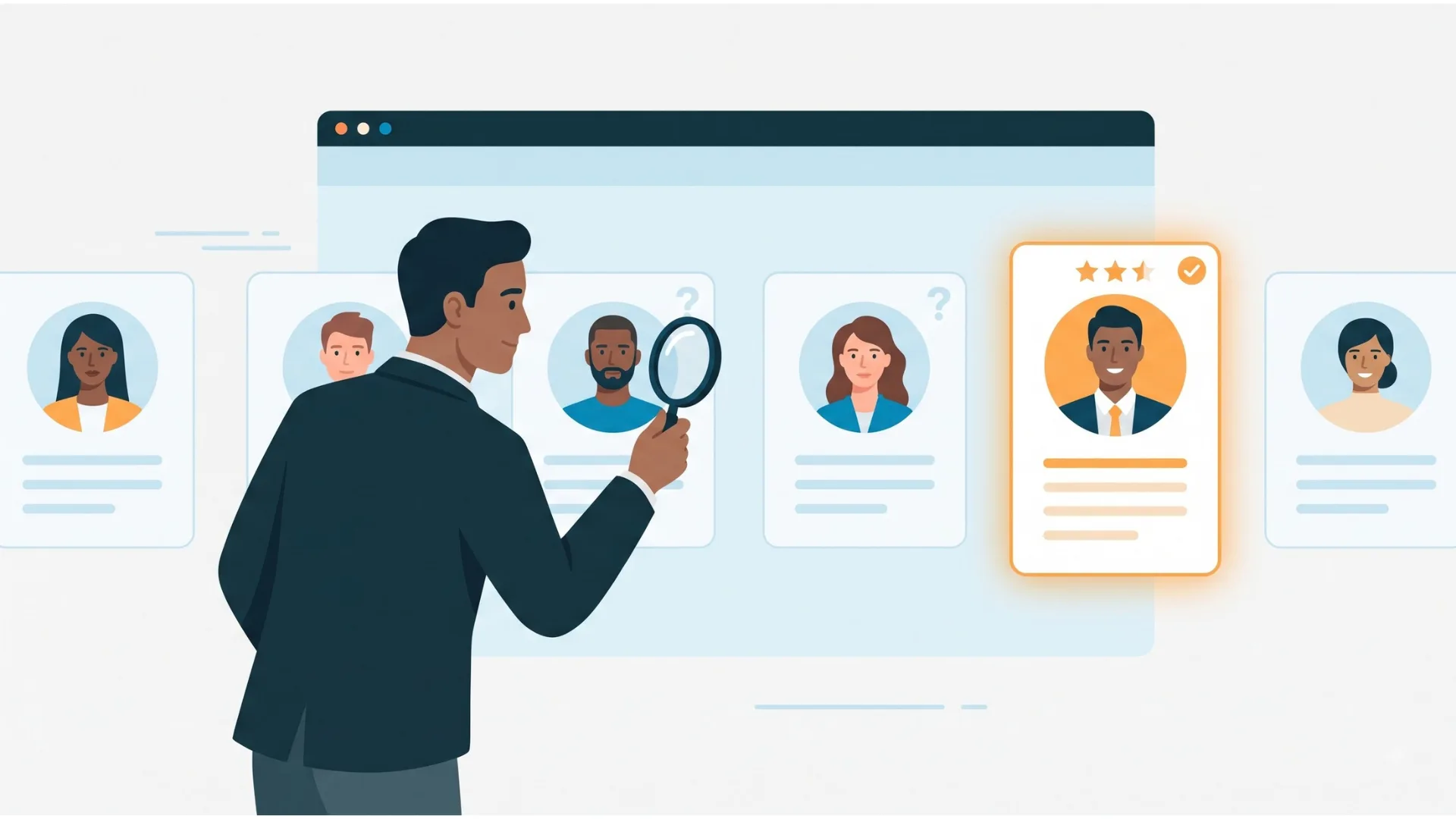



Recruitment compliance refers to following employment laws, regulations, and internal policies throughout the hiring process to ensure fair and ethical recruitment.
In 2026, compliance has become more than a box-ticking exercise for HR teams. New data protection regulations, AI-powered screening tools, and increasingly informed candidates have all raised the bar for what compliant hiring actually looks like. Candidates research employers before they apply, share their hiring experiences on Glassdoor and LinkedIn, and know their rights better than ever. A single compliance failure a discriminatory interview question, a data breach, a poorly worded job description can escalate into a legal claim, a public relations problem, or both.
This guide covers what recruitment compliance means in practice, why it matters at every stage of the hiring lifecycle, how to measure whether your process is working, and how to use technology and structured practices to stay consistently compliant as your organisation grows.
TL;DR
- Recruitment compliance ensures your hiring process is fair, ethical and legally compliant at every stage from the first word of a job description to the last day of onboarding.
- Following employment laws prevents discrimination, protects candidate rights, and shields organisations from costly legal penalties and reputational damage.
- Compliance strengthens your employer brand and builds long-term trust with both candidates and employees 75% of job seekers research employer brand before applying.
- Key metrics new hire attrition rate, application-to-interview ratio, time to full productivity and cost of bad hires help measure whether your process is working and where the risks lie.
- Non-compliance can result in fines, discrimination claims, reputational damage and long-term difficulty attracting top talent.
- Technology, when implemented correctly, is one of the most effective tools for maintaining consistent, audit-ready and compliant recruitment processes at scale.
What is Recruitment Compliance?
Recruitment compliance refers to following legal regulations, internal policies, and ethical hiring practices while attracting, evaluating, and selecting candidates. It ensures that organisations adhere to employment laws related to equal opportunity, data protection, background checks, candidate assessments, and fair hiring practices throughout the entire recruitment process.
Compliance is not a single checkbox it must be considered at every phase of the hiring procedure. The major components that fall under recruitment compliance include:
- Data security and protection ensuring candidate data is collected, stored and processed lawfully and securely throughout the process.
- GDPR and privacy laws particularly critical for organisations operating in the UK and EU, where candidate data handling is subject to strict regulatory requirements. This practical guide to GDPR in AI recruitment is essential reading for any HR team using digital or AI-assisted hiring tools.
- Candidate assessment fairness ensuring screening criteria are validated, role-relevant and do not produce unjustified adverse impact on protected groups.
- Background checking protocols obtaining proper consent, communicating results transparently and making compliant decisions based on findings.
- Scoring and weighting consistency applying evaluation criteria equally across all candidates to prevent discriminatory or arbitrary shortlisting.
- Integration security ensuring all third-party tools, platforms and API connections used in the recruitment workflow meet the required security and compliance standards.
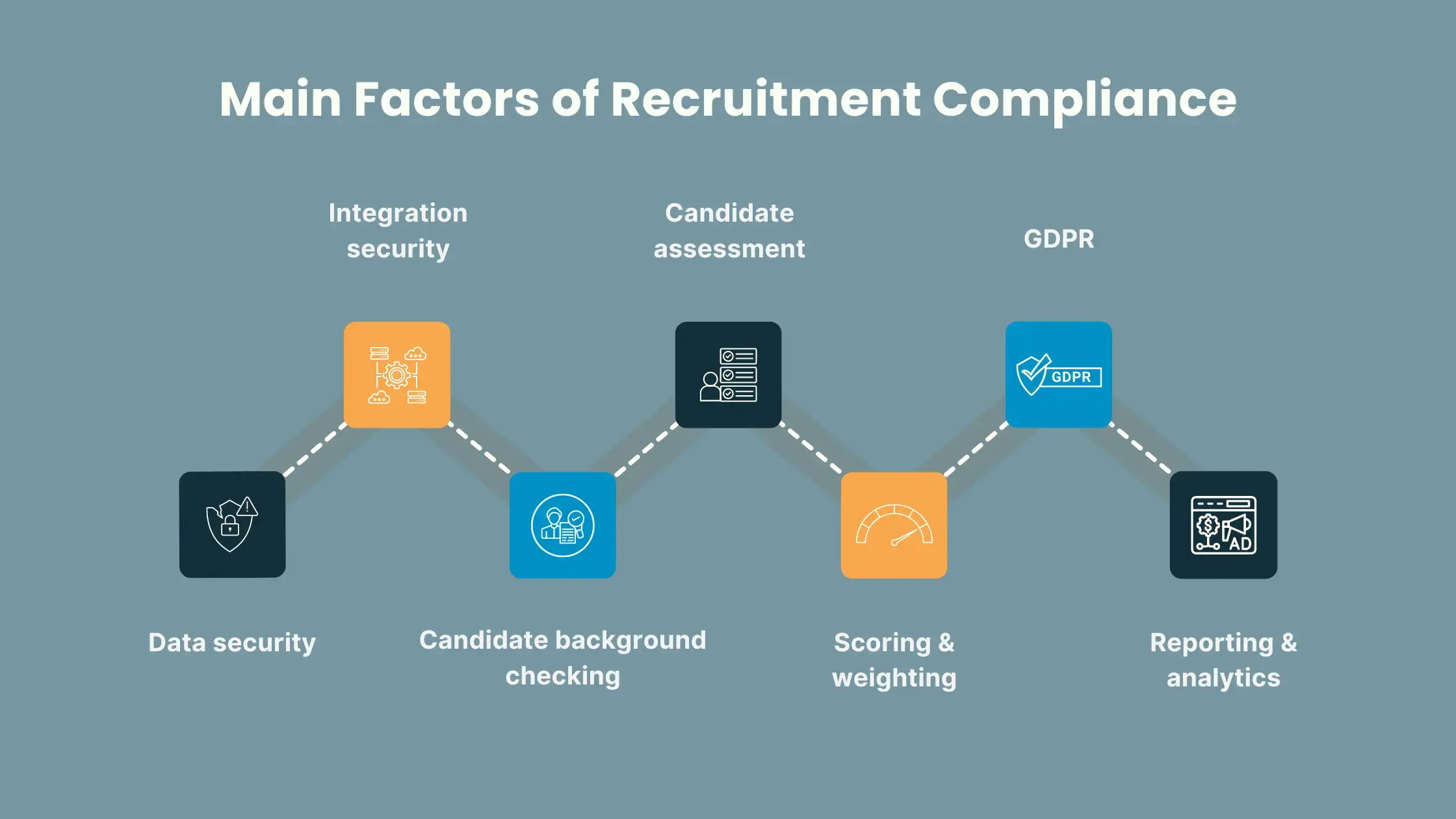
Compliance is a significant issue that must be considered at each phase of the hiring procedure, various components fall under the umbrella of recruitment compliance, such as data security, integration security, GDPR/privacy laws, scoring & weighting, candidates' background checking, candidate assessment and so on.
The Significance of Recruitment Compliance
Failure to maintain recruitment compliance can result in financial penalties, legal sanctions, and serious reputational damage for organizations.
Ensuring that your hiring process follows relevant employment laws and regulations is essential for maintaining a fair and legally compliant workplace. When recruitment practices are transparent and compliant, organizations reduce the risk of discrimination claims and unfair hiring practices.
Recruitment compliance also plays an important role in protecting an organization’s employer brand and corporate reputation. A well-structured and compliant recruitment process helps companies build trust with candidates and employees, reducing the chances of reputational damage and poor hiring decisions.
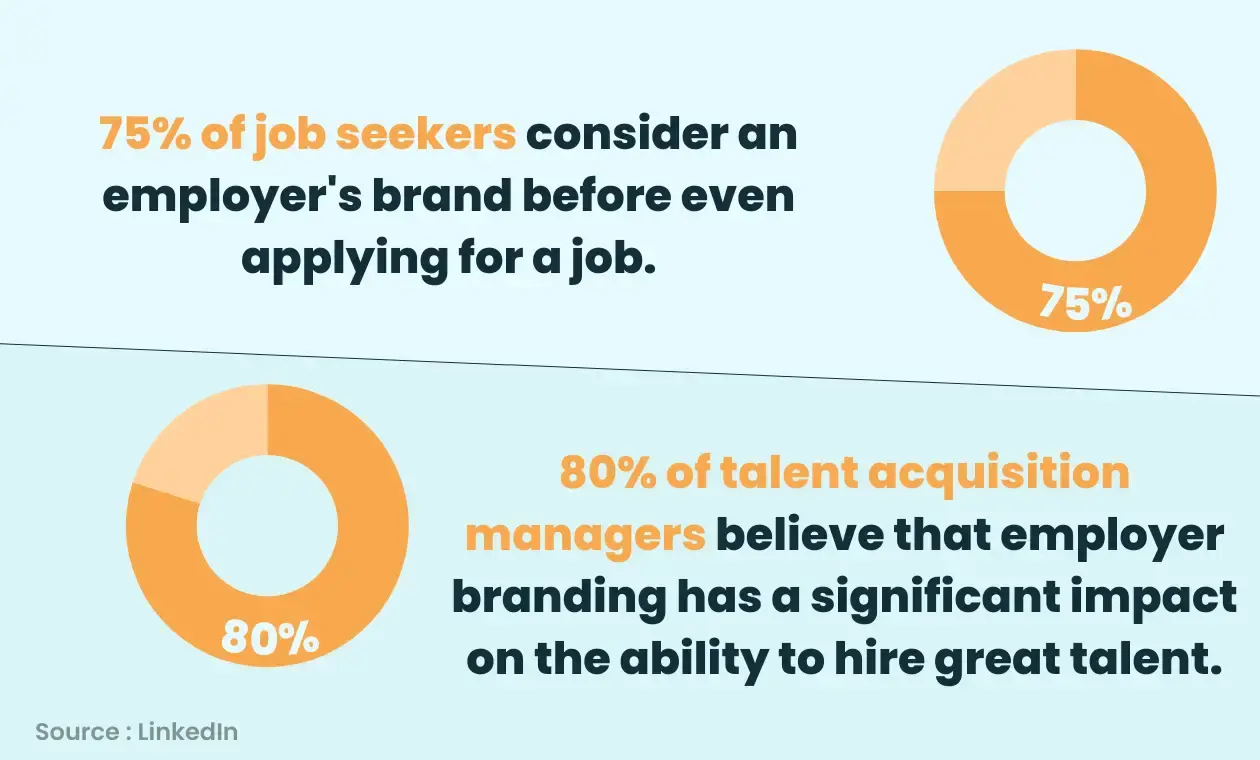
Strong employer branding is closely linked to ethical and compliant hiring practices. Studies show that 75% of job seekers consider an employer’s brand before applying for a job, while 80% of talent acquisition managers believe employer branding significantly impacts their ability to attract top talent.
How Does Compliance Impact Recruiting?
Recruitment compliance affects multiple stages of the hiring process. Organizations must ensure that each step follows fair and non-discriminatory practices.
- Key areas where compliance plays an important role include:
- Job advertisements and job descriptions
- Candidate communication and interview invitations
- Interview questions and evaluation criteria
- Collection and reporting of employee data
- Internal hiring policies and recruitment procedures
By maintaining structured and compliant hiring practices, organizations can make objective hiring decisions based on skills, qualifications, and experience.
Compliance Recruitment Metrics
Understanding the importance of recruitment compliance is only the first step. To ensure that the hiring process remains fair and compliant, organizations should track key recruitment metrics.
These metrics help evaluate whether the recruitment strategy is effective and identify gaps in the hiring process. By measuring recruitment performance, organizations can better understand what is working and where improvements are needed.
Below are some important metrics that help measure compliance in the recruitment process.
1. The New Hire Attrition Rate
The new hire attrition rate is the rate of new employees who leave the organization within 12 months.
It is the best way to measure the success of candidate attraction and the onboarding process. It also shows that the selected candidate is a good fit for the company for a long period. If the hire attrition rate is too high, then the company should take action for employee sustainability.
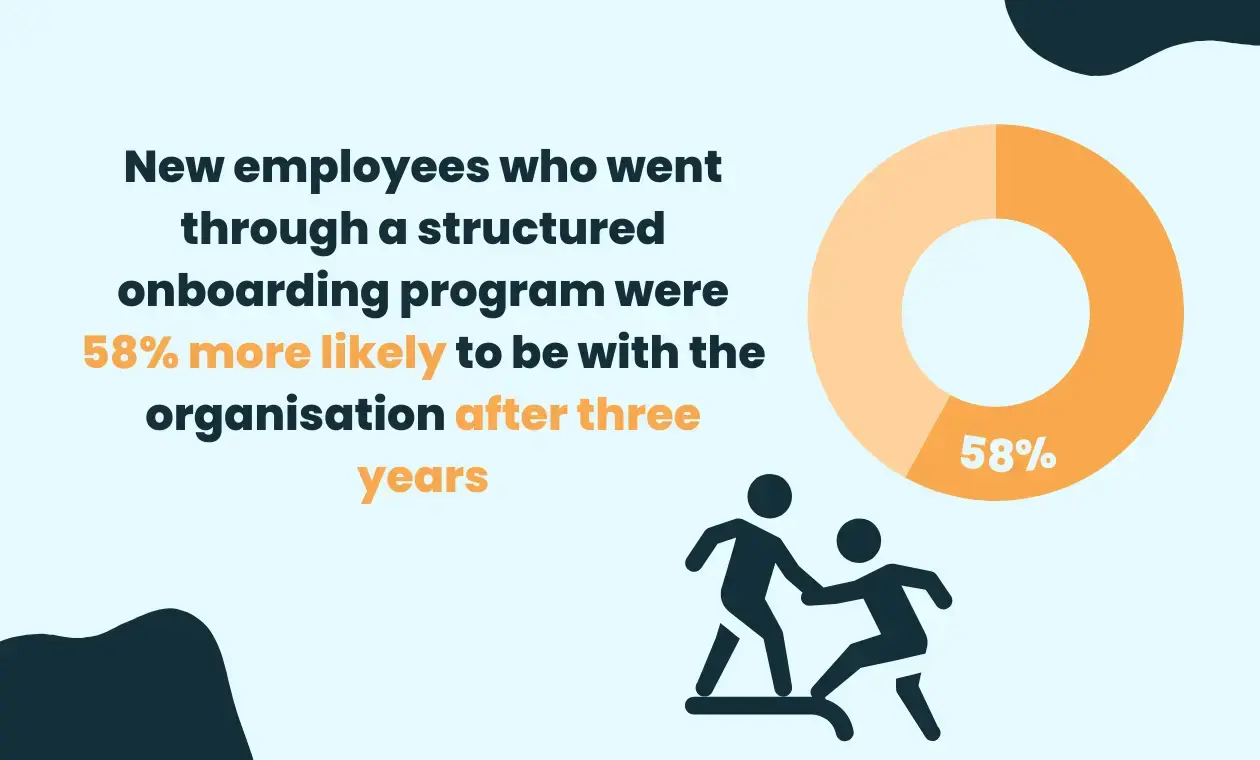
New employees who went through a structured onboarding program were 58% more likely to be with the organization after three years.
Formula to measure new hire attrition rate:
New hire attrition rate(%) = Number of new hires that left the organisation within 12 months/ Total new hires*100
2. Applications-to-Interview Ratio
It is the process of counting the number of candidates who pass the pre questions screening and reach the interview stage.
This ratio will help the company to identify the level of screening. If very few candidates reach the interview phase, then the screening process is too tight while if too many candidates pass the screening process, then the phase needs to be tough.
Formula to measure application-to-interview ratio
ATR(%) = Total number of interviews/Total number of applications
3. Time for Full Productivity
Time of productivity is overall time new hires take to become productive by serving the task up to a benchmark that average workers produce in the exact position.
This metric also brings up many components of hiring factors like quality of hire and employee satisfaction. The employee with high quality and who feels happy at the workplace is likely to reach the productive benchmark faster.
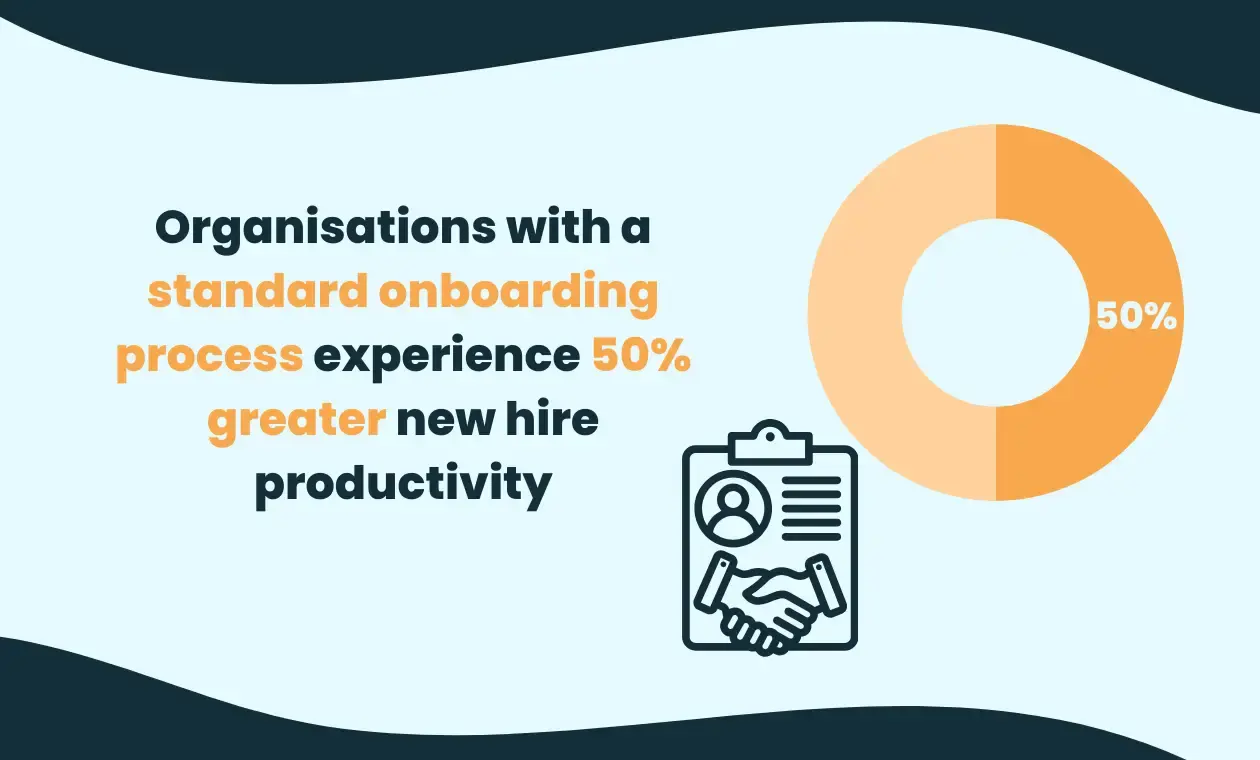
Organizations with a standard onboarding process experience 50% greater new hire productivity. ( Source)
Formula to measure time to full productivity
TFP = Starting date - Date to become fully productive
4. Financial Impact of Bad Hires
This term is concerned with the amount that the company spends on hiring an employee who is totally unqualified and undeserving for a position or left the organisation too soon. That is what a bad hire is.
Consequently, the company has to conduct the hiring process again with the same hiring budget. Thus, bad hires affect the financial pillar of companies, as well as HR, which has to spend time on backfill.

Formula to measure the financial impact of a bad hire
Financial impact= (Cost per hire * 2) + Business productivity lost
Recruitment Compliance Checklist
Organizations can follow a recruitment compliance checklist to ensure their hiring process remains compliant with employment laws and internal policies.
- Use inclusive and unbiased job descriptions.
- Ensure job advertisements follow equal opportunity hiring guidelines.
- Standardize interview questions to avoid discrimination.
- Maintain proper documentation of candidate evaluations and hiring decisions.
- Obtain candidate consent before conducting background checks.
- Protect candidate information according to data privacy regulations.
- Maintain records of recruitment activities for compliance reporting.
Following a structured compliance checklist helps organizations reduce legal risks and maintain a fair and transparent hiring process.
Ways to Maintain Recruitment Compliance During Hiring
Technology can play an important role in maintaining recruitment compliance. Many HRMS platforms and recruitment software solutions, such as iSmartRecruit, help organizations keep their hiring processes structured and compliant.
These systems support recruiters by maintaining candidate records, collecting required information, and sending automated reminders to ensure all hiring steps follow company policies and legal requirements.
In addition to technology, organizations should follow several practices to maintain compliance during recruitment:
- Use clear and unbiased job descriptions.
- Standardize interview questions and evaluation criteria.
- Maintain proper documentation of hiring decisions.
- Obtain consent before conducting background checks.
- Follow data privacy regulations when handling candidate information.
By combining structured hiring practices with the right recruitment technology, organizations can ensure their recruitment process remains fair, transparent, and compliant with employment laws.
Essential Recruitment Compliance Laws & Regulations
In today’s competitive hiring environment, managing recruitment compliance is an important responsibility for HR professionals. Organizations must ensure that their hiring practices follow employment laws designed to prevent discrimination and promote fair hiring.
Regulatory bodies such as the Office of Federal Contract Compliance Programs (OFCCP) and the Equal Employment Opportunity Commission (EEOC) establish guidelines to ensure employers provide equal opportunities to candidates.
Failing to follow these regulations can lead to legal penalties, lawsuits, and reputational damage. As recruitment increasingly moves online, organizations must also comply with data protection laws such as GDPR and maintain proper documentation throughout the recruitment process.
Why Recruitment Compliance Protects Your Reputation?
Recruitment compliance plays an important role in protecting an organization’s reputation. When companies fail to follow fair hiring laws and ethical recruitment practices, it can lead to negative publicity and loss of trust among candidates and employees.
In today’s digital environment, job seekers often share their experiences on platforms such as LinkedIn and Glassdoor. If a company is known for unfair or non-compliant hiring practices, it can discourage qualified candidates from applying and make it harder to attract top talent.
Maintaining recruitment compliance demonstrates that an organization values fairness, transparency, and equal opportunity. This not only helps avoid legal risks but also strengthens employer branding and builds long-term trust with candidates and employees.
Risks of Recruitment Non-Compliance
Failing to maintain recruitment compliance can create serious and compounding risks for organisations:
- Legal penalties and financial fines GDPR breaches, EEOC violations and equivalent regulatory failures carry significant financial consequences, including fines, compensation payments and legal costs.
- Discrimination lawsuits and regulatory investigations even where intent was not discriminatory, systemic process failures can trigger investigations and class-action claims.
- Damage to employer brand and corporate reputation public knowledge of non-compliant hiring practices directly impacts the ability to attract talent, retain employees and maintain client confidence.
- Loss of candidate trust once lost, candidate trust is extremely difficult to rebuild, particularly in markets where professional networks are close-knit and hiring experiences travel quickly.
- Difficulty attracting qualified talent the cumulative effect of reputational damage is a shrinking and lower-quality candidate pool the opposite of what competitive hiring requires.
By maintaining recruitment compliance proactively, organisations protect both their immediate legal position and their long-term ability to attract and hire the talent they need.
Conclusion
Recruitment compliance is not a constraint on effective hiring it is a foundation for it. When organisations follow employment laws, apply consistent evaluation criteria, protect candidate data and document their decisions, they create a hiring process that is simultaneously fairer, more legally defensible and more effective at identifying the right people for each role.
The organisations that get this right in 2026 are those that treat compliance not as a periodic audit exercise, but as something embedded into every step of how they hire from the first word of a job description to the last day of an onboarding programme. That means clear policies, trained hiring managers, structured processes, regular audits, and technology that supports rather than circumvents the human judgement at the heart of good hiring.
Platforms like iSmartRecruit support this approach directly, providing structured recruitment workflows, secure candidate data management, GDPR-compliant processes and centralised audit trails that give HR teams the visibility and confidence to manage compliance at scale.

FAQs - Frequently Asked Questions
1. What is recruitment compliance and why is it important?
Recruitment compliance refers to following employment laws, regulations, and company policies during the hiring process. It ensures fair and non-discriminatory hiring practices, protects candidate rights, and helps organizations avoid legal risks while building trust with job seekers.
2. What are the risks of not following recruitment compliance?
Failure to maintain recruitment compliance can lead to legal penalties, discrimination claims, reputational damage, and loss of candidate trust. Non-compliant hiring practices may also make it harder for organizations to attract and retain qualified talent.
3. What is a recruitment compliance checklist?
A recruitment compliance checklist outlines the steps organizations should follow to ensure their hiring process meets legal and ethical standards. It typically includes unbiased job descriptions, equal opportunity practices, candidate data protection, and proper documentation of hiring decisions.
4. What are recruitment compliance laws?
Recruitment compliance laws are regulations that ensure fair and lawful hiring practices. These laws may include equal employment opportunity regulations, anti-discrimination laws, labor laws, and data privacy requirements that employers must follow during recruitment.
5. How can iSmartRecruit assist with recruitment compliance?
iSmartRecruit supports recruitment compliance by providing structured hiring workflows, secure candidate data management, and centralized recruitment records. These features help organizations maintain transparency and follow regulatory requirements throughout the hiring process.