

An executive interview is a high-stakes hiring conversation designed to assess whether a senior leader has the strategic vision, leadership ability, cultural alignment, and decision-making skills needed to guide an organisation forward.
Unlike standard interviews, the executive interview process goes beyond qualifications and experience. It evaluates how candidates lead teams, manage change, influence stakeholders, solve complex business challenges, and align with long-term company goals.
In this guide, we’ll walk you through seven practical steps to conduct effective executive interviews, from defining leadership requirements and preparing senior leadership interview questions to evaluating candidates consistently and making the final hiring decision.
TL;DR
- Executive interviews require a strategic, multi-stage process to identify visionary leaders.
- Roughly 40% of executive hires fail within their first 18 months, and the cost of a senior leadership mis-hire can reach 213% of the executive's salary once hidden costs are included.
- Defining a clear leadership mandate tailored to organisational goals is critical.
- In-depth research into candidates' career impact and leadership style enhances selection quality.
- Structured interviews assess strategic, crisis management, and cultural competencies.
Why the Executive Interview Process Deserves Rigour
An executive interview is a high-stakes hiring conversation designed to assess whether a senior leader has the strategic vision, leadership ability, cultural alignment, and decision-making skills needed to guide an organisation forward.
The stakes behind that conversation are larger than most hiring teams assume. Roughly 40% of executive hires fail within their first 18 months, according to a 2026 mis-hire benchmark from Talentfoot, and the cost of a failed senior leadership hire can climb as high as 213% of the executive's salary once severance, lost momentum, team turnover, and opportunity cost are added to the direct search fee. Executive failure typically becomes visible within 6 to 12 months, but leaders often stay in the role well beyond that point, extending the damage.
The good news is that process discipline closes most of that gap. Firms that run a structured, evidence-based search report success rates around 98%, compared with closer to 60% for less rigorous, relationship-driven searches, according to 2026 industry benchmarking. Structured interviews, specifically, where every candidate answers the same predetermined questions in the same order, are more than twice as accurate at predicting job performance compared to unstructured conversations, based on a meta-analysis published in the Journal of Applied Psychology.
Unlike standard interviews, the executive interview process goes beyond qualifications and experience. It evaluates how candidates lead teams, manage change, influence stakeholders, solve complex business challenges, and align with long-term company goals. This guide walks through seven practical steps to conduct effective executive interviews, from defining leadership requirements and preparing senior leadership interview questions to evaluating candidates consistently and making the final hiring decision.
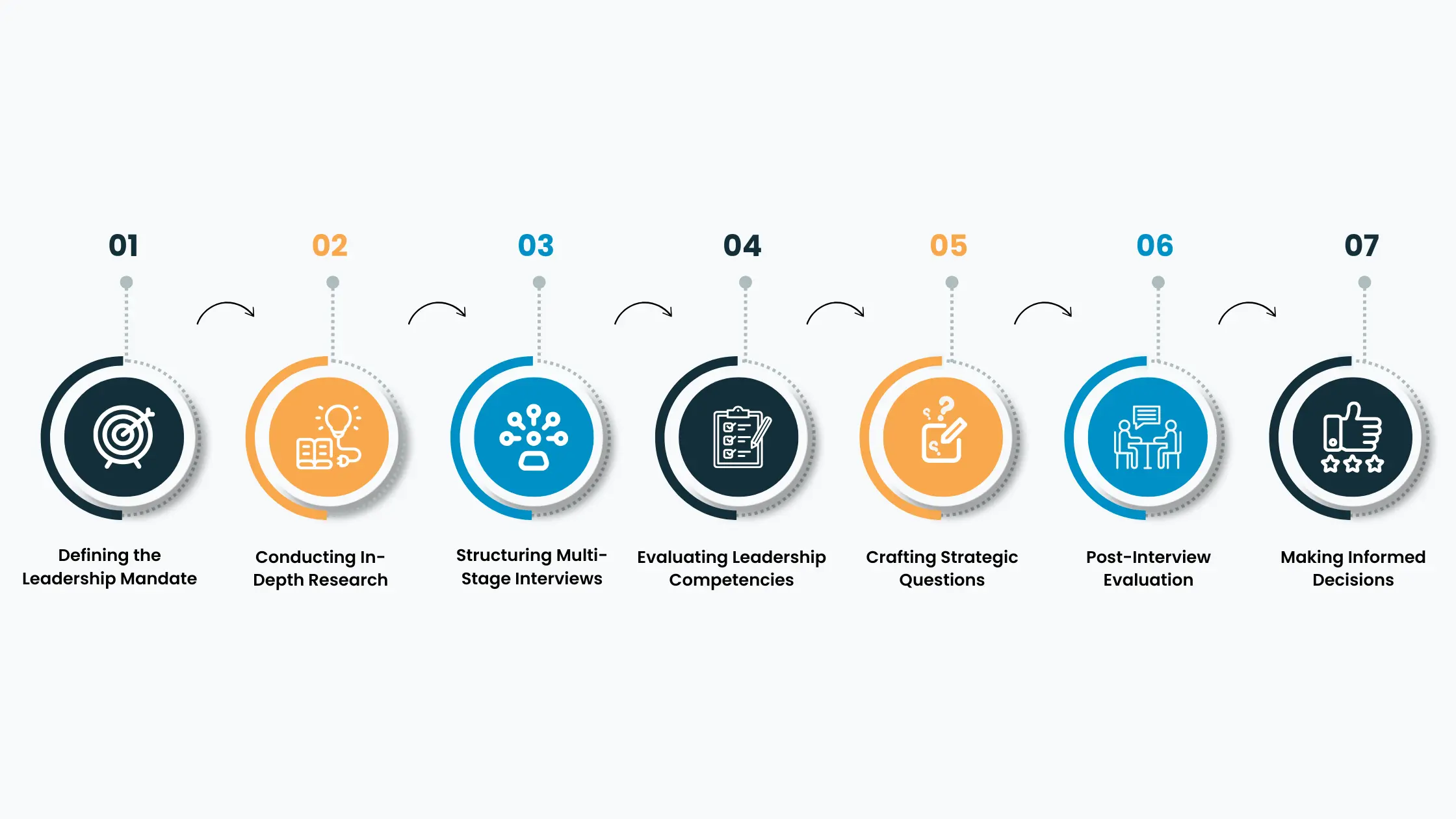
7 Key Stages of an Effective Executive Interview Process
1. Define the Leadership Mandate for the Executive Role
The first step in any successful C-suite recruitment is defining the leadership mandate. This involves close collaboration between the executive search firm, the board, the CEO, and other key stakeholders. The leadership mandate outlines the core responsibilities of the executive role, strategic objectives, and the leadership qualities required to meet these objectives.
For example, if the company is undergoing digital transformation, the leadership mandate would emphasise a leader’s ability to lead technological change while ensuring alignment with the company's long-term strategy. Similarly, if the company is focused on market expansion, the leadership mandate would require the candidate to have a deep understanding of international markets and the ability to drive revenue growth in new regions.
This phase also considers budget management and the executive's experience managing large-scale financial decisions. At the C-suite level, especially for roles like CFO or COO, P&L responsibilities are critical. The leadership mandate must include expectations on how the new leader will manage the company's financial health, allocate resources effectively, and ensure a return on investment (ROI) in various strategic initiatives.
2. Research the Executive Candidate Thoroughly
Once the leadership mandate is established, executive search firms conduct deep-dive research into potential executive leaders. This research is much more detailed than traditional recruitment methods. Firms evaluate the leader’s career trajectory, decision-making history, and impact on company growth in previous roles. For instance, have they successfully managed a digital transformation? Have they led a company through an industry disruption?
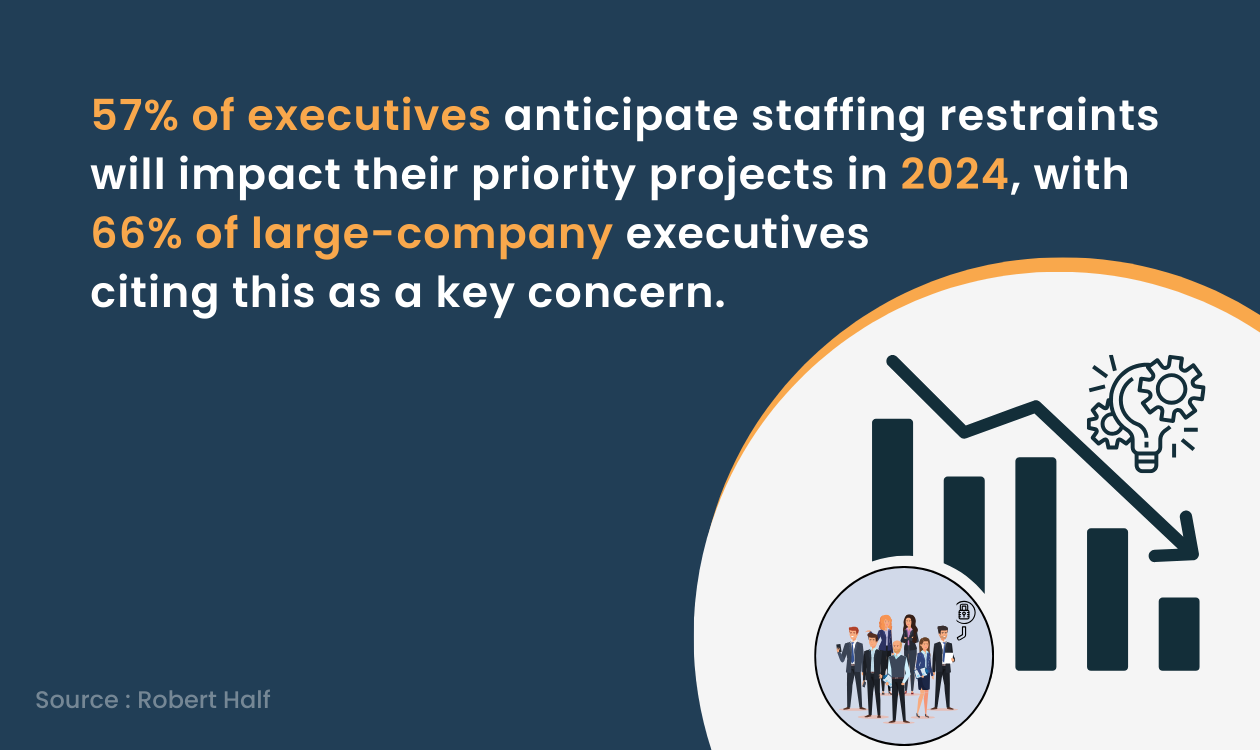
According to Robert Half, more than 57% of executives expect staffing issues to hinder their key projects in 2024. This concern is even more pressing for large companies, where 66% of executives view this as a major challenge.
Understanding how the executive leader has managed team dynamics and influenced company culture is essential. Leadership isn't just about making decisions; it's about involving the entire organisation in those decisions. Executive search firms look at how leaders have managed teams across diverse functions and geographies, whether they foster an inclusive and innovative culture, and how they balance internal team needs with external market pressures.
Recruiters also focus on how the executive leader has handled technology adoption. In today's business world, understanding and implementing new technologies - whether AI, automation, or digital platforms - is crucial for long-term success. The executive's technological aptitude can directly influence the company's competitiveness and ability to innovate in a rapidly evolving market.
3. Structure a Multi-Stage Interview Process for C-Suite Roles
C-suite interviews are typically divided into multiple stages, each focusing on different aspects of the executive's skills and potential fit.
Initial Executive Interview
In this stage, recruiters assess the executive leader’s overall leadership presence and alignment with the company's strategic goals. The leader’s understanding of the industry, market trends, and financial landscape is critical. Discussions often revolve around the leader’s vision for growing the business, improving profitability, and enhancing market share.
Mid-Stage Leadership Interview
This stage is where things get more complex. Executive recruiters present real-world challenges that the company might face - such as a budget cut, a sudden shift in market dynamics, or a large-scale technology integration. The purpose is to assess how the executives would navigate these scenarios.
Final Executive Interview Round
In this phase, executives meet with the board, investors, and other key decision-makers. Here, the focus shifts to evaluating their stakeholder management skills and their ability to align multiple interests with the company's strategic direction.
A critical element in this stage is ensuring that the executive can manage both internal team members and external stakeholders - balancing the interests of the board, investors, and senior leadership. Cultural alignment is a key topic, as the executive's ability to fit within the company's existing culture while also fostering growth and innovation is essential.
4. Evaluate Leadership Competencies in Senior-Level Executives
Executive recruiters assess several key leadership competencies during the executive search process, each of which is vital for the success of a C-suite executive:
Strategic Vision and Market Insight
The ability to anticipate shifts in the market, respond to industry trends, and adjust the company's strategy accordingly. For example, can the executive steer the company through a post-pandemic economy or navigate global supply chain disruptions?
Crisis Management and Financial Leadership
Assessing how the executive has managed crises in the past, including economic downturns or major financial setbacks. Can they effectively manage budgets, cut costs where necessary, and still drive growth?
Cultural Fit and Team Leadership
In today's business environment, leading diverse teams across global markets is critical. Can the executive create an environment of innovation, accountability, and inclusivity? Do they foster a culture that supports technology adoption and continuous improvement?
5. Prepare Strategic Executive Interview Questions
The questions asked during C-suite interviews are designed to uncover how executive leaders think, respond in challenging situations, and approach long-term challenges. Here are a few examples:
Budgeting and Financial Strategy: How do you approach cost management during an economic downturn while still maintaining growth targets?
Technology Adoption: Can you provide an example of leading a company through a significant technology transition? How did you manage team adoption, budget constraints, and operational disruption?
Cultural Leadership: How have you successfully integrated new team members into a company culture while balancing diversity, inclusion, and innovation?
6. Conduct Post-Interview Evaluation and Build Consensus
Once interviews are complete, it’s essential to gather comprehensive feedback from all key stakeholders. This phase isn't just a simple review - it's a detailed assessment of each leader’s performance across all interview stages.
Feedback Gathering
Executive recruiters consolidate feedback from interviewers, highlighting the leader’s strengths, weaknesses, and overall fit for the executive role. This feedback includes insights into how well the executive aligns with the leadership mandate, their cultural fit, and their capacity to drive the company forward.
Stakeholder Consensus Building
Organise a debrief session with senior leaders, board members, and other stakeholders to discuss findings and opinions. The aim is to reach a consensus on the best leaders. This discussion might involve ranking executives based on key competencies, evaluating their ability to navigate future executive search firm challenges, and ensuring they align with the company's strategic direction.
Key Evaluation Criteria
- Alignment with company goals and culture.
- Ability to manage complex projects and lead teams.
- Strategic thinking and decision-making capabilities.
7. Make the Final Hiring Decision and Plan Executive Onboarding
The final step is to make a well-informed decision, select the top leaders and initiate the offer negotiation process. Once the offer is accepted, the focus shifts to ensuring a seamless onboarding experience.
Offer Negotiation
Ensure clarity in offer terms and align the executive’s expectations with the company's goals. Discuss compensation, benefits, and other incentives, keeping the long-term objectives in mind.
Structured Executive Onboarding
Develop a comprehensive onboarding plan that outlines the new leader's responsibilities from day one. This plan should include regular check-ins, clear performance goals, and integration with key teams. Focus on aligning them with the company culture, strategic objectives, and financial expectations.
Conclusion
Each stage of the executive interview process is crucial in selecting leaders who align with your company’s vision and can drive growth and innovation. Master executive recruitment through our Step-by-Step Guide to Executive Search.
iSmartRecruit’s Executive Recruiting Software simplifies this process by providing in-depth insights into executive profiles, customisable interview stages, and streamlined stakeholder feedback. With data-driven decision-making and easy executive comparisons, the platform ensures you select the best leaders for high-level assignments. Ready for a better way to hire? Book your demo now and discover how iSmartRecruit can help you find your next business leader.

Frequently Asked Questions (FAQs)
1. What are the key stages of an executive interview process?
The executive interview process typically involves seven stages: defining the leadership mandate, researching candidates, structuring a multi-stage interview format, evaluating leadership competencies, preparing strategic questions, building stakeholder consensus, and finalising the hire and onboarding plan.
2. How do you assess cultural fit in an executive interview?
Assess cultural fit by asking situational questions related to leadership style, team dynamics, adaptability, and alignment with your organisation's stated values, and by cross-checking impressions across multiple interviewers rather than relying on a single conversation.
3. How can technology improve executive interviews?
An ATS like iSmartRecruit can streamline interview scheduling, centralise candidate notes and stakeholder feedback, and support structured scoring, which reduces unconscious bias and makes multi-stakeholder consensus-building significantly faster.
4. What are common mistakes in executive interviews?
Common mistakes include an undefined leadership mandate, unstructured or inconsistent questioning across interviewers, over-indexing on technical skills, and failing to rigorously assess leadership style or cultural alignment before extending an offer.
5. Why do structured interviews produce better hiring outcomes?
Structured interviews, where every candidate answers the same predetermined questions, are more than twice as accurate at predicting job performance compared to unstructured conversations, because they reduce interviewer bias and produce directly comparable evaluations across candidates.
6. How common is executive hiring failure, and why does it happen?
Roughly 40% of executive hires fail within their first 18 months, most often due to cultural or attitudinal misalignment rather than a lack of technical skill, which is why structured cultural and behavioural assessment matters as much as evaluating a candidate's track record.
7. How long does a typical executive interview process take?
C-suite searches averaged around 14 weeks in 2025, though firms using AI-assisted sourcing in the early stages have compressed that to roughly 9 weeks in 2026, freeing more time for rigorous, multi-stage interview evaluation rather than cutting corners on it.
About the Author