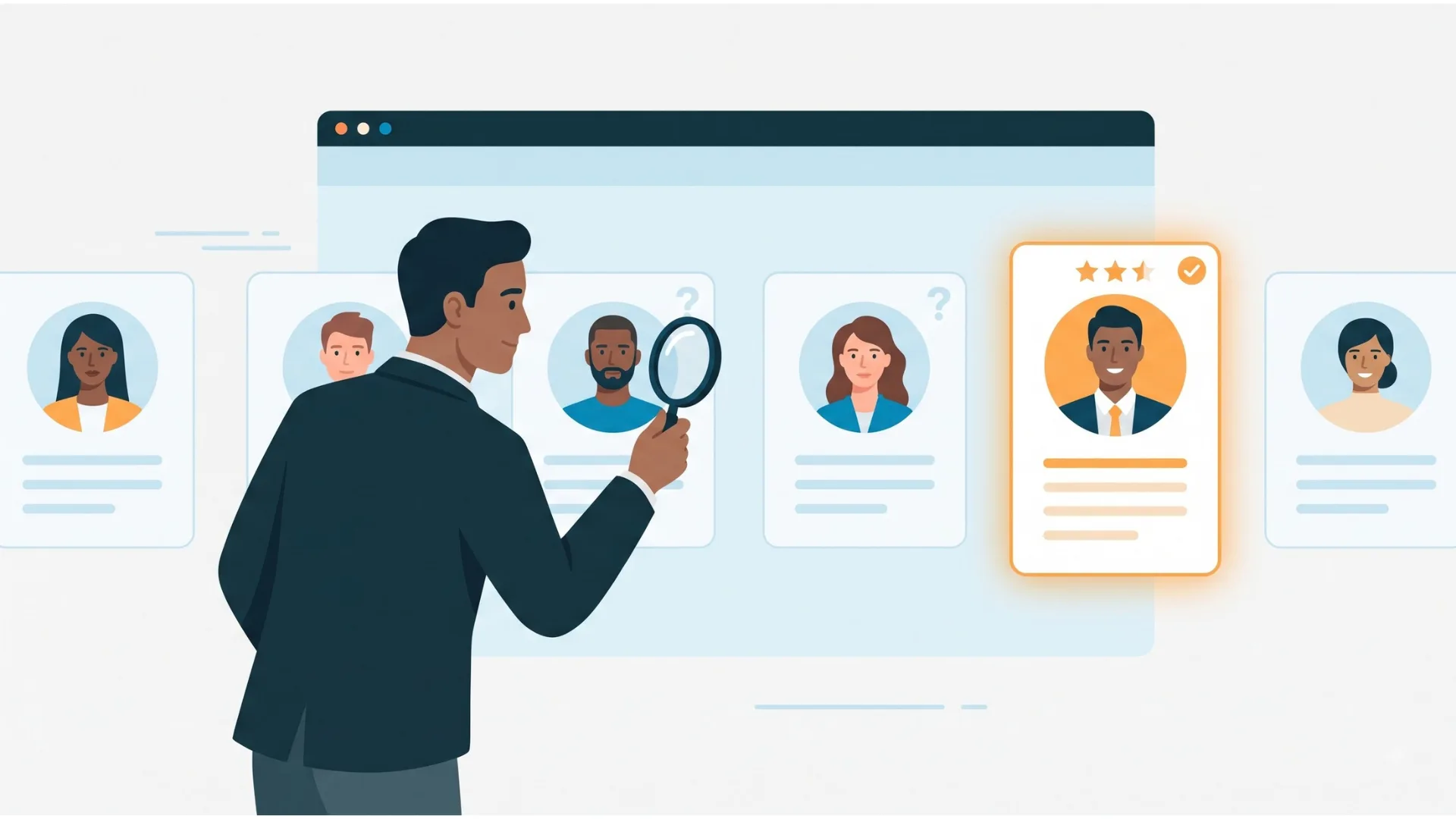

Recruitment is moving beyond CV screening, standard aptitude tests and one-off interviews. Employers now need faster and more practical ways to understand how candidates think, respond and solve problems in realistic situations.
Gamified assessments support this shift by using game-like tasks, simulations and challenges to assess job-relevant skills in a more interactive way. Organisations adopting gamification in recruitment are using these methods to improve both hiring accuracy and candidate engagement.
One large validation study used 11,574 assessment completions to test a game-based cognitive assessment for recruitment, showing why scientific validation matters before these tools are used in selection.
For recruiters, the value is clear: gamified assessments can reveal practical signals that a CV or interview may miss. For candidates, they can make the process feel more engaging and less intimidating when designed properly.
TL;DR
- Gamified assessments use game-like tasks, simulations and challenges to assess candidate skills, behaviour and decision-making.
- They help recruiters look beyond CVs, job titles and rehearsed interview answers.
- They can improve candidate engagement, but only when the assessment is clear, relevant and easy to complete.
- Employers must check the validity, fairness, accessibility and privacy before using them in real hiring decisions.
- Candidates should prepare their technical setup before online assessments, especially when tasks are timed or interactive.
What Are Gamified Assessments in Recruitment?
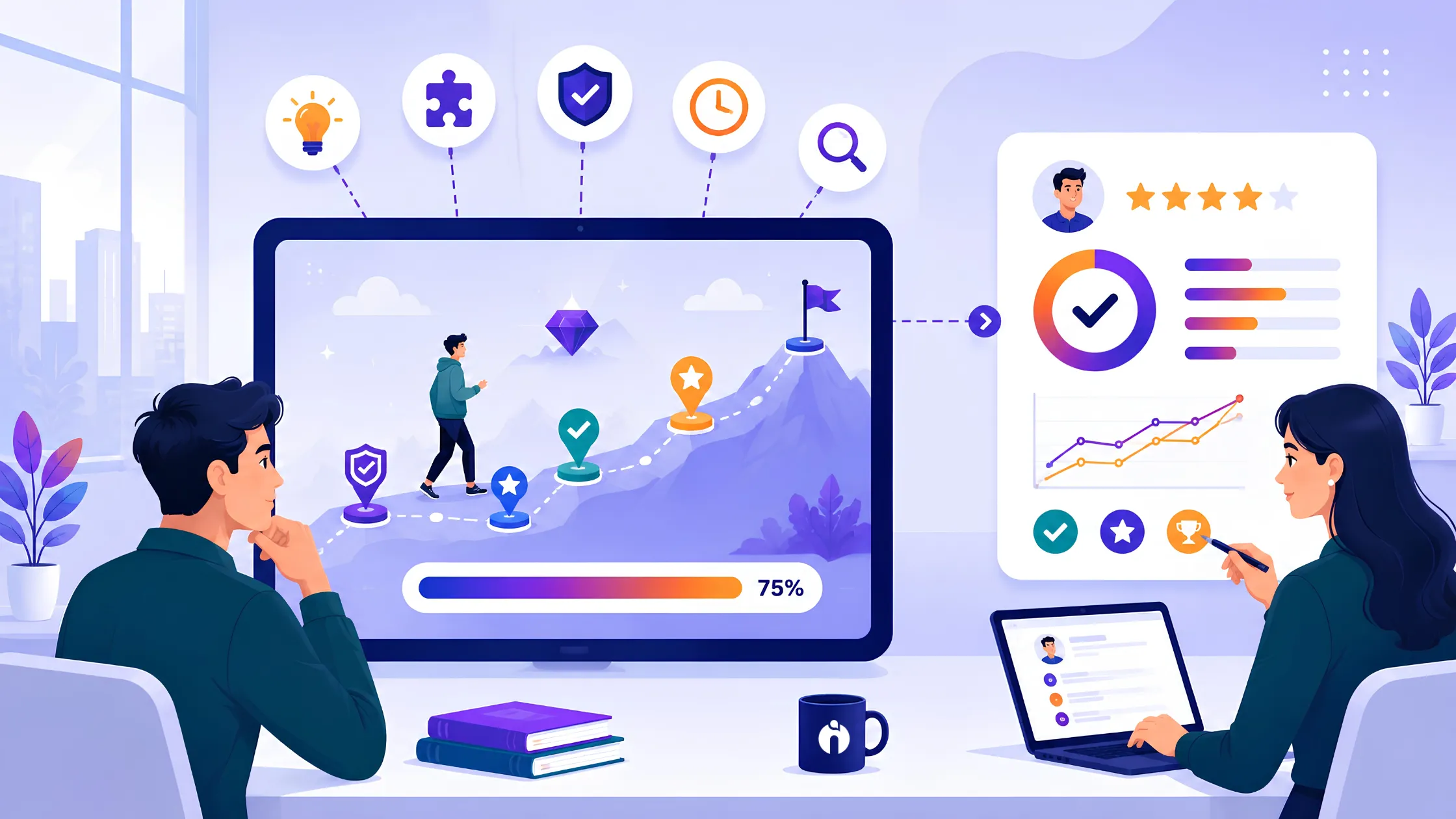
Gamified assessments are recruitment assessments that use game mechanics to measure job-related skills and behaviours. These mechanics may include timed tasks, levels, points, progress indicators, puzzles, simulations, feedback loops or scenario-based challenges.
For example, a candidate may be asked to manage limited resources in a business simulation, solve a pattern-recognition task, respond to a customer issue or make a decision under time pressure.
The purpose is not only to see whether the candidate gets the right answer. Recruiters may also review how the candidate approaches the task, how quickly they respond, whether they adapt to new information and how consistent their choices are.
This makes gamified assessments useful for measuring qualities such as problem-solving, attention to detail, adaptability, judgement, resilience and learning ability.
Why Traditional Hiring Assessments Are Being Rethought
Traditional hiring methods still matter, but they have clear limits.
CVs often give more visibility to candidates with recognised employers, strong academic backgrounds or polished writing skills. Standard tests can feel repetitive or stressful. Unstructured interviews may be affected by bias, inconsistent questions and first impressions.
Gamified assessments offer another way to evaluate potential while also improving the overall candidate experience. Instead of asking a candidate to say they are adaptable, the assessment can show how they react when a task changes. Instead of relying only on interview answers, recruiters can observe decision-making in action.
This is especially useful in roles where practical judgement matters, such as customer support, sales, operations, graduate hiring, leadership development and technical problem-solving.
How Gamified Assessments Work in Hiring
Gamified assessments can look very different depending on the role. Some resemble short online games. Others look more like workplace simulations with game-style elements added.
A sales candidate may complete a scenario about prioritising leads. A customer support candidate may respond to a difficult customer situation. A graduate applicant may complete a logic or memory challenge. A leadership candidate may work through a business simulation involving limited resources and competing priorities.
It is also useful to separate game-based assessments from gamified assessments. Game-based assessments are built around interactive game-like tasks, while gamified assessments usually add game mechanics, such as points, badges, progress bars or leaderboards, to a more traditional assessment format.
The strongest assessments are not chosen just because they look modern. They are designed around clear measurement goals. A systematic review of game-related assessments found that these tools can be used in hiring, but employers should still review validity, candidate reactions, design, adverse impact and faking risks before relying on them.
Technical Readiness for Online Gamified Assessments
Most gamified assessments are completed online, so technical readiness matters. Timed tasks, interactive screens, audio prompts or real-time responses can be affected by poor connectivity or browser issues.
Because these assessments can feel similar to online games, candidates should prepare their setup before starting. Some people use VPN for online games to improve privacy, avoid unstable routing or create a smoother digital experience, and candidates completing online assessments may also want to check that their connection is stable before beginning.
A VPN should not be presented as a guaranteed fix. Candidates should still test their device, check internet speed, close unnecessary tabs, use a quiet space and read the employer's instructions carefully.
How Gamified Assessments Improve Candidate Engagement
One reason employers use gamified assessments is that they can make the hiring process feel less formal and more interactive.
A traditional test can feel like an exam. A gamified task can feel more practical because the candidate is doing something rather than only selecting answers. This can be useful for early-career candidates, high-volume hiring campaigns and roles where practical behaviour matters.
Research on applicant reactions found that gamified assessment methods can increase process satisfaction, perceived fairness and organisational attractiveness compared with traditional versions of the same assessment.
However, this only works when the assessment is clear and relevant. If candidates cannot understand why they are completing a game-like task, the experience may feel gimmicky rather than useful.
Benefits of Gamified Assessments for Employers
For employers, gamified assessments can provide richer behavioural insight. Recruiters may see how candidates make decisions, respond under pressure, adapt to change and solve problems.
They also support skills-based hiring. When combined with modern recruitment technology, gamified assessments help recruiters make faster and more consistent hiring decisions.
This can be useful in high-volume recruitment. If every candidate completes the same assessment under similar conditions, recruiters can compare early-stage applicants more consistently.
Gamified assessments may also help identify candidates from non-traditional backgrounds. A candidate without a perfect CV may still perform strongly in a realistic scenario, problem-solving challenge or decision-making task.
Benefits of Gamified Assessments for Candidates
Candidates also benefit when the process is designed well.
A gamified assessment can give them a chance to demonstrate ability instead of only describing it. This can be helpful for candidates who are strong practical thinkers but may not perform well in formal tests or interviews.
It can also make the application process more memorable. A realistic simulation may show candidates what the role involves, what decisions they may need to make and what kind of challenges they may face.
The key is clarity. Candidates should know why they are completing the assessment, how long it will take and how the results will be used.
Common Challenges of Gamified Assessments
The first challenge is accessibility. Not every candidate is confident with game-like tools. Some may have limited device access, weaker internet connectivity or accessibility needs.
The second challenge is validity. A tool may look impressive but still fail to measure anything meaningful for the role. Employers should ask vendors for validation evidence, scoring logic and fairness testing.
The third challenge is privacy. Gamified tools may collect behavioural data such as response speed, click patterns, decision paths and interaction data. Employers must be clear about what data is collected, how it is used and who can access it.
Automated decision-making in recruitment is also receiving greater regulatory attention, especially where technology is used to score or filter candidates. Transparency, fairness and proper safeguards are essential when online assessments influence hiring decisions.
There is also the risk of using gamification only for novelty. If the assessment does not connect to the job, it may reduce candidate trust rather than improve engagement.
Best Practices for Using Gamified Assessments in Hiring
- Start with the role, not the tool. Decide which skills or behaviours need to be assessed before selecting the format.
- Keep the assessment short and relevant. Candidates should not feel that they are completing a long game with no clear connection to the job.
- Give clear instructions. Explain the time required, device expectations, deadline and what happens after completion.
- Use results as one part of the decision. A gamified assessment should support recruiter judgement, not replace it. Combine results with structured interviews, work samples and hiring manager feedback.
- Review outcomes regularly. If completion rates are low or candidate feedback is poor, the process should be adjusted.
Technology and Tools That Support Gamified Hiring
Gamified hiring usually works best when connected to a wider recruitment workflow.
Assessment platforms deliver the tasks and scoring, while Applicant Tracking Systems (ATS) help recruiters manage candidate progress throughout the hiring process. Modern recruitment technology also provides reporting, automation and analytics that support better hiring decisions. Analytics tools help track completion rates, pass-through rates and quality of shortlist.
Structured interview scorecards, video interviews and reporting dashboards can also support the process. The goal is not to add more software, but to make candidate evidence easier to collect, compare and act on.
Metrics to Track Gamified Assessment Success
Recruiters should track completion rate, candidate satisfaction, time-to-screen and quality of shortlist.
If many candidates abandon the assessment, it may be too long, confusing or technically difficult. If hiring managers are not satisfied with shortlisted candidates, the assessment may not be measuring the right traits.
Employers should also monitor the adverse impact to check whether any candidate group is being unfairly disadvantaged. Other useful metrics include interview-to-offer ratio, offer acceptance rate, post-hire performance and candidate feedback.
Practical Checklist for Gamified Assessments
Stage 1. Define the Role Competencies
Identify what the assessment should measure, such as judgement, problem-solving, resilience or attention to detail.
Stage 2. Choose the Right Assessment Format
Select a simulation, puzzle, scenario or challenge that matches the role.
Stage 3. Validate the Assessment
Check reliability, fairness, job relevance and scoring logic before using it in hiring.
Stage 4. Prepare Candidates
Share instructions, time limits, technical requirements and practice options.
Stage 5. Review Results with Human Judgement
Use assessment results alongside interviews, CVs, work samples and recruiter review.
Stage 6. Monitor Outcomes
Track completion rates, candidate feedback, fairness and post-hire performance.
Conclusion
Gamified assessments are changing recruitment by making candidate evaluation more interactive, practical and behaviour-focused. They can help employers look beyond CVs and standard interview answers to understand how candidates think, adapt and solve problems.
For candidates, they can make assessments feel more engaging and less intimidating. Employers can support skills-based hiring and improve early-stage screening.
Still, gamified assessments must be used responsibly. They should be validated, accessible, transparent and connected to the role. Used well, they can become a valuable part of a modern recruitment process.
Frequently Asked Questions
1. What are gamified assessments in recruitment?
Gamified assessments are hiring assessments that use game-like tasks, simulations or challenges to evaluate candidate skills, behaviour and decision-making.
2. How do gamified assessments work?
Candidates complete interactive tasks, and recruiters review performance data such as accuracy, speed, choices, consistency and problem-solving approach.
3. Are gamified assessments better than traditional hiring tests?
Not always. They can improve engagement and provide behavioural insight, but they must be validated and used with other hiring methods.
4. What skills can gamified assessments measure?
They can measure problem-solving, attention to detail, adaptability, judgement, resilience, logical thinking and decision-making under pressure.
5. Are gamified assessments fair for all candidates?
They can be fair when they are accessible, job-relevant and monitored for adverse impact. Employers should also provide clear instructions and alternatives where needed.
6. How can employers use gamified assessments responsibly?
Employers should use validated tools, explain the process clearly, protect candidate data and combine assessment results with human judgement.
About the Author