


Recruitment cost is the total expense a company spends to attract, assess, hire, and onboard new employees. It includes job advertising, recruiter time, candidate screening, interviews, hiring tools, background checks, and onboarding costs. When the hiring process is slow or manual, the cost per hire increases and puts pressure on the overall human resources budget.
To reduce recruitment cost, companies can use smart recruitment software to automate repetitive hiring tasks, centralise candidate data, improve screening accuracy, and speed up communication. Features like AI-driven candidate matching, automated workflows, and applicant tracking help reduce manual effort, lower hiring expenses, and improve recruitment software ROI. As a result, businesses can build a more cost-effective recruitment process while improving hiring quality and time-to-hire.
TL;DR
- Recruitment costs include direct expenses like advertising and agency fees, as well as indirect costs such as HR staff time and lost productivity.
- Smart recruitment software utilises AI and automation to streamline hiring processes, significantly reducing time-to-hire and recruitment expenditure.
- Key software features include AI-powered screening, automated communication, centralised applicant tracking, and real-time analytics.
- Implementing recruitment software can lower dependency on costly external agencies and improve hiring accuracy, reducing turnover costs.
What Is Recruitment Cost?
Recruitment cost refers to the total expenditure involved in attracting, selecting, and hiring candidates. This encompasses a wide range of activities and resources that contribute to the hiring process, whether they are internal or external to the organisation.
Recruitment costs are generally categorised into two types:
- Direct costs: These are the visible, upfront expenses directly associated with filling a role. They include job board fees, recruitment agency charges, advertising costs, background checks, travel reimbursements for candidates, and employee referral bonuses. They are typically easier to track and quantify.
- Indirect costs: These are the less obvious but equally significant costs that arise from the recruitment process. Indirect expenses include internal HR staff time spent on screening and interviewing, lost productivity due to vacant roles, training and onboarding new hires, and costs associated with a poor hire.
Tracking and managing these hiring expenses is essential for budget control and efficient workforce planning. Understanding the average recruitment cost per hire allows organisations to benchmark and strategise cost-effective recruitment practices.
Why Reducing Recruitment Cost Matters
Recruitment is more than just filling vacancies; it’s a strategic function that can significantly affect your organisation’s finances and performance. Understanding why recruitment cost matters helps you make better hiring decisions, manage your resources wisely, and support long-term business growth. Here's why it's critical:
1. Impact on the Overall HR Budget
Recruitment can represent a substantial portion of an organisation’s HR spend. Advertising job roles, using recruitment agencies, running background checks, and onboarding all come at a cost. When hiring is inefficient or frequent due to poor retention, these costs escalate, leaving less budget for other key HR initiatives such as employee engagement, training, and development programmes.
2. Influence on Time-to-Hire and Quality-of-Hire
Recruitment cost directly affects how quickly and effectively you can bring in new talent. A longer time to hire can increase expenses by stretching out vacancy periods and overburdening existing teams. On the other hand, rushing the process to cut costs can harm the quality of the hire, leading to mismatched candidates and eventual turnover. A well-balanced hiring strategy is key to controlling costs without compromising on talent.
3. Hidden Costs of Poor Hiring Decisions
Not all recruitment expenses are obvious. Poor hiring decisions can result in hidden costs such as reduced productivity, low employee morale, increased supervision needs, and additional time spent managing performance issues. If the hire eventually leaves, the cost of rehiring and retraining starts the cycle all over again, damaging both the budget and team stability.
Common Causes of Elevated Recruitment Costs
If your average recruitment cost per hire feels unsustainably high, the following factors could be contributing:
- Manual hiring workflows: Relaying on spreadsheets, emails, and data entry slows down the process and increases the risk of error.
- Lack of automation: Without collaborative tools, teams suffer from delays and miscommunication.
- Poor candidate experience: Lengthy processes and unclear communication lead to high drop-out rates.
- High employee turnover: A rushed hiring process often leads to poor matches and early exits.
- Heavy dependence on recruitment agencies: While they can be helpful, agencies can significantly increase your costs if used as your primary method.
- Limited recruitment analytics: Inadequate data makes it hard to measure success or identify bottlenecks, resulting in poor hiring decisions.
What is the Role of Smart Recruitment Software in Recruitment?
So, what is recruitment software, and why is it changing the game? It’s a digital platform designed to manage and optimise every stage of the hiring process. Whether purchased as an off-the-shelf solution or created by a custom development company to meet specific organisational needs, recruitment software goes a step further by incorporating artificial intelligence, automation, and advanced analytics to maximise hiring efficiency.
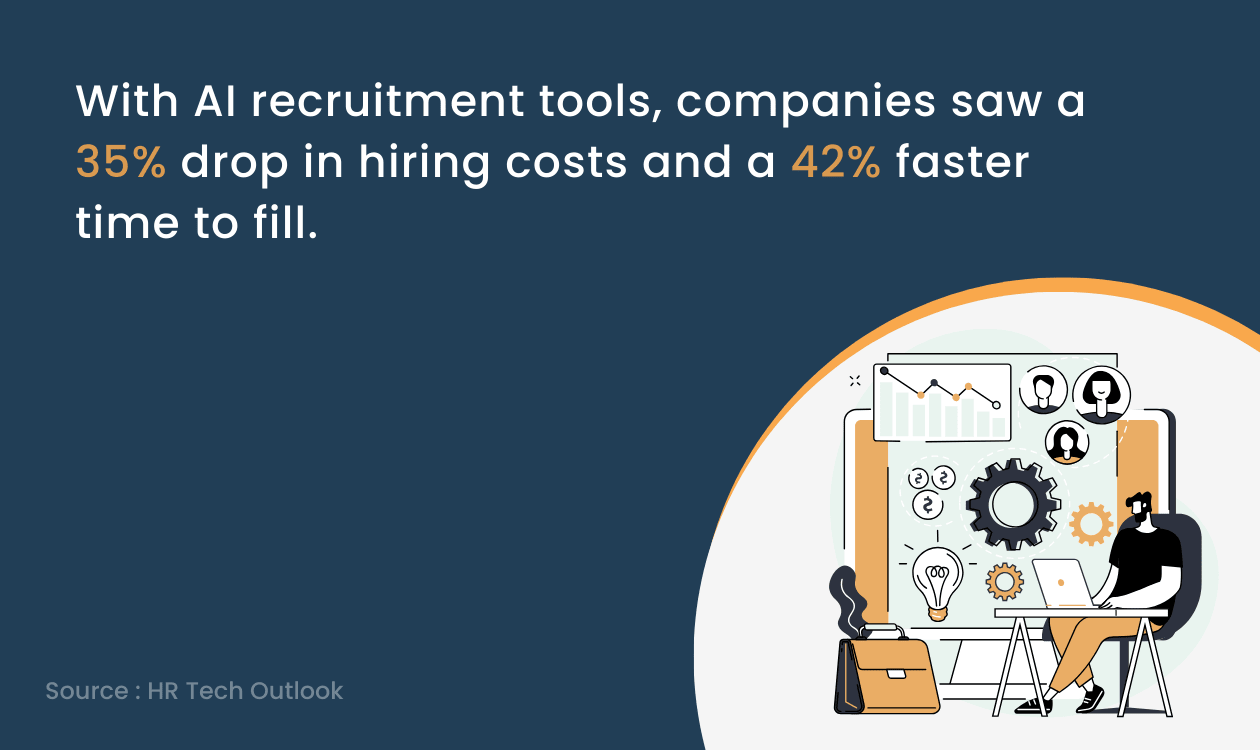
According to the HR Tech Report, businesses using AI recruitment software have seen a 35% reduction in the cost per hire and a 42% improvement in time to fill.
Key features include:
- AI-powered candidate screening to surface top talent quickly and reduce manual workload.
- Automated communication for a responsive, engaging candidate experience.
- Centralised applicant tracking to facilitate team collaboration and improve visibility.
- Customisable analytics dashboards to monitor key recruitment metrics in real-time.
- Seamless integration with job boards and social media platforms for wider reach.
- Built-in compliance tools to help meet data protection regulations such as the GDPR.
How Smart Recruitment Software Reduces Recruitment Cost
Recruitment software is designed to streamline the entire hiring process, delivering significant cost savings across multiple areas of your recruitment strategy. Here’s how these tools can directly reduce your recruitment costs:
-
Streamlining the Hiring Process
Automation speeds up key stages, such as candidate screening, interview scheduling, and communication. By reducing delays, recruitment software shortens the time-to-hire, ensuring quicker onboarding and less lost productivity.
-
Reduces Reliance on External Agencies
With recruitment software, internal teams can handle sourcing, screening, and communication, reducing the need for expensive recruitment agencies and saving on agency fees.
-
Reducing time-to-hire
Automated scheduling, AI-driven resume parsing, and intelligent shortlisting drastically cut the time required to move candidates through the pipeline, helping organisations fill vacancies faster and maintain productivity.
-
Minimising manual administrative tasks
Time-consuming administrative tasks, such as reviewing applications and scheduling interviews, are automated, freeing up HR staff to focus on more strategic responsibilities. This efficiency allows teams to manage more hires simultaneously, reducing operational costs.
-
Improving hiring accuracy
Advanced analytics help assess candidate fit more precisely. By reducing mis-hires and enhancing the quality of hire, organisations avoid the costs associated with early turnover, poor performance, and rehiring.
By streamlining tasks, improving candidate quality, and leveraging data, smart recruitment software ensures more efficient and cost-effective hiring, ultimately improving your bottom line.
How Recruitment Software Transformed Results?
The Challenge:
A growing tech company faced high recruitment costs due to manual processes and reliance on external agencies. Their hiring cycle was slow, with tasks like CV screening and interview scheduling consuming valuable time, which led to increased costs and prolonged vacancies.
The Solution:
The company implemented iSmartRecruit, an AI-driven recruitment software that automated job postings, candidate screening, and interview scheduling. The platform also provided valuable analytics for tracking key metrics, such as time to hire and cost per hire.
Before iSmartRecruit:
- Time-to-Hire: 60 days
- Agency Reliance: 40% of hires were through agencies.
After iSmartRecruit:
- Time-to-Hire: Reduced to 35 days (42 days faster)
- Agency Reliance: Dropped to 10%, reducing external fees.
Results:
The company saw significant cost savings by speeding up the hiring process and reducing dependence on agencies. The streamlined process resulted in faster role fill times and higher-quality candidates, improving overall efficiency.

How to Choose Cost-Effective Recruitment Software
Selecting the right recruitment software is crucial for building a sustainable and cost-effective hiring process.
Here are key considerations to guide your decision:
-
Scalability and Customisation
Opt for a solution that grows with your business and offers flexible customisation, whether it’s adapting workflows or managing increased hiring volume.
-
User-Friendly Interface and Support
A simple, intuitive design helps your team get started quickly. Strong customer support and training resources are also vital for long-term success.
-
Compliance with Data Protection Laws
Ensure the software complies with regulations like the General Data Protection Regulation (GDPR). Look for features such as secure data storage, user access controls, and compliance tools.
-
Trial Periods and User Reviews
Use free trials to test the platform’s usability and features. Check user reviews to understand real-world performance, support quality, and reliability.
Conclusion
Controlling recruitment costs is essential for any organisation seeking long-term success. Transitioning from outdated methods to recruitment software can transform your hiring approach, making it faster, more effective, and more affordable.
Whether you're expanding your team or refining your strategy, innovative hiring tools provide the clarity and capability to grow with confidence.
Frequently Asked Questions (FAQs)
1. What does recruitment cost mean?
Recruitment cost means the total expense a company spends to attract, evaluate, hire, and onboard new employees. It includes job advertising, recruiter time, screening, interviews, hiring tools, background checks, and onboarding.
2. How do you calculate cost per hire?
Cost per hire is calculated by dividing total recruitment expenses by the number of hires.
Cost per hire = Total recruitment expenses ÷ Number of hires
3. How does recruitment software reduce recruitment cost?
Recruitment software reduces recruitment cost by automating candidate screening, interview scheduling, communication, and applicant tracking. This saves recruiter time, reduces manual work, and lowers hiring expenses.
4. How does recruitment software improve ROI?
Recruitment software improves ROI by reducing time-to-hire, lowering hiring expenses, improving candidate quality, and helping HR teams make better recruitment decisions using data.
5. Can AI recruitment software lower hiring expenses?
Yes. AI recruitment software can lower hiring expenses by shortlisting suitable candidates faster, reducing manual screening time, improving hiring accuracy, and helping recruiters focus on high-value tasks.
About the Author