


The way organisations find and hire talent has changed permanently. Job seekers no longer wait for newspaper ads or visit physical job centres they search on their phones, research employers on social media, read employee reviews on Glassdoor and decide whether to apply based on what they find online, often before they have even looked at the job description. In this environment, recruitment that is not digital is recruitment that is invisible to a significant portion of the talent market.
Digital recruitment is not simply a modern version of traditional hiring. It is a fundamentally different approach one that uses online platforms, social media, data analytics and technology to attract, engage and convert the right candidates more efficiently and at greater scale than any offline method can achieve. According to research, 79% of candidates use online resources during their job search, which means the organisations that have invested in a strong digital presence and a coherent online hiring strategy consistently reach better candidates faster and at lower cost than those that have not.
This guide covers what digital recruitment means in practice, the specific advantages it delivers over traditional approaches, and seven practical tips for building a digital recruitment strategy that actually works in 2026 not as a collection of disconnected tactics, but as a coherent system for attracting and hiring the talent your organisation needs.
TL;DR
- Digital recruitment uses online platforms, social media, automation and technology to attract and hire candidates more efficiently, at greater scale and with better ROI than traditional methods.
- Key advantages over traditional recruitment: wider geographic reach, significantly higher efficiency through automation, and stronger return on investment.
- The 7 most effective digital recruitment tactics in 2026: sharing relevant employer brand content, social media recruiting, website optimisation, UTM campaign tracking, recruitment metrics monitoring, employer reputation building and active candidate communication.
- Tracking recruitment campaigns with UTM codes and monitoring metrics such as time-to-hire, source of hire and offer acceptance rate is essential for continuous improvement.
- Building a strong employer brand and maintaining transparent, timely communication with applicants are the two most impactful actions for attracting top talent at scale.
Every business is constantly growing, it may be some inches, but still, they are. Consequently, nowadays, top talent has more and more opportunities. Furthermore, things become difficult for recruiters. To attract and grab the attention of qualified talent, recruiters and hiring managers have to implement some recruitment marketing strategies. Learn meaningful recruitment marketing strategies and 7 tips to build strong digital recruitment.
What is Digital Recruitment?
Digital recruitment is something that is also known as online recruitment or social recruitment.
During the process of hiring, whenever a recruiter, hiring manager, or human resource person utilizes social media platforms or any other technology in order to attract the maximum candidate and hire the great employee is known as digital recruitment.
The Internet and mobile devices are the two major aspects of digitalization. And play a vital role in each working sector, including recruitment. This recruitment using the internet is what makes digital recruitment by adding extra benefits to the process of recruitment.
Key digital recruitment tactics include:
- Digital job posting and advertising across job boards, social media and programmatic platforms
- Posting on career sites with optimised, brand-consistent content
- Mobile recruiting designed for smartphone-first candidate behaviour
- Social recruiting across LinkedIn, Instagram, Facebook, TikTok and professional communities
- Pre-employment assessment tools that screen and evaluate candidates digitally
These are the recruitment tactics that surely clarify digital recruitment and how the internet and other technologies become essential components of the recruiting process.
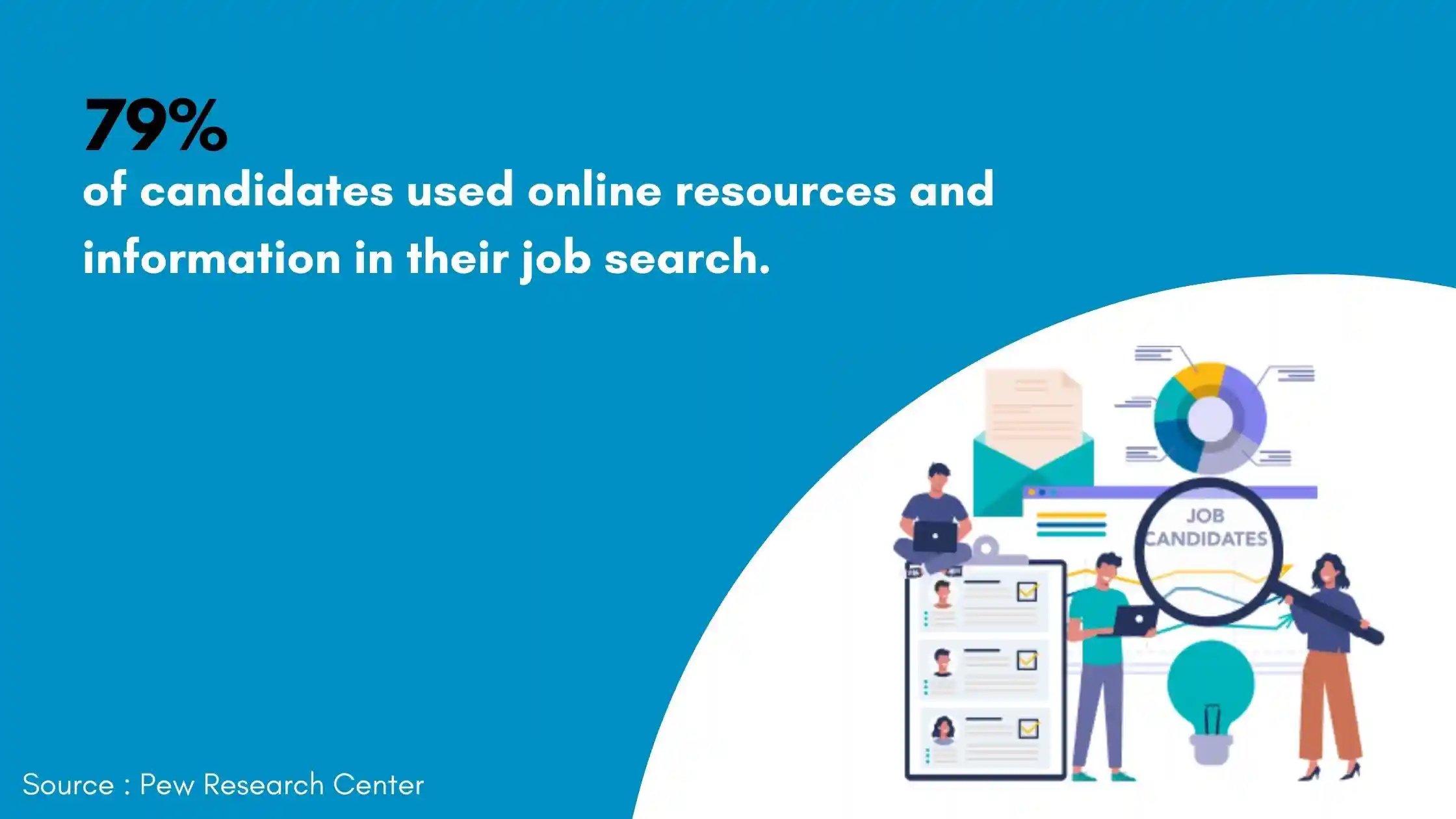
According to the research, 79 per cent of candidates used online resources and information in their job search.
What are the Advantages of Digital Recruitment?
Before we can move to the next step of digital marketing of the recruitment process, let's know the benefits of digital recruitment. Below are a few advantages of digital recruitment.
- Wider reach:- The range of attracting and hiring employees to become wider. Recruiters and hiring managers can easily promote the job to national and international candidates.
- High efficiency:- Sourcing, attracting, selecting, and hiring are less time-consuming. This is because the communication with applicants turns into a manageable and transparent part due to the AI automation recruitment process.
- High ROI:- While you invest in developing and making the recruitment process fruitful, the ROI is always high compared to the traditional method. Reason? Because through an effective way, recruitment you will find out top talent earlier.
7 Tips for Building a Strong Digital Recruitment Strategy
Find out what a perfect digital recruitment strategy looks like. These simple tips will let you select and engage the right people in your business Job hunting is quite a game these days. Employers have various channels to search for experts and professionals. But the main ace up their sleeve is obviously technology.
It got way easier to look for potential workers because of the internet. Social media and job search platforms connect job seekers with employers and greatly accelerates the recruitment process. One does not have to go for a face-to-face job interview to get a job.

Skype or Zoom video conferencing is not a worse alternative. What complicates the search for personnel is an increased level of competition between companies and enterprises, especially when it comes to industries with high skills shortages, like the field of cybersecurity.
These are 7 tips for developing a digital recruitment strategy aimed to help businesses find the best talents faster.
#1: Share relevant content
Every business that is focused on continuous growth should not only retain the current workforce but also think about ways to attract new talent. Using your website to grab the attention of potential employees is a proven strategy to achieve this goal. Most business owners view their website as a customer entry point, but you can go even further if you add specific content to make potential employees want to apply for a job in your company.
This can be either a weekly blog that describes the benefits of working in your industry, short videos to help people pass an interview successfully, or even regularly updated feedback from your employees on how they feel being a part of your company.
When creating video content for recruitment, you can start with an AI video generator to turn a script into raw footage, then use an AI video editor to produce polished employer branding and interview prep videos with minimal effort - and don't forget to add subtitles to video to ensure your content is accessible to all candidates, including non-native speakers.
#2: Use social media
Most HR managers will unanimously confirm that social media are one of the most effective tools in many recruitment strategies. Indeed, there is nothing easier for a job-seeker than monitoring social media in their pursuit of a new workplace.
Besides looking for candidates on specialized social media platforms like LinkedIn, you can post your job ads in various communities or chats on Facebook, Telegram, and other social media with equal success. This can be explained by the fact that active browsing for a job may put considerable pressure on a person while chasing new career opportunities on a favourite social media platform can help job seekers enjoy the process.
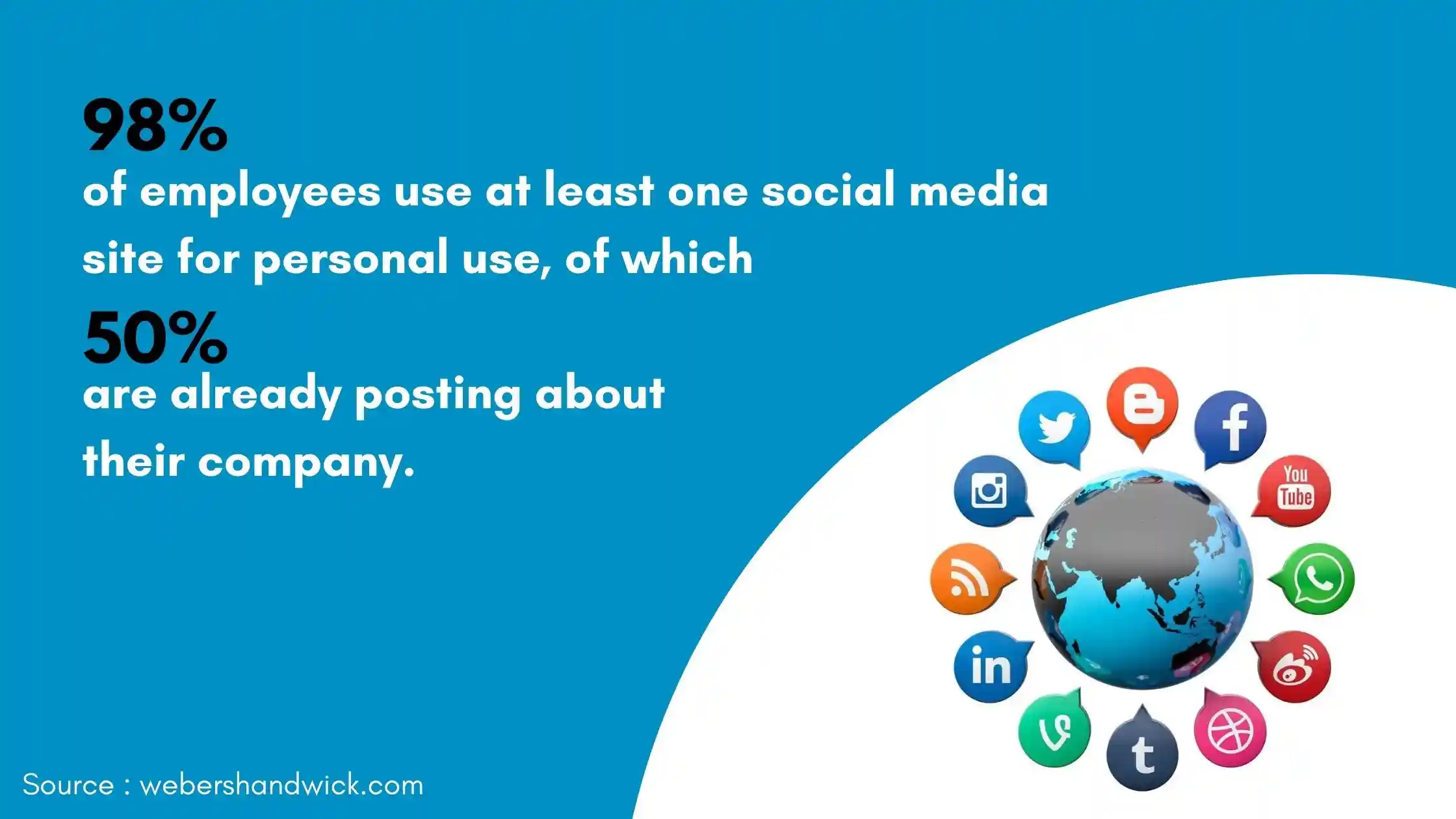
98% of employees use at least one social media site for personal use, of which 50% are already posting about their company. (Source)
#3: Ensure website optimization
To make sure potential candidates will be able to find you on the web, you should also think of investing in website optimization. Alongside a good-looking and responsive design, it is important to tailor your website to different devices, including smartphones which account for over 60% of all online searches.
A mobile-friendly website or a progressive web app are two widely-used solutions that let you compete with mobile apps and remain appealing to users. If you own a website without mobile optimization, the idea to find app developers and improve your site for mobile users seems a good one if you are concerned about your business development.
#4: Harness UTM technology
The purpose of UTM technology is to give you the ability to track recruiting campaigns through Google Analytics options. UTM links are used to analyze the users who happen to click on your web page. UTM code is applied to URLs and lets you see how many users are actually interested in what you offer and where they come from. To improve the recruitment process, you can set up a new UTM link for every single page with a specific vacancy. This segmentation will also help you see which campaign parameters work best for you and give positive recruitment results.
#5: Check recruitment metrics
Another feature of every successful digital recruitment strategy is the use of recruitment software that allows for monitoring recruitment metrics. Some of the major benefits of such tools include an ability to calculate the selection ratio, track manager satisfaction and candidate job satisfaction, assess the quality of hire and enhance the effectiveness of the recruitment funnel. Many recruiting agencies equally decide to integrate chatbot-based tools that allow for an accurate and quick analysis of CVs and the detection of the best-suited applicants.
#6: Build a strong reputation
When you are at a start-up level, it requires efforts to persuade a high-level specialist to relocate to your company. However, as long as your business grows, employees become more willing to work in your place. To strengthen your company’s image in the eyes of potential candidates, you should develop a good branding strategy to make your company look reputable as fast as possible. Brand awareness comes from positive reviews on your website as well as good feedback about your business on social media. All job seekers tend to research the company they are going to apply for. In this case, a good online reputation is a guarantee you will attract competent and talented workers faster.
#7: Be in touch with applicants
It may sound a bit strange, but still, many business owners neglect the importance of sharing the contacts of their HR department both on a website and on social media in a proper way. No matter how appealing your company may look for a potential job candidate who has just opened your website, these positive impressions can quickly disappear if no contact information is provided. The Careers section on a website should also be followed by the relevant contact information of your HR specialists. Moreover, the more communication channels you will leave there (phone, email, different social media accounts), the better your chances of getting more job requests. Also, try to make the About Us section as detailed as possible. Do not think that most job seekers will just skip it, but instead, view this section as a key reason that will persuade them to send you their CVs.
Conclusion
Digital recruitment is not a trend that organisations can afford to engage with selectively. In 2026, it is the standard and the gap between organisations with a coherent digital recruiting strategy and those still relying on traditional, reactive hiring methods keeps widening. The seven tips covered in this guide give a practical, implementable framework for closing that gap: building employer brand content that works across the right platforms, using social media strategically rather than sporadically, optimising the digital candidate experience from careers page to offer, tracking campaign data with UTM codes, measuring the metrics that reveal what is actually working, investing in a reputation that draws candidates in before they even see a vacancy, and communicating in ways that keep candidates engaged rather than pushing them toward competitors who respond faster.
The most effective digital recruitment strategies treat each of these elements as part of a connected system not a checklist of tactics to activate and leave running. The organisations consistently attracting the best candidates are those that continuously measure, iterate and improve, using data and candidate feedback to make their digital presence and hiring process progressively more effective. Whether you are building a digital recruitment strategy from scratch or upgrading an existing one, the starting point is the same: treat every digital touchpoint as part of the candidate experience, and optimise it accordingly. The right recruitment technology stack makes this continuous improvement manageable at scale turning what could be a complex, multi-channel operation into a coherent, measurable and consistently improving talent attraction system.

FAQs - Frequently Asked Questions
1. What is digital recruitment?
Digital recruitment is the process of hiring candidates using online platforms, social media, and technology. It helps recruiters reach a wider audience efficiently and improves the overall hiring process.
2. How does iSmartRecruit support digital recruitment?
iSmartRecruit offers tools that simplify candidate sourcing, job posting, and communication. Its AI-powered features help recruiters quickly identify top talent and streamline the recruitment workflow.
3. Why is social media important in recruiting?
Social media platforms allow recruiters to engage with potential candidates where they spend time. This increases visibility of job openings and helps build a good employer brand.
4. What benefits does website optimisation bring to recruitment?
Optimised websites provide a better experience for candidates, especially on mobile devices. This increases applications and helps recruiters attract more qualified candidates efficiently.
5. What is UTM tracking and how does it help recruitment?
UTM tracking lets you see exactly which job boards, social platforms or campaigns are driving the best candidates, so you can invest your budget where it actually works.
6. How quickly can a digital recruitment strategy show results?
Most organisations see measurable improvements in application volume and source-of-hire data within four to six weeks of implementing a structured digital strategy.