
Finding and hiring the right people requires more than publishing job vacancies and reviewing applications. Businesses need an organised way to attract candidates, manage recruitment pipelines, maintain relationships and make informed hiring decisions. Talent acquisition software brings these activities together through applicant tracking, candidate sourcing, automation and recruitment analytics.
The right platform can help recruitment agencies, staffing companies and corporate HR teams manage hiring more efficiently while improving communication and candidate experience.
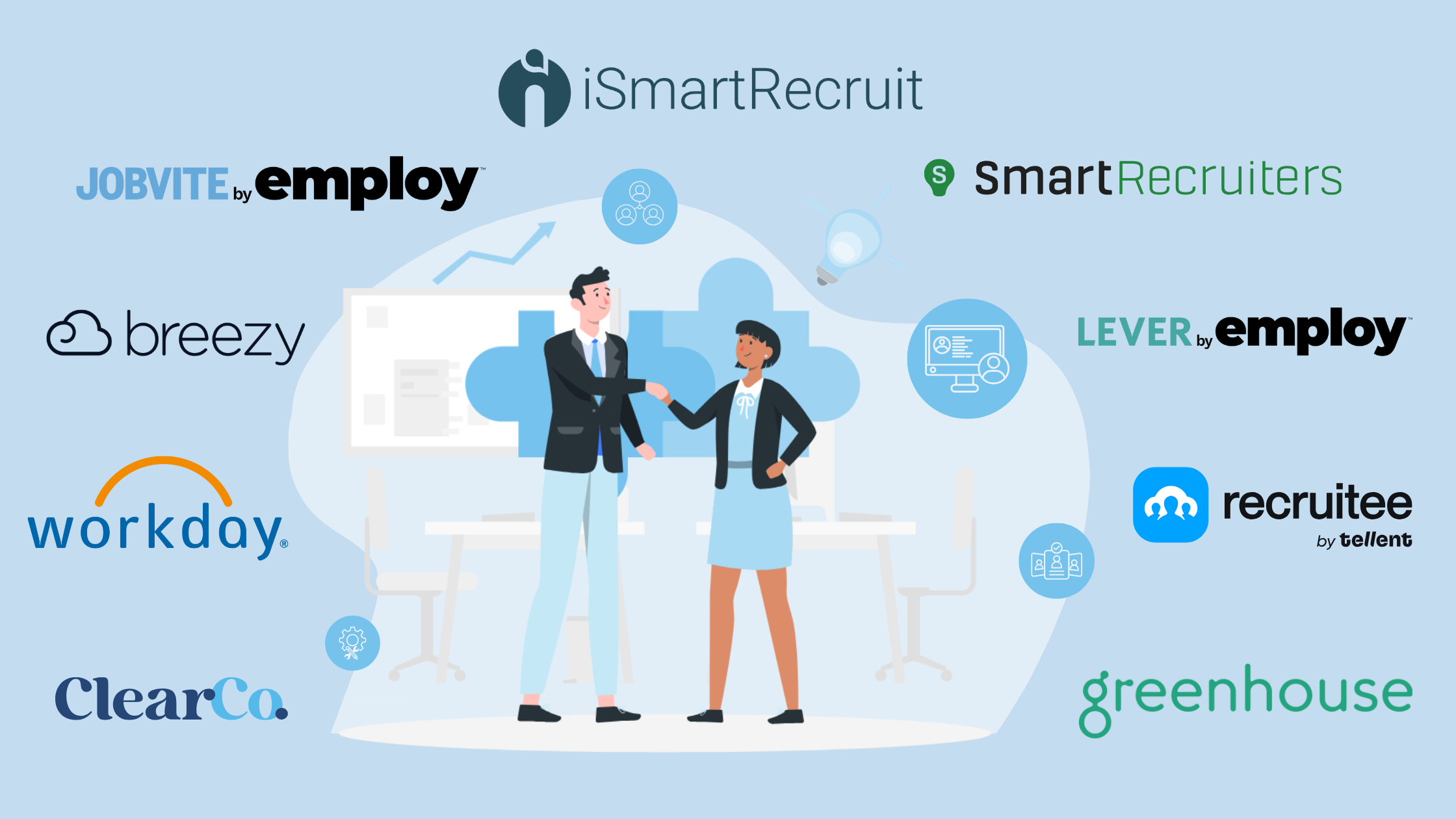
This article compares ten talent acquisition software platforms for 2026, including their key capabilities, intended users, strengths and potential limitations. It also explains what to consider when selecting a system for your recruitment requirements.
TL;DR
- Talent acquisition software helps organisations manage candidate sourcing, applications, recruitment workflows and hiring activities.
- iSmartRecruit, Breezy HR, Recruitee, Workable and Greenhouse are among the platforms worth evaluating for different recruitment requirements.
- Key capabilities to compare include applicant tracking, recruiting CRM, AI-assisted matching, workflow automation, reporting and integrations.
- Pricing, implementation requirements and available features vary between providers.
- The right solution depends on your hiring volume, team structure, recruitment model, budget and future requirements.
What Is Talent Acquisition Software?
Talent Acquisition Software is not just a smart assistant at all times, but it can be a big help for companies that require new staff members. This software does activities by itself, like posting jobs, finding suitable candidates, scheduling interviews, and even doing paperwork on your behalf. The property of AI to link workers to projects that suit them best, thus facilitating companies to employ the best staff in a simple way, is among the main reasons why machines are getting smarter.
For example, the marketing agency needs a Social Media Manager, which is a good example. Without going through heaps of resumes manually, they utilise Talent Acquisition Software to find what they are looking for. The software can automatically post a job on several websites. After that, AI goes through the CVs received and promptly identifies the individuals with the right skills like good content creation, social media analysis experience, and familiarity using certain social platforms. The software automatically sets up interviews with the best candidates and sends appointment reminders. Later, the interviewers elaborate on their ideas about each and select one from the software system.
Last but not least, the software is involved in the onboarding process, it sends the job offer and manages the new hire's paperwork. This not only saves the recruitment agency time but also enables them to find the best person for the job, thus making them able to start as soon as possible.
Why do HR’s Need Talent Acquisition Software in 2026
The job market in 2026 is fast-paced, competitive, and relies heavily on technology. Companies need to use AI & automation, and data to find and keep the best employees. Here's why Talent Acquisition Software is so important in 2026:
- Smarter Hiring with AI: AI automatically looks through resumes, ranks candidates, and matches them to jobs.
- Keeps Data Safe: This AI technology ensures the safe handling of applicant entries, and it is in accordance with the GDPR regulations.
- Find Candidates Everywhere: The new way of finding people these days is to post it on sites, social networks, and career sites so that organisations can have more options.
- Makes Smart Decisions with Data: The tool in question proposes real-time reports about recruitment which help businesses to optimise the strategies they have in place.
- Better Candidate Experience: It activates messages automatically and thereby shortens the time for the employees to finish the onboarding process this, in turn, helps the company’s image among the potential hires.
- Saves Time and Money: It is a system designed for hiring which specifically issues alerts; it cuts costs and uses artificial intelligence for automated tasks such as searching for, and even more so screening, potential employees.
Top 10 Talent Acquisition Software in 2026
1. iSmartRecruit
iSmartRecruit is an AI-powered recruitment software platform designed for recruitment agencies, staffing firms, executive search firms and corporate HR teams. It brings applicant tracking, recruiting CRM and recruitment automation together to help teams manage hiring activities from candidate sourcing through placement.
The platform supports candidate and client management, recruitment workflows, AI-assisted matching, reporting and team collaboration. Its capabilities are designed to help recruiters organise candidate information, manage talent pipelines and reduce repetitive administrative work.
iSmartRecruit also provides AI capabilities such as AI agents, generative AI, conversational AI and candidate matching to support different recruitment activities.
Key Features:
-
AI Recruitment Agents: Use specialised AI agents for candidate sourcing, executive research, headhunting, company insights and recruitment workflows.
-
AI Candidate Matching: Identify suitable candidates using AI-powered skills analysis, contextual intelligence and job-candidate matching.
-
Generative AI: Generate job descriptions, candidate summaries, recruiter notes, interview feedback and personalised recruitment emails.
-
Conversational AI: Engage candidates through AI-powered chatbots and voice agents for candidate queries, screening and interview scheduling.
-
MCP Connector: Connect recruitment data with ChatGPT and Claude to search, compare and analyse candidate profiles using natural language.
-
Applicant Tracking System (ATS): Manage job openings, candidate applications, recruitment pipelines, interview processes and hiring stages.
-
Recruiting CRM: Manage candidate and client relationships, maintain talent pools, track interactions and nurture recruitment leads.
-
AI-Powered Candidate Sourcing: Discover potential candidates, automate talent research and build targeted candidate pipelines.
-
Recruitment Automation: Automate resume parsing, candidate screening, follow-ups, interview scheduling, task management and recruitment workflows.
-
Executive Research and Market Mapping: Research companies, identify executive talent, analyse leadership structures and build market maps.
Free Trial: Available on request.
Pricing: Contact [email protected]
Suitable for:
- Recruitment and staffing agencies.
- Executive search firms.
- Corporate talent acquisition teams.
- Businesses managing multiple recruitment workflows.
Pros:
- AI-powered automation for faster hiring.
- Strong GDPR compliance & data security.
- Multi-language support for global hiring.
- Highly customisable workflows & reports.
- Seamless integration with job boards & HR tools.
Cons:
- Advanced customisation requires an initial setup time.
- Limited offline functionality.
G2 Ratings: 5/5
Official website: https://www.ismartrecruit.com/
2. Breezy HR
Breezy HR is a modern and user-friendly recruiting solution designed specifically for small to medium-sized businesses. It is a team-based hiring program that checks out the applications automatically and also the recruitment marketing. The platform is straightforward to use and designed with a drag-and-drop feature, which assists recruiters in the hiring process.
The platform focuses on simplifying recruitment workflows through job posting, candidate management and team collaboration. Its visual interface helps teams understand application progress and coordinate hiring activities.
Key Features:
- Applicant tracking and visual hiring pipelines.
- Job posting and distribution.
- Candidate communication.
- Interview scheduling.
- Recruitment workflow management.
- Team collaboration and candidate evaluation.
Free Trial: Yes
Pricing:
- Bootstrap: Free - Per month/Unlimited user
- Startup: $NULL - Per month/Unlimited user
- Growth: $NULL - Per month/Unlimited user
- Business: $NULL - Per month/Unlimited user
Suitable for:
- Small businesses and startups.
- Growing HR teams.
- Organisations looking for straightforward recruitment workflows.
Pros:
- Simple, easy-to-use interface.
- Affordable pricing for small businesses.
- Automated resume screening & candidate scoring.
Cons:
- Lacks advanced AI automation for high-volume hiring.
- Limited customisability compared to enterprise solutions.
G2 Ratings: 4.4/5
3. Recruitee
Recruitee is a collaborative talent acquisition software tailored for fast-growing companies. It enables HR teams to automate hiring workflows, source candidates across multiple platforms, and manage employer branding.
Its collaborative approach allows recruiters and hiring managers to participate in candidate evaluation and recruitment decisions. Teams can organise hiring pipelines and manage recruitment activities through a central system.
Key Features:
- Applicant tracking and candidate management.
- Customisable recruitment pipelines.
- Collaborative hiring workflows.
- Recruitment reporting.
- Career site and job posting capabilities.
- Recruitment integrations.
Free Trial: Yes (Offers 18 days free trial)
Pricing:
- Start: €216 - Per month/5 job slots & unlimited users
- Grow: €274 - Per month/Unlimited job slots & users
- Optimise: Available on request.
Suitable for:
- Small to mid-sized businesses.
- HR teams & in-house recruitment.
Pros:
- Highly collaborative & user-friendly.
- Strong job board integrations.
- GDPR-compliant with secure data management.
Cons:
- Limited AI automation for large-scale hiring.
- Not ideal for recruitment agencies handling high-volume hiring.
G2 Ratings: 4.5/5
4. Workable
Workable is a smart hiring platform that uses AI to help businesses automate their hiring. It's designed to make it easy for hiring managers and recruiters to work together.
It uses AI to find potential employees, automatically posts job openings, schedules interviews, and tracks applicants smoothly. This makes it a great choice for both small and large companies. Workable also lets you post jobs to many job boards with just one click, and it has tools that work well on phones. This makes hiring faster, more organized, and cheaper.
Key Features:
- AI-Powered Candidate Sourcing & Job Matching.
- Automated Job Board Posting & Distribution.
- Interview Scheduling & Team Collaboration.
- Mobile-Optimised ATS with Hiring Alerts.
- GDPR & Compliance Management.
Free Trial: Yes (Offers 15 days free trial)
Pricing:
- Starter: $NULL - Per month/user
- Standard: $? - Per month/user
- Premier: $? - Per month/user
Suitable for:
- Startups and small businesses.
- Mid-sized organisations.
- HR teams seeking organised recruitment workflows.
Pros:
- AI-powered hiring automation.
- User-friendly with strong job board integrations.
- GDPR-compliant with data security features.
Cons:
- Not ideal for enterprise-level recruitment.
- Limited deep analytics compared to advanced ATS.
G2 Ratings: 4.6/5
5. Greenhouse
Greenhouse is a high-quality hiring software designed for large companies. It focuses on organized hiring, diverse hiring practices, and using data to make good decisions.
The platform supports organisations that want to introduce more structure into recruitment decisions. Its interview kits and scorecards help hiring teams evaluate candidates against defined criteria rather than relying entirely on informal feedback.
Key Features:
- Applicant tracking.
- Structured interview processes.
- Interview kits and scorecards.
- Hiring team collaboration.
- Recruitment reporting and analytics.
- Integration capabilities.
- Configurable recruitment workflows.
Free Trial: Available on request.
Pricing: Contact sales.
Suitable for:
- Mid-sized organisations.
- Large businesses.
- Companies prioritising structured hiring and consistent candidate evaluation.
Pros:
- Strong data analytics & hiring reports.
- AI-driven hiring & structured interview workflows.
- GDPR-compliant & scalable.
Cons:
- Expensive for small businesses.
- Steep learning curve for new users.
G2 Ratings: 4.4/5
6. SmartRecruiters
SmartRecruiters provides talent acquisition software for organisations managing recruitment across multiple departments and locations. Its platform supports applicant tracking, candidate engagement and recruitment workflows.
It is designed to help larger recruitment teams coordinate hiring activities while connecting recruitment processes with other business systems. Organisations can evaluate its capabilities based on their hiring volume, integration requirements and talent acquisition structure.
Key Features:
- AI-Powered Job Matching & Candidate Sourcing.
- Collaborative Hiring & Automated Interview Scheduling.
- Job Board Integrations & Employer Branding Features.
- GDPR-Compliant Secure Data Handling.
- Custom Analytics & Advanced Reporting.
Free Trial: Available on request.
Pricing: Contact sales.
Suitable for:
- Mid-sized to large businesses.
- Enterprises requiring end-to-end hiring automation.
Pros:
- Scalable & AI-powered automation.
- Strong CRM & recruitment marketing tools.
- GDPR-compliant.
Cons:
- Costly for small businesses.
- Requires training for full functionality.
G2 Ratings: 4.3/5
7. Jobvite
Jobvite is a talent acquisition platform that uses AI and focuses on recruitment marketing, automatically engaging with candidates, and managing the hiring pipeline.
It helps companies find candidates, automatically send email campaigns, and track how well their recruiting is going in real time. Jobvite's AI chatbot and automated workflows help businesses hire faster and keep candidates interested throughout the process.
Key Features:
- Applicant tracking and candidate management.
- Recruitment marketing capabilities.
- Candidate engagement and communication.
- Recruitment workflow management.
- Hiring analytics and reporting.
- Recruitment integrations.
Free Trial: Available on request.
Pricing: Contact sales.
Suitable for:
- Mid-sized and large organisations.
- Recruitment teams with candidate engagement requirements.
- Businesses focusing on recruitment marketing.
Pros:
- Strong recruitment marketing tools.
- AI-powered hiring & automation.
Cons:
- Pricing can be high for SMBs.
- Requires setup & training.
G2 Ratings: 4/5
8. LeverTRM
LeverTRM is a complete talent acquisition platform that combines applicant tracking (ATS) and candidate relationship management (CRM) into one system. It helps businesses build strong talent pools, keep track of candidates, and connect with top talent.
LeverTRM is known for using data to drive hiring decisions, automation, and detailed reporting, making it a good fit for medium to large companies wanting to simplify their recruitment process.
Key Features:
- AI-Driven Candidate Relationship Management (CRM).
- Automated Job Posting & AI Resume Screening.
- Data-Driven Hiring Insights & Advanced Analytics.
- Collaboration Tools for Hiring Teams.
- Customizable Hiring Pipelines & Automated Workflows.
- Seamless Integration with HR Tech & Job Boards.
Free Trial: No.
Pricing: Contact sales.
Suitable for:
- Mid-to-large enterprises.
- Recruitment teams focused on data-driven hiring & CRM-based recruitment.
- Companies looking for AI-powered talent engagement.
Pros:
- Combines ATS & CRM for enhanced talent acquisition.
- AI-driven candidate sourcing & engagement.
- Strong automation & analytics features.
- Excellent collaboration tools for hiring teams.
Cons:
- High learning curve for beginners.
- Expensive for small businesses.
- Requires initial setup & customization.
G2 Ratings: 4.3/5
9. Workday Recruiting
Workday Recruiting is a recruitment solution within the wider Workday enterprise platform. It helps organisations manage hiring activities while connecting recruitment with broader human capital management processes.
Its integration with the wider Workday ecosystem makes it relevant to large organisations that want recruitment information connected with employee and workforce management processes.
Key Features:
- AI-Powered Talent Acquisition & Job Matching.
- End-to-End Recruitment & Onboarding Automation.
- Employee Referrals & Candidate Engagement Tools.
- Customizable Hiring Pipelines & Talent Analytics.
- Seamless Integration with Workday’s HR & Payroll Systems.
- Global Compliance & GDPR-Adherence.
Free Trial: Yes (Offers 30-day free trial)
Pricing: Contact sales.
Suitable for:
- Large enterprises & multinational companies.
- Businesses using Workday HR for workforce management.
- Organizations looking for scalable, AI-driven hiring solutions.
Pros:
- Fully integrated with Workday’s HR ecosystem.
- AI-driven automation for faster & smarter hiring.
- Scalable for enterprises with high-volume recruitment needs.
- Strong data security & compliance features.
Cons:
- Expensive & not ideal for small businesses.
- Requires Workday HR system for full functionality.
- Setup & implementation can be complex.
G2 Ratings: 3.8/5
10. ClearCompany
ClearCompany provides talent management and recruitment solutions designed to help organisations manage hiring and related employee processes.
Its offering includes recruitment management and capabilities that connect different stages of the employee lifecycle. This makes it worth evaluating for organisations looking for a broader talent management approach.
Key Features:
- AI-Powered Candidate Sourcing & Smart Resume Parsing.
- Automated Job Posting & Hiring Workflows.
- Onboarding & Employee Performance Management.
- Recruitment Analytics & Customizable Hiring Dashboards.
- Seamless HR & Payroll Integrations.
Free Trial: Available on request
Pricing: Contact sales.
Suitable for:
- Mid-sized businesses & HR teams.
- Companies looking for integrated hiring & HR solutions.
- Businesses focused on long-term employee engagement.
Pros:
- AI-driven candidate sourcing & smart screening.
- Seamless integration with HR & payroll systems.
- Strong analytics & customizable hiring workflows.
- Includes performance management & onboarding tools.
Cons:
- Not ideal for high-volume hiring.
- Limited automation compared to advanced AI-powered platforms.
- Some features require add-ons.
G2 Ratings: 4/5
Quick Comparison
The following table provides an overview of the ten platforms and their typical use cases.
| Software | Best suited for | Key strength | Pricing model |
| iSmartRecruit | Recruitment agencies, staffing firms, executive search firms and corporate HR teams | ATS, recruiting CRM and AI-powered recruitment capabilities | Contact sales |
| Breezy HR | Small and growing businesses | Visual hiring pipelines and collaborative recruitment | Free and paid plans |
| Recruitee | Growing in-house recruitment teams | Collaborative hiring and configurable workflows | Subscription-based |
| Workable | Small and mid-sized businesses | Recruitment management and candidate sourcing | Subscription-based |
| Greenhouse | Mid-sized and enterprise organisations | Structured hiring and interview management | Custom pricing |
| SmartRecruiters | Mid-sized and large organisations | Enterprise talent acquisition workflows | Custom pricing |
| Jobvite | Mid-sized and large recruitment teams | Recruitment marketing and candidate engagement | Custom pricing |
| LeverTRM | Growing businesses and enterprise recruitment teams | Combined ATS and candidate relationship management | Custom pricing |
| Workday Recruiting | Large organisations using Workday | Recruitment within a broader HCM ecosystem | Custom pricing |
| ClearCompany | Mid-sized businesses and HR teams | Connected hiring and talent management capabilities | Custom pricing |
Pricing descriptions are indicative categories, not verified quotations. Features, packages and availability may vary by vendor, region and subscription.
Benefits of Talent Acquisition Software
Using talent acquisition software can improve how organisations manage recruitment activities and candidate relationships.
1. More organised recruitment workflows
Centralised candidate information and recruitment pipelines help teams monitor applications, manage vacancies and understand the progress of each hiring process.
2. Reduced administrative work
Automation can support repetitive activities such as candidate notifications, task reminders, interview coordination and recruitment workflow updates. This gives recruiters more time for candidate engagement and evaluation.
3. Improved candidate experience
Timely communication, organised interview scheduling and clear application updates help create a more consistent experience for candidates.
4. Better recruitment visibility
Recruitment dashboards and reporting help teams monitor hiring activity, identify pipeline bottlenecks and evaluate recruitment performance.
5. Stronger team collaboration
Shared candidate profiles, interview feedback and recruitment updates help recruiters and hiring managers coordinate decisions.
6. More effective talent pipeline management
Recruiting CRM capabilities help organisations maintain candidate relationships and build talent pools for current and future vacancies.
7. Better support for growing recruitment needs
Configurable workflows, integrations and scalable systems can help organisations adapt their recruitment processes as hiring requirements change.
How to Choose the Right Talent Acquisition Software
Selecting talent acquisition software requires an understanding of your recruitment model, hiring objectives and existing technology.
Consider the following factors before making a decision.
1. Identify Your Recruitment Requirements
Start by identifying the recruitment activities your organisation needs to manage.
For example:
- Recruitment agencies may need candidate databases, client management, placement tracking and talent sourcing.
- Executive search firms may prioritise relationship management, confidential searches and candidate research.
- Corporate HR teams may focus on applicant tracking, hiring manager collaboration and recruitment reporting.
- High-volume hiring teams may need application management, automated communication and interview coordination.
Choosing software based on your actual recruitment processes helps avoid paying for capabilities that your team may not use.
2. Evaluate AI and Automation Capabilities
AI and automation can support recruitment activities, but their usefulness depends on how they are implemented.
Evaluate whether the software offers:
- Resume parsing and candidate profile extraction.
- AI-assisted candidate matching.
- Candidate sourcing capabilities.
- Automated recruitment workflows.
- Interview scheduling support.
- Automated candidate communication.
- AI-generated recruitment content.
Also consider whether recruiters can review AI-generated recommendations and make the final hiring decisions.
3. Check ATS and Recruiting CRM Capabilities
An applicant tracking system manages applications and recruitment stages, while a recruiting CRM helps maintain candidate and client relationships.
Some talent acquisition platforms combine both capabilities.
Consider whether your organisation needs a centralised candidate database, searchable talent pools, communication history, application tracking and relationship management.
4. Review Integrations
Your recruitment software should work with the tools your team already uses.
Check integrations with:
- Job boards.
- Professional networking platforms.
- Email and calendar applications.
- Video interviewing tools.
- HRIS and HRMS systems.
- Payroll and onboarding software.
- Reporting and analytics tools.
Confirm whether integrations are native, available through third-party connectors or require additional costs.
5. Consider Customisation and Scalability
Your recruitment requirements may change as your organisation grows.
Evaluate whether the software supports configurable hiring stages, user permissions, approval workflows, reporting and multiple recruitment teams.
The system should accommodate your current requirements without creating unnecessary complexity.
6. Evaluate Reporting and Analytics
Recruitment reporting helps organisations understand how their hiring processes are performing.
Look for reporting capabilities covering:
- Time to hire and time to fill.
- Source of hire.
- Candidate pipeline progress.
- Interview-to-offer conversion.
- Recruitment activity.
- Recruitment team performance.
Choose metrics that support your actual hiring objectives rather than relying on the number of reports available.
7. Review Data Security and Compliance
Recruitment systems handle personal information, including candidate contact details, employment history and CVs.
Review data access controls, retention settings, security measures and the provider's support for relevant privacy regulations.
For organisations hiring across different countries, consider the data protection requirements applicable to each operating location.
8. Compare Pricing and Implementation Costs
Software costs can vary according to the number of users, recruitment volume, available modules and implementation requirements.
Before choosing a provider, ask about:
- Subscription fees.
- User or recruiter licensing.
- Implementation and onboarding costs.
- Additional module charges.
- Integration costs.
- Support and maintenance.
- Contract length and renewal conditions.
Request a demonstration and a detailed quotation before making a final decision.
Why iSmartRecruit Stands Out as a Talent Acquisition System
iSmartRecruit brings applicant tracking, recruiting CRM and AI-powered recruitment capabilities together in one platform.
It is designed for recruitment agencies, staffing firms, executive search firms and corporate recruitment teams that need to manage candidate information, relationships and hiring workflows.
Some capabilities worth evaluating include:
- Applicant Tracking: Manage candidate applications, recruitment stages and hiring workflows.
- Recruiting CRM: Maintain candidate and client information, communication history and talent pools.
- AI Candidate Matching: Use AI-assisted matching to identify candidates based on job requirements.
- Candidate Sourcing: Search for potential candidates through recruitment databases and sourcing capabilities.
- Workflow Automation: Automate repetitive recruitment activities, candidate follow-ups and workflow tasks.
- Recruitment Analytics: Monitor recruitment activity and access reporting insights.
- Team Collaboration: Coordinate recruitment activities and share candidate information across teams.
- AI Capabilities: Explore AI agents, generative AI and conversational AI for relevant recruitment workflows.
The platform may be worth considering if your organisation wants to manage recruitment operations, candidate relationships and automation through one connected system.
Explore iSmartRecruit's recruitment capabilities or request a personalised demo to understand how the platform fits your hiring requirements.
Conclusion
Talent acquisition software helps organisations manage the different activities involved in finding, evaluating and hiring candidates. From applicant tracking and candidate sourcing to recruitment automation and analytics, the right system can make recruitment processes more organised and measurable.
However, the best solution depends on your organisation's hiring model, recruitment volume, team structure, integration requirements and budget.
Compare the available platforms based on their actual capabilities, implementation requirements and suitability for your workflows. A practical evaluation will help you select a talent acquisition system that supports your current hiring needs and future growth.
If you are evaluating a platform that combines applicant tracking, recruiting CRM and AI-powered recruitment capabilities, consider exploring iSmartRecruit and its available features.
Frequently Asked Questions (FAQs)
1. What is Talent Acquisition Software?
The talent acquisition system is a tech tool that helps businesses find, track, and manage job applicants efficiently using AI, marketing, and hiring data.
2. How does Talent Acquisition Software improve hiring?
By automating repetitive tasks like posting jobs, looking at resumes, and scheduling interviews, talent acquisition software makes hiring faster and improves the experience for job applicants.
3. Is AI important in Talent Acquisition Software?
Yes! AI features like candidate matching, predictions about who will be a good fit, and automated communication help recruiters find the best people faster and make better hiring decisions.
4. How much does Talent Acquisition Software cost?
The price depends on what the software does, how many people will use it, and how big your company is. Most companies offer custom pricing plans that fit your specific needs.
5. What industries benefit from Talent Acquisition Software?
Industries like tech, healthcare, finance, retail, and staffing agencies get the most out of it because they need to hire efficiently and handle lots of applicants.
About the Author