

Finding the right senior leader requires far more than a standard hiring process. Executive hiring is strategic because top leaders are often passive, highly selective, and difficult to reach through traditional channels. The stakes are also considerably higher: a poor executive hire can cost an organisation several times the role's annual salary, disrupt teams, and slow strategic progress for years.
In this article, we explore 10 proven executive search strategies to help you attract top leadership talent, reduce hiring risks, and make better executive hiring decisions.
TL;DR
- Clarify executive roles thoroughly to ensure alignment and success.
- Use storytelling and candidate-centric approaches to engage top executives effectively.
- Expand networking beyond traditional platforms to access a broader talent pool.
- Leverage technology and data-driven insights for informed decision-making.
- Prioritise cultural fit and diversity to build strong and innovative leadership teams.
What Are Executive Search Strategies?
Executive search strategies are structured approaches used to identify, attract, assess, and hire senior-level leaders for critical business roles. These strategies go beyond traditional recruitment by focusing on passive candidates, leadership fit, market mapping, confidential outreach, and long-term organisational goals.
A strong executive search strategy helps companies hire leaders who can drive growth, improve decision-making, and support business transformation. It includes defining leadership requirements, researching the executive talent market, engaging high-value candidates, evaluating cultural fit, and using data-driven recruitment tools to make better hiring decisions.
Top Executive Search Strategies for Hiring Leaders
Executive search is a world apart from general recruitment. It is not simply about filling a vacancy; it is about finding the right person to lead, inspire, and make critical decisions that shape the direction of an organisation. These roles demand discretion, deeper networks, and a highly tailored assessment process. Successful recruiters do not rely on instinct alone. They bring together data, technology, and human insight to uncover leaders who can genuinely make a difference.
1. Define Role Clarity Before Starting Your Executive Search
When hiring at the executive level, a very clear understanding of the role is essential before outreach begins. Think of it as designing a detailed blueprint for the ideal leader. Skipping this step causes problems and wastes resources. At the senior level, "good enough" is never good enough. Leaders need to understand exactly what they are responsible for, how their performance will be measured, and the strategic goals they are expected to achieve.
Begin by collaborating closely with key stakeholders to define what success looks like in this position. Ask detailed questions to understand not only what the role involves but why it is important to the company's future. Focus on specifics: What skills are genuinely required? What personal qualities align with your company's culture? How will this leader work with and complement the existing team?
Incorporating effective executive search strategies is essential here. These strategies should align with your organisation's goals and help in identifying the right talent. Keep in mind the aim is to find a leader who not only fits the job description but is also motivated by its mission.
A clearly defined role saves time, reduces misalignment, and ensures that every stage of the search process is focused on identifying candidates who match the organisation's goals, not just the job description.
2. Use Storytelling to Attract Executive Candidates
Storytelling is one of the strong executive search strategies that can make a candidate's experience exceptional rather than ordinary. As headhunters, you understand that top executives are attracted to roles that seem significant and influential. Instead of simply listing duties and qualifications, you craft a story that highlights the strategic importance of the position within the company and the larger field.
Every senior role carries a story: a path filled with challenge, opportunity, and the chance to create lasting impact. Frame the company's goals, the transformation this leader will drive, and how the position contributes to the broader mission. This approach helps executives see themselves making a meaningful contribution, not simply occupying a seat. At the senior level, the "why" matters as much as the "what."
3. Add Leadership Shadowing to Assess Executive Fit
When hiring top leaders, just looking at a resume or having an interview usually isn’t enough to get the whole story. This is where leadership shadowing programs can help. Imagine it like a 'test drive' for important leaders. In this program, future executive candidates spend time watching current leaders in their daily work - going to meetings, planning strategies, and dealing with real problems.
This approach helps the executives understand the company’s culture and work style better, and it also gives the hiring team a chance to see how well the candidate’s decision-making and people skills match the company’s goals. Shadowing allows you to see how potential hires might fit into the company beyond what’s written on their resume.
For executives, this provides valuable insight into the daily tasks and team interactions they'll oversee. For you, as executive recruiters, it's a smart strategy to ensure you're not just matching skills but also finding the right cultural match for lasting success. Incorporating leadership shadowing into your executive search strategies can significantly enhance the effectiveness of your hiring process.
4. Align Stakeholders in the Executive Hiring Process
In an executive search, managing relationships with important people is crucial for making the hiring process for top positions smoother. These important people - like top managers, department leaders, and sometimes board members - need to agree on what the job requires and the qualities needed in a leader from the beginning.
Starting with a clear meeting to outline the key requirements and expectations lays a solid groundwork for effective executive search strategies.
Giving regular updates helps build trust and keeps everyone involved. For example, sharing a list of potential candidates with detailed profiles backed by data allows for faster and better-informed choices. Handling feedback well is also important - encouraging open discussions when opinions differ ensures everyone's voice is heard, which helps reach a consensus. Good stakeholder management leads to a coordinated effort that helps attract and secure the best leadership talent.

5. Use Headhunting Strategies for Leadership Talent
Finding the right executives often requires looking well beyond familiar platforms. Expanding your sourcing approach opens access to a significantly broader and more diverse talent pool.
- Host or Attend Diverse Networking Events: Participating in or organising events that bring together professionals from different sectors and backgrounds helps surface leaders with distinctive thinking and experience, which is especially valuable when building a well-rounded executive team.
- Use Digital Tools for Finding Talent: Industry webinars, leadership podcasts, and specialist online forums are spaces where senior executives often share expertise publicly. These platforms offer a chance to observe thought leadership before making direct contact.
- Join Specialised Groups and Communities: Industry associations, executive alumni networks, and senior leadership forums are valuable sources of warm introductions. Many executives who are not actively searching for new roles will consider a well-presented opportunity if it reaches them through the right channel.
- Connect with Industry Professionals: The strongest executive search networks are built over years, not during a live search. Conferences, seminars, and advisory events all create opportunities to develop the kind of relationships that produce quality referrals and access to passive candidates who would never appear on a standard job board.
81﹪ of recruiters already use AI to source passive candidates from professional networks, and 74﹪ of organisations use AI for talent pipeline development. Using these executive search strategies allows you to access a broader talent pool, identify passive candidates, and connect with people who might not be found on regular job platforms. In the competitive world of executive search, having a wide network is crucial to finding the best candidates, not just the ones who are easy to find.
6. Use an Executive Search Agency for Confidential Hiring
For important or difficult leadership positions, working with an executive search agency can make a big difference. They have the knowledge, can keep things private, and can find top people that you might not be able to find on your own.
Some organisations need to fill leadership positions without signalling to the market, to competitors, or to internal teams that a change is coming. Executive search agencies are experienced in conducting these confidential processes without creating disruption. They also have access to passive talent: senior professionals who are not actively searching but who may be open to the right conversation through a trusted intermediary.
41﹪ of executive placements by specialist search firms in 2024 were diversity hires, reflecting a growing commitment to supporting diversity at the executive and board level. This is another area where experienced agencies often add value, bringing structured approaches to broadening candidate shortlists beyond familiar networks.
By working with an executive search agency, you make sure the process of finding the right leader for your company is easy, private, and quick.

7. Use Executive Recruitment Software for Data-Driven Hiring
Relying on technology for data-driven insights is a game-changer in executive search. Imagine it as your special tool for making choices based on strong analysis instead of just guessing. With Executive Recruiting Software as a special tool and advanced analysis, you can look into data that gives a better understanding of candidates' backgrounds, behaviour, and how well they fit with your client's organisation.
For executive search specifically, the value of data-driven tools lies not in replacing human judgment but in sharpening it. Predictive analytics can surface patterns in a candidate's background, career trajectory, and leadership behaviour that go beyond what a CV or interview reveals. Talent intelligence tools allow recruiters to compare high performers, analyse trends in leadership competencies, and even model likely tenure before a hiring decision is made.
The executive search focuses on reducing risks for your clients. Data-driven information helps you recommend candidates with a history of success, supported by analytics, rather than just relying on gut feelings.
8. Improve Candidate Experience in Executive Recruiting
At the executive level, the candidate experience is not a secondary consideration. It is a core part of the search strategy. Senior leaders evaluate organisations just as carefully as organisations evaluate them. A poor process reflects directly on the company and can lose you a high-quality candidate before an offer is ever made.
A candidate-centred approach means being transparent, responsive, and demonstrating from the first conversation how this opportunity connects to the candidate's professional goals. Replace generic interviews with meaningful conversations that explore the role's strategic context and the impact the individual could genuinely have.
Today's leaders are expected to manage dispersed teams while maintaining collaboration, productivity, and inclusivity across both virtual and in-person environments, and they look for similar qualities in the organisations they join. Personalisation, respect for the candidate's time, and honest dialogue about the opportunity and the organisation are what turn interest into commitment.
9. Use Executive Recruitment Market Mapping and Succession Planning
In executive recruitment, market mapping and succession planning together form the backbone of a genuinely proactive talent strategy.
Succession planning focuses inward. It involves identifying and developing internal leaders who have the potential to step into senior roles when needed. Without this, organisations are consistently forced into reactive, compressed searches under pressure.
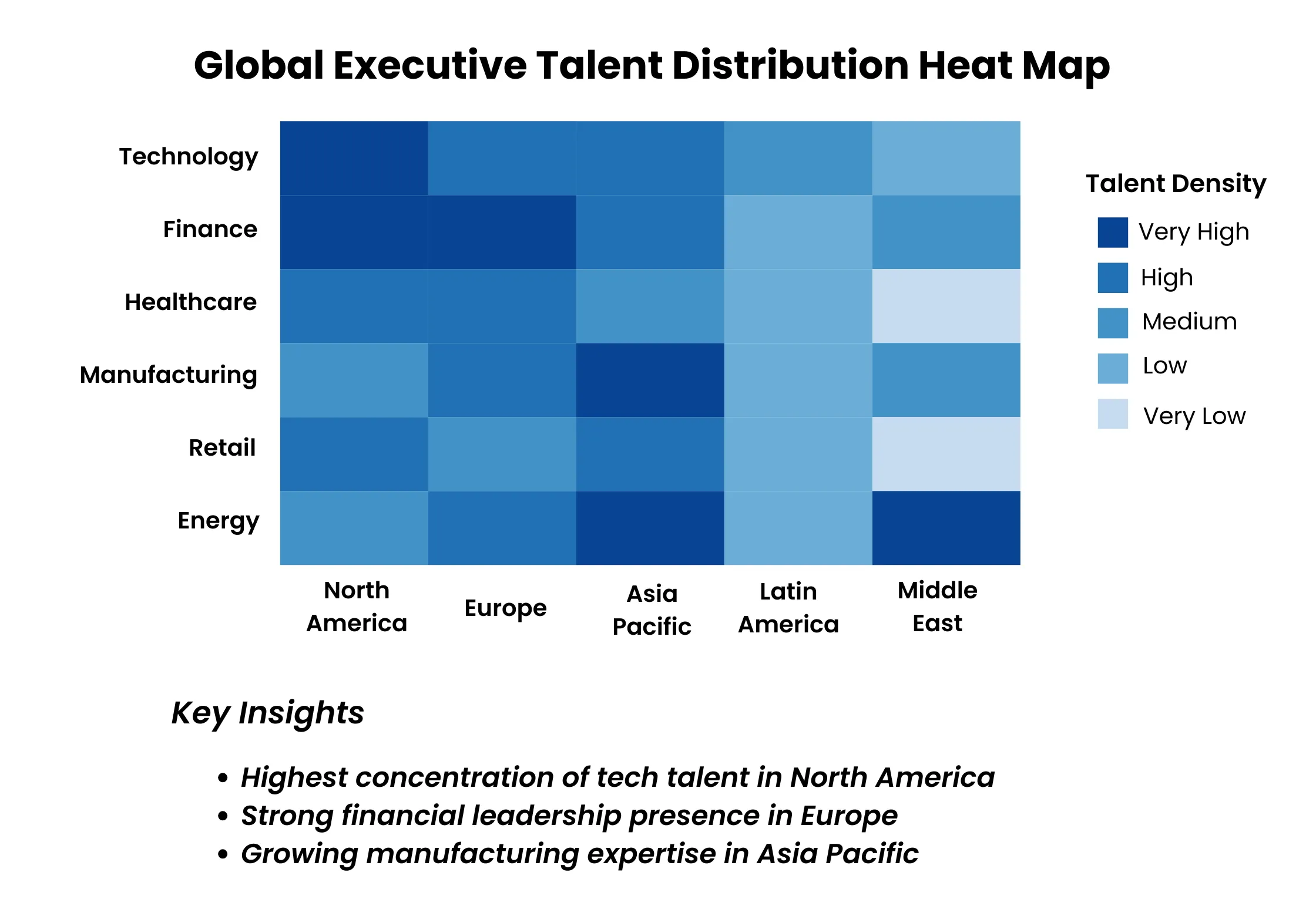
Market mapping focuses on analysing the talent landscape outside your company, identifying top talent across the industry, often within competitor firms or related sectors. By regularly mapping the talent market, you can quickly find external candidates when you need them. Executive recruitment market mapping can be useful when you're running a shortage of the right executive pool.
Together, these approaches ensure that when a senior role opens, whether planned or unexpected, the organisation already has a shortlist in progress rather than starting from scratch. They reduce disruption, compress time-to-hire, and consistently produce better outcomes than reactive searching alone.
10. Prioritise Cultural Fit and Diversity in Leadership Hiring
Finding the right executive is about more than skills and experience. Cultural alignment and diversity of perspective are equally critical at the leadership level, and increasingly, boards and investors expect both. Cultural fit at the executive level means ensuring the candidate's values, leadership style, and approach to people genuinely align with the organisation. A technically brilliant leader who conflicts with company culture will create lasting problems that outweigh their contribution.
Diversity is also crucial; having different viewpoints at the executive level helps with innovation and making better decisions. As headhunters, you know that diverse backgrounds and experiences make leadership teams stronger. To achieve this, you broaden your networks and use data-driven tools to find both traditional and non-traditional candidates who offer new perspectives. These executive search strategies ensure that you’re not just filling a position; you’re creating a leadership team ready for growth and change.
Conclusion
Mastering executive search strategies involves striking a balance between precision and genuine human insight. The right approach helps you secure not just a capable leader but a visionary one who can drive meaningful transformation.
Executive hiring is no longer simply about filling senior vacancies. It is about shaping the future of your organisation through leadership that is aligned, diverse, and built for the challenges ahead. With the right combination of strategy, stakeholder alignment, and modern recruitment technology, your team can significantly improve both the quality and the speed of executive hires. Embracing tools like iSmartRecruit empowers you to streamline the process, reduce hiring risk, and stay ahead in a competitive talent landscape.
Access key strategies in our Expert Insights on Executive Search.
.webp.dat)
FAQs - Frequently Asked Questions
1. What are executive search strategies and why do they matter?
Executive search strategies are structured approaches used to identify, assess, and hire senior-level leaders. They matter because executive roles have an outsized impact on organisational performance, and the cost of a poor hire at this level is significantly higher than in standard recruitment.
2. How does executive search differ from regular recruitment?
Executive search focuses on senior roles that require confidential outreach, passive candidate engagement, leadership assessment, and long-term succession planning. Standard recruitment typically targets active candidates for operational roles and relies on more conventional advertising and application processes.
3. Why is role clarity so important before beginning an executive search?
Without a precisely defined role, search efforts become unfocused, stakeholder expectations diverge, and the likelihood of misalignment between the hired leader and the organisation increases significantly. Clarity on responsibilities, success metrics, and cultural expectations is the foundation of every effective search.
4. What is executive recruitment market mapping?
Market mapping is the process of systematically identifying where top leadership talent sits across the industry, which organisations employ them, and how candidates compare on skills, experience, and career trajectory. It allows search teams to build a proactive pipeline rather than starting from scratch each time a vacancy arises.
5. How can technology improve executive search outcomes?
Executive recruitment software and AI-driven tools improve candidate shortlisting accuracy, reduce time spent on administrative tasks, support talent pipeline management, and enable data-backed comparisons between candidates. They are most effective when used to enhance human judgement rather than replace it.
6. When should an organisation use an external executive search agency?
External agencies are particularly valuable for confidential searches, highly specialised roles, situations requiring access to passive candidates, and cases where internal capacity or networks are insufficient. They also provide useful market intelligence on compensation, candidate availability, and competitor activity.
7. What is leadership shadowing and how does it support executive hiring?
Leadership shadowing involves shortlisted candidates spending structured time observing current senior leaders in their day-to-day environment. It provides a more realistic view of the role and culture for the candidate, and gives the hiring team richer insight into the candidate's interpersonal style and decision-making approach.
8. Why does candidate experience matter in executive search?
Senior executives evaluate organisations carefully throughout the hiring process. A poorly managed, impersonal, or slow process signals how the organisation operates and can cause strong candidates to withdraw. A respectful, personalised, and transparent experience builds trust and increases the likelihood of acceptance.
9. How do succession planning and market mapping work together?
Succession planning develops internal leadership talent for future senior roles. Market mapping identifies high-calibre external candidates across the industry. Together, they ensure organisations always have a well-prepared mix of internal and external options for key positions, reducing disruption when leadership changes occur.
10. How should diversity be approached in executive hiring?
Diversity in executive hiring requires deliberate action: broadening sourcing networks beyond familiar channels, using structured assessment frameworks that limit affinity bias, and applying data-driven tools to ensure shortlists reflect a genuinely wide range of candidates. Diverse leadership teams consistently outperform homogenous ones on innovation and decision quality.
About the Author