
TL;DR
- The U.S. staffing and recruiting industry is valued at well over $150 billion annually, with more than 25,000 firms operating across roughly 49,000 offices nationwide.
- No single agency fits every hiring need; generalist giants excel at volume and geographic reach, while specialist firms win on niche expertise and candidate quality.
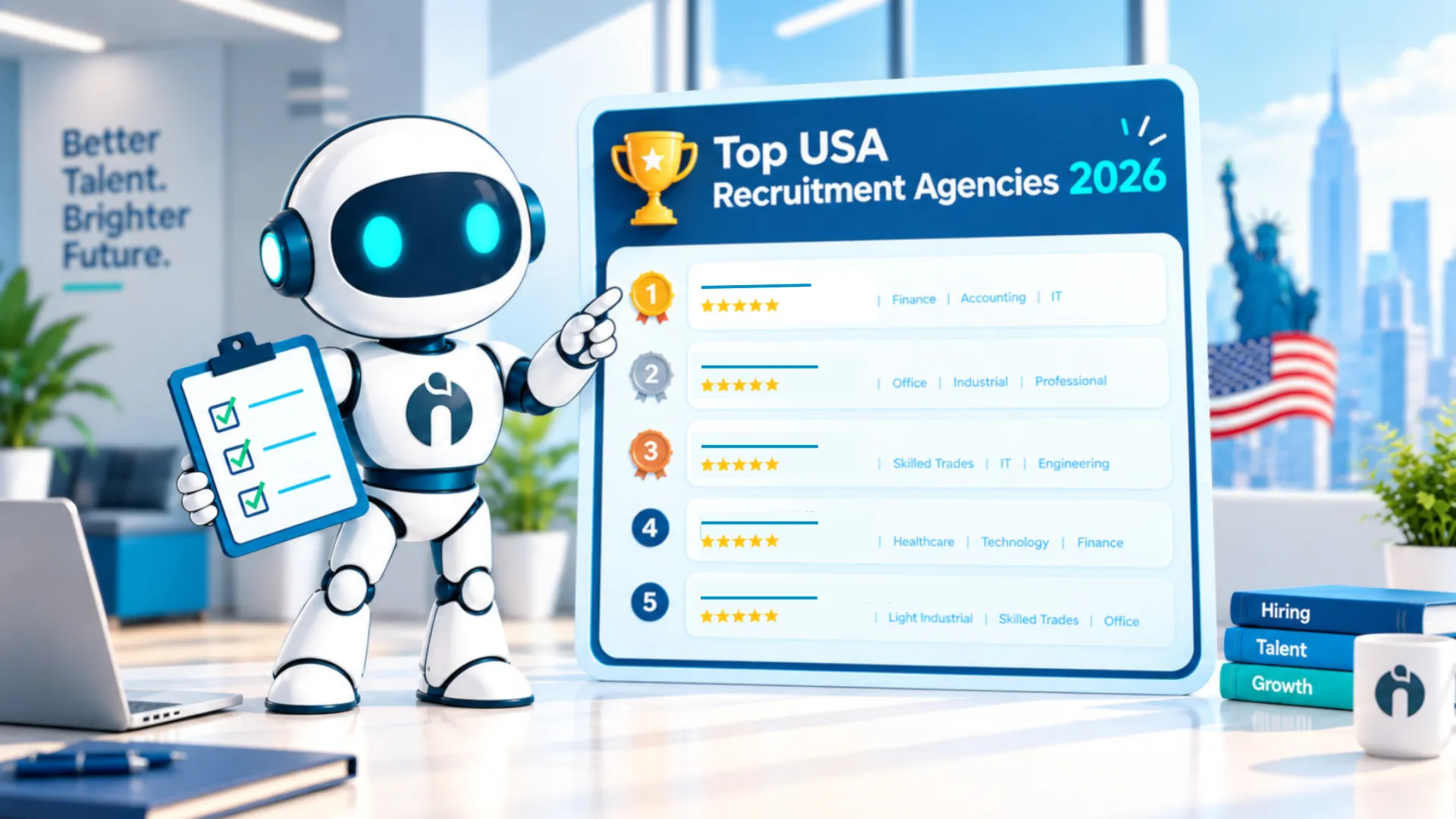
- This list ranks 10 standout agencies for 2026:
- Ocular Recruiting Solutions (ophthalmology and optometry)
- Randstad USA (enterprise scale, multi-industry)
- Allegis Group / TEKsystems & Aerotek (IT and industrial)
- ManpowerGroup (workforce consulting)
- Adecco USA (general staffing)
- Kforce (IT and finance contract)
- Insight Global (IT, healthcare, admin)
- Korn Ferry (executive search)
- Kelly Services (education and science)
- GPAC (multi-industry executive search)
- Choosing the right partner comes down to matching your role type, hiring volume, and industry to the agency's core specialisation, not just its size or brand recognition.
Why the Right Recruitment Agency Choice Matters
Hiring the wrong recruiting partner is an expensive mistake. Traditional agencies typically charge 15% to 30% of a new hire's first-year salary, which on a $70,000 role means a $10,500 to $21,000 fee before the person has done a single day of work. If that hire doesn't work out, most of that spend is difficult to recover.
At the same time, going without external recruiting help isn't always realistic. Internal teams are stretched thin, time to fill keeps climbing for hard to source roles, and niche positions, such as a compliance officer with a specific certification or an optometrist willing to relocate to a rural market, can sit open for months without the right network behind the search, one of the most common recruitment challenges agencies face.
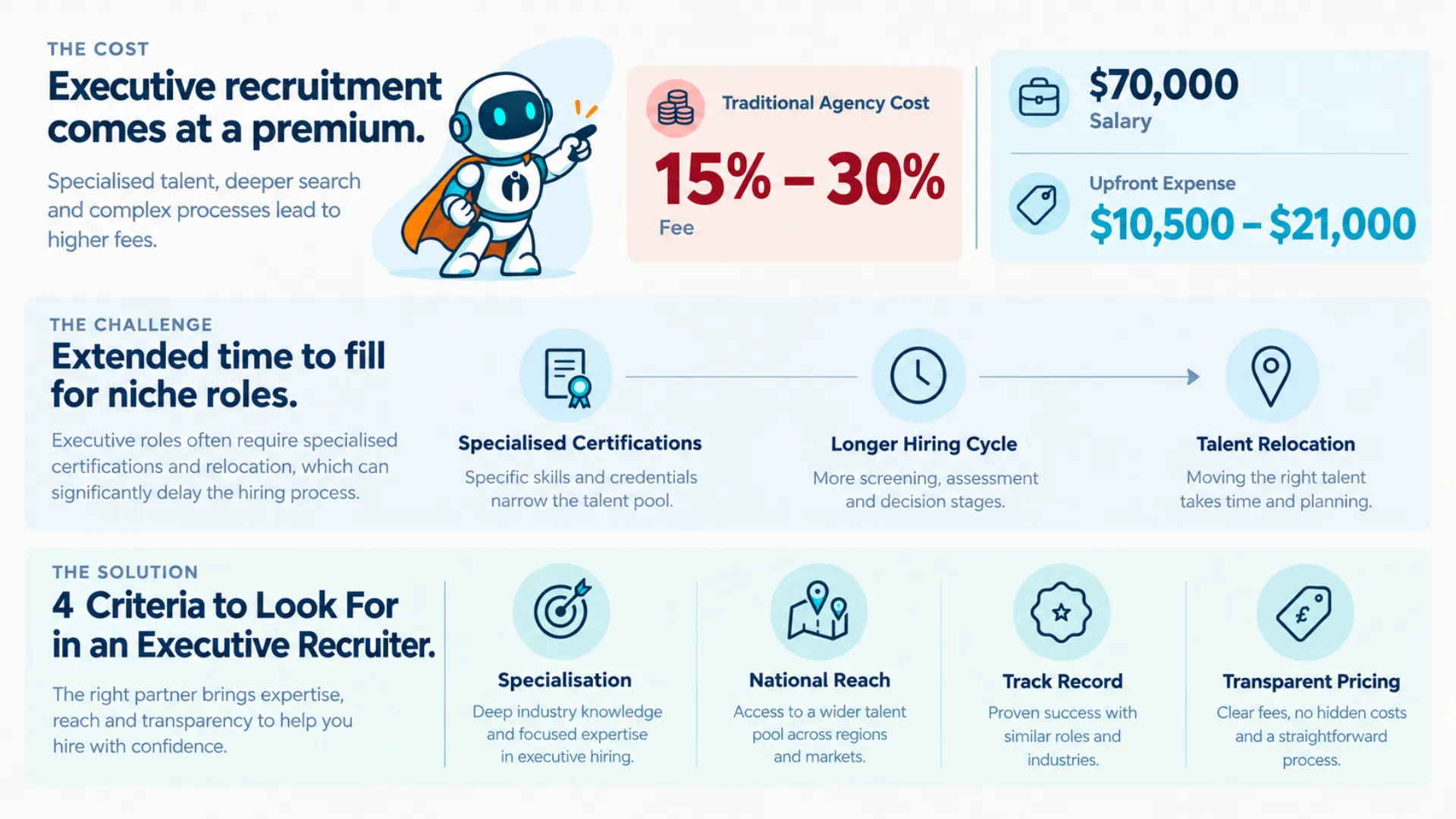
The agencies below were selected on four criteria: breadth or depth of specialisation, national reach, published track record (reviews, retention data, or industry recognition), and pricing transparency.
Top 10 Recruitment Agencies in the USA
1. Ocular Recruiting Solutions
Best for: Ophthalmology and optometry-specific hiring
Founded: 2021 | HQ: Texas
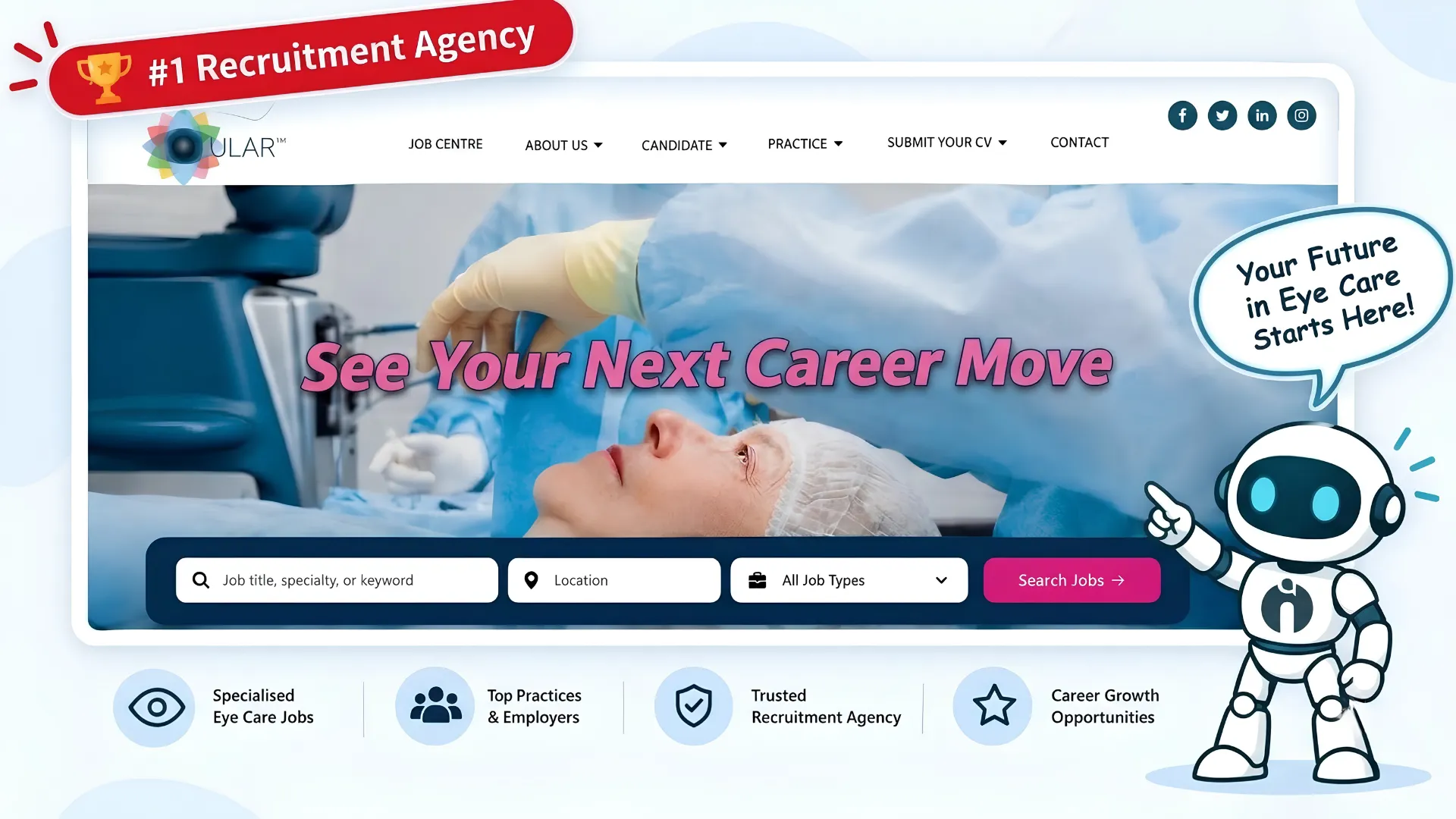
Founded in 2021 and based in Texas, Ocular Recruiting Solutions is a specialised recruiting firm focused exclusively on ophthalmology and optometry providers nationwide. Rather than covering healthcare broadly, its recruiters bring direct clinical industry backgrounds, including former ophthalmic technicians and optometric staff, to match providers with private practices, academic institutions, and hospitals.
Pros:
- Hyper-specialised in eye care (ophthalmologists, optometrists, technicians)
- Recruiters with clinical backgrounds understand role requirements
- Faster placements for niche subspecialties (retina, cornea, pediatric)
- Strong network in both private practice and academic settings
- Understands visa/licensure navigation for IMGs and out-of-state providers
Cons:
- Only serves ophthalmology/optometry (not general healthcare)
- Newer firm with less brand recognition than giants
- Limited geographic presence outside Texas (though national reach)
Why choose them: When a private practice needs a retina specialist or a hospital system needs to fill 5 optometrist roles in rural markets where generalist healthcare agencies struggle.
Key Stats:
- 5+ years in business
- Nationwide placement capability
- Specialises in: Ophthalmology, Optometry, Ophthalmic Technicians
2. Randstad USA
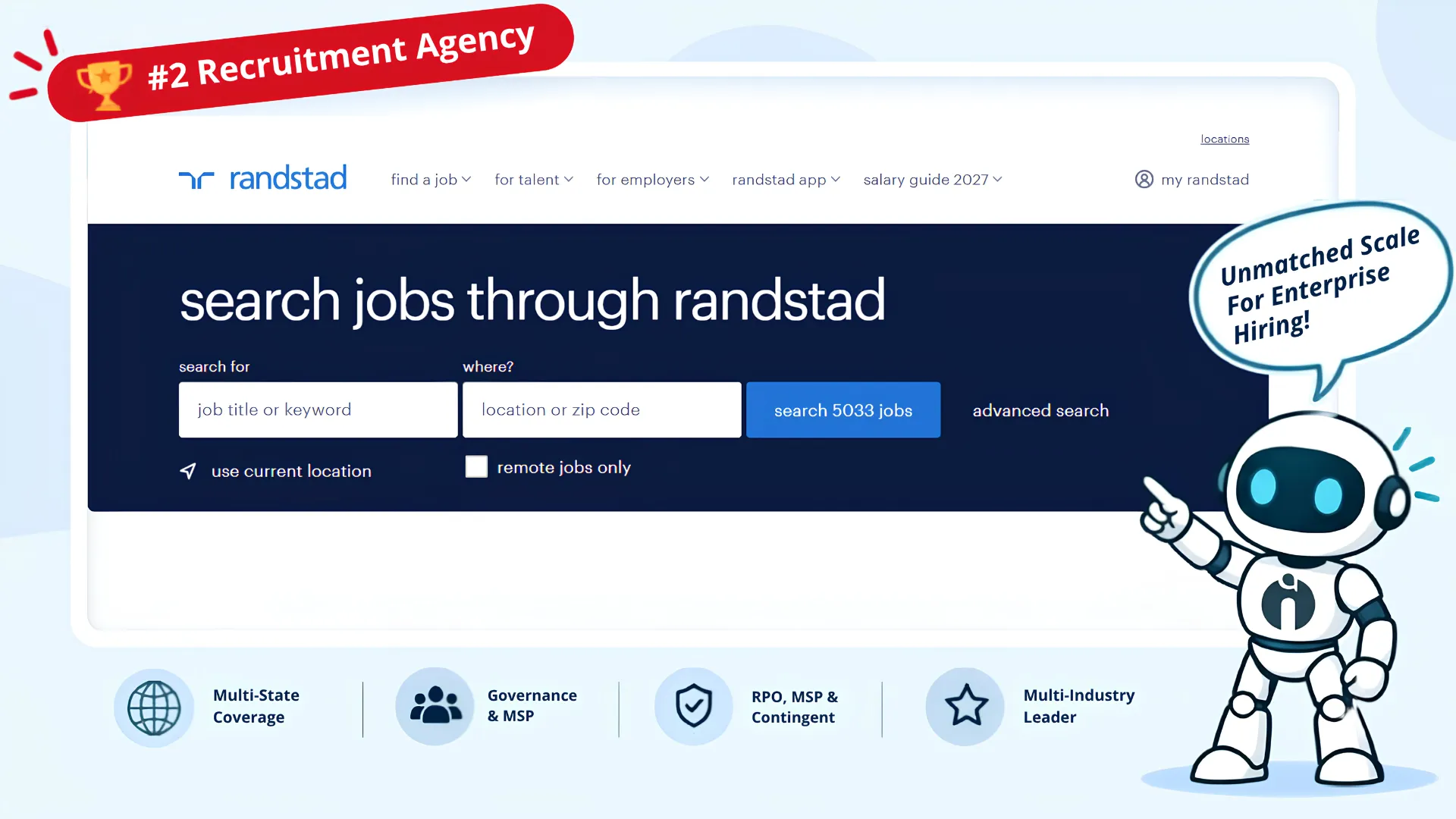
Best for: Enterprise-scale, multi-industry staffing
Founded: 1960 | HQ: Diemen, Netherlands (US HQ: Atlanta, GA)
Randstad is one of the largest staffing organisations globally, with deep infrastructure for supplier governance, compliance reviews, and multi-region workforce planning. Enterprise employers managing hiring across several states or business units often turn to Randstad for the scale and reporting rigour smaller firms cannot match.
Pros:
- Unmatched scale for multi-state hiring campaigns
- Advanced vendor management and compliance reporting
- Flexible engagement models (RPO, MSP, contingent)
- Strong in industrial, office admin, and light professional roles
- 450+ U.S. locations for local market coverage
Cons:
- Less personalised service for smaller clients
- Can feel bureaucratic for urgent, single-role hires
- Pricing not always transparent without negotiation
Why choose them: Ideal for Fortune 500 companies running coordinated hiring across 10+ locations or managing a contingent workforce of 500+ temps.
Key Stats:
- Global leader with presence in 38+ countries
- 34,000+ employees worldwide
- Specialises in: IT, Finance, Healthcare, Industrial, Engineering
3. Allegis Group (TEKsystems & Aerotek)
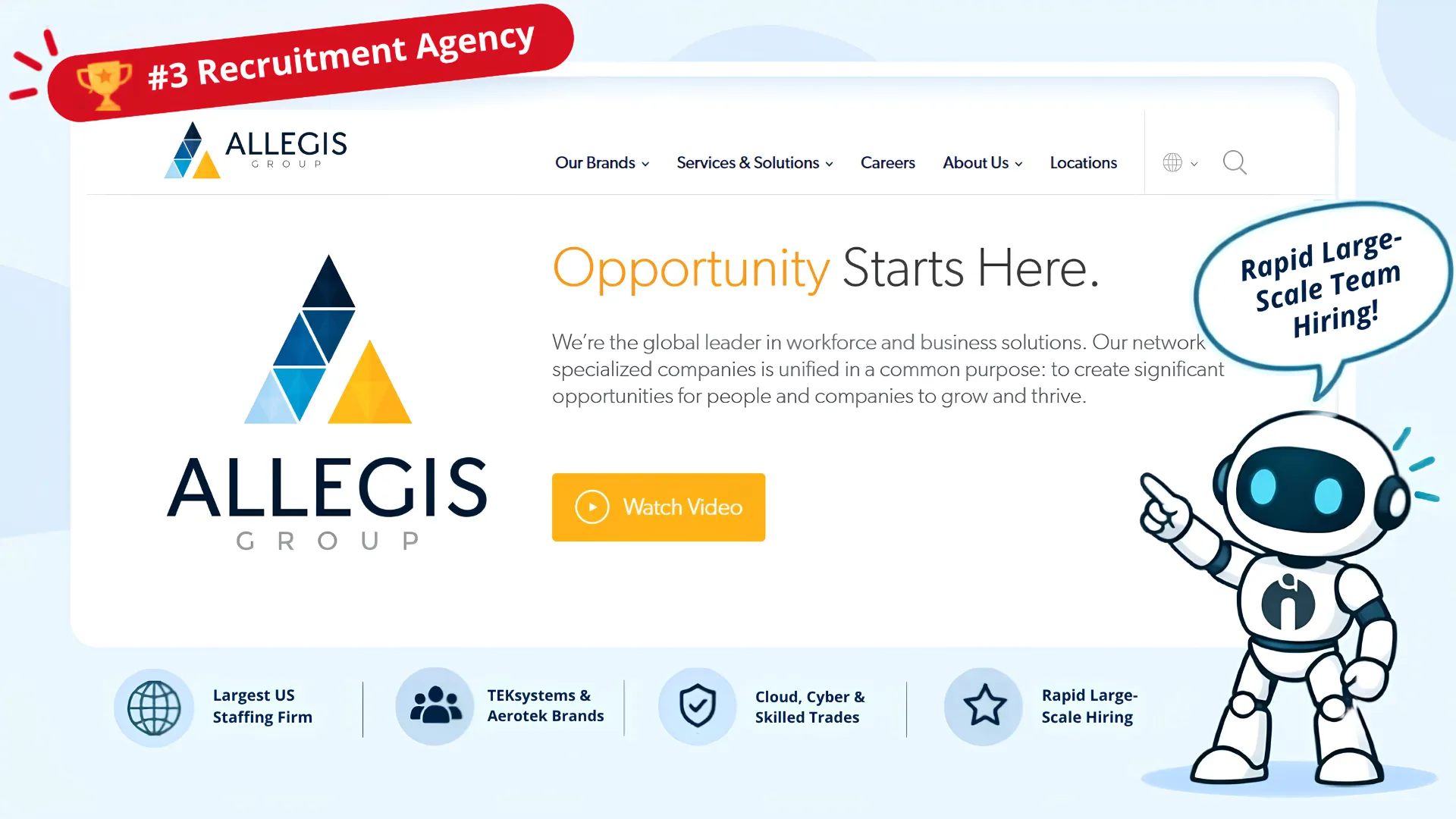
Best for: IT and light industrial/technical staffing
Founded: 1983 | HQ: Hanover, MD
As the parent company of TEKsystems and Aerotek, Allegis Group is widely cited as the largest U.S. staffing firm by placement volume. TEKsystems focuses on technology roles while Aerotek covers industrial, manufacturing, and skilled trades, giving the group unusually broad coverage under one umbrella.
Pros:
- Market leader in IT staffing (TEKsystems placed 80,000+ tech workers in 2025)
- Strong in both contract and permanent placements
- Dedicated divisions for niche skills (cybersecurity, cloud, DevOps)
- Aerotek dominates engineering and skilled trades staffing
- Enterprise-grade compliance and reporting tools
Cons:
- Premium pricing for specialised tech roles
- High recruiter turnover can affect continuity
- Less effective for executive-level searches
Why choose them: When you need 20 Java developers in 60 days or a team of certified welders for a manufacturing expansion, Allegis has the bench strength to deliver.
Key Stats:
- $6+ billion in annual revenue
- 50+ offices across North America
- Specialises in: IT, Engineering, Healthcare, Finance, Industrial
4. ManpowerGroup
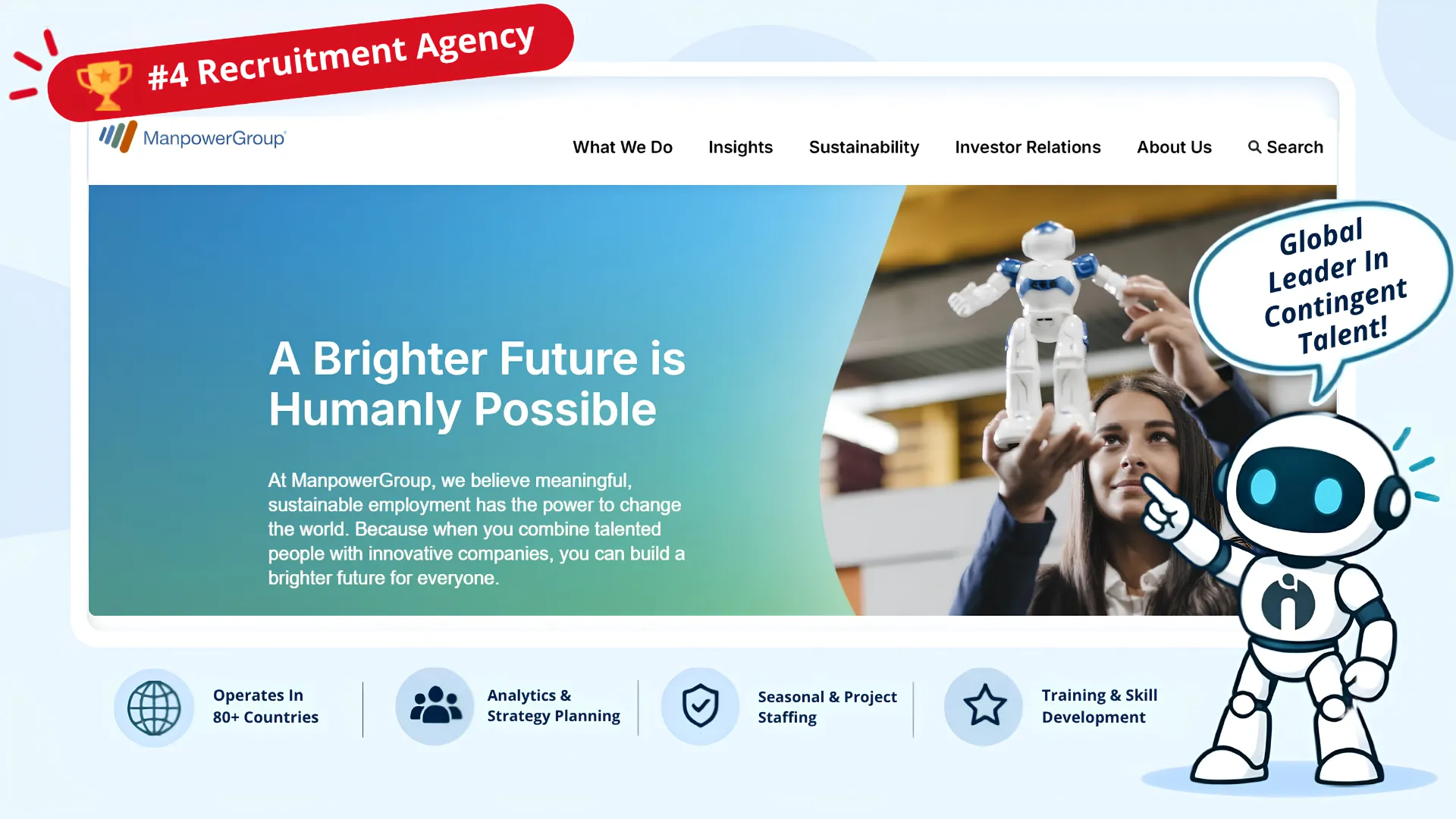
Best for: Workforce consulting and large-scale temporary staffing
Founded: 1948 | HQ: Milwaukee, WI
ManpowerGroup combines traditional staffing with broader workforce strategy consulting, making it a fit for organisations that need help planning contingent labour strategy, not just filling individual seats.
Pros:
- Strong workforce analytics and planning tools
- Global reach with local compliance expertise
- Excellent for seasonal and project-based hiring
- Offers training and upskilling programs
- 75+ years of industry experience
Cons:
- Less specialised for niche professional roles
- Consulting services add to overall cost
- Can be slower to respond than boutique firms
Why choose them: Best for companies needing strategic workforce planning alongside staffing, especially for seasonal peaks or multi-year projects.
Key Stats:
- Operates in 80+ countries
- 27,000+ employees
- Specialises in: Industrial, Office, IT, Healthcare, Finance
5. Adecco USA
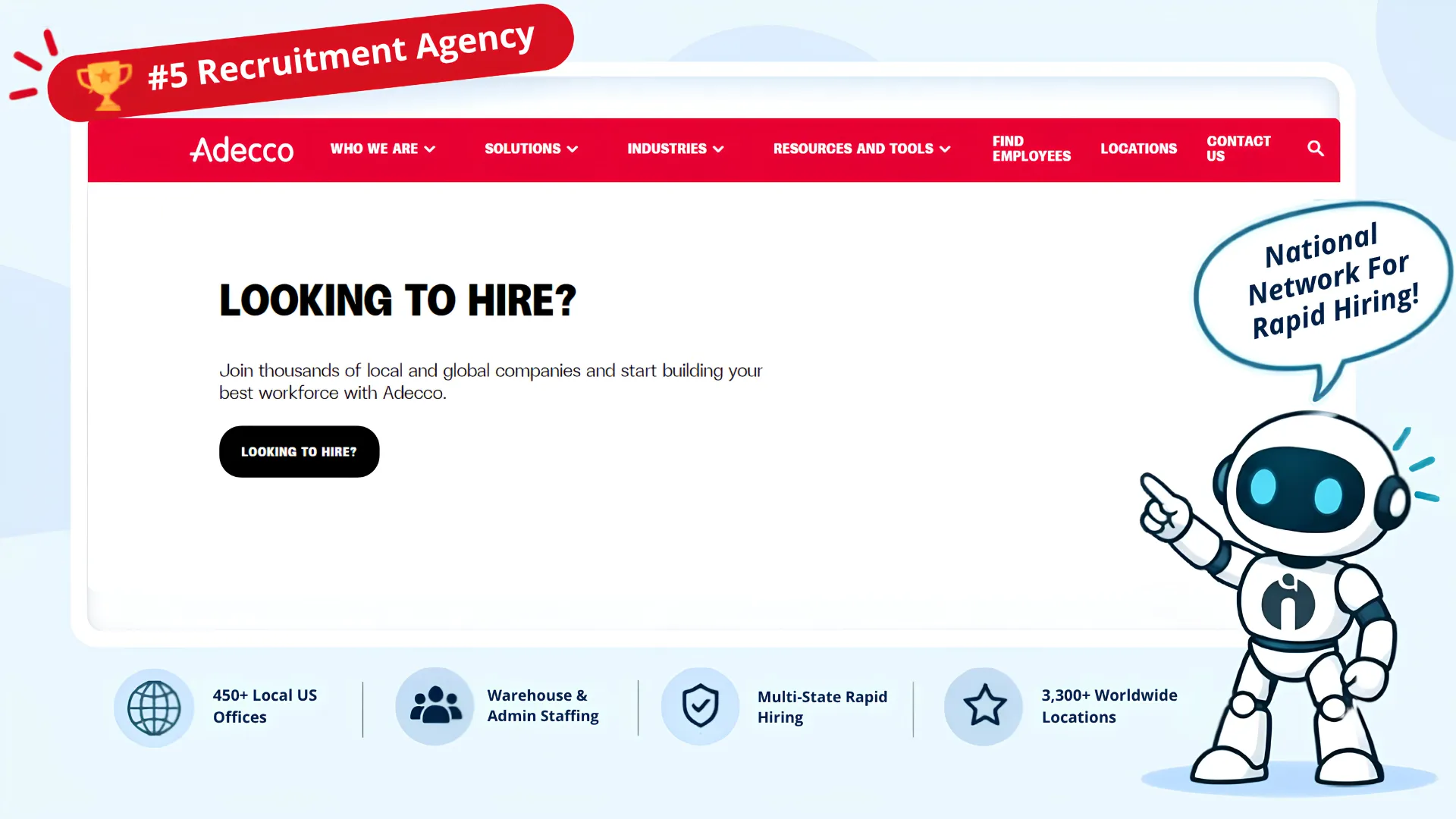
Best for: General staffing across office, industrial, and professional roles
Founded: 1990 (US operations) | HQ: Jacksonville, FL
Adecco's national branch network gives it strong regional coverage for both temporary and permanent placements, particularly useful for companies hiring across multiple U.S. markets with varying local labour conditions.
Pros:
- One of the largest branch networks in the U.S. (450+ locations)
- Strong in light industrial, warehouse, and office admin
- Competitive pricing for high-volume hires
- Good technology platform for candidate tracking
- Backed by 50+ years of global experience
Cons:
- Less effective for highly specialised roles
- Service quality varies by local branch
- Not ideal for executive or C-suite searches
Why choose them: When you're opening a new distribution centre and need 100 warehouse workers across 3 states within 4 weeks.
Key Stats:
- 450+ U.S. offices
- 3,300+ locations worldwide
- Specialises in: Industrial, Office, IT, Finance, Healthcare
6. Kforce
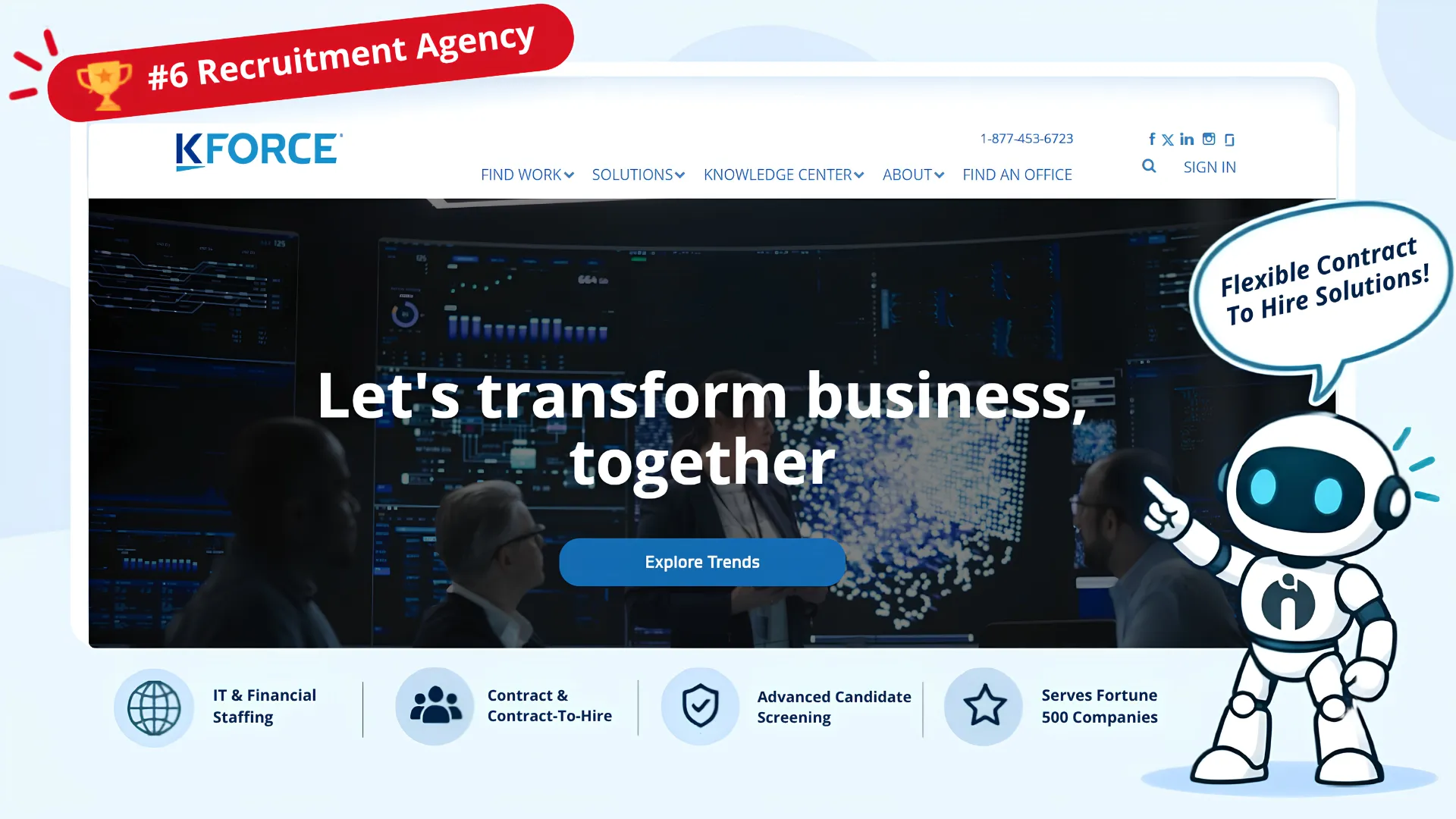
Best for: IT and finance contract staffing
Founded: 1962 | HQ: Tampa, FL
Kforce specialises in connecting technical and finance professionals with mid-size to large enterprises, with a consultative, data-driven screening process. It is a common choice for companies running high volumes of contract to hire technical roles.
Pros:
- Strong focus on IT and finance contract-to-hire
- Data-driven candidate matching and screening
- Good retention rates for technical placements
- Flexible engagement models (contract, contract-to-hire, direct)
- Serves most Fortune 500 companies
Cons:
- Limited presence outside IT and finance
- Less effective for permanent direct hires
- Pricing can be opaque without negotiation
Why choose them: Ideal for tech companies needing 10-50 contract developers with specific stack experience (e.g., React + Node + AWS) on a contract-to-hire basis.
Key Stats:
- 60+ years in business
- 8+ million professionals in network
- Specialises in: IT, Finance, Healthcare, Government
7. Insight Global
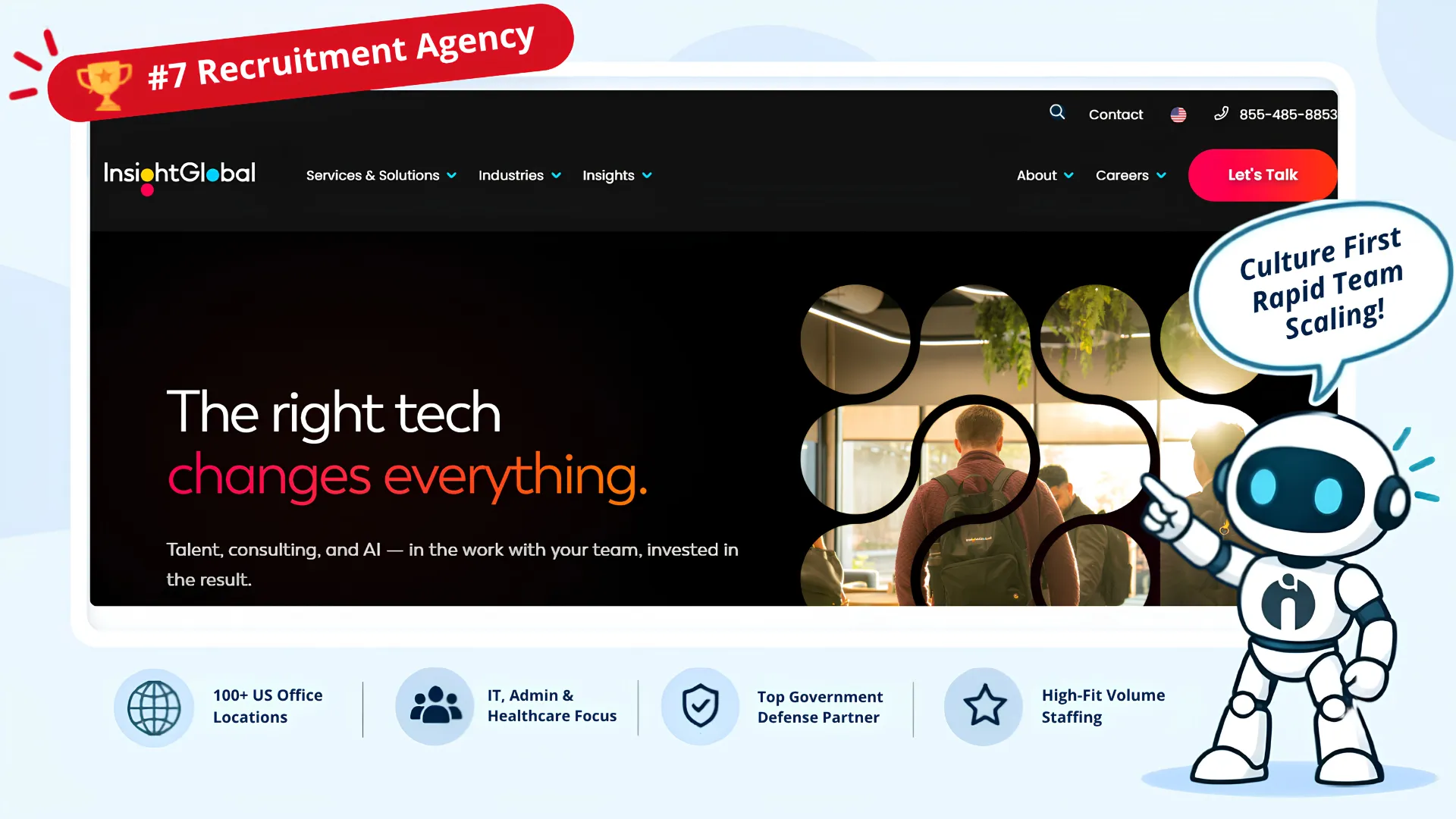
Best for: IT, healthcare, and administrative staffing at scale
Founded: 2001 | HQ: Atlanta, GA
Insight Global has grown rapidly by combining high volume recruiting capability with a strong emphasis on cultural fit, and maintains a large national presence across professional and technical roles.
Pros:
- Fast scaling capability for growing companies
- Strong in IT, healthcare admin, and professional services
- Emphasis on cultural fit and retention
- Competitive pricing for volume hires
- Named one of the top cleared recruiting firms for government contracts
Cons:
- Less specialised for executive searches
- Quality can vary by regional office
- Not ideal for highly niche clinical roles
Why choose them: When you're a Series B startup needing to scale from 50 to 200 employees in 12 months across multiple functions.
Key Stats:
- 100+ office locations
- 5,000+ employees
- Specialises in: IT, Healthcare, Finance, Administrative, Government
8. Korn Ferry
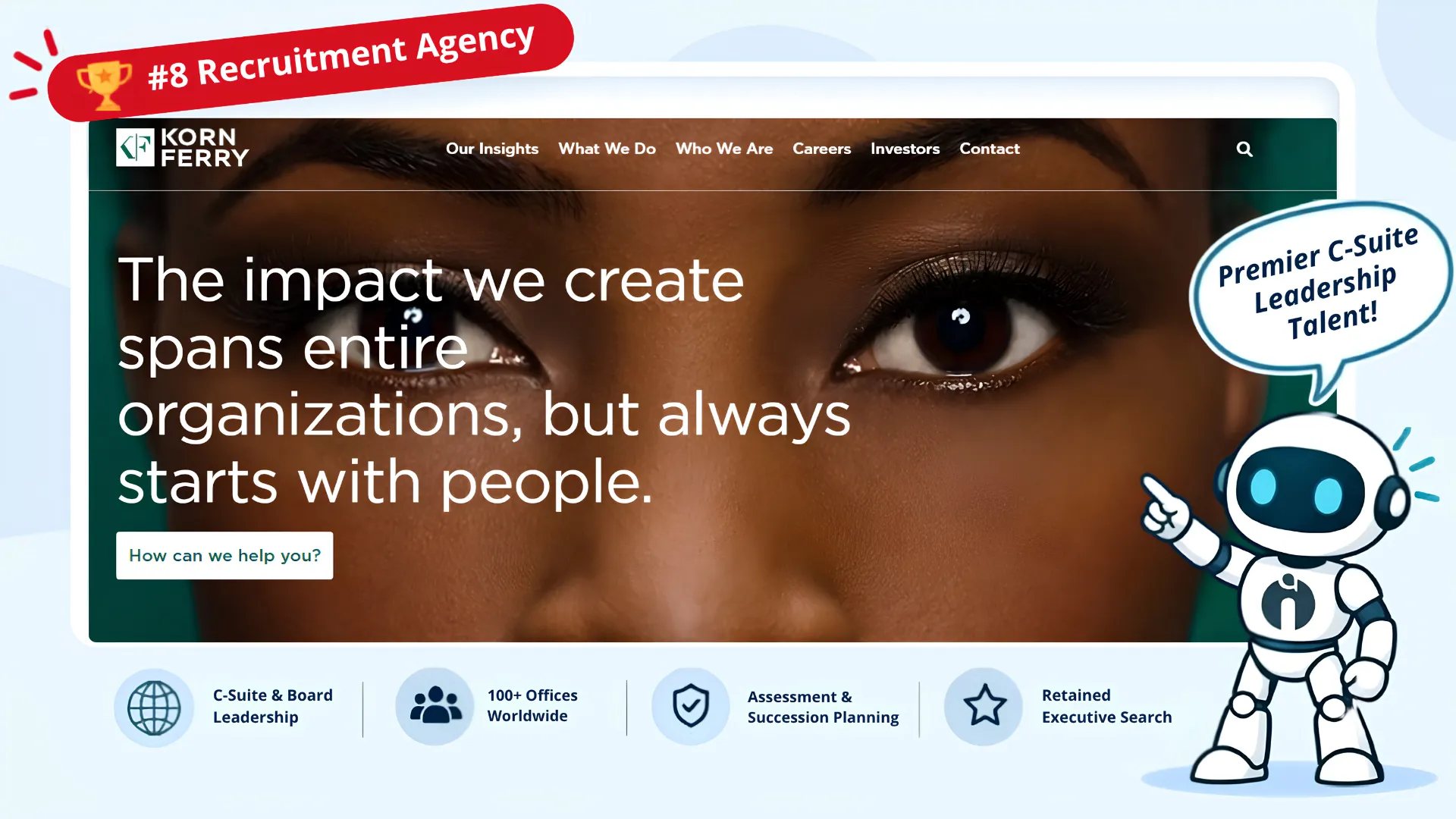
Best for: Executive and leadership search
Founded: 1969 | HQ: Los Angeles, CA
For C-suite and senior leadership hiring, Korn Ferry is one of the most recognised executive search firms in the U.S., typically engaged for retained searches where the cost of a mis-hire at the leadership level is especially high.
Pros:
- Global leader in executive search and leadership advisory
- Deep C-suite and board-level networks
- Comprehensive assessment and psychometric tools
- Strong in succession planning and leadership development
- Hands-on approach with deep company immersion
Cons:
- Highest fees in the industry (25-35% + retainers)
- Overkill for mid-level or individual contributor roles
- Longer search timelines (3-6 months typical)
Why choose them: When hiring a CEO, CFO, or divisional president where a bad hire could cost millions in lost value.
Key Stats:
- 100+ offices in 50+ countries
- 5,000+ employees
- Specialises in: Executive Search, Leadership Development, Organisational Strategy
9. Kelly Services
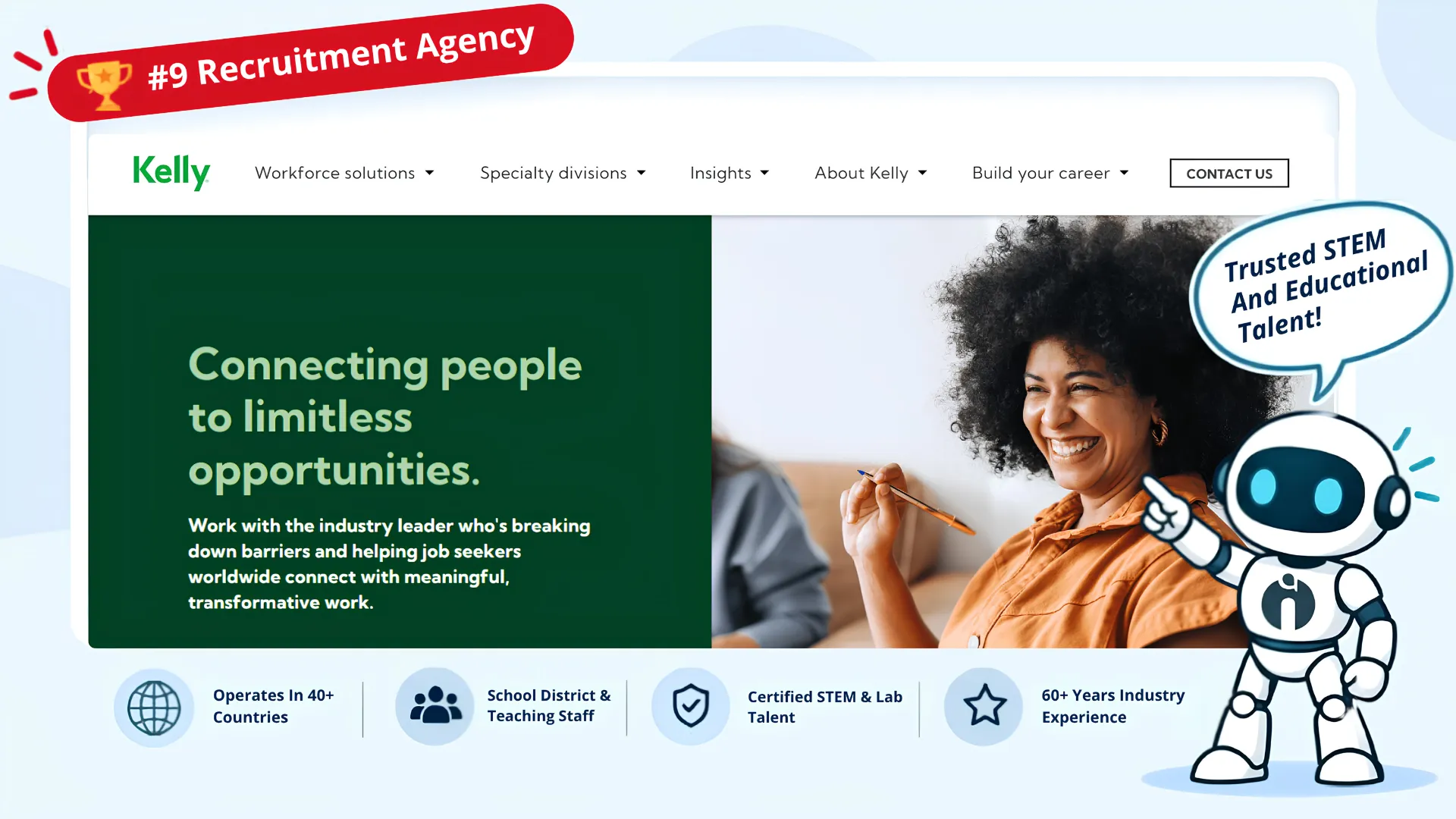
Best for: Education, science, and general staffing
Founded: 1964 | HQ: Troy, MI
Kelly has decades of experience across a wide span of industries, with particular strength in education staffing and scientific/laboratory roles alongside general office and light industrial placements.
Pros:
- Strong in education (substitute teachers, administrators)
- Good presence in scientific and laboratory staffing
- Long-standing reputation and brand recognition
- Flexible staffing models (temp, temp-to-hire, direct)
- 60+ years of industry experience
Cons:
- Less competitive in pure IT or finance roles
- Service quality varies by location
- Not ideal for highly specialised executive searches
Why choose them: Best for school districts needing substitute teachers, or research labs needing lab technicians with specific certifications.
Key Stats:
- 60+ years in business
- Operates in 40+ countries
- Specialises in: Education, Science, Healthcare, Office, Industrial
10. GPAC
Best for: Multi-industry executive search and digital-first recruiting
Founded: 1989 | HQ: Jackson, MS
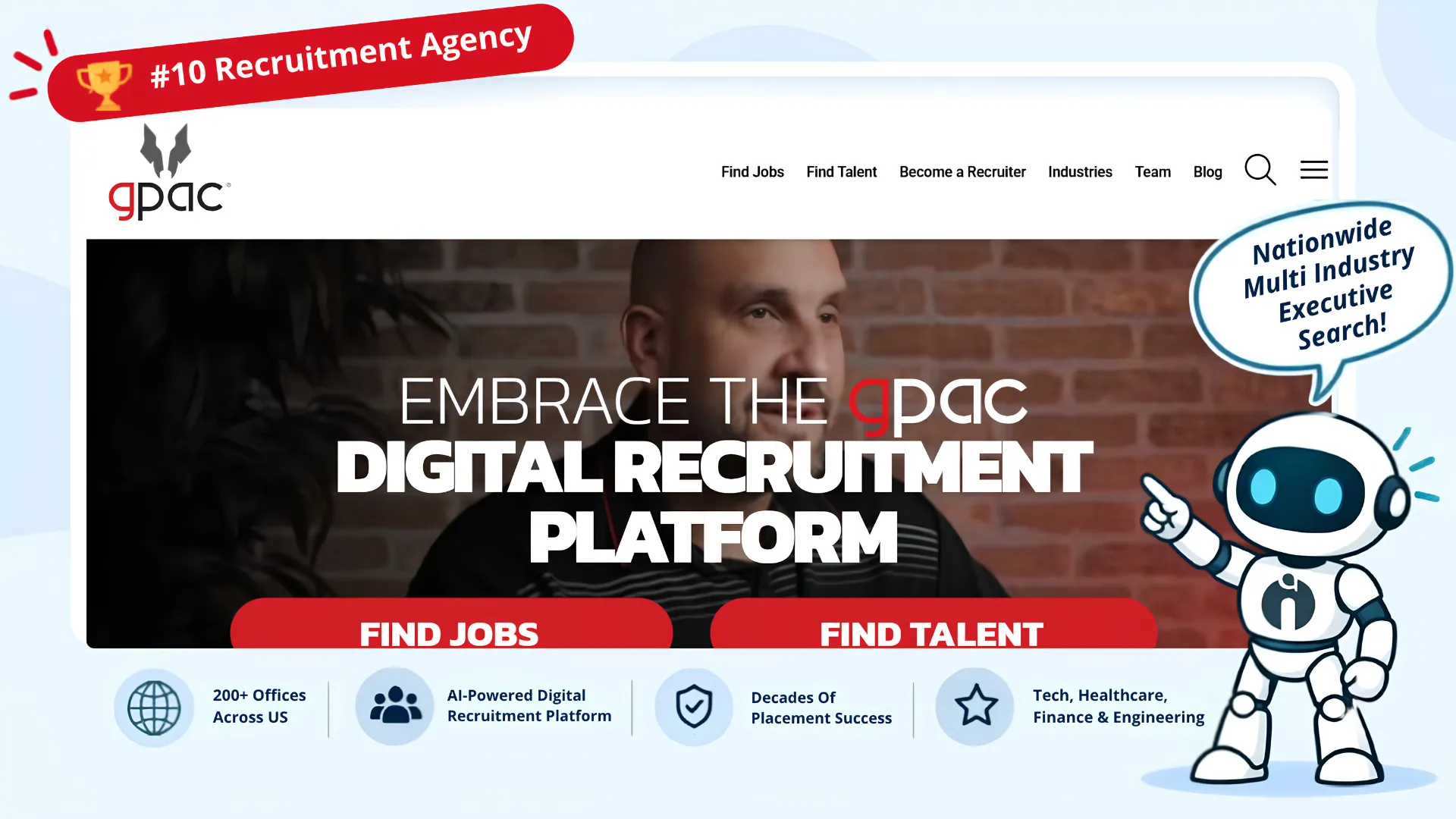
GPAC has grown from a family-owned executive search firm to become one of the most recognised digital recruitment platforms in the United States. With over 35 years of experience and a network of 200+ offices nationwide, GPAC combines traditional search expertise with modern digital tools to connect employers with top talent across finance, healthcare, technology, engineering, and professional services.
Pros:
- 35+ years of proven placement success across multiple industries
- 200+ offices nationwide with local market expertise
- Digital-first platform for faster candidate matching
- Strong presence in finance, healthcare, IT, and engineering
- Family-owned culture with enterprise-level capabilities
- Work-from-home recruiter opportunities show a scalable model
Cons:
- Less specialised than boutique firms for ultra-niche roles
- May not match the global scale of Randstad or Adecco
- Pricing transparency varies by office location
Why choose them: When you need a versatile recruiting partner that can handle everything from entry-level to C-suite across multiple industries, GPAC's digital platform and national network deliver speed without sacrificing quality.
Key Stats:
- 35+ years in business
- 200+ offices across the U.S.
- Specialises in: Finance, Healthcare, Technology, Engineering, Professional Services
- Digital recruitment platform with AI-powered matching
Recruitment Agency Comparison at a Glance
| Agency | Primary Focus | Best Fit For | Typical Fee Range | Years in Business |
|---|---|---|---|---|
| Ocular Recruiting Solutions | Ophthalmology & Optometry | Speciality eye care provider hiring | 20–25% | 5+ |
| Randstad USA | Multi-industry, Enterprise | Large-scale, multi-region hiring | 15–25% | 60+ |
| Allegis Group | IT & Industrial | Broad technical + trades coverage | 18–30% | 40+ |
| ManpowerGroup | Workforce consulting | Contingent workforce strategy | 15–25% | 75+ |
| Adecco USA | General staffing | Multi-market regional hiring | 15–25% | 35+ |
| Kforce | IT & Finance contract | High-volume contract-to-hire tech roles | 20–28% | 60+ |
| Insight Global | IT, Healthcare, Admin | Fast-scaling teams | 18–25% | 25+ |
| Korn Ferry | Executive search | C-suite and leadership roles | 25–35% + retainer | 55+ |
| Kelly Services | Education & Science | Niche academic/lab staffing | 15–25% | 60+ |
| GPAC | Multi-industry executive search | Digital-first recruiting across Finance, Healthcare & IT | 20–28% | 35+ |
How to Choose the Right Agency for Your Organisation
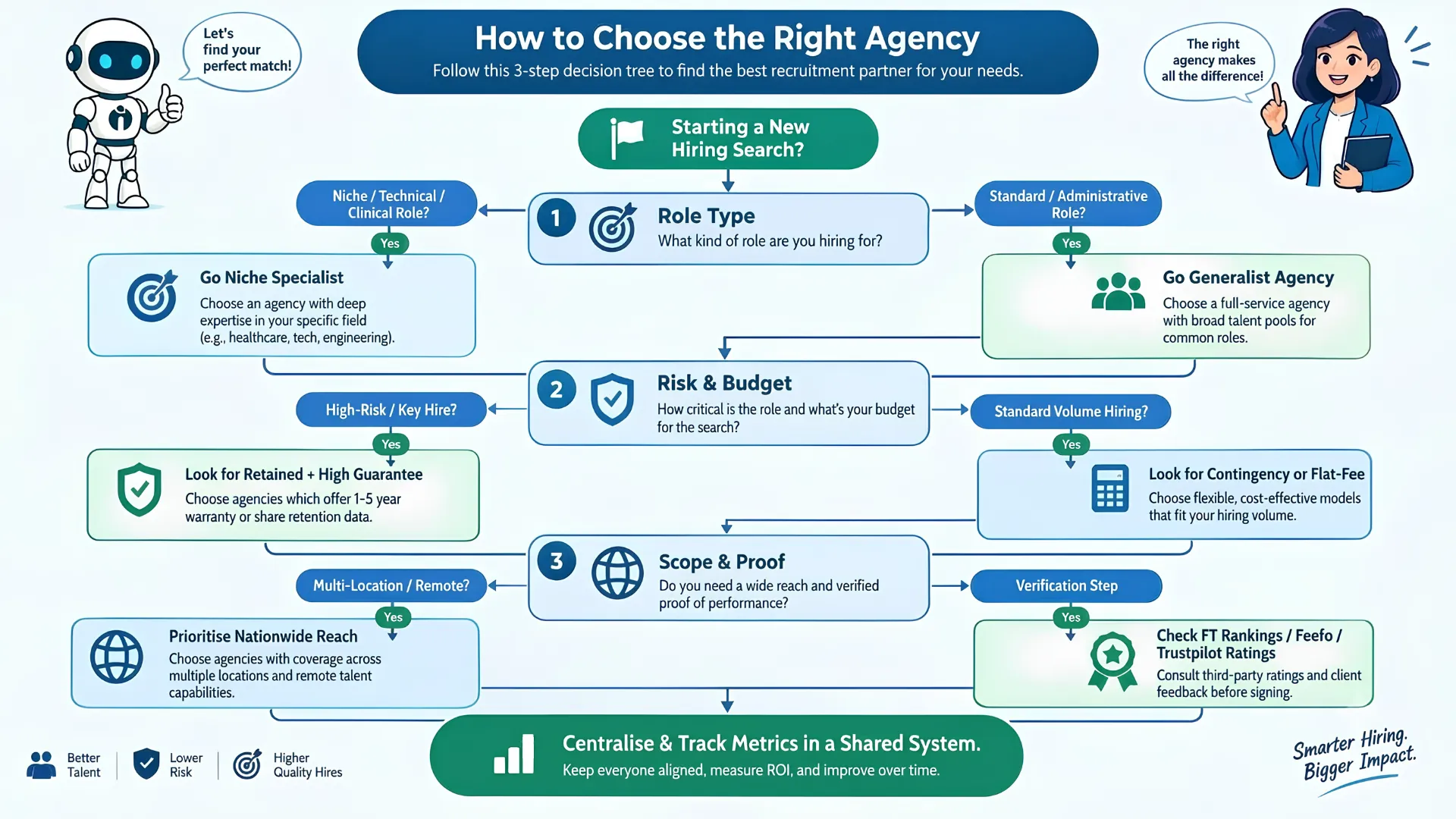
Match specialisation to your role type first. A generalist firm might fill an office administrator role well but struggle with a niche clinical or technical hire that requires industry-specific screening.
Ask for retention and placement data. Firms that publish placement volume, retention rates, or guarantee periods are giving you a way to evaluate quality before you commit a fee. Frontline Source Group, for example, publishes a 98.94% executive retention rate and offers a 5-Year Placement Warranty.
Understand the fee structure upfront. Contingency, retained, and flat fee models carry very different risk profiles, so know which one you are agreeing to before the search starts.
Weigh specialisation against reach. National generalist firms offer geographic flexibility, while niche specialists usually offer deeper candidate networks within their vertical. Many hiring plans need both, depending on the mix of roles being filled. For a closer look at what each type of firm actually delivers day to day, see our guide on types of services offered by staffing agencies.
Centralise what you learn. If you are working with more than one agency at a time, tracking submissions, interview feedback, and time to fill in a shared system, rather than separate email threads, makes it far easier to compare which partner is actually delivering results.
Check independent validation. Look for Forbes rankings, ClearlyRated Best of Staffing awards, and verified Trustpilot reviews rather than relying on agency self-promotion.
Conclusion
There is no single "best" recruitment agency in the U.S., only the agency that is best matched to the role you are trying to fill right now. Large generalist firms like Randstad, Allegis Group, and ManpowerGroup bring scale and infrastructure, while specialists like GPAC, Korn Ferry, and Ocular Recruiting Solutions bring depth in a narrower lane.
The right approach for most growing organisations is to build a short bench of two or three agencies across these categories rather than relying on one partner to cover every kind of hire. Start with a digital-first platform like GPAC for versatile, multi-industry hiring, add a specialist for your hardest-to-fill niche roles, and bring in an executive search firm like Korn Ferry for C-suite positions where the cost of a mis-hire is highest. Before signing with anyone, audit your hiring needs by specialisation, volume, and urgency, shortlist two to three agencies across those categories, ask each for retention rates and client references, and run a pilot with one or two roles before committing to an exclusive agreement.
The U.S. recruitment landscape in 2026 rewards employers who take this kind of strategic, data-driven approach. Track time to fill, quality of hire, and cost per hire in a shared system so you can see which partner is actually delivering, and you'll reduce time to fill, improve hire quality, and maximise your recruitment ROI.
Frequently Asked Questions (FAQs)
1. What's the difference between a staffing agency and an executive search firm?
Staffing agencies (such as Randstad, Adecco, or Insight Global) typically fill high-volume, hourly, contract, or mid-level roles quickly, often on a contingency fee. Executive search firms (such as Korn Ferry) run retained searches for C-suite and senior leadership roles, with deeper vetting and longer timelines, but at a higher fee (often 25-35% plus a retainer).
2. When should I use a specialist agency instead of a generalist?
Use a specialist (such as Ocular Recruiting Solutions for eye care, or GPAC for finance, healthcare, and engineering) when the role requires niche certification, licensure, or industry-specific screening that a generalist recruiter won't know how to evaluate, for example, a retina specialist or a compliance officer with a specific credential. Generalists are better suited to high-volume or geographically distributed hiring.
3. How much do recruitment agencies typically charge?
Fees generally range from 15-30% of the hire's first-year salary for contingency or contract placements, and 25-35% plus a retainer for executive search. Some firms, such as Frontline Source Group, offer placement warranties or guarantee periods, which can offset risk if a hire doesn't work out.
4. Should I work with more than one agency at a time?
Yes, for most growing companies. A common approach is to keep a bench of two to three agencies: one generalist for volume and geographic reach, one specialist for hard to fill niche roles, and one executive search firm for leadership hires. It's worth tracking submissions and time to fill in one shared system so you can compare which partner is actually performing.
5. What should I ask an agency before signing an agreement?
Ask for their placement volume, retention rate, and fee structure (contingency vs. retained vs. flat fee) upfront.
About the Author