

In today’s highly competitive executive search landscape, building a strong employer brand is no longer optional - it is a strategic advantage. For senior leaders and top executives, an employer brand represents far more than a company name or logo. It reflects your organisation’s purpose, reputation, culture, and long-term vision.
Building a strong employer brand for executive search is essential for attracting high-calibre leaders who align with your company’s vision, culture, and long-term goals. Senior executives do not evaluate opportunities only by salary or job title; they look for purpose, leadership credibility, growth potential, and organisational values.
A clear employer brand helps executive search firms and hiring teams communicate what makes the company a compelling place for top leadership talent. It strengthens trust, improves candidate engagement, and positions the organisation as an employer of choice in a competitive executive hiring market.
TL;DR
- Your employer brand is crucial for attracting senior leaders seeking purpose and alignment with values.
- Develop a strong Employer Value Proposition (EVP) that emphasises long-term vision and strategic impact.
- Maintain consistent and authentic communication across multiple platforms.
- Leverage current executives as brand ambassadors to enhance credibility.
Why Employer Branding Matters in Executive Search
The executive recruitment market has undergone significant evolution. Today's C-level candidates evaluate potential employers through multiple lenses: company culture, growth opportunities, social impact, and leadership development possibilities. Organisations that fail to articulate their unique value proposition struggle to attract top-tier talent in this candidate-driven market.
How to Build a Strong Employer Brand for Executive Search
1) Define Your Executive Employee Value Proposition
An Employer Value Proposition (EVP) designed for executive recruitment answers the question: 'Why should a highly accomplished leader choose to make a difference here?' This isn’t about general perks or benefits; for executives, it’s about purpose, long-term vision, and potential for influence.
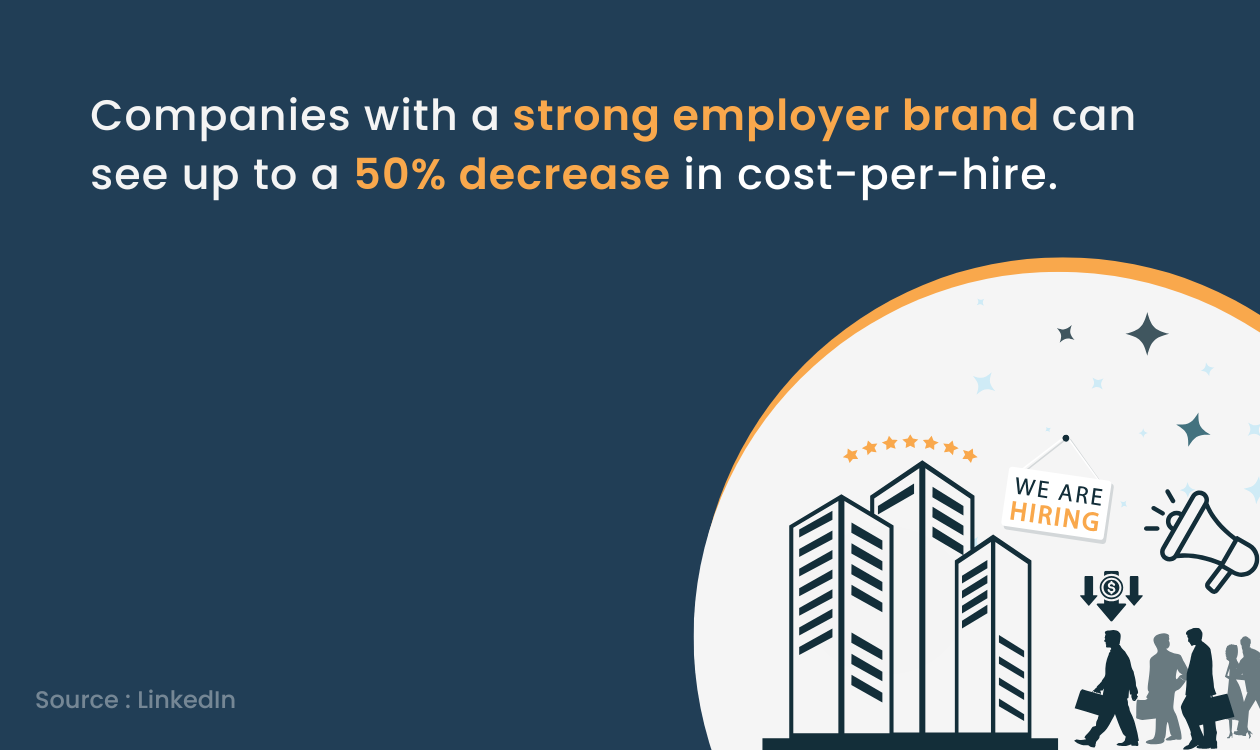
A strong EVP reflects what distinguishes your leadership culture and highlights the strategic impact executives can make within your organisation. Aligning this proposition with your organisation's mission, values, and goals not only helps attract the right leaders but can also reduce recruitment costs. According to the LinkedIn Report, companies with strong employer brands experience up to a 50﹪decrease in cost-per-hire.
2) Communicate a Consistent Executive Brand Message
With a clear EVP established, consistent communication is essential. Executives will interact with your brand across numerous platforms, from LinkedIn to industry panels and business publications. Ensuring your message is cohesive and authentic across all these channels reinforces trust and credibility.
Use a mix of formats, thought leadership articles, executive testimonials, and case studies, to present a well-rounded view of your organisation. Video content in particular carries outsized weight on LinkedIn, generating roughly 1.4 times more engagement than static posts, and C-suite video activity specifically is rising fast as a trust signal. By tailoring your messaging while remaining consistent, you create a unified story that speaks clearly to leaders about your values and direction.
3) Engage Leaders as Employer Brand Ambassadors
Your current executives and senior leaders are among your best brand advocates. Their stories and experiences give potential hires valuable insights into the realities of working within your organisation. Encouraging leaders to share their journeys - whether on social media, at industry events, or within professional networks lends authenticity to your brand and strengthens your appeal in executive circles. Providing them with tools and guidelines ensures they represent your brand consistently while their genuine stories enhance credibility and foster a strong brand reputation.
4) Showcase Purpose, Culture, and Social Responsibility
Executives today increasingly look for organizations that prioritize purpose alongside profit. Highlighting your commitment to social responsibility, whether through sustainability initiatives, diversity and inclusion, or community involvement, appeals to leaders who value meaningful impact.
Demonstrating how executives at your company drive these initiatives reinforces that new leaders will have the chance to lead in ways that matter beyond financial results. Sharing stories of your achievements in these areas, and the role leaders play in them, makes your brand more attractive to purpose-driven executives.
5) Build a Leadership Talent Pipeline
Building a strong executive brand also involves developing a network of future leaders who align with your organisation's mission and values. Engage with these leaders early by sharing insights, achievements, and updates that resonate with them, and participate in industry events, webinars, and alumni networks to stay visible and relevant.
Consistent engagement with high-potential executives ensures they are familiar with your brand well before a search opens, and see your organisation as a genuine destination for their next leadership move rather than an unfamiliar name in a recruiter's outreach.
6) Measure and Improve Employer Brand Performance
An impactful employer brand requires regular evaluation and refinement. Monitor key metrics such as executive retention, engagement with branded content, InMail or outreach acceptance rates, and overall brand reputation across review platforms.
Gather insights from recent hires and current leaders to assess how well your brand aligns with executive expectations, and benchmark against industry leaders to keep your brand relevant in a competitive landscape. Companies with a strong talent brand on LinkedIn see meaningfully higher InMail acceptance rates than weaker-branded competitors, a useful proxy metric for how much friction your outreach is facing before a conversation even starts.
7) Learn from Real Employer Branding Examples
Observing how leading organizations build and maintain strong employer brands can offer actionable insight. Successful brands consistently combine a clear EVP, consistent messaging, and strong leadership advocacy to stand out.
By studying how these brands communicate their purpose, empower leaders as ambassadors, and create a cohesive culture story, you can gather inspiration to refine your own approach and strengthen your brand's appeal to executive talent.
Strengthen Your Employer Brand for Executive Search with iSmartRecruit
Using iSmartRecruit in your executive search process can be a real boost for your employer brand. The platform lets you tailor your career site to match your brand’s look and feel, giving prospective leaders a seamless and welcoming experience from the get-go. With its built-in recruitment marketing tools, you can promote your brand across various channels, ensuring that executives see a cohesive and compelling message about what makes your organisation unique.
Beyond just looking good, iSmartRecruit’s AI-powered analytics provide insights into how candidates are interacting with your brand, allowing you to fine-tune your approach based on what resonates most. By showcasing your organisation’s culture and values authentically and making real-time adjustments based on feedback, iSmartRecruit’s headhunting software helps you build an employer brand that truly speaks to top executives, making it easier to attract and retain the leaders who will drive your vision forward.
Conclusion
Building a strong employer brand for executive search is no longer optional - it is a strategic necessity. Senior leaders evaluate organisations as carefully as organisations evaluate them. A clearly defined Employer Value Proposition (EVP), authentic leadership visibility, and consistent messaging across recruitment channels directly influence your ability to attract and retain high-impact executives.
Organisations that invest in employer branding in recruitment gain a competitive advantage by aligning branding with recruitment goals, communicating purpose-driven leadership, and showcasing real workplace culture. When done correctly, employer branding becomes a long-term growth strategy - not just a hiring tactic.
To build a strong employer brand, focus on authenticity, executive brand visibility (including LinkedIn presence), employee advocacy, and measurable branding activities. With a structured employer branding strategy and ongoing optimisation, companies can position themselves as employers of choice for senior talent and accelerate executive brand growth.
A strong employer brand doesn’t just fill executive roles - it shapes leadership pipelines, strengthens reputation, and supports sustainable business success..webp.dat)
Frequently Asked Questions (FAQs)
1. Why is employer branding important in executive search?
Employer branding is important in executive search because senior leaders evaluate an organisation’s vision, culture, and long-term strategy before accepting a role. A strong employer brand helps attract high-calibre executives who align with your values and leadership goals.
2. How do you build a strong employer brand for executive search?
To build a strong employer brand, define a clear Employee Value Proposition (EVP), align branding with recruitment goals, showcase leadership credibility, and maintain consistent messaging across all executive hiring channels.
3. What is an Employee Value Proposition (EVP) in executive hiring?
An EVP in executive hiring outlines the unique benefits, leadership opportunities, mission, and impact your organisation offers senior leaders. It explains why top executives should choose your company over competitors.
4. How does employer branding impact executive recruitment success?
Effective employer branding improves executive recruitment by building trust, strengthening reputation, and positioning the organisation as a purpose-driven workplace where visionary leaders can thrive.
5. What are the key employer branding strategies for attracting top executives?
Key strategies include authentic leadership visibility (especially on LinkedIn), clear strategic messaging, employee advocacy, strong company culture storytelling, and consistent engagement throughout the executive search process.
About the Author