
Hiring across multiple countries is no longer unusual. What has changed is the speed at which companies are doing it. The challenge is that with global hiring, HR teams are now navigating new employment requirements. Legal differences between regions, along with mismatched working hours, now shape how people interact during recruitment.
Success depends on having a repeatable method that guides applicants from initial contact to hire. Following consistent steps improves outreach to capable individuals, lowers legal missteps, and creates an environment where workers choose to remain and grow over time.
TL;DR
- Global hiring requires a structured process for sourcing, evaluation, compliance, cost planning, and onboarding.
- International candidates should be assessed based on skills, experience, and role fit, not only job titles or traditional credentials.
- Clear communication and asynchronous interview methods help manage time zone differences.
- Compliance areas such as worker classification, employment contracts, and work authorisation must be checked before hiring.
- Digital onboarding tools and centralised recruitment technology help distributed teams work more smoothly.
Finding and Evaluating International Candidates
One of the easiest mistakes to make in international hiring is assuming that strong candidates will present themselves easily. Job titles often vary. Career paths vary even more. Those differences can influence how experience is presented without saying much about actual capability.
Set Clear Evaluation Criteria
The strongest hiring teams usually recognise this early. Rather than reacting to every application differently, they establish clear evaluation criteria and stick with them throughout the process. When reviewing incoming applications, you should prioritise actual abilities, professional background, and alignment with role demands instead of defaulting to conventional credentials.
Expand Global Sourcing Channels
Expanding sourcing efforts also helps. Local job boards can only take you so far. Reaching out through career networks, specialised groups, or global hiring hubs often exposes organisations to candidates they would never have found otherwise. Using clear candidate sourcing strategies can also help hiring teams reach talent beyond local channels.
Managing Interviews Across Time Zones
Candidates are generally flexible. Most understand that interviewing with an international company may require an early morning call or a late evening meeting. What frustrates them is uncertainty. Long gaps between updates, confusing interview scheduling, or constantly changing meeting times tend to create a poor impression regardless of location.
The organisations that handle distributed hiring well communicate clearly and stay organised.
Use Asynchronous Interview Methods
Many distributed teams have become comfortable using asynchronous communication through recorded responses, written assessments, or video introductions where necessary. These methods help keep the interview process moving and remove unnecessary friction while still giving candidates a fair and consistent experience. In some cases, virtual interviews also make international hiring more flexible for both recruiters and candidates.
Compliance Considerations During Global Hiring
Many organisations focus heavily on sourcing and candidate engagement in the early stages. Then they reach the offer stage and discover that employment requirements are more complicated than expected.
Worker classification is often where the biggest issue lies. Where someone works often depends on national guidelines that decide whether they are classified as an employee or a self-employed contractor. Getting this wrong may result in fines, legal disputes, or penalties.
Employment contracts also vary. Working conditions such as hours, annual leave, dismissal rules, and required benefits depend on regional regulations. Most companies use a standard agreement, but they should instead match the contract details to the specific country’s employment laws.
Checking work authorisation matters just as much. You must verify that the potential hire has the legal right to work in the country they are based in to avoid recruitment compliance issues later. Compliance issues are manageable, but they become far harder to solve once hiring decisions have already been made.
This is why many companies now rely on EOR services. They handle the legal requirements of hiring internationally, so you can focus on the day-to-day operations of your distributed team without worrying about compliance risk.
Planning for International Hiring Costs
One of the most common surprises in global hiring is discovering how different total employment costs can be from one country to another.
Salary usually gets most of the attention during planning discussions. But hiring across borders is not just about salary differences. Hidden expenses usually come from local tax obligations. Social security contributions also vary significantly from one country to another. Insurance is not optional in most places. Even running payroll itself takes time, tools, and resources that add to overall employment costs.
This is where an employee cost calculator becomes a useful planning tool. Decisions about growing into new regions are more informed when based on solid data. Budgets adjust better when they reflect actual overheads, not guesses. A clear recruitment budget plan can also help HR teams estimate hiring costs more accurately before expanding into new markets.
Streamlining Onboarding for Global Employees
Productivity often rises when new hires settle in quickly through clear guidance at the start. Remote settings demand methods that function well even without face-to-face contact.
Use Digital Onboarding Tools
Using digital onboarding tools makes gathering documents, confirming identities, and recording policy confirmations easier. Because of this, each new employee receives consistent information no matter where they are based.
Build Early Team Connection
Orientation should also show what truly matters in the workplace. Well-guided online meetings help build early connections among coworkers. A person begins caring more about their job when they see how their effort fits into broader company goals.
The administrative side matters, too. A manager who checks in regularly and a teammate who reaches out proactively are often the things employees remember. When people know where to find support and understand what is expected of them, they usually become productive faster and feel more confident in their role.
Technology That Supports Global Recruitment and Onboarding
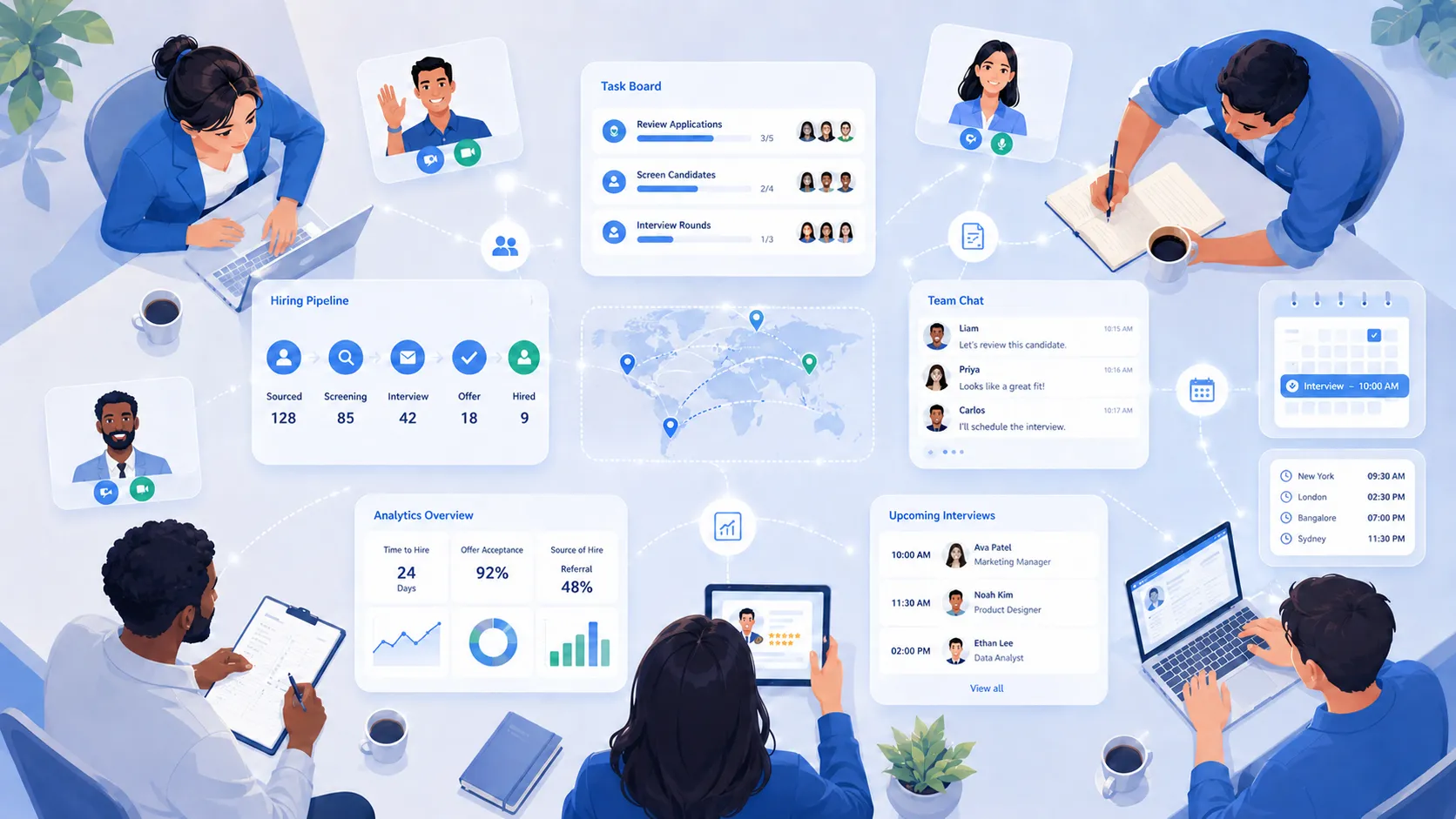
Most of the time, technology shapes how easily companies hire people worldwide. From sorting applicants to tracking progress, these systems bring order to hiring steps. Tasks such as setting up interviews can be handled automatically behind the scenes. Messages can also go out on time without someone needing to remember to send each one.
Centralise Recruitment and Employee Data
Working together becomes simpler when hiring teams, talent scouts, and job applicants share one applicant tracking system. Through digital folders and centralised records, companies can connect hiring, onboarding, worker records, and daily team tasks in one place.
From recruitment to role tracking, everything flows through integrated tools. Work runs more smoothly when information does not get lost between stages. Central access means fewer delays and less confusion.
Conclusion
Success in global hiring goes beyond selecting skilled individuals. Effective interviews, legal readiness, financial oversight, and cross-border onboarding all shape stronger outcomes.
Together, these elements make hiring easier to scale. With organised methods and up-to-date tools, applicant interactions improve while daily hiring challenges become easier to manage.

Frequently Asked Questions
1. What is global hiring?
Global hiring is the process of recruiting and employing candidates from different countries. It helps companies access wider talent pools but also requires careful planning around compliance, payroll, interviews, and onboarding.
2. Why is onboarding important for distributed teams?
Onboarding is important because remote and international employees need clear guidance from the beginning. A structured onboarding process helps them understand company expectations, tools, policies, and team communication methods.
3. What are the biggest challenges in global hiring?
The biggest challenges include time zone differences, worker classification, local employment laws, work authorisation checks, payroll costs, and maintaining a consistent candidate experience.
4. How can companies manage interviews across time zones?
Companies can manage interviews across time zones by communicating clearly, offering flexible meeting slots, avoiding last-minute changes, and using asynchronous methods such as recorded video responses or written assessments.
5. What is an EOR in global hiring?
An EOR, or Employer of Record, is a service provider that legally employs workers on behalf of a company in another country. It helps manage contracts, payroll, benefits, taxes, and compliance requirements.
6. How can technology support global recruitment?
Technology supports global recruitment by centralising candidate data, automating interview scheduling, tracking hiring stages, storing documents, and improving collaboration between recruiters, managers, and candidates.
About the Author