

TL;DR
- Virtual interviews are vital in modern recruitment, providing unmatched convenience and access to global talent.
- Key types include live two-way, one-way recorded, and one-way with re-recording options.
- Preparation is crucial: plan questions, use reliable platforms, maintain professionalism, and ensure legal compliance.
- These interviews save time and costs, offer flexible scheduling, and ensure a consistent interview experience.
- Avoid pitfalls like inadequate preparation, technical issues, unsuitable environments, disengagement, and ignoring time zones.
- Engage effectively with candidates through eye contact, active listening, and clear communication of next steps.
- Adopting virtual interview strategies is essential for hiring the best talent and adapting to evolving work environments.
Technology has transformed business operations, especially in recruitment, elevating virtual interviews to a standard part of hiring processes for job seekers, hiring professionals, and industry leaders.
These interviews provide convenience and flexibility to hiring managers and candidates, enabling participation from any location and broadening access to diverse talent pools.
For interviewers aiming to master the art of conducting virtual job interviews, understanding the essentials is vital for ensuring a seamless candidate experience. Let's explore essential virtual interviewing tips to successfully conduct them.
What are Virtual Interviews?
Virtual job interviews, often called online interviews, involve interviewing candidates remotely via technology platforms such as video conferencing tools or cloud-based communication systems.
While similar to in-person interviews, virtual interviews occur without physical interactions, providing a unique set of logistical conveniences and challenges. The process parallels traditional interviews but takes place online, allowing for remote interviewing candidates.
Types of Virtual Interviews
1. Live Two-Way Video Interview: This is the closest equivalent to an in-person interview. Conducted in real time via platforms such as Zoom, Google Meet, or Microsoft Teams, it involves a live conversation between a hiring manager and a candidate. It is the most commonly used format for mid-to-late stage hiring.
2. One-Way Recorded Interview: In this format, the hiring team prepares a set of questions in advance and candidates record their responses independently at a time that suits them. Recruiters review the recordings asynchronously. This format works well for high-volume early-stage screening, where reviewing every candidate live would be impractical.
3. One-Way Recorded Interview with Re-record Option: Similar to the one-way interview, but candidates can re-record responses before submission, ensuring their best answers. Adaptability is enhanced by using cloud phone options.
Tips for Conducting a Successful Virtual Interview

Conducting successful virtual interviews requires strategic planning, adapting traditional methods to the online environment.
Discover virtual interviewing tips to optimise your remote hiring processes.
1. Prepare Interview Questions in Advance
Formulate questions based on your job description to evaluate candidates beyond standard queries, aiming to reveal real competencies.
2. Choose the Best Virtual Communication Platform
The choice of platform influences the interview's smoothness. Select optimal video conferencing software that meets your organisation's needs.
3. Structure the Interview Effectively
Utilise a structured approach with predefined questions and topics to assess each candidate more consistently and fairly.
Good first impressions are crucial; maintain eye contact and exhibit active engagement throughout.

Engage with candidates empathetically, valuing their responses, and fostering a respectful interview atmosphere.
4. Be Ready to Answer Questions Confidently
Remember, an interview is a two-way street. Be prepared to share insights about your company, company culture, and team dynamics effectively.
5. Understand Candidates' Legal Rights
Ensure compliance with anti-discrimination laws at every stage of recruitment to protect both the organisation and candidates.
6. Dress Professionally, Even for Remote Interviews
Dress to impress, even in virtual settings, to maintain professionalism and enhance self-assuredness.
Benefits of Conducting Virtual Interviews
The digital shift has brought virtual interviews to the forefront, thanks to advanced interview management software. Let's explore why this trend is advantageous.
1. No Location Barriers
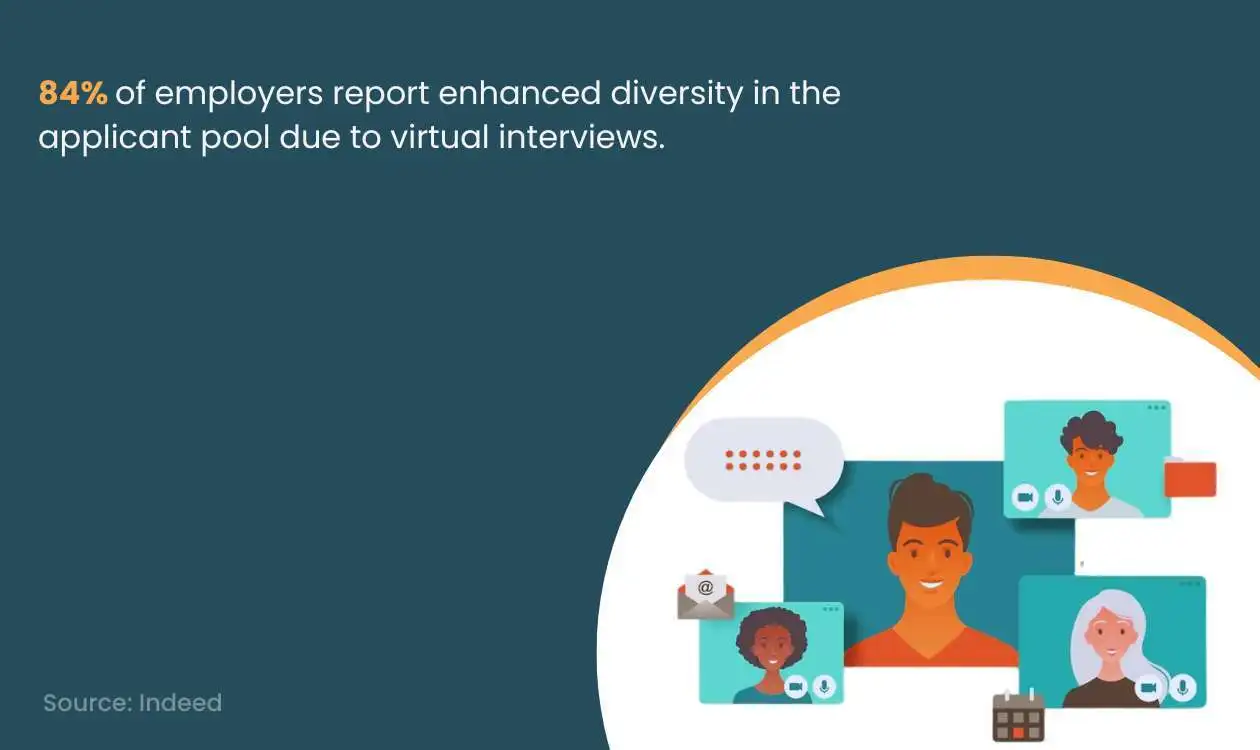
Virtual interviews open roles to candidates who would be excluded by geography from an in-person process. This materially expands your talent pool, particularly for specialist or senior roles where the right candidate may not be located nearby. Organisations that default to virtual formats for early-stage interviews consistently report access to a broader range of applicants.
2. Flexible Scheduling Options
Coordinating interview schedules across multiple stakeholders is one of the more time-consuming elements of recruitment. Virtual formats make this easier by reducing the logistical constraints associated with room availability, travel, and rigid time blocks. 49% of candidates have dropped out of a recruitment process because scheduling an interview took too long, making scheduling efficiency a direct retention lever for candidate interest.
3. Effective Time Management
Organisations using video interviewing report a reduction in time-to-hire of 50 to 70% and cost-per-hire savings of 30 to 50%. For teams managing high volumes of roles simultaneously, the cumulative time savings across screening, scheduling, and early-stage assessment are substantial.
4. Highly Convenient for All
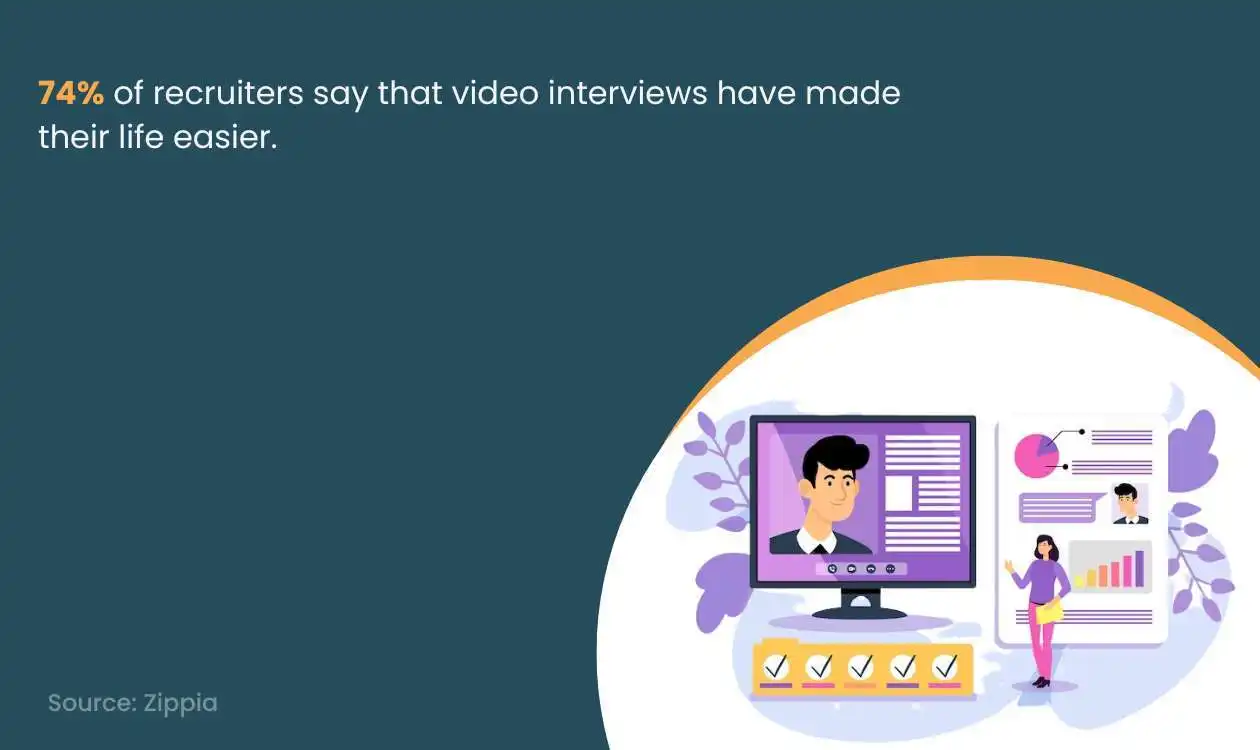
Enjoy freedom from travel obligations, reducing administrative burdens while engaging candidates smoothly through recruitment software.
5. Cost-Effective Interviewing
Significantly cut costs associated with in-person interviews, including venue hire, travel, and traditional record management.
6. Ensures Consistent Interview Process
Maintain uniformity in your interview process with structured questions, reviewing video responses multiple times to enhance decision-making for hiring managers.
Virtual Interview Mistakes to Avoid
Despite their benefits, virtual interviews present unique challenges. Avoid these pitfalls to ensure success:
1. Poor Preparation: Review the candidate's CV and any application materials before the interview begins. Arriving without having done so signals disorganisation and wastes the limited time available.
2. Technical Difficulties: Test your equipment, internet connection, audio, and video before every interview, not just the first time you use a platform. A technical failure at the start of an interview reflects poorly on your organisation and puts candidates on edge. A quick fix for shaky audio: running a noise cancellation app in the background strips out keyboard clicks, traffic, and household noise so the candidate hears you clearly, even from a home office.
3. Inadequate Environment: Select a quiet, tidy space with good lighting and a neutral background. A cluttered or distracting setting undermines the professionalism of the interaction.
4. Lack of Engagement: Multitasking during an interview, whether checking email, reading notes, or allowing notifications to distract you, is disrespectful to the candidate and reduces the quality of your assessment. Close unnecessary applications and give the interview your full attention.
5. Ignoring Time Zone Differences: When interviewing candidates in different time zones, be explicit about the time zone when sending the invitation, and verify that the candidate has received the correct local time. Scheduling errors in this area are a preventable source of friction that reflects poorly on your process.
6. Not Clarifying Next Steps: Always close the interview by telling the candidate what happens next: the expected timeline, who will be in touch, and what the following stage involves. Candidates who leave an interview without this information are more likely to disengage or accept offers elsewhere while waiting.
Conclusion
Virtual interviews have become a core competency for any hiring team operating in today's talent market. When conducted well, they reduce cost and time-to-hire, expand access to global candidates, and create a more structured, consistent assessment process than many in-person alternatives. When conducted poorly, they create friction, project disorganisation, and drive candidates toward competitors who invest more care in their process.
The investment required to do virtual interviews well is relatively modest: structured questions, a reliable platform, a professional environment, and genuine engagement with each candidate. The return on that investment, in terms of candidate quality, hiring efficiency, and employer brand, is significant.
Organisations that treat virtual interviewing as a serious, practised discipline rather than a convenient shortcut will consistently outperform those that treat it as an afterthought.
Frequently Asked Questions (FAQs)
1. What is a virtual interview?
A virtual interview is conducted remotely over the internet, allowing participants from any location to connect seamlessly, enhancing reach and flexibility.
2. How can I prepare for a virtual interview?
Test your technology, choose a distraction-free setting, dress appropriately, and practise responses to likely questions. Tools like iSmartRecruit can greatly streamline the interview process.
3. What are common mistakes to avoid during virtual interviews?
Avoid inadequate preparation, technology failures, unprofessional settings, disengagement due to distractions, and overlooking time zone differences. Efficiency and clarity are essential.
4. What are the benefits of virtual interviews?
Virtual interviews streamline logistics, remove geographic barriers, and ensure cost-effective, consistent candidate assessment, providing compelling advantages for firms.
5. Are virtual interviews cost-efficient?
Yes, they significantly cut costs associated with travel, venue, and time, providing a financially savvy alternative to traditional interviewing methods.
About the Author