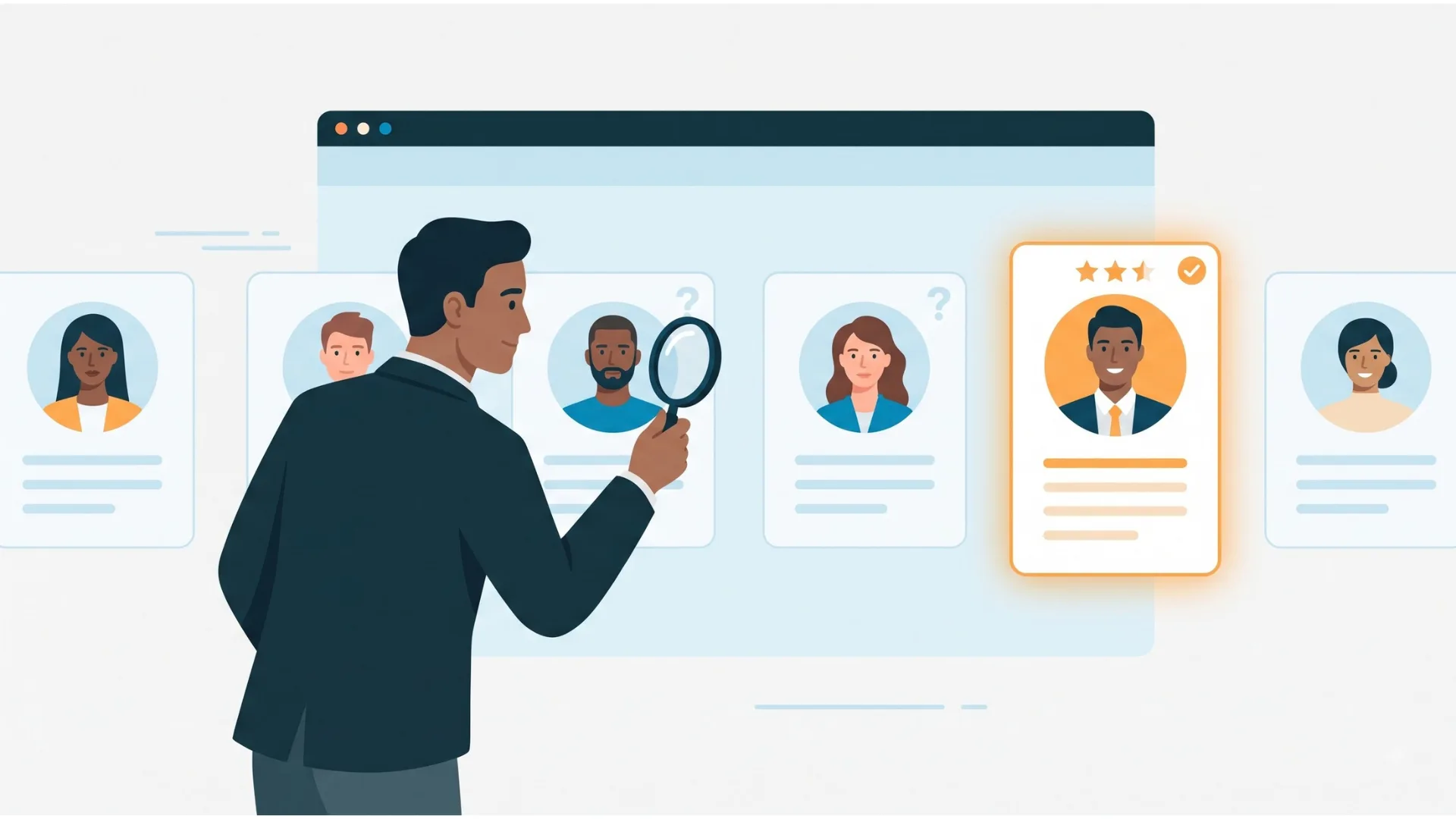

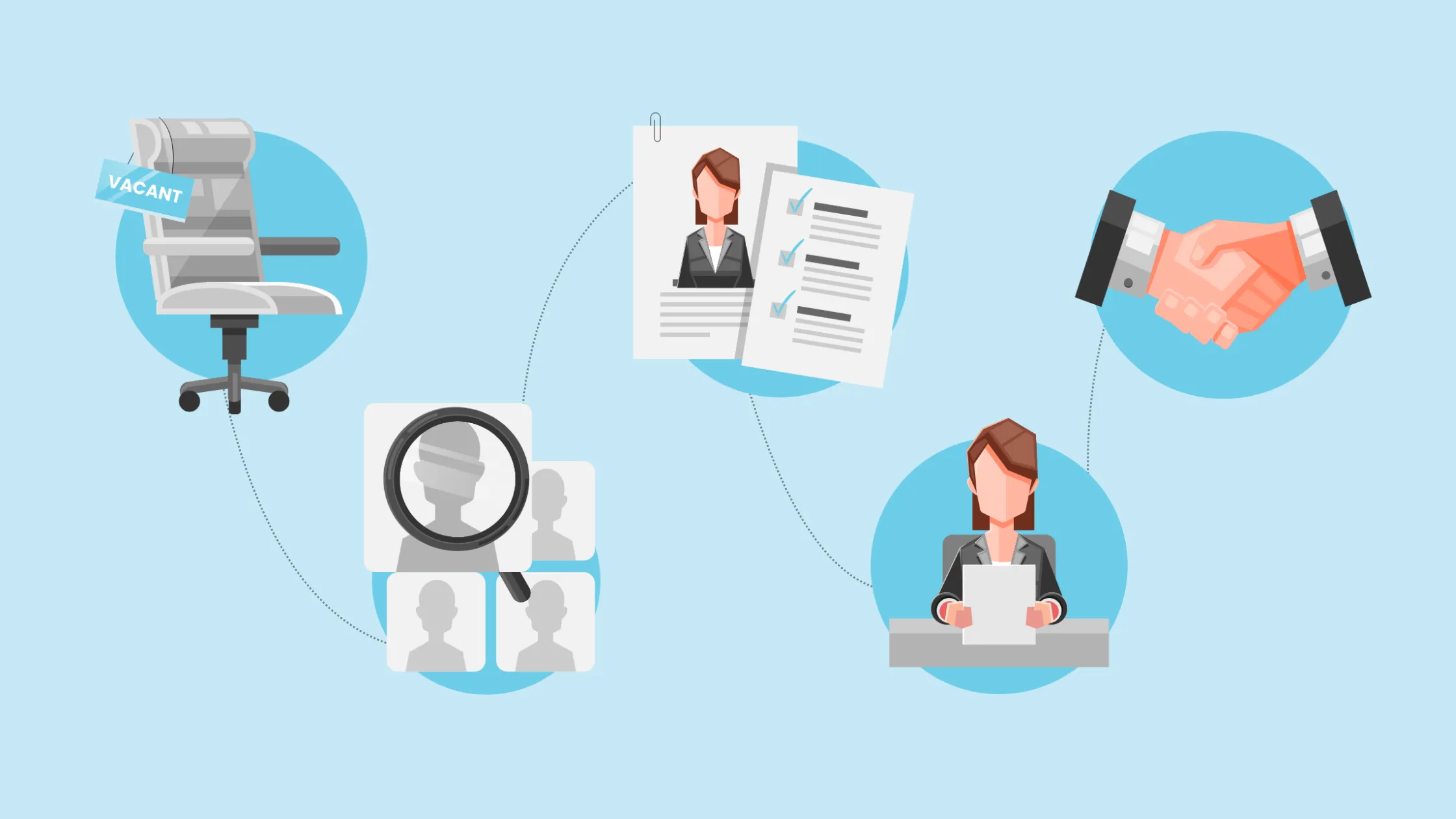
A well-structured interview process is one of the most direct levers a hiring team has for improving the quality, consistency, and speed of its hiring decisions. When each stage is deliberately designed, from the initial application review through to final selection and feedback, recruiters are better positioned to identify the right candidates, reduce bias, and create an experience that reflects positively on the organisation.
TL;DR
- The interview process is a structured series of steps used by employers to evaluate and select the right candidates.
- Common interview process steps include application review, candidate screening, interview rounds, skill assessments, and final selection.
- Different interview types such as one-on-one, phone, video, behavioural, and technical interviews help assess various candidate skills.
- A well-organised interview process with clear communication, structured evaluation, and timely feedback improves candidate experience and hiring outcomes.
This guide covers the essential components of an effective interview process: the formats available, the best practices that experienced interviewers apply, the tools that make evaluation more consistent, and the candidate-facing elements that shape how your organisation is perceived in the market.
What is the Interview Process?
The interview process is a series of organised steps that employers use to find and choose the best people for a job. It includes different parts, starting with looking at job applications and ending with picking the final candidate. The goal is to check if the candidate has the right skills and qualifications and if they fit well with the company's culture.
The interview process is very important for hiring and affects how well you find the right people. Each part affects both the employer and the candidate, from setting up interviews to giving results.
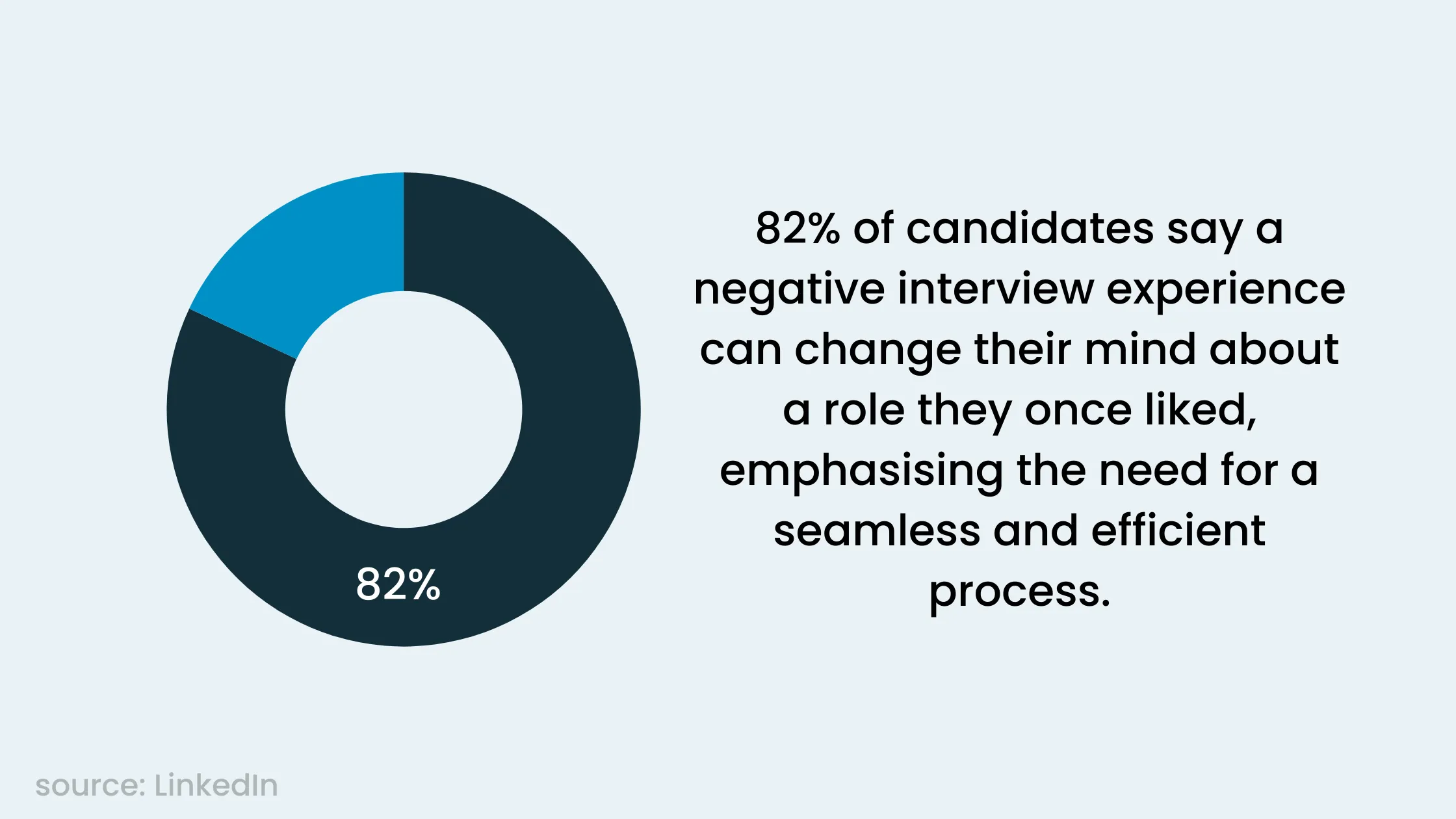
This guide looks at essential parts of a successful interview process, with advice from experts and helpful resources.
Essential Components of the Interview Process
1. Cracking the Secrets of Conducting Job Interviews
Holding job interviews is very important for making good hiring choices. These interviews help pick the right people for your company, which affects its future and also shows what your company stands for. However, doing a good interview is more than just asking the right questions; it needs careful planning and focus. Recruiters must handle applications, make candidates feel good, and get the best people to apply.
Check out the Top Secret of Conducting Awesome Job Interviews for useful tips.
2. Best Practices for Interviewers in the Interview Process
Good interviewing requires interviewers to know what the job requires, ask the right questions, and keep the conversation going smoothly. Questions like "Can you tell me about a difficult project you managed?" help candidates share essential details about their skills and past work. Mixing planned questions with some flexibility lets the interview fit each candidate's unique skills.
Making candidates feel comfortable helps them be honest and sets a good mood. To avoid unfair judgments, focus on job-related things and use scorecards or checklists to judge everyone the same way. Talking with other interviewers after the meeting helps make a fair hiring choice.
Statistics: Companies that use planned interviews see a 57﹪ better chance of picking the right person.
Source: Harvard Business Review
For more tips, here are 11 Best Insider Interview Tips for Interviewers.
3. Types of Interviews in the Hiring Process
The kind of interview you choose greatly affects how well your hiring process goes. Interviews are a very important part of hiring someone. Here are some common types:
- One-on-One Interview: A usual face-to-face meeting with just one interviewer.
- Group Interview: Multiple candidates are interviewed at the same time to see how they work together and solve problems.
- Phone Interview: A first-round interview is done over the phone to screen candidates.
- Structured Interview: A set interview where all candidates are asked the same questions in the same order. This helps make sure everyone is judged fairly and equally.
- Video Interview: A remote interview done using video calls.
- Behavioural Interview: Questions focus on what someone has done before to see their skills and how they act.
- Technical Interview: Tests technical skills by giving coding tasks or asking technical questions.
- Case Interview: Candidates are given business problems to analyse and solve.
For more information, see the Types of Interviews in details.
4. Understanding the Candidate's Interview Perspective
The interview is not just a recruitment step; it’s an opportunity to showcase your organisation and gauge cultural fit. Candidates evaluate companies as much as companies evaluate them. A clear, organised process that reflects your company values makes candidates feel respected.
Customising the interview to align with a candidate’s background and goals shows consideration and helps maintain interest. For roles that require communication across different regions or languages, multilingual interviews can demonstrate your company’s global outlook while effectively assessing candidates’ language skills and cultural adaptability.
Providing detailed schedules and expectations beforehand reduces stress. Timely feedback, regardless of the outcome, helps build a positive reputation.
Did you know? A LinkedIn survey found that 94﹪ of candidates appreciate getting helpful feedback after an interview, even if they don't get the job.
Statistics: 73﹪, express a desire for more detailed information regarding the interview process when applying for a position.
Source: Glassdoor
Take a tour here for actionable tips: Key Points of Candidate Interview to Bring the Best Talent.
5. Interview Scheduling Process
A simplified scheduling process saves time and makes a good first impression. Using tools like automatic scheduling software cuts down on repeated messages and mistakes. Offering various time slots for candidates shows understanding and flexibility. Clear, regular communication about times, locations, and interview types ensures openness.
Employers can improve this process by adding reminders and syncing calendars, which helps avoid last-minute changes. LinkedIn says that companies using automatic scheduling systems see a 25﹪ boost in hiring efficiency.
Statistics: 70﹪ of professionals like having flexible scheduling options.
Source: Glassdoor
For detailed insights: Interview Scheduling Process that Improves Candidates' Experience.
6. Structured Assessments with Interview Scorecards
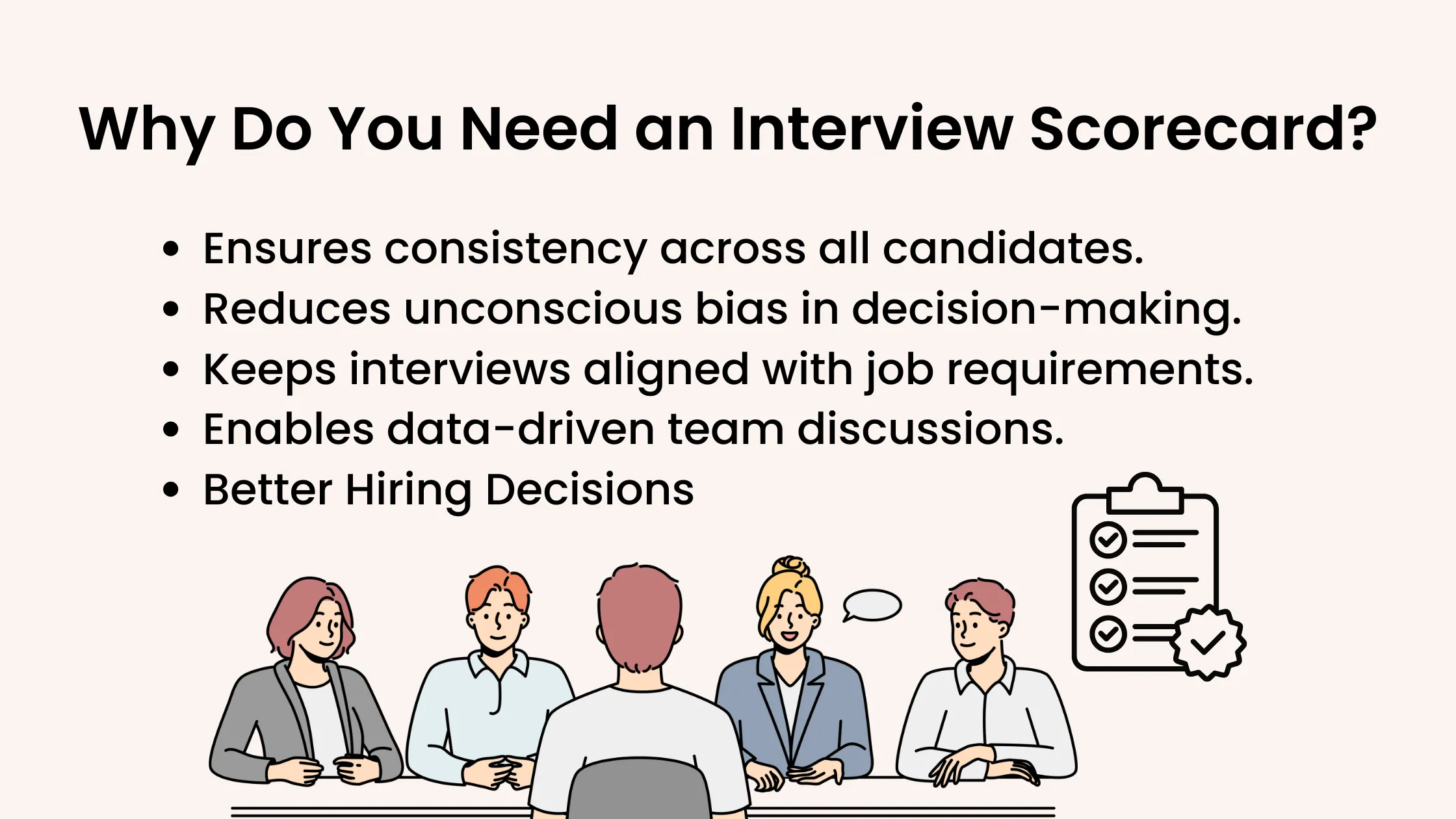
Interview scorecards help recruiters judge candidates using set standards, making the process more fair and consistent. They reduce bias, make better decisions, and match evaluations with job requirements. Scorecards also make it simpler to compare candidates, especially in group or multiple-round interviews.
Companies that use scorecards find it faster for hiring teams to agree and are more satisfied with new hires. Adding clear measures and space for detailed feedback on scorecards ensures a thorough evaluation.
Statistics: Data shows that businesses using scorecards have a 36﹪ better chance of making the right hiring choice
Source: Harvard Business Review
Learn more: Interview Scorecards: A Guide for Interviewers.
7. Providing Constructive Interview Feedback to the Candidate
Feedback is an important part of the interview process that many people forget about. Giving timely and helpful feedback, even to candidates who didn't get the job, helps build trust and a good relationship. By pointing out specific strengths and areas where they can improve, candidates can grow, and the company looks like a caring employer.
Using tools like automated feedback presentation templates helps keep communication consistent. Personalising the feedback shows that the interviewer pays attention and cares.
Statistics: Candidates who get feedback are 80﹪ more likely to apply again for future jobs, even if they were turned down the first time.
Source: Glassdoor
For practical approaches: How to Give Interview Feedback.
8. Common Interview Questions Recruiters Should Ask
Asking the right questions is an essential part of an effective interview process. Well-structured interview questions help recruiters evaluate candidate experience, problem-solving ability, and cultural fit.
Some commonly used interview questions include:
- Can you describe a challenging project you worked on and how you handled it?
- How do you prioritise tasks when managing multiple deadlines?
- Tell us about a situation where you solved a difficult problem at work.
- How do you handle feedback or criticism from managers or colleagues?
- What motivates you to perform well in your role?
These questions encourage candidates to share real experiences and help interviewers better understand their skills and decision-making abilities.
For tough interview questions, visit 5 Tough Interview Questions that are Difficult to Answer.
Conclusion
A well-designed interview process is one of the most significant investments a hiring team can make in the quality and consistency of its outcomes. The components covered in this guide, structured formats, trained interviewers, consistent scorecards, responsive scheduling, and substantive feedback, do not require large budgets or complex technology. They require deliberate design and disciplined execution.
Organisations that treat the interview process as a professional, structured discipline rather than an informal conversation series consistently outperform those that do not: on quality of hire, on time to fill, on candidate experience, and on the employer reputation that makes future hiring easier.
The starting point is straightforward. Define the competencies that matter for each role, design questions and formats that genuinely assess them, evaluate candidates against consistent criteria, and communicate clearly and promptly at every stage. Applied consistently, these practices form the foundation of a hiring process that works for the organisation and for the candidates it is designed to serve.

Frequently Asked Questions (FAQs)
1. What is the interview process?
The interview process is a structured hiring procedure where recruiters screen, assess, interview, and evaluate candidates to select the best person for a job role.
2. What are the typical steps in the interview process?
The typical interview process steps include application review, phone screening, first-round interview, skills assessment, final interview, reference checks, offer discussion, and candidate selection.
3. How does the interview process work?
The interview process works by moving candidates through planned stages, from screening and interviews to assessments, feedback review, and the final hiring decision.
4. Why is a structured interview process important?
A structured interview process helps recruiters evaluate candidates using consistent criteria, reduce bias, and make fair hiring decisions through predefined questions, scorecards, and clear interview stages.
5. What is the recruiter’s role in the interview process?
Recruiters manage the interview process by screening candidates, coordinating interview stages, preparing interviewers, collecting feedback, and keeping candidates informed throughout the hiring process.
About the Author