
In today's competitive job market, companies utilise innovative methods like group interviews to efficiently assess multiple candidates. This approach allows employers to evaluate key soft skills, such as communication, leadership, and team synergy. However, it presents unique challenges, from candidates needing to stand out amidst peers to recruiters ensuring fair evaluations.
TL;DR
- Group interviews offer a simultaneous assessment of multiple candidates, focusing on teamwork, leadership, and communication.
- They reveal genuine personalities and showcase essential soft skills crucial for the role.
- Benefits include rapid hiring, rich discussions, and spotlighting communication skills.
- Challenges include heightened competition, potential dominance by certain personalities, and limited scope for follow-up questions.
- Success tips: thorough preparation, keen listening, proactive engagement, and confidence.
- Frequent questions tackle teamwork, conflict resolution, task prioritisation, and company culture compatibility.
- iSmartRecruit enhances group interviews with real-time collaboration tools and insightful analytics.
The interview process typically involves multiple stages, starting with initial screenings, followed by one-on-one or panel interviews, and sometimes practical assessments. Employers may use different types of interviews, such as structured interviews with predefined questions, behavioural interviews that explore past experiences, and situational interviews that assess problem-solving abilities. Each format is designed to evaluate specific competencies and ensure a comprehensive understanding of a candidate’s fit for the role.
What is a Group Interview?
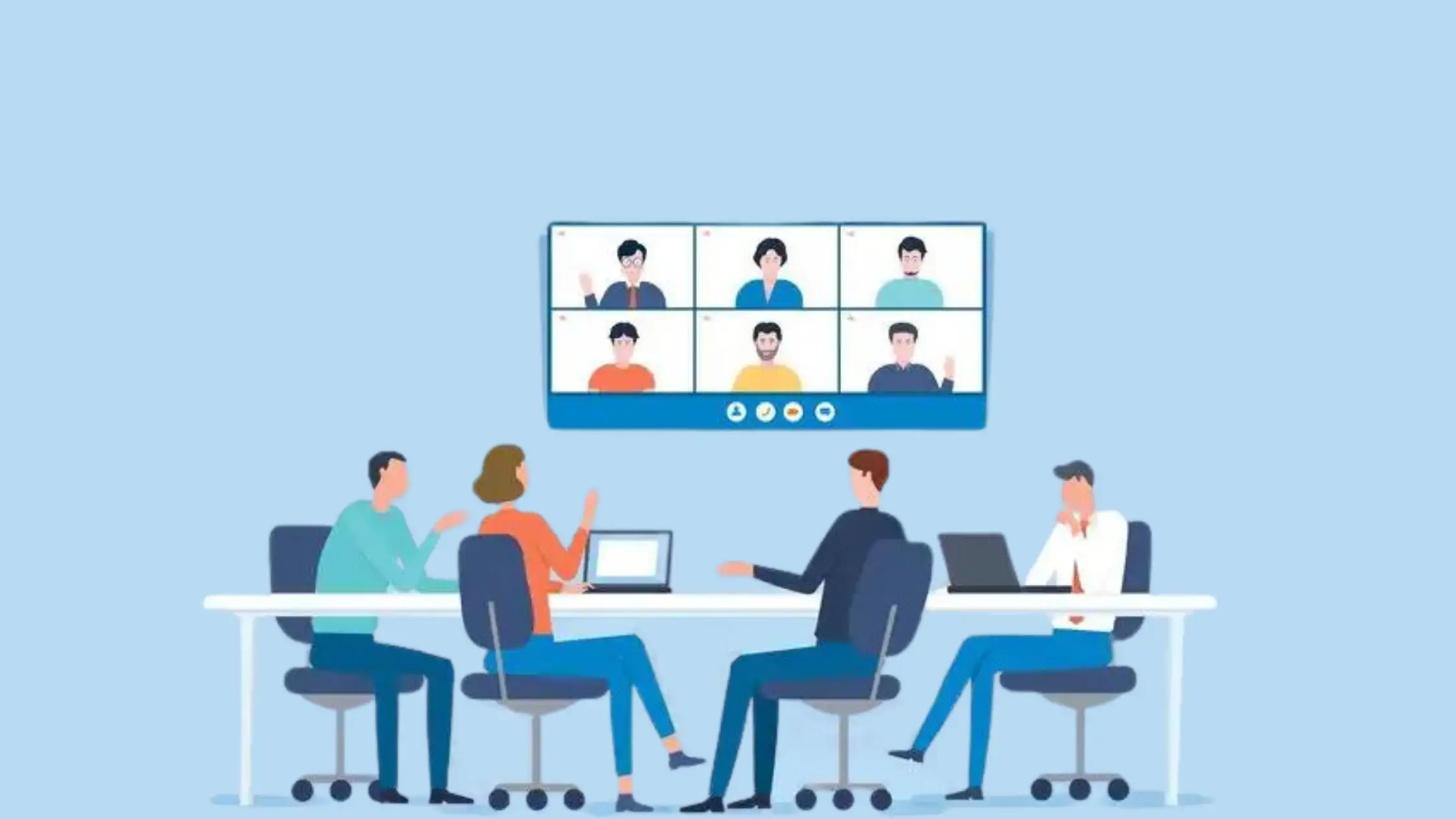
A group interview is a hiring format in which multiple candidates are assessed together by one or more interviewers at the same time. Rather than evaluating individuals in isolation, employers observe how candidates communicate, collaborate, and conduct themselves when interacting with peers in a professional setting.
Group interviews are particularly effective for roles where soft skills like teamwork, leadership, and communication are central requirements. They also allow employers to compare candidates directly against each other, which can make shortlisting decisions faster and more informed.
A group interview is a hiring practice where several candidates are evaluated together for a job. This technique enables employers to assess candidates' abilities in communication, teamwork, and leadership, facilitating swift evaluations when filling multiple positions.
By observing interactions among candidates, employers gain insights into their personalities, working styles, and potential fit within the team.
Uncertain about the differences between group and panel interviews? The next section clarifies these distinctions.
Group Interview vs Panel Interview: Key Differences
Group interviews and panel interviews are sometimes confused, but they serve different purposes and are structured very differently.
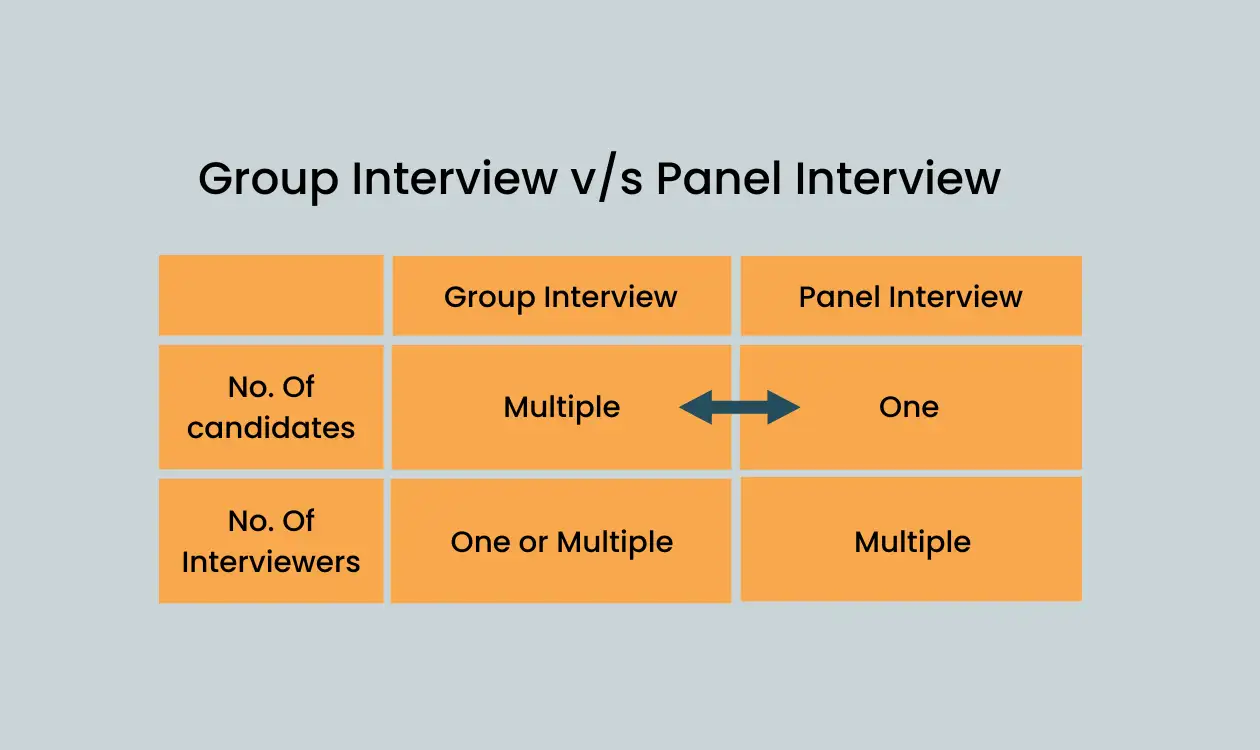
Recruiters frequently choose between group and panel interviews when seeking the best candidates. Despite some similarities, their fundamental differences have a notable impact on the hiring process.
Here we delve into these differences to help decide the most suitable method for your organisation.
Group Interview
- Format: One or more interviewers assess several candidates together.
- Questions: Typically, candidates respond to identical questions.
- Activities: May include group exercises or discussions.
- Efficiency: Facilitates the quick assessment of many candidates for various roles.
- Structure: Less formal than panel interviews, possibly complicating candidate comparisons.
Panel Interview
- Format: A team of interviewers questions a single candidate.
- Questions: Tailored to each interviewer's expertise.
- Focus: Individual candidate responses are scrutinised.
- Detail: Allows comprehensive assessment of each candidate.
- Experience: Might be daunting due to multiple interviewers' presence.
The right choice depends on what you need to evaluate and how many candidates you are assessing. Group interviews work well for volume hiring and soft skill assessment. Panel interviews are better suited to individual deep dives and senior-level recruitment.
Group Interview Advantages and Disadvantages
Group interviews can be a double-edged sword, offering both significant insights and distinct challenges. Explore the benefits and hurdles of group interviews below.
Advantages of Group Interview
Companies favour group interviews for their distinct benefits, which surpass those of traditional one-on-one interviews. Key advantages include:
1. Quick selection
Efficiency for all parties involved with rapid evaluations, allowing timely decisions.
2. Scope for discussion
Candidates can express views that influence recruiters and reveal significant personal attributes.
3. Diverse responses
The setup provides varied answers to similar inquiries, aiding understanding of different mindsets.
4. Identify top candidates
Group interviews clearly highlight standout candidates and illustrate their collaborative skills.
5. Demonstrate communication skills
Serves as a platform to demonstrate vital communication abilities.
6. Immediate decisions
On-the-spot decisions are possible, reducing the need for lengthy follow-ups.
Disadvantages of a Group Interview
Despite advantages, several drawbacks exist with group interviews. Consider the challenges:
1. Intense competition
Highly competitive settings can complicate decision-making processes for all involved.
2. Dominating discussions
Some participants may dominate discussions, hindering balanced evaluations.
3. Overpowering participants
The presence of dominant personalities can overshadow quieter candidates, affecting thorough assessments.
4. Limited questioning
Time pressure can curtail in-depth follow-up, impacting comprehensive evaluations.
5. Conflicting mindsets
Divergent viewpoints among candidates can be challenging to moderate.
Group Interview Tips For Succeeding
Success in group interviews requires tailored strategies. The following tips will enhance your performance:
Consider these essential pointers for group job interviews:
- Stay informed about industry trends.
- Respectfully greet everyone involved in the interview.
- Craft a captivating self-introduction.
- Listen carefully to others before responding.
- Actively contribute to discussions.
- Encourage others to share their insights.
- Ask pertinent questions during discussions.
- Display confidence during interactions.
- Engaging eye contact conveys interest and involvement.

Common Questions and Answers for a Group Interview
Specific questions can streamline your prep for a group interview. Consider these common examples:
Q1. Can you tell us about a time you worked in a team to achieve a shared goal?
How to approach it: Describe a specific situation, your role within the team, how you contributed, and what the outcome was. Focus on what you personally did while acknowledging the contributions of others. This question assesses collaboration and self-awareness equally.
Example answer: In my previous role, I was part of a cross-functional team working to launch a new product within a tight four-week window. I took responsibility for coordinating communication between the design and development teams, which had previously been a source of delays. By setting up a shared progress tracker and a brief daily check-in, we were able to launch on time. The experience reinforced for me that clear communication is often the difference between a team that delivers and one that struggles.
Q2. How do you handle conflict within a team?
How to approach it: Show that you can address disagreement directly and constructively without avoiding it or escalating it. Interviewers want to see emotional maturity and a collaborative instinct.
Example answer: When conflict comes up, I try to address it early rather than letting it build. My first step is to understand the other perspective genuinely, because most conflicts come down to different priorities or assumptions rather than bad intentions. Once I understand where the other person is coming from, it is usually much easier to find a way forward that works for both sides.
Q3. How do you prioritise tasks when working collaboratively?
How to approach it: Demonstrate that you can balance your own responsibilities with shared team goals, and that you communicate proactively when priorities shift.
Example answer: I start by understanding which tasks have the highest impact and the nearest deadlines, then I check in with the team to make sure my priorities are aligned with theirs. If something comes up that changes the order of work, I flag it early rather than making assumptions. The goal is always to make sure the team is moving in the same direction.
Q4. How do you contribute to a positive team culture?
How to approach it: Be specific rather than general. Vague answers about "being positive" are less convincing than concrete examples of how you have actively shaped team dynamics.
Example answer: I try to be consistent in how I treat people, especially when things are stressful. I make a point of acknowledging when someone has done good work, because that kind of recognition tends to be underprovided in most teams. I also try to be direct about problems early, because teams that avoid difficult conversations tend to develop much bigger problems later.
When to Use a Group Interview Format
Group interviews are not suitable for every role or every stage of the recruitment process. They tend to work best in specific circumstances.
They are particularly effective for customer-facing roles where interpersonal skills are central, such as sales, service, retail, and hospitality. They are also well suited to graduate and early-career recruitment where a large number of candidates need to be assessed efficiently and quickly. Volume hiring for team-based environments, and initial screening stages where the goal is to identify a smaller shortlist for further assessment, are also strong use cases.
They are less appropriate for senior leadership roles, highly technical positions, or any situation where individual depth of knowledge and specific experience need to be assessed in detail. In those cases, individual interviews or structured technical assessments are better suited to the evaluation required.
How iSmartRecruit Will Help You In Group Interviews
Equipped with the knowledge and tactics discussed, you're poised to navigate group interviews successfully.
A notable advantage is iSmartRecruit’s Recruitment Software, which can significantly enhance your group interviews.
Featuring real-time collaboration, gather rapid feedback to create a comprehensive review system.
Advanced analytics offer data-driven insights, expediting informed hiring decisions and empowering your recruitment strategy with iSmartRecruit.
Curious to learn more? Experience these solutions yourself during a free demo and see the iSmartRecruit difference in action.
1.png)
Frequently Asked Questions (FAQs)
1. What is a group interview?
A group interview is a hiring method where multiple candidates participate simultaneously. It allows employers to gauge communication, collaboration, and leadership qualities by observing inter-candidate interactions.
2. How does a group interview work?
During a group interview, candidates engage in group tasks or discussions. Interviewers assess each participant's ability to communicate, collaborate, and thrive under competition or stress.
3. What is the difference between a group interview and a panel interview?
Group interviews involve simultaneous candidate evaluation. In contrast, panel interviews involve a single candidate interviewed by multiple interviewers at once.
4. How should you prepare for a group interview?
Preparation for a group interview includes researching the organisation, crafting a strong introduction, maintaining confidence, actively listening, contributing meaningfully, and showcasing teamwork skills.
5. What are common group interview questions?
Typical group interview questions cover teamwork, conflict resolution, leadership, time management, and communication. Candidates are often prompted to discuss past experiences involving collaborative efforts.
About the Author