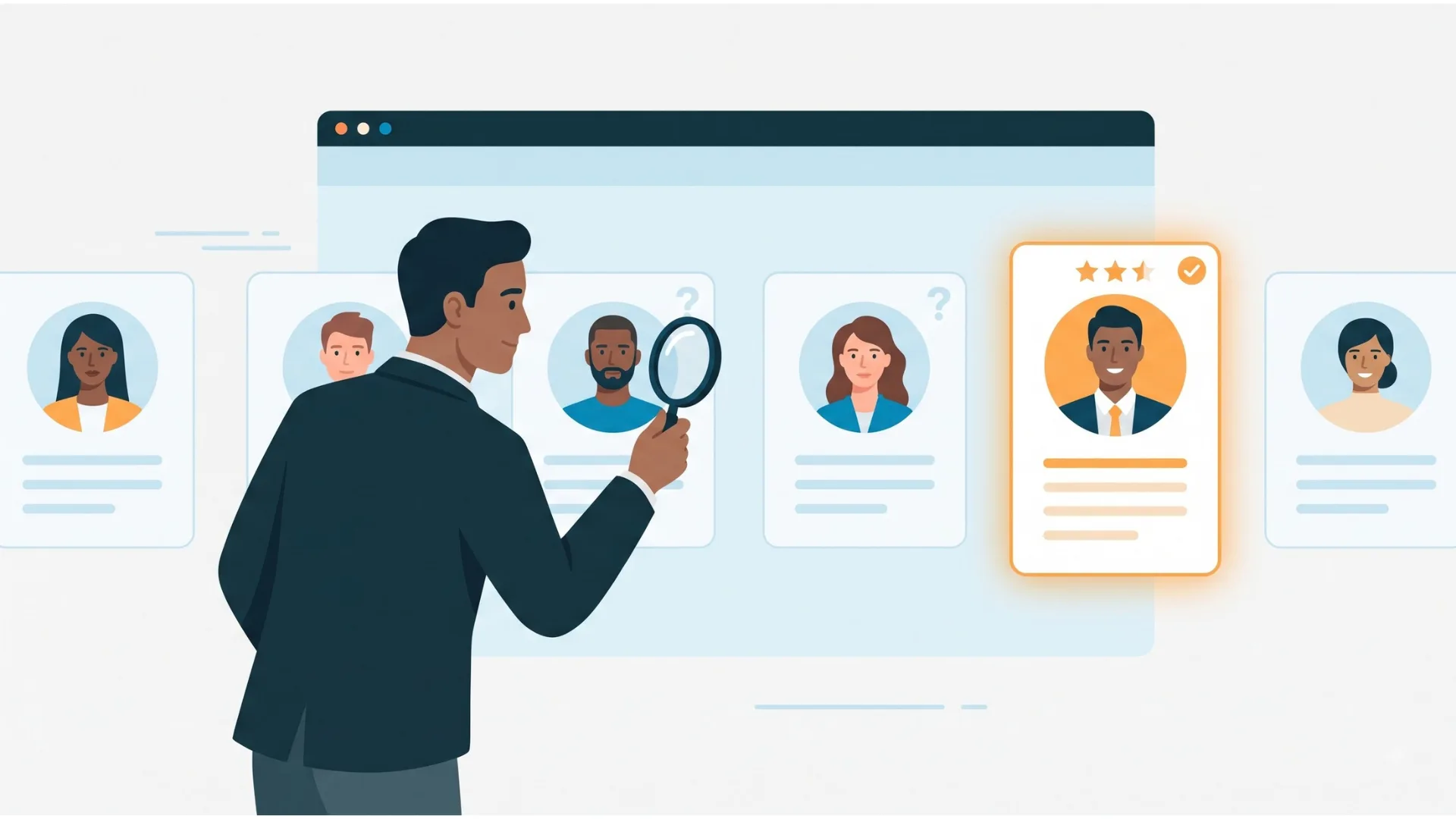


Recruiters and talent acquisition teams face mounting pressure to hire more diverse teams while moving faster and cutting costs. The phrase AI diversity hiring captures how artificial intelligence is shaping diversity hiring and inclusion efforts. In recruitment technology, AI promises more consistent screening, better sourcing for underrepresented groups and smarter analytics to measure outcomes. At the same time, poorly configured systems can entrench bias. This article explains how AI can help, where it can harm, and the practical steps HR teams should take when adopting AI for diversity hiring.
TL;DR
- AI can reduce human bias in hiring when designed and audited carefully.
- Tools like anonymised screening and structured scoring improve fairness and consistency.
- Bias in training data and proxy variables are the main risks to manage.
- Combine AI with human oversight, transparency and continuous monitoring.
- Practical steps: audit vendors, test outcomes, standardise interviews, track diversity metrics.
- Candidate experience and legal compliance must be prioritised alongside accuracy.
- When used well, AI diversity hiring can accelerate inclusive talent acquisition and measurable outcomes.
Why AI is becoming central to diversity hiring
Recruitment volumes, the number of channels and candidate expectations have changed. Recruiters need repeatable ways to assess applicants. AI can automate repetitive tasks and surface candidates from wider talent pools. It can also help remove subjective elements that cause inconsistent decisions.
For diversity hiring, three AI strengths matter most:
1. Scalability:
AI can screen thousands of CVs quickly and apply consistent criteria across candidates.
2. Pattern detection:
Machine learning can reveal where pipelines leak underrepresented groups and why.
3. Personalisation:
AI-powered outreach and job advertising can target diverse talent more effectively.
Concrete examples and results
Several organisations and vendors show the potential and pitfalls of AI in practice. For sourcing, companies use programmematic ads and AI-driven sourcing tools to reach diverse communities. For screening, anonymised CV tools remove names and addresses to reduce affinity bias. For assessment, some firms use game-based cognitive tests and structured scoring to evaluate candidates on skill rather than background.
Research shows companies with diverse leadership outperform less diverse peers on profitability metrics, and many candidates value diversity when choosing employers.
While I avoid attributing a single number to every context, reputable studies indicate diversity correlates with improved business outcomes and talent attraction. Case studies from large employers reveal measurable improvements in time to hire and candidate diversity when AI is combined with process changes and governance. Conversely, high profile debates around facial analysis and video interview scoring illustrate the harms when AI models use problematic inputs or lack transparency.
How AI reduces bias in hiring
When designed with fairness in mind, AI supports diversity hiring in several ways:
1. Anonymised screening:
Removing names, photos and institutions helps evaluators focus on skills and experience.
2. Structured interviews:
AI scoring frameworks encourage consistent questions and objective rating rubrics for all candidates.
3. Predictive analytics:
Models that predict attrition, performance or retention can be used to design inclusive hiring plans that avoid overreliance on narrow proxies.
4. Targeted sourcing:
AI can find candidates with transferable skills from non-traditional backgrounds and surface talent pools recruiters may miss.
5. Bias detection:
Tools can audit historical hiring data to identify where certain groups were systematically screened out, enabling corrective action.
Common risks and how they arise
AI is not bias free. Major risks include:
1. Tainted training data:
If historical hiring favoured a narrow profile, models trained on that history will reproduce the bias.
2. Proxy variables:
Features like postcode or university may act as proxies for protected attributes and inadvertently exclude candidates.
3. Lack of transparency:
Black box models make it hard to explain decisions to candidates and hiring managers.
4. Feedback loops:
Using model recommendations to guide hiring without monitoring can reinforce initial biases.
5. Poor candidate experience:
Over-automation or opaque assessments can alienate diverse candidates who value fairness and communication.
Practical governance for safe AI diversity hiring
Organisations should treat AI as a policy and process problem as much as a technology problem. A practical governance framework looks like this:
- Define use cases - be explicit about where AI will assist, for example CV shortlisting, sourcing or interview scoring.
- Vendor due diligence - require vendors to provide fairness metrics, explainability and data lineage for their models.
- Bias audits - perform pre-deployment testing and periodic audits that measure disparate impact across groups.
- Human in the loop - ensure hiring decisions stay with trained recruiters or managers who review AI recommendations.
- Data governance - document datasets, clean sensitive fields and manage consent for candidate data.
- Monitoring and KPIs - track conversion rates by demographic segment, time to hire and quality of hire to spot regressions.
Design and implementation best practices
Follow these steps when implementing AI for diversity hiring:
1. Start with the question
define the diversity outcome you aim to improve, for instance increasing hires from underrepresented groups for a specific role.
2. Collect the right data
gather diversity metrics and non-identifying contextual data to test fairness without exposing sensitive attributes unnecessarily.
3. Use simple models first
simpler models provide more transparency and are easier to audit than complex neural networks for many recruiting tasks.
4. Remove direct identifiers
anonymise names, photos and other explicit identifiers during screening stages.
5. Standardise evaluation
use structured interview guides and scorecards so AI scores complement rather than replace human judgement.
6. Run A B tests
compare AI-assisted workflows to control groups to measure impact on diversity outcomes and candidate experience.
7. Communicate with candidates
tell applicants when AI is used, explain what is being evaluated and provide appeal routes or human review options.
Vendor selection: what to ask
When choosing an AI vendor, ask for the following documentation and capabilities:
- Fairness metrics and validation reports demonstrating low disparate impact.
- Model explainability tools that show which features drive decisions.
- Data provenance documentation showing where training data originates.
- Options for anonymisation and removal of sensitive attributes.
- Support for audits and the ability to provide raw scoring data for independent review.
Real world considerations and examples
Some organisations have adopted AI tools successfully while pairing them with process changes. For example, a large consumer business used anonymised CV screening plus structured interviews and found a measurable rise in hires from non-traditional backgrounds. Another firm used AI to identify universities and boot camps that produced high performing graduates and adjusted sourcing to include those pipelines.
There have also been cases where organisations paused or changed tools after finding unintended bias. Those examples underline that governance, transparency and continuous measurement are critical. The debate about video interview analysis illustrates this. Video scoring can introduce cultural or accent bias if models were trained on narrow datasets. Reputable providers now offer clearer documentation, model cards and the option to disable facial analysis features.
Metrics to monitor for diversity hiring success
To know whether AI is helping diversity hiring, track the following metrics:
- Source to hire conversion rates by demographic group.
- Time to hire and offer acceptance rates across groups.
- Performance and retention metrics of hires sourced or screened by AI versus traditional channels.
- Candidate satisfaction and Net Promoter Score for applicants who experienced AI-driven assessments.
Legal, ethical and candidate experience issues
Regulation is catching up with AI in recruitment. Ensure compliance with data protection laws and be ready to explain automated decisions if candidates ask. Ethical practice also means providing human appeal routes and avoiding opaque scoring that candidates cannot challenge. From a candidate perspective, transparency increases trust. Clear communication about how AI is used can reduce concern and improve engagement.
Action checklist for HR and talent teams
Use this checklist when evaluating or implementing AI for diversity hiring:
- Map where AI touches the candidate journey.
- Require fairness reports from vendors and run independent audits.
- Remove direct identifiers and check for proxy variables.
- Standardise interviews and scoring to reduce subjectivity.
- Track outcomes and iterate based on data.
- Offer human review and communicate AI use to candidates.
Conclusion
The promise of AI diversity hiring is real. When deployed with strong governance, transparent models and human oversight, AI can reduce bias, widen talent pools and deliver measurable improvements to inclusion efforts. The opposite is also true. Without careful design, AI can replicate and accelerate unfair practices. For recruiters and talent acquisition leaders the imperative is clear. Treat AI as a tool that must be audited, explained and integrated into standardised hiring processes. Doing so makes AI a powerful ally in building more diverse, fair and effective teams.
.webp.dat)
FAQs - Frequently Asked Questions
1. Does AI eliminate hiring bias entirely?
No. AI can reduce certain human biases by standardising processes and removing identifiers, but it can introduce new biases if training data or features act as proxies for protected characteristics. Continuous audits and human oversight are essential.
2. How should we measure whether AI is improving diversity?
Track conversion rates, time to hire, offer acceptance and retention by demographic group. Also measure candidate satisfaction and compare performance of hires sourced via AI versus other channels.
3. Are anonymised CVs effective?
Yes. Anonymisation removes obvious triggers for affinity bias and encourages focus on skills. It should be combined with structured evaluation to be most effective.
4. Can vendors be trusted to provide fair AI?
Some vendors provide robust fairness documentation and support audits. Demand transparency, require fairness metrics and, where possible, audit vendor models using your own data.
5. What should we tell candidates about AI use?
Be transparent. Explain what the AI evaluates, how it influences decisions and how candidates can request human review or further information.
6. How often should we audit AI systems?
Audit before deployment, then at regular intervals and whenever you see unexpected changes in hiring patterns. Frequency depends on volume and impact, but quarterly reviews are a good starting point for many organisations.
7. Where can I start if my team has no AI experience?
Begin with a clear problem statement, run a pilot on a single use case, choose a vendor offering transparency and involve legal, data and diversity leads from the start. Use simple models and build governance as you scale.
About the Author