

Hiring in 2026 looks nothing like it did even three years ago. Job seekers apply from their phones in seconds, top candidates disappear from the market within days, and recruiting teams are expected to fill more roles with leaner headcount. AI talent acquisition software has become the layer that makes this possible it scans thousands of profiles in the time a recruiter takes to read one resume, flags the candidates worth a conversation, and keeps everyone in the pipeline informed without anyone lifting a finger.
TL;DR
- AI talent acquisition software automates sourcing, screening, candidate engagement and workforce analytics so recruiters can focus on judgement calls, not admin.
- Must-have features: automated sourcing, semantic resume matching, bias mitigation, conversational AI, predictive analytics and deep ATS/HRIS integrations.
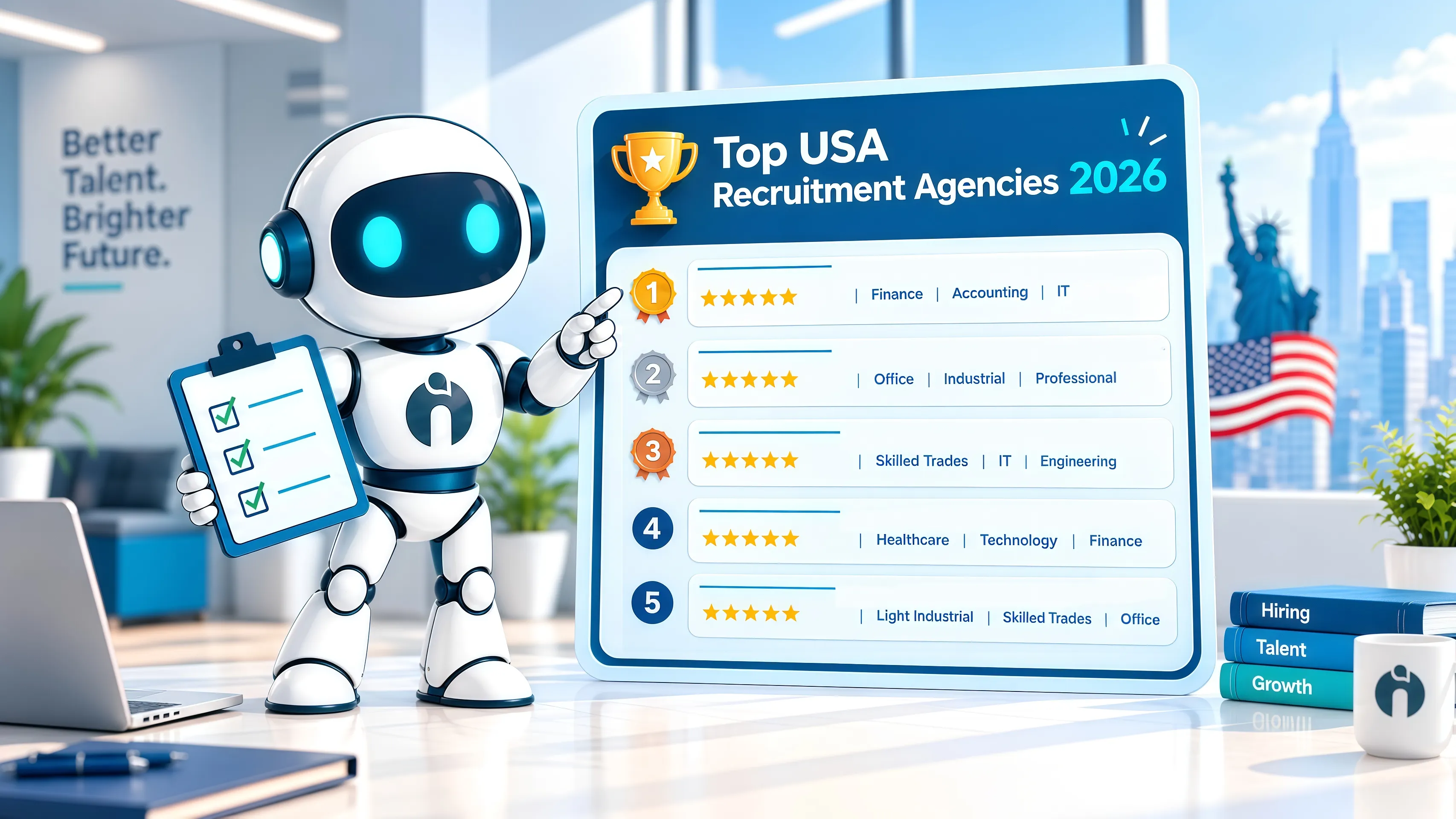
- Our top picks for 2026 balance accuracy, integrations and data privacy: iSmartRecruit, Eightfold.ai, SeekOut, Beamery and Greenhouse.
- Teams that adopt the right talent acquisition platform typically see faster time-to-hire, lighter screening workloads and higher offer-acceptance rates but the gains depend on disciplined change management.
- Track ROI with time-to-hire, quality-of-hire, interview-to-offer ratio and candidate conversion at every funnel stage.
- Treat data security, bias audits and ATS/HRIS connectivity as non-negotiables before you sign a contract.
- Start with a pilot, measure outcomes against a baseline, then scale with governance and training.
In this guide we define AI talent acquisition software, break down core features, compare leading platforms, share real examples and give a practical buyer checklist for HR teams and talent acquisition experts. The aim is to help you choose a platform that improves hiring speed, candidate experience and quality of hire while protecting data and fairness.
Why Talent Teams Are Adopting AI Recruitment Software in 2026 ?
HR leaders are investing in AI hiring tools for three reasons: speed, consistency and better decisions. Teams report that automated shortlisting cuts screening time dramatically and produces more consistent candidate evaluations than manual review, while predictive scoring helps recruiters prioritise the applicants most likely to convert to a hire. Adoption has also accelerated as AI agents move beyond basic automation into fully autonomous sourcing and engagement a shift covered in depth in this breakdown of the AI trends reshaping recruitment in 2026.
Cost pressure is another driver. Every unfilled requisition has a real price tag lost productivity, overworked teams and, eventually, attrition. Automated talent acquisition tools reduce that drag by compressing the sourcing-to-shortlist window from weeks to days.
Why do organisations adopt AI talent acquisition software ?
HR teams adopt AI talent acquisition software to reduce time to hire, improve candidate experience and make better hiring decisions. Industry surveys report that teams using AI tools often see screening times cut by up to 50% and more consistent shortlisting. Recruiters also report higher interview-to-hire ratios when predictive tools help prioritise candidates.
Core features to evaluate
- Automated sourcing - AI scans job boards, social profiles, talent pools and internal databases to surface both active applicants and passive candidates who aren't actively job-hunting.
- Resume parsing and semantic matching - natural language processing matches skills, intent and career trajectory to a role, going far beyond simple keyword search.
- AI candidate screening software capabilities - automated shortlisting, scoring and even fraud detection, since deepfake interviews and fabricated work histories are a growing risk; this guide to AI fraud detection in recruitment is worth reading before you scale up high-volume hiring.
- Bias mitigation tools - anonymisation, fairness testing and calibrated scoring to reduce unintended bias in shortlisting decisions.
- Conversational AI and recruiting chatbots - automated outreach, pre-screening conversations and status updates that work around the clock; see how AI recruitment agents act as talent scouts for sourcing and engagement.
- Interview scheduling and assessment integration - automation removes the back-and-forth admin and connects directly to video interviews and skills tests.
- Predictive analytics - models forecast candidate fit, tenure likelihood and pipeline conversion so recruiters know where to focus.
- Integrations and APIs - seamless connections with your ATS, HRIS, calendars, assessment providers and background-check vendors; recruiting CRMs in particular solve a lot of the friction here, as outlined in how recruiting CRM software solves common hiring challenges.
- Compliance and data governance - GDPR-ready data handling, audit logs and explainable AI are essential, not optional; this practical guide to GDPR in AI recruitment is a good starting point for legal and HR teams working through compliance.
Real Examples and Use Cases
High-volume retail hiring:
A retail chain rolled out conversational AI to handle high-volume candidate enquiries eligibility questions, assessment scheduling and status updates freeing recruiters to focus entirely on interviews. Candidate drop-off during the application stage fell sharply during the busiest hiring months once applicants stopped waiting days for a response.
Always-on sourcing for technical roles:
A mid-size technology company used automated sourcing to surface passive candidates from professional networks and internal talent pools for senior engineering roles, cutting time-to-fill nearly in half by prioritising candidates who matched both skills and mobility preferences. This mirrors a broader pattern seen across companies adopting automated talent acquisition tools, when AI agents handle the repetitive first pass, application-completion rates and speed-to-hire both improve, a trend explored further in this look at AI recruitment agents as 24/7 talent scouts.
Diversity-focused sourcing:
Organisations under pressure to widen their candidate pool are increasingly using AI to flag biased language in job postings and promote blind, skills-first evaluation. This look at how AI is transforming diversity hiring strategies walks through how that works in practice.
Best AI Talent Acquisition Software: Top Picks for 2026
Below are practical, vendor-neutral observations on the platforms leading the market. Match capability to your hiring volume, budget and integration needs the "best" platform is the one that fits your workflow, not the one with the longest feature list.
1. iSmartRecruit
- Best for: mid-market and enterprise teams that want configurability without a steep implementation curve.
- Key features: strong ATS and CRM integration, AI agents, conversational screening, semantic candidate matching, intelligent sourcing.
- Standout capability: generative AI that drafts job posts, candidate summaries and outreach emails automatically, alongside 24/7 conversational chatbots.
- Good to know: used across 70+ countries with support for 14 languages, plus a self-hosted option for teams with stricter data-security needs.
- Pricing: quote-based, scaling with team size and feature set. Third-party trackers put per-user costs at roughly $25–$45 per user, per month generally at or below the industry-average ATS price point.
2. Eightfold.ai
- Best for: large enterprises (typically 2,000+ employees) focused on internal mobility.
- Key features: talent intelligence and internal redeployment tooling, built on a database of more than a billion career profiles.
- Standout capability: deep-learning skills inference that surfaces a candidate's likely skills even when they aren't explicitly listed on a resume.
- Good to know: implementation typically runs 3–6 months with no free trial, so it suits teams that can absorb a longer rollout before seeing value.
- Pricing: not published. Industry estimates put costs at roughly $7–$10 per employee, per month, which typically lands large-enterprise contracts between $150,000 and $500,000+ per year depending on modules licensed.
3. SeekOut
- Best for: diversity hiring and sourcing hard-to-reach technical talent.
- Key features: advanced people-search filters spanning GitHub, patents and academic publications, plus dedicated DEI sourcing analytics.
- Standout capability: SeekOut Spot, a managed sourcing add-on that delivers interview-ready candidates in roughly two weeks.
- Good to know: team and enterprise tiers require a minimum of three seats and annual billing; a free trial is only available on the self-serve plan.
- Pricing: a self-serve entry plan starts at roughly $150–$180 per month for a single seat. Team and enterprise plans need a custom quote, with reported annual contracts typically landing between $10,000 and $55,000+ depending on seat count and modules.
4. Beamery
- Best for: large enterprises (1,000+ employees) investing in talent CRM and long-term, skills-based workforce planning rather than purely transactional hiring.
- Key features: campaign automation, candidate-experience tracking, and an AI-driven skills ontology that also powers internal mobility.
- Standout capability: a Talent Data Platform that automatically enriches, validates and de-duplicates candidate records across the whole talent lifecycle.
- Good to know: enterprise customers including Salesforce, Hilti and Wells Fargo use it to run large-scale candidate nurture programmes.
- Pricing: not published anywhere every quote comes through a sales demo. Generally positioned at enterprise budget levels.
5. Greenhouse
- Best for: structured enterprise hiring that wants rigorous, bias-aware interview processes.
- Key features: plan tiers that add automation, custom workflows and governance as you move up, backed by 400+ native integrations for ATS, HRIS, background checks and assessments.
- Standout capability: structured interview kits and scorecards built specifically to reduce interviewer bias and improve hiring consistency.
- Good to know: there's no free trial evaluation runs through a guided demo, and implementation can take anywhere from a few weeks to several months depending on tier.
- Pricing: not published. Third-party trackers report typical annual contracts from roughly $5,000–$10,000 for small teams on the entry tier up to $70,000+ for enterprise deployments on the top tier, plus separate implementation fees.
For a broader side-by-side across ten leading platforms, including pricing tiers and standout AI features, see this complete list of top talent acquisition software for 2026.
AI ATS Software vs. Standalone AI Point Tools
One decision every buyer faces: invest in a unified AI ATS software platform, or stitch together standalone point tools (a sourcing tool, a chatbot, a separate analytics dashboard)? Point tools can be cheaper individually, but they often create data silos and integration headaches down the line. A connected applicant tracking system with AI built in rather than bolted on tends to give cleaner candidate data and fewer reporting gaps. This comparison of leading applicant tracking systems is a useful reference if you're weighing a full ATS replacement against adding AI modules to your current stack.
Feature Comparison Checklist
Before signing with any vendor, confirm:
- Does the platform integrate with your existing ATS and HRIS out of the box?
- Can the AI models be audited for fairness and explainability?
- Is natural language matching available for resumes, cover letters and online profiles?
- Does the vendor provide regional data residency and GDPR-ready processes?
- Are conversational AI scripts and automation templates editable by your own team?
- What connectors exist for background checks, skills assessments and payroll?
- Can the vendor show you real customer data on time-to-hire or quality-of-hire improvements?
Pricing and Commercial Terms
Pricing models vary across the market: per-seat, per-hire, flat subscription or usage-based. Smaller teams often favour subscription tiers covering core sourcing and chat capabilities, while larger enterprises typically opt for full platform suites with talent intelligence and bespoke integrations. Expect implementation and change-management fees on top of the licence cost always request a total-cost-of-ownership estimate that includes training, integration work and ongoing support, not just the headline subscription price.
Implementation Best Practice
- Pilot first: Run the platform on one to three roles that reflect your typical hiring complexity. Track time-to-hire, quality-of-hire and candidate experience against your current baseline before rolling out further.
- Build governance early: Create a cross-functional review group HR, legal, security and, ideally, a data or analytics lead to review model outputs and fairness metrics on a set schedule.
- Train for judgement, not deference: Recruiters and hiring managers need hands-on training focused on interpreting AI recommendations critically, not accepting them automatically.
- Monitor continuously: Track model drift and candidate outcomes over time, and schedule periodic bias audits rather than treating compliance as a one-time checkbox.
Measuring Success and ROI
Track time-to-hire, cost-per-hire, offer-acceptance rate, interview-to-offer ratio and candidate drop-off at each funnel stage. Pair these with qualitative signals hiring manager satisfaction and candidate NPS for a fuller picture. Use a baseline period of three to six months before go-live, and measure results across multiple hiring cycles rather than a single quarter, since seasonal hiring patterns can skew early numbers. For a deeper framework on connecting these metrics to actual budget outcomes, this guide on maximising ROI from modern staffing software is a useful next read.
Risks and Mitigation
- Hidden bias: Require model explainability and run counterfactual tests on outputs before trusting them at scale. The diversity hiring guide referenced earlier covers practical mitigation steps.
- Data privacy exposure: Insist on robust data processing agreements, data minimisation, and regional hosting where required see the GDPR compliance guide for specifics.
- Poor integration: Validate APIs and run integration tests early in the project, well before go-live, to avoid discovering data silos after the contract is signed.
- Candidate fraud: As AI lowers the barrier to fabricating credentials, pair your screening stack with verification layers covered in how AI detects fake candidates and recruitment scams.
Where AI Recruiting Platforms Are Headed Next
The next wave of top AI recruiting platforms in 2026 is moving past simple automation toward autonomous agents that source, screen and even conduct preliminary conversations with candidates before a recruiter ever sees a profile. That shift raises the stakes on governance and transparency, but it also means recruiters increasingly spend their time on the parts of the job that actually require a human negotiation, culture fit and closing offers. This deep dive on AI recruitment agents and the future of hiring is a good place to understand where the market is trending over the next few years.
Practical Tips for Recruiters
- Use AI to automate repetitive tasks and reclaim time for actual candidate conversations.
- Never treat AI recommendations as final decisions use them to inform human judgement, not replace it.
- Write inclusive job descriptions and test different phrasings to reduce self-selection bias before candidates even apply.
- Keep candidates informed throughout the process; automated status updates measurably improve candidate experience.
Conclusion
The right AI talent acquisition software can meaningfully improve hiring speed, candidate experience and decision quality but only when it's chosen and implemented carefully. Prioritise platforms that offer transparent models, strong integrations and real governance capabilities, not just an "AI-powered" label. Start with a focused pilot, measure outcomes against a clear baseline, and scale with attention to fairness and data protection. Done right, the software augments your recruiters rather than replacing their judgement and that combination is what actually moves the needle on quality-of-hire.
It's also worth remembering that this space is moving fast. The platforms covered here will keep adding more autonomous sourcing, deeper predictive modelling and tighter ATS/HRIS connectivity over the next few hiring cycles, and the gap between AI-powered in name and AI-powered in practice will likely keep widening. Treat this guide as a starting point rather than a final answer: revisit your shortlist annually, lean on vendor trials before committing budget, and keep the human side of hiring empathy, judgement and relationship-building firmly in the loop no matter how capable the technology becomes.
FAQs - Frequently Asked Questions
1. What is the difference between AI talent acquisition software and an ATS?
An ATS is primarily a workflow system for managing candidates. AI talent acquisition software adds machine learning and automation to sourcing, matching and analytics. Many vendors integrate AI modules into an ATS to combine both capabilities.
2. Will AI talent acquisition software replace recruiters?
No. The technology automates repetitive work and provides insights, but recruiters retain responsibility for interviewing, assessing cultural fit and making final hiring decisions.
3. How can I check for bias in AI hiring tools?
Ask vendors for fairness testing, model explainability and audit reports. Conduct your own validation with historical hiring data and run A B tests. Maintain a governance framework with periodic reviews.
4. What integrations should I prioritise?
Prioritise ATS and HRIS integration, calendar and email systems, assessment vendors and background check providers. These integrations reduce manual handoffs and improve data accuracy.
5. How long does it take to implement AI talent acquisition software?
Implementation timelines vary. A pilot can be set up in a few weeks, while full enterprise roll-out may take several months depending on integrations and change management requirements.
6. What budgets should organisations expect?
Budgets depend on scale. Expect subscription costs, implementation fees and training. Get a total cost of ownership estimate from vendors and include internal resource costs for governance and change management.
7. How do I measure the impact of AI on hiring?
Track time to hire, cost per hire, interview-to-offer ratio, offer acceptance rate and candidate satisfaction. Compare to a pre-implementation baseline over multiple hiring cycles to capture reliable results.
About the Author