

AI is reshaping recruitment at speed. Automated resume screening, predictive candidate ranking, AI-assisted interview scheduling, and intelligent candidate matching are now standard features of modern hiring platforms. For many recruitment teams, these tools deliver genuine efficiency gains and help surface talent that might otherwise be missed.
But the same capabilities that make AI powerful in recruitment also create significant data privacy exposure. Recruitment involves processing sensitive personal data at scale. When automated systems influence hiring decisions, the regulatory scrutiny increases and the consequences of getting it wrong become more serious.
TL;DR
- GDPR in AI Recruitment requires transparency, lawful basis, and data minimisation.
- Prefer legitimate interest or consent; document decisions and carry out DPIAs when needed.
- Explainability is essential for automated decision making and profiling.
- Use secure Applicant Tracking System and clear vendor contracts with processing terms.
- Keep candidate data accurate, limited, and retained only as long as justified.
- Operational checklist: mapping, DPIA, DPA, access procedures, and audit logs.
- Practical steps let recruiters use AI without breaching GDPR in AI Recruitment.
Under the General Data Protection Regulation, using AI in recruitment is entirely lawful, but it requires careful design, clear documentation, and consistent candidate communication. This guide explains what GDPR compliance looks like in practice when AI is part of your hiring workflow, from choosing the right lawful basis to running a Data Protection Impact Assessment and managing third-party vendor obligations.
Why GDPR Compliance Matters in AI-Driven Recruitment
GDPR protects individual rights and sets strict requirements for personal data use. Recruitment uses sensitive personal information at scale. When you add AI-driven decisions, risk and scrutiny rise. Non compliance can lead to fines, reputational damage, and loss of candidate trust. Practical compliance also improves hiring quality by ensuring fairness, transparency, and accountability.
Core GDPR Principles That Apply to AI Recruitment
- Lawfulness, fairness and transparency: Be clear which lawful basis you rely on and tell candidates how AI is used.
- Purpose limitation: Use candidate data only for the hiring purposes declared.
- Data minimisation: Collect only what you need for recruitment decisions.
- Accuracy: Keep CVs, application details, and assessments up to date.
- Storage limitation: Retain data only for as long as necessary.
- Integrity and confidentiality: Secure candidate data with technical and organisational measures.
Choosing the Right Lawful Basis for AI in Recruitment
Choosing the correct lawful basis is one of the first GDPR decisions recruiters must make. For most recruitment activities you will rely on one of these bases:
-
Consent: is appropriate when candidates are invited to submit data for talent pools, participate in optional assessments, or be considered for future roles beyond the immediate vacancy. For consent to be valid under GDPR it must be freely given, specific to a defined purpose, clearly informed, and straightforward to withdraw at any time. Consent is not a catch-all solution. It is one of the more demanding bases to maintain properly, particularly at scale.
-
Contractual necessity: applies where processing is directly required to take steps prior to entering a contract. In recruitment, this typically covers pre-employment checks and assessments directly linked to a specific role being offered.
-
Legitimate interest: is the most commonly used basis for AI-assisted screening, matching, and shortlisting. It is more flexible than consent but carries its own obligations. Recruiters must complete and document a legitimate interest assessment (LIA) that identifies the interest being pursued, confirms that the processing is necessary for that purpose, and demonstrates that the organisation's interest is not overridden by the candidate's rights and expectations.
Where AI is used for automated profiling or decision-making, GDPR requires additional safeguards regardless of which lawful basis applies. These are covered in the following section.
Transparency and Explainability: What Candidates Must Be Told
Transparency is not optional. Candidates must know when AI influences hiring and how decisions are reached, especially when following a step-by-step checklist for the new EU hiring rules.
Practical steps include:
- Adding clear, plain-language AI notices to job adverts and application forms that explain which automated tools are used and what role they play in the selection process.
- Explaining which data sources are used to power AI matching or scoring, including any third-party datasets or external models.
- Providing candidates with a meaningful explanation of how assessments, scores, or rankings affect their progression through the hiring process.
Where a decision is solely automated and has legal or similarly significant effects, you must provide meaningful information about the logic and allow human review. This applies to systems that reject candidates automatically or rank them without human oversight.
Automated Decision-Making and Profiling Under GDPR
GDPR treats profiling and automated decisions with higher risk. Use cases in recruitment include automated shortlisting, scoring and predictive candidate ranking. To comply:
- Identify if processing involves profiling and if outcomes are automated.
- Offer human review and a clear appeals route for rejected candidates.
- Monitor models for bias and fairness throughout the recruitment lifecycle.
Data Mapping and Minimisation Strategies
Before configuring or deploying any AI recruitment tool, build a clear map of how candidate data flows through your hiring process. For each data point, record what is collected, where it is stored, who can access it, which lawful basis applies, and how long it is retained.
This data map serves multiple purposes. It identifies where minimisation opportunities exist, it supports DPIA completion, and it provides the evidence base needed to respond to candidate data subject access requests accurately and within the required timeframe.
Data minimisation is particularly relevant when AI is involved. Automated systems can process far more data points than a recruiter would manually review, but collecting data simply because a system can use it is not a valid approach under GDPR. If a data point cannot be directly justified as necessary for the hiring decision, it should not be collected.
Demographic data warrants particular attention. Collecting protected characteristics such as gender, ethnicity, or disability status is only lawful for defined purposes such as equal opportunity monitoring, and only where appropriate safeguards and documented justification are in place.
Managing AI Recruitment Vendors and Contracts
Most recruiters rely on third party tools such as an Applicant Tracking System, AI resume parser, or Recruiting CRM Software. Under GDPR you remain responsible for candidate data when you use processors. Key measures:
- Sign a Data Processing Agreement with each vendor.
- Ensure vendors provide subprocessors lists and security standards.
- Check certifications and independent audits where possible.
Technical and Organisational Measures for Compliance
Security must match the risk. Use encryption for data at rest and in transit. Control access with role based permissions within ATS and Recruiting CRM platforms. Keep an audit log of scoring, model updates, and user actions. Train hiring managers on data handling and GDPR basics. Keep an audit log of scoring, model updates, and user actions using enterprise compliance management practices. Train hiring managers on data handling and GDPR basics.
When to Conduct a Data Protection Impact Assessment (DPIA)
When using high risk AI or large scale profiling, carry out a DPIA. A DPIA documents processing, assesses risks to candidate rights, and records mitigation measures. Supervisory authorities expect DPIAs for new or intrusive automation in recruitment.
Practical Compliance Checklist for GDPR in AI Recruitment
- Map all candidate data flows and record the lawful basis and retention period for each data point.
- Identify all AI-assisted processes in your hiring workflow and assess whether they involve profiling or automated decision-making.
- Run a DPIA for any process involving significant automated decisions or large-scale profiling of candidates.
- Update privacy notices and job advert language to include clear, plain-language AI disclosures.
- Establish or review consent flows for talent pools, optional assessments, and future consideration pipelines.
- Configure your ATS and CRM with role-based access controls, retention schedules, and comprehensive audit logging.
- Sign Data Processing Agreements with all vendors that process candidate data, and review subprocessor lists.
- Document model validation, bias testing methodology, and ongoing monitoring processes.
- Define and communicate a human review and appeals process for candidates subject to automated decisions.
- Schedule regular reviews of DPIA documentation, vendor contracts, and ATS compliance configuration.
Real Example of GDPR in AI Recruitment
Example: An executive search firm used AI-job matching inside their Applicant Tracking Software to pre-score candidates. They relied on legitimate interest but had not run a DPIA. After a candidate complaint about an automated reject decision, the firm carried out a DPIA, provided human review, and adjusted the model to remove a biased feature.
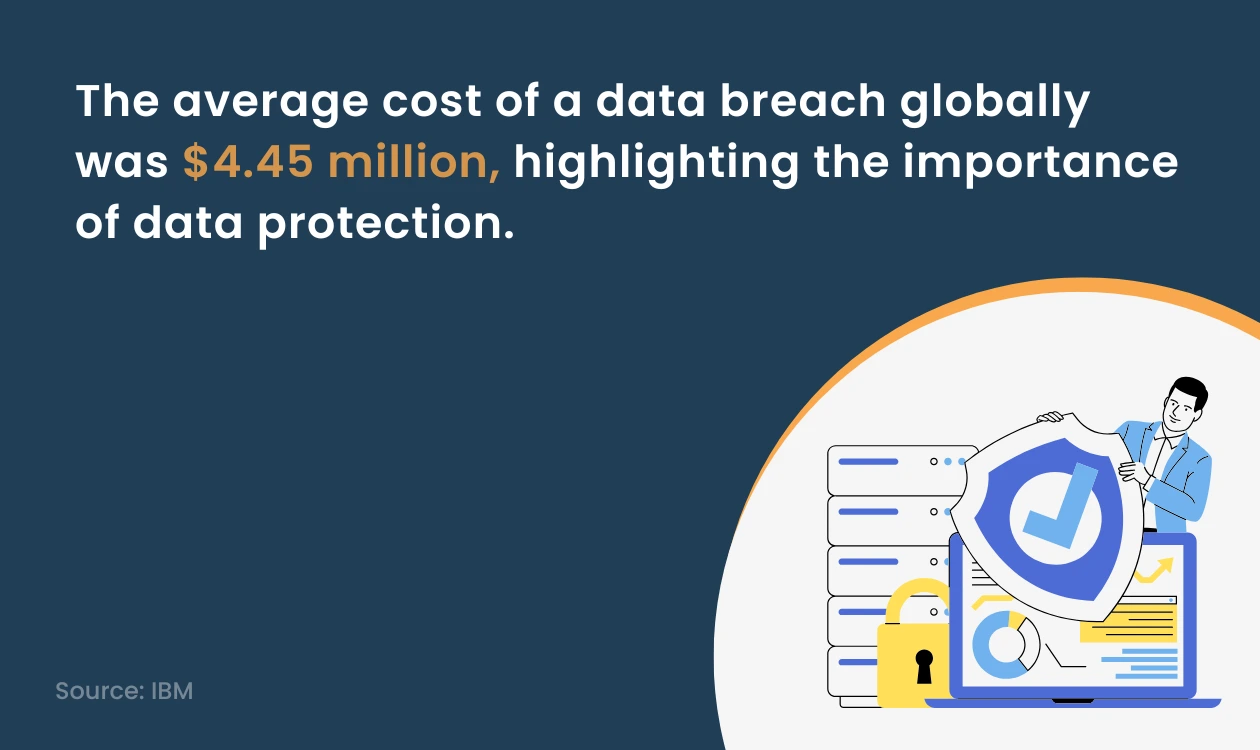
The risk is real. According to IBM, the average global cost of a data breach reached $4.45 million, based on the latest available data. This highlights why strong data protection and compliance in AI recruitment are critical for agencies handling sensitive candidate data.
How Recruitment Software Supports GDPR Compliance
Modern recruitment software plays a key role in helping agencies meet GDPR requirements. Platforms like iSmartRecruit support compliance by offering features such as configurable data retention policies, audit logs, role-based access controls, and built-in consent management. These capabilities help recruiters handle candidate data securely while maintaining transparency and accountability.
AI-powered features such as resume parsing and candidate-job matching further enhance efficiency, but they must be implemented with clear visibility into how candidate data is processed. Maintaining transparency in AI-driven decisions is essential for meeting GDPR requirements around automated decision-making and profiling.
When evaluating an Applicant Tracking System or Recruiting CRM, it is important to look for strong data protection features, secure infrastructure, and clear Data Processing Agreements (DPAs). Recruitment platforms like iSmartRecruit, which are designed with GDPR compliance in mind, can help agencies reduce risk while improving hiring efficiency.
Implementing Compliant AI in Five Practical Steps
Step 1: Map your data
Document what candidate data is collected at each stage of your AI-assisted hiring workflow, who processes it, and on what lawful basis.
Step 2: Run a DPIA
Complete a Data Protection Impact Assessment for any profiling or automated decision-making that produces significant effects for candidates. Document risks and mitigation measures before the process goes live.
Step 3: Update candidate-facing communications
Revise privacy notices, job adverts, and application forms to include clear, specific information about AI use, data sources, and candidates' rights.
Step 4: Configure your systems
Set retention periods, access controls, and audit logging in your ATS and CRM. Ensure consent capture is correctly configured for talent pools and optional assessments.
Step 5: Monitor and maintain
Establish a regular review cycle for AI model performance, bias testing, vendor contract compliance, and DPIA currency. Compliance is a continuous obligation, not a one-time project.
Common GDPR Mistakes in AI Recruitment
1. Treating consent as a universal solution:
Consent is one of the more demanding lawful bases to maintain correctly. It must be genuinely voluntary, specific, and easy to withdraw. Many organisations use consent language in their privacy notices without having the systems in place to honour withdrawal requests reliably.
2. Skipping DPIAs for automated shortlisting:
The obligation to conduct a DPIA for high-risk processing is not discretionary. Automated shortlisting at scale almost always meets the threshold.
3. Using third-party AI without transparency into the model:
Deploying an opaque vendor model without understanding how it processes candidate data or how its decisions can be explained creates direct compliance exposure for the recruiting organisation.
4. Retaining candidate data beyond justifiable periods:
Talent pools and passive candidate databases are a common source of retention failures. Every candidate record requires a documented lawful basis and a defined retention period.
5. Failing to provide a genuine human review option:
A review process that exists on paper but is not accessible, communicated, or genuinely independent does not satisfy GDPR's Article 22 requirements.
Conclusion
GDPR compliance in AI recruitment is not about limiting what technology can do. It is about ensuring that the efficiency gains AI delivers do not come at the expense of candidate rights, hiring fairness, or organisational accountability.
The practical steps are well defined: choose and document the right lawful basis, conduct DPIAs before high-risk processing begins, communicate clearly with candidates about how AI is used, configure your systems to enforce retention and access controls, and hold vendors to the same standards you apply internally.
Organisations that treat these obligations as a compliance burden tend to approach them reactively and expensively. Those that treat them as part of good hiring practice build more defensible processes, make more consistent decisions, and earn greater candidate trust. In a competitive talent market, that trust is a meaningful advantage.
Frequently Asked Questions (FAQs)
1. What is the biggest GDPR risk when using AI in recruitment?
The biggest risk is automated decision-making and profiling without proper safeguards. This includes lack of transparency, absence of human review, and potential bias in AI models. To reduce risk, carry out DPIAs and ensure explainability and clear appeal processes.
2. Can I rely on consent for AI-driven talent pools?
Yes, but consent must be freely given, specific, informed, and easy to withdraw. In many cases, legitimate interest may be more practical for recruitment-related processing, provided you perform a proper balancing test.
3. Do I need a DPA with my ATS vendor?
Yes. A Data Processing Agreement (DPA) is required whenever a third party processes candidate data on your behalf. It should clearly define the scope of processing, security measures, and use of subprocessors.
4. When should I perform a DPIA in AI recruitment?
You should perform a Data Protection Impact Assessment (DPIA) when using AI for large-scale profiling, automated shortlisting, or any decision that significantly affects candidates. DPIAs should be documented and reviewed regularly.
5. How do I explain AI decisions to candidates?
Provide clear and concise information about how AI is used, including the data sources, decision logic, and impact on outcomes. Avoid technical jargon and always offer an option for human review.
6. Can I use third-party AI models in my ATS?
Yes, but ensure your vendors are GDPR-compliant. This includes signing DPAs, verifying security measures, ensuring transparency, and regularly monitoring models for bias and accuracy.
7. What records should I keep to demonstrate GDPR compliance?
Maintain documentation such as data maps, lawful basis records, DPIAs, consent logs, vendor agreements, audit trails, and model validation reports. These records help demonstrate accountability to regulators.
About the Author