

Hiring the right employee involves more than reviewing resumes and conducting interviews. While candidates may present impressive qualifications and experience, it's equally important to verify the information they provide before making a hiring decision. Employee background checks help organizations confirm a candidate's credentials, identify potential risks, and ensure they are selecting trustworthy professionals.
Today, background screening has become a standard part of the recruitment process across many industries. Employers use various types of background checks to verify employment history, educational qualifications, criminal records, professional licenses, and work eligibility. These checks not only help reduce hiring risks but also protect organizations from legal, financial, and reputational damage.
Whether you're hiring for entry-level positions or senior leadership roles, conducting thorough background checks enables recruiters and HR professionals to make informed hiring decisions while creating a safer and more compliant workplace. In this guide, we'll explore why background checks matter, the different types of employee background checks, their benefits, and the common red flags recruiters should look for before extending a job offer.
TL;DR
- Employee background checks help verify a candidate's identity, qualifications, employment history, and legal eligibility to work.
- Common background checks include employment verification, criminal record checks, E-Verify, fingerprint screening, professional license verification, and OIG background checks.
- Background screening reduces hiring risks, protects company assets, and supports legal and regulatory compliance.
- Conducting thorough checks helps prevent workplace fraud, negligent hiring claims, and reputational damage.
- Recruiters should pay close attention to red flags such as inconsistent employment history, false credentials, unexplained employment gaps, and refusal to undergo background screening.
So, you've met someone who seems to be an excellent candidate for your company's open position. They seem smart, qualified, and like someone who would get along great with the rest of your employees so clearly, you should hire them, right?
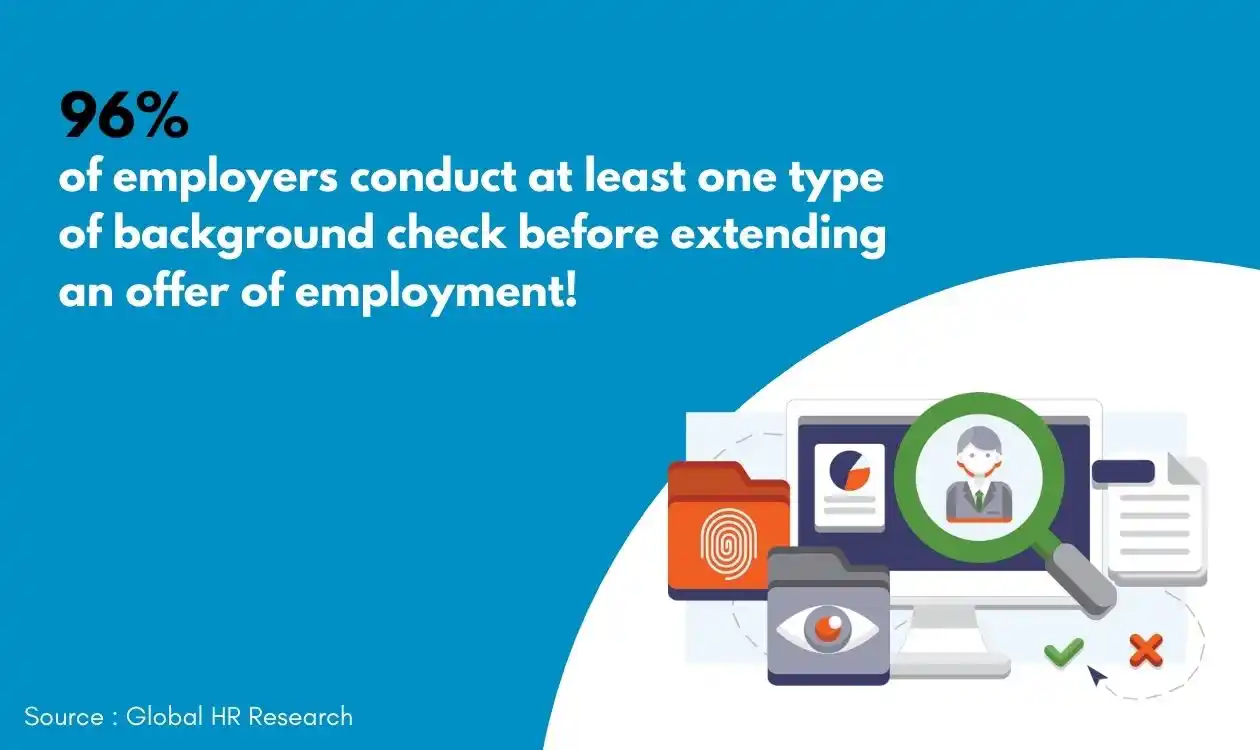
Not so fast. Before you hire anyone for your business, you might want to consider running a background check. In fact, Global HR Research reports that about 96% of employers conduct at least one type of background check before extending an offer of employment! Here's what you need to know about running proper employee background checks at your company.
Why Your Company Should Invest in Background Checks?
When you hire a new employee, you are investing time and resources to train them and integrate them into your organization. Don't you want to make sure you (and your company) are investing safely? Background checks are a great way to make sure your new hire is who they claim to be.
Hiring a new employee is a significant investment of time, money, and resources. Beyond recruiting and onboarding costs, every new hire can directly impact team performance, workplace safety, customer trust, and your organization's reputation. That's why conducting employee background checks is an essential step in the hiring process.
Background checks help verify that candidates are who they claim to be. They confirm important information such as employment history, educational qualifications, professional certifications, and legal eligibility to work. This verification enables recruiters to make informed hiring decisions while reducing the risk of costly hiring mistakes.
Investing in background screening also helps organizations:
- Verify candidate information and qualifications.
- Reduce the risk of fraud and identity misrepresentation.
- Create a safer workplace for employees and customers.
- Protect confidential business information.
- Ensure compliance with industry regulations and hiring policies.
- Minimize legal and financial risks associated with negligent hiring.
A thorough background screening process not only improves hiring quality but also strengthens trust within the organization and supports long-term business success.
What are the different types of checks?
Through background checks, you can verify education, credentials, and even previous employment. These details can help you assess whether a candidate is the right fit for your business. There are several different types of background checks, and you can do as many as you feel are necessary for your hiring process. Some of the most common background checks are the following:
Employment
An employment background check is the most common type of check potential candidates go through in the hiring process. This check gives potential employers pertinent information about your life over the past seven years (or 10, in certain states).
Employers typically verify:
- Previous employers
- Job titles
- Employment dates
- Key responsibilities
- Career progression
- Reason for leaving (where permitted)
Some organizations may also verify educational qualifications, professional references, and other employment-related information depending on the role.
Employment verification helps recruiters identify inconsistencies, exaggerations, or false claims while ensuring candidates possess the experience required for the position.

What "pertinent information" does the check reveal? Work history, education, credit history, motor vehicle reports (MVRs), criminal record, medical history, use of social media, drug screening, and sometimes more. This information will show employees if you are generally trustworthy as a worker.
Criminal
Criminal background checks help organizations identify convictions or criminal records that may affect a candidate's suitability for a particular role.
The scope of these checks varies depending on local laws and job requirements but may include:
- Felony convictions
- Violent offenses
- Financial crimes
- Fraud and embezzlement
- Theft
- Sex offender records
- Drug-related offenses
Conducting criminal background checks helps organizations protect employees, customers, business assets, and workplace safety.
This is where the criminal background check comes in; these checks review a candidate's record for major crimes like violent or sex crimes, fraud, embezzlement, or felony convictions. Running this background check protects your company, your customers, and your colleagues from potentially dangerous situations.
E-Verify
E-Verify is an employment eligibility verification system used by employers in the United States to confirm that newly hired employees are authorized to work legally.
After completing the required employment eligibility documentation, employers can compare employee information with government records to verify work authorization.
Using E-Verify helps organizations:
- Confirm employment eligibility.
- Reduce the risk of hiring unauthorized workers.
- Support legal compliance.
- Avoid potential fines and penalties.
- Strengthen hiring documentation and recordkeeping.
For organizations operating in the United States, E-Verify can be an important part of maintaining a compliant recruitment process.
Fingerprint
The Automated Fingerprint Identification System (AFIS) is a database of over 35 million fingerprints, most of which were submitted by law enforcement agencies around the country. Employers can cross-reference their new hires or prospective new hires with this database by running a fingerprint background check.

Fingerprint background checks help organizations:
- Verify a candidate's identity accurately.
- Detect criminal records linked to fingerprint databases.
- Meet industry-specific compliance requirements.
- Improve workplace safety.
- Reduce the risk of identity fraud.
For organizations hiring employees who work with vulnerable populations or sensitive information, fingerprint verification provides an additional level of confidence during the recruitment process.
Fingerprint background checks are relatively uncommon for corporate jobs or jobs in hospitality or retail. However, if you are hiring an individual for work in a public school, airport, hospital, law enforcement agency, or fire department, it's very likely you will want to check that person's fingerprints against the national database.
Professional license
If you're hiring for a position that requires a professional license, like a nurse or home contractor, it is vital that you run a professional license background check to verify that they actually have the license they claim.
Professional license verification is particularly important when hiring:
- Doctors and nurses
- Pharmacists
- Lawyers
- Engineers
- Accountants
- Architects
- Contractors
- Financial advisors
During this background check, employers typically verify:
- License validity
- License number
- Issuing authority
- Expiration date
- Disciplinary actions (if applicable)
- License status
Hiring candidates with expired, suspended, or fraudulent licenses can expose organizations to legal liabilities, regulatory penalties, and reputational damage. Verifying professional credentials helps employers maintain compliance while protecting customers and the business.
Make sure that your candidate has earned his or her license, and that the license is fully up to date and in good standing. This is especially important when hiring for medical professionals and unlicensed nurses or physicians can be incredibly dangerous for your patients and your business! For instance, if you were hiring for travel nursing, you must ensure that your candidates are licensed to practice in all compact nursing states, especially the state where you are offering the position.
OIG Background Checks
If you work in the healthcare industry, you must conduct Office of Inspector General (OIG) background checks on any potential employee who might be working with federally-funded healthcare programs. This screening checks your employee against a list of excluded individuals and entities (LEIE) put together by the U.S. Department of Health and Human Services.
The OIG maintains the List of Excluded Individuals and Entities (LEIE), which identifies individuals and organizations prohibited from participating in Medicare, Medicaid, and other federal healthcare programs due to specific violations.
Candidates may appear on the exclusion list because of:
- Healthcare fraud
- Medicare or Medicaid fraud
- Patient abuse or neglect
- Financial misconduct
- Controlled substance violations
- Other healthcare-related criminal offenses
Conducting OIG background checks helps healthcare organizations:
- Meet regulatory compliance requirements.
- Avoid financial penalties.
- Protect patients.
- Maintain eligibility for federal healthcare programs.
- Reduce legal and reputational risks.
For hospitals, clinics, nursing homes, and other healthcare providers, OIG screening is an essential part of a compliant hiring process.
Individuals who appear on the LEIE have been convicted of crimes like Medicare or Medicaid fraud; patient abuse or neglect; felonies involving other healthcare-related fraud, theft, or other financial misconduct; or felonies related to controlled substances.
What Can Background Checks Prevent?
Background checks do much more than verify candidate information they help organizations reduce hiring risks and protect their business from costly mistakes.
By identifying inaccurate information, criminal history, or missing qualifications before employment begins, employers can make more informed hiring decisions and create a safer workplace.
Background checks help prevent:
Negligent Hiring
Hiring someone without verifying their background can expose organizations to negligent hiring claims if the employee later causes harm to customers, colleagues, or the business.
Workplace Fraud
Verifying employment history, educational qualifications, and professional credentials reduces the risk of hiring individuals who have falsified their experience or certifications.
Financial Losses
Background screening helps organizations avoid losses caused by employee theft, fraud, embezzlement, or regulatory penalties resulting from non-compliant hiring practices.
Workplace Safety Risks
Criminal background checks and identity verification help employers identify candidates whose history may pose safety concerns, particularly for positions involving vulnerable individuals or sensitive information.
Compliance Violations
Many industries require specific background checks before hiring employees. Conducting the appropriate screenings helps organizations comply with employment regulations and avoid legal penalties.
Reputational Damage
Hiring an unsuitable candidate can negatively impact customer trust, employee morale, and brand reputation. Thorough background checks reduce this risk by helping employers make responsible hiring decisions.
Overall, investing in comprehensive background screening strengthens organizational security while supporting better hiring outcomes.
Typical Red Flags
Background checks sometimes reveal information that requires further investigation before extending a job offer. While these findings don't automatically disqualify a candidate, they should encourage recruiters to ask additional questions and verify the information provided.
Some common red flags include:
- Long or unexplained employment gaps.
- Multiple short-term jobs without clear reasons.
- Inconsistencies between the resume and verified employment history.
- False educational qualifications or certifications.
- Inconsistency in experience or education compared with the candidate's resume
- Missing or omitted previous employers.
- Criminal records relevant to the position.
- Invalid or expired professional licenses.
- Negative employment references.
- Identity discrepancies.
- Refusal to consent to a background check.
It's important to evaluate each situation fairly and objectively. Many red flags have reasonable explanations, so recruiters should consider the context, the role's requirements, and applicable employment laws before making a final hiring decision.
Partnering with a trusted background screening provider can help organizations conduct accurate, compliant, and efficient employee background checks while improving the overall recruitment process.
Conclusion
Background checks have become an essential part of modern recruitment, helping organizations make informed hiring decisions while reducing potential risks. Verifying a candidate's employment history, qualifications, criminal records, professional licenses, and work eligibility ensures that employers hire individuals who are both qualified and trustworthy.
Different roles require different levels of screening, making it important for HR professionals and recruiters to choose background checks that align with the position and industry requirements. A well-structured background screening process not only improves workplace safety but also protects businesses from legal, financial, and reputational risks.
While background checks can uncover potential red flags, they should always be evaluated fairly and alongside interviews, skills assessments, and reference checks. Combining thorough background verification with a structured recruitment process enables organizations to build stronger teams, maintain compliance, and create a safer, more reliable workplace.
FAQs - Frequently Asked Questions
1. Why should I conduct background checks on potential employees?
Conducting background checks helps ensure you hire trustworthy and qualified candidates. It safeguards your company from risks like fraud or legal issues, maintaining a secure and professional workplace with the help of tools like iSmartRecruit.
2. What types of background checks are commonly used?
Common checks include employment history, criminal records, professional licenses, and E-Verify for citizenship. Depending on the role, you may also consider fingerprint or OIG checks to cover all necessary areas.
3. Can background checks prevent hiring mistakes?
Yes, they help identify red flags such as inconsistent job history or omitted criminal records. This process reduces the chance of hiring unsuitable employees who might harm your organisation’s reputation or safety.
4. Is it legal to require background checks?
Yes, with proper consent and compliance with legal standards, conducting background checks is lawful. Always inform candidates about the process, ensuring transparency and respect for their privacy rights.