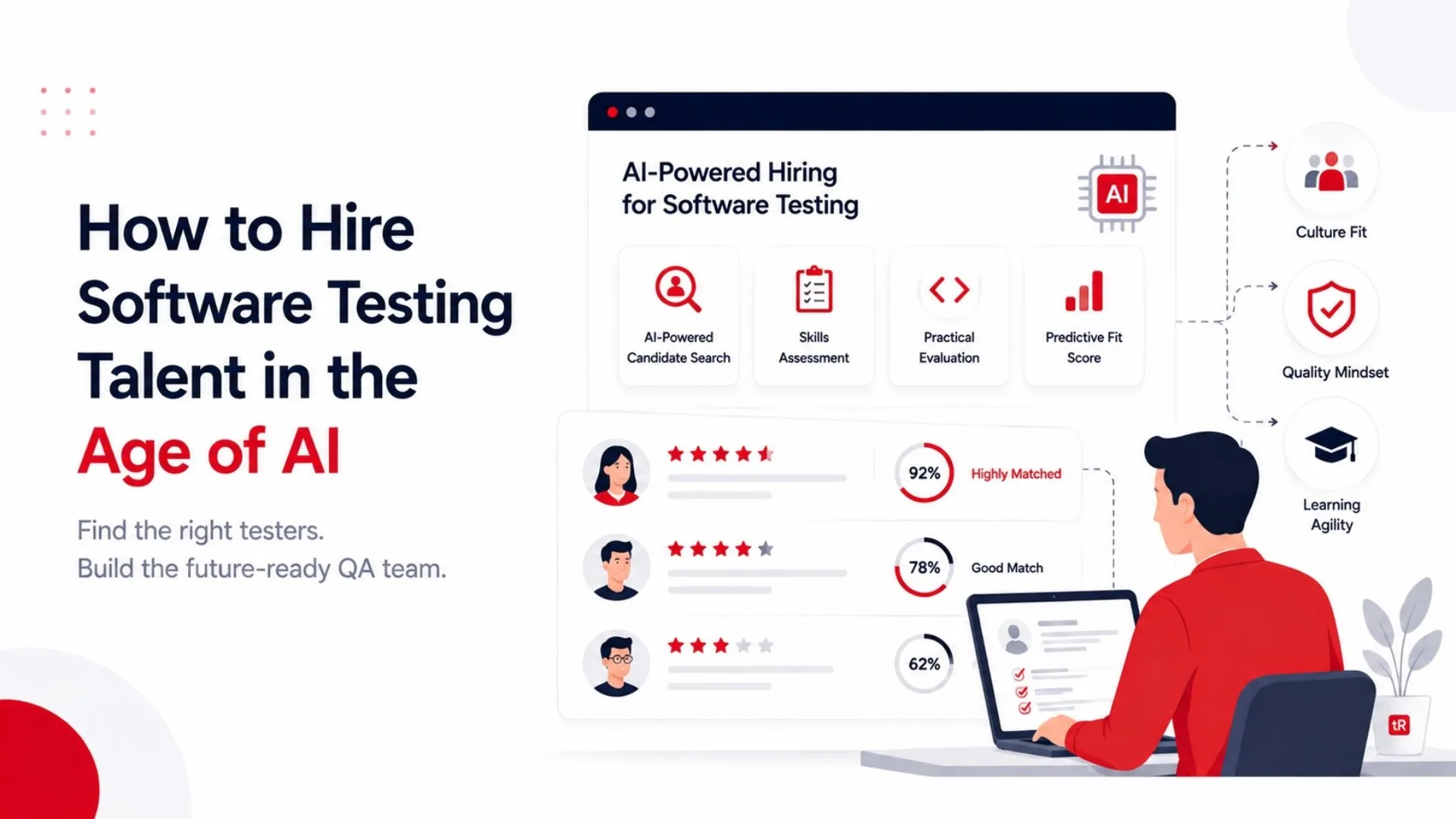


TL;DR
- Top recruiters go beyond traditional tactics by adopting innovative methods that match how modern candidates search, communicate, and evaluate employers.
- Key strategies include flexible and remote work offerings, agile workforce models, video recruitment, and text-based candidate communication.
- Social media, employee referral programmes, and structured candidate engagement remain high-impact, cost-effective sourcing channels.
- AI is reshaping talent acquisition by automating screening, reducing bias, and enabling more data-driven hiring decisions.
- Hiring for transferable skills rather than purely prior experience is becoming essential as talent pools tighten across industries.
Ever wonder what separates top recruiters from the rest of the pack?
It’s not just about having a sharp eye for talent; it's about using cutting-edge recruitment methods that go beyond the usual "post-and-pray" tactics.
Then what are the things that are landing them the best candidates?
It’s a recruitment method.
From leveraging AI to predict candidate success to using gamification to make the hiring process fun and engaging, these recruitment methods are shaking up the industry.
By the end, you'll have a clear understanding of what it takes to be a top recruiter in today's competitive job market.
So, if you’re curious about how the pros are attracting top talent in today’s competitive market, keep reading.
Top 9 Innovative Recruitment Methods for Recruiters in 2026
Recruiters are struggling when it comes to sourcing and hiring the appropriate people. As a result, new recruitment techniques and innovative recruitment methods will be required to attract and hire people in novel ways. Here we are introducing the top 9 innovative recruitment methods that recruiters can innovate with.
1. Recruit With Flexibility as a Value Proposition
A competitive hiring market implies offering advantages to employees, which includes giving them a flexible work environment. This perk permits the employees to work some time from home and at different hours at the workplace. This can act as your leverage against organizations with job offers that exclude flexibility. Flexibility depends upon the kind of occupation and technology and is generally reasonable for a person who can work remotely through their PCs.
2. Building and Managing an Agile Workforce
The distinction between a contingent and agile workforce is that a contingent workforce is one where employees hired for projects or temporary basis are included in the organization's current workforce as and when required, whereas in case of an agile workforce is centred around skilled employees acquired when required from inside or outside of the company. So, it is better to have an agile workforce as they bring specialization to your workplace.
3. Use Video Throughout the Recruitment Process
Video has been progressively used by organizations in their hiring procedures to inform about what the activity involves and to display the company's way of life, and qualities. For job description or "day in the life" videos that need frequent updates, tools like DomoAI let recruiters generate a presenter-style video from a script, without filming a new video for every role. Videos are useful during the interview process, for analysing applicants, and also for addressing possibilities remotely."
4. Incorporate Text-Based Candidate Communication
Keeping in contact with applicants, especially those from younger generations, might be difficult at times. Using the communication methods that people choose is the best way to reach recruiting targets. As an innovative recruitment idea, texting is ideal for checking in with candidates, scheduling interviews, and maintaining general engagement throughout the recruitment process. Because text messaging is used by over 70% of mobile phone users, it makes sense to conduct first interviews using text messages.
5. Use Social Media as a Recruitment Channel Strategically
It's time to begin using social media as a means of your online recruiting efforts if you haven't already. Most people will utilise social media as their primary source of information when looking for a job. Facebook, Twitter, LinkedIn, and Instagram are all effective methods for promoting your company and communicating with candidates. When it came to identifying new talent, recruiters began to go outside the box, employing apps like Tinder, Snapchat, and Bumble. When recruiting on social media, the key is to know who you're looking for and where you might find them.
6. Strengthen Your Employee Referral Programme
An employee referral program is one of the most effective recruitment methods. Of course, when your employees refer someone to your organisation, they will not refer a bad applicant. You must encourage your staff to recommend others. They don't see it as a necessary component of their job. Positive word-of-mouth about your brand or organisation might help you attract top industry talent. It is one of the most cost-effective and reliable methods of finding qualified candidates.
7. Treat Candidate Engagement as an Ongoing Process
The significance of candidate engagement is known to all recruiters. It is perhaps the most straightforward thing you can do as we live in the most technologically advanced times and there is no lack of strong communication channels. Use each channel you need to connect with competitors. Make sure to be connected to candidates all through the hiring procedure and fully utilize social media platforms, emails, texts, chatbots, etc. Also, never forget to personalize your emails and not drown your candidates with unnecessary emails.
8. Leverage AI Across the Talent Acquisition Workflow
Now, come to the most hyped topic, which is AI in recruitment. AI is transforming the recruitment landscape in ways you couldn’t have imagined a few years ago.
It’s like having a tool that can sift through thousands of resumes in seconds, identify the best-fit candidates based on specific criteria, and even engage with them through automated yet personalised messages. That’s what AI brings to the table.
You can streamline your hiring process by automating repetitive tasks like screening resumes, scheduling interviews, and even conducting initial assessments. This not only saves time but also reduces the chances of human bias.
You can use AI to make more data-driven decisions. By leveraging AI, you can focus more on the human aspects of your role, such as building relationships with candidates and enhancing the overall hiring experience.
It's not about replacing you but rather augmenting your capabilities to make the recruitment process more intelligent and efficient.
9. Hire for Transferable Skills, Not Just Direct Experience
As talent shortages deepen across most industries, restricting candidate searches to those with directly matching prior experience is increasingly counterproductive. Many of the most effective hires of the past decade came from adjacent industries or non-traditional backgrounds, bringing fresh perspective alongside the transferable capabilities that matter most.
Transferable skills include communication, critical thinking, adaptability, leadership, problem-solving, and the ability to learn quickly. These qualities are consistently cited by hiring managers as among the most valuable attributes in strong performers, and they are not exclusive to candidates who have done the exact same role before.
Practically, this means reviewing job description requirements critically to distinguish between what is genuinely essential and what is a proxy for a certain type of background. It means designing assessments that test capability rather than knowledge of a specific context. And it means training hiring managers to evaluate potential alongside experience during the interview process.
Opening up the candidate criteria in this way does not lower hiring standards. It widens the pool of candidates who meet the ones that actually matter.
Conclusion
The recruitment methods that worked reliably a decade ago are producing diminishing returns in a market defined by skills shortages, candidate choice, and rapidly evolving technology. The hiring professionals maintaining a consistent advantage are those who treat their recruitment approach as a system to be continuously improved, not a fixed set of processes to be repeated.
The nine methods covered in this guide are not standalone tactics. They work most effectively in combination: flexibility and employer brand attract more of the right candidates, AI and structured engagement move them through the process more efficiently, and referral programmes and skills-based hiring improve the quality of who ultimately joins. Together, they form the foundation of a recruitment function built for the current landscape rather than the previous one.
4.png)
Frequently Asked Questions (FAQs)
1. What are some innovative recruitment methods for 2026?
Innovative recruitment methods include flexible work environments, agile workforce management, video recruitment, texting candidates, and leveraging AI-powered tools. These techniques help recruiters find and engage top talent efficiently with the help of platforms like iSmartRecruit.
2. How can AI improve the recruitment process?
AI speeds up tasks like resume screening and interview scheduling. It helps reduce bias and allows recruiters to focus on building relationships with candidates, making the hiring process smarter and more effective, especially when using iSmartRecruit’s AI features.
3. Why is flexibility important in recruitment?
Offering flexibility through remote work or varied hours attracts talented candidates who value work-life balance. It sets your organisation apart from others and can increase employee satisfaction and retention rates.
4. How does social media aid in recruitment?
Social media platforms like LinkedIn, Facebook, and Instagram enable recruiters to reach a broad, diverse audience. They provide new ways to interact and promote jobs, making recruitment more dynamic and engaging.
5. What role does candidate engagement play in hiring?
Staying connected and personalising communication keeps candidates interested throughout the hiring process. Using multiple channels such as emails, texts, and chatbots ensures a positive candidate experience, which iSmartRecruit supports seamlessly.
About the Author