

When it comes to finding quality hires quickly, few strategies outperform a well-structured employee referral program. Your existing employees already understand your culture, know your standards, and have professional networks full of people who might be the perfect fit for your next open role.
The result? Faster hiring, lower cost per hire, and candidates who tend to stay longer and perform better.
This guide covers everything you need to build and run an effective employee referral program, plus how customer referral programs work and how the two differ.
TL;DR
- Employee referral programs leverage existing employees to find quality hires efficiently and cost-effectively.
- Customer referral programs focus on promoting products through satisfied customers, utilising incentives and strong branding.
- The employee referral process includes announcement, mass email campaigns, candidate mining, selecting and recruiting, and rewarding referral bonuses.
- Successful customer referral programs require clear goals, identification of referral sources, planned outreach, appropriate incentives, and consistent promotion.
Employment is all about networking and expanding your contacts. As a good recruiter, you need to communicate with so many people in a day. It's not just communication it is going to help every recruiter when they want some manpower.
There are basically two ways to fill the requirements of the manpower:
-
In-house Recruiting
-
Recruitment and HR functions Outsourcing
In terms of filling the positions quickly and cost-effectively, recruiters rely on the first method of recruitment as it is not so complicated.
This kind of internal recruiting can be beneficial in many ways. To implement/apply this method in your recruiting within your organization, you need to build a strong employee referral program for your current employees.
What is an Employee Referral Program?
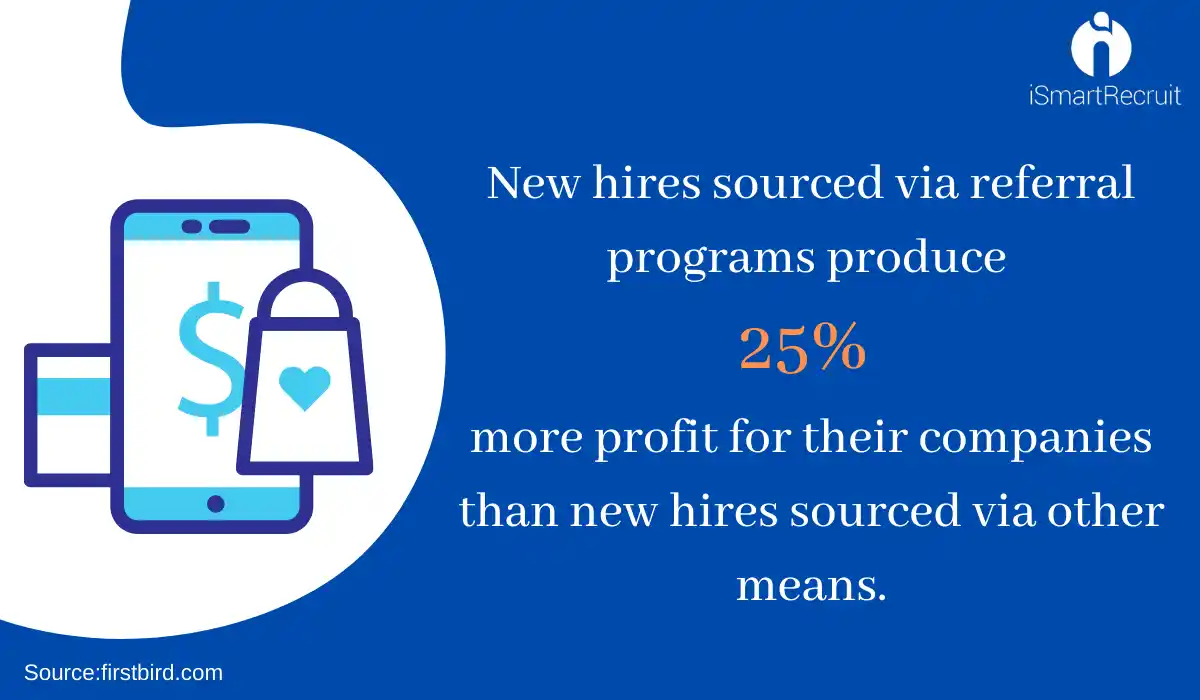
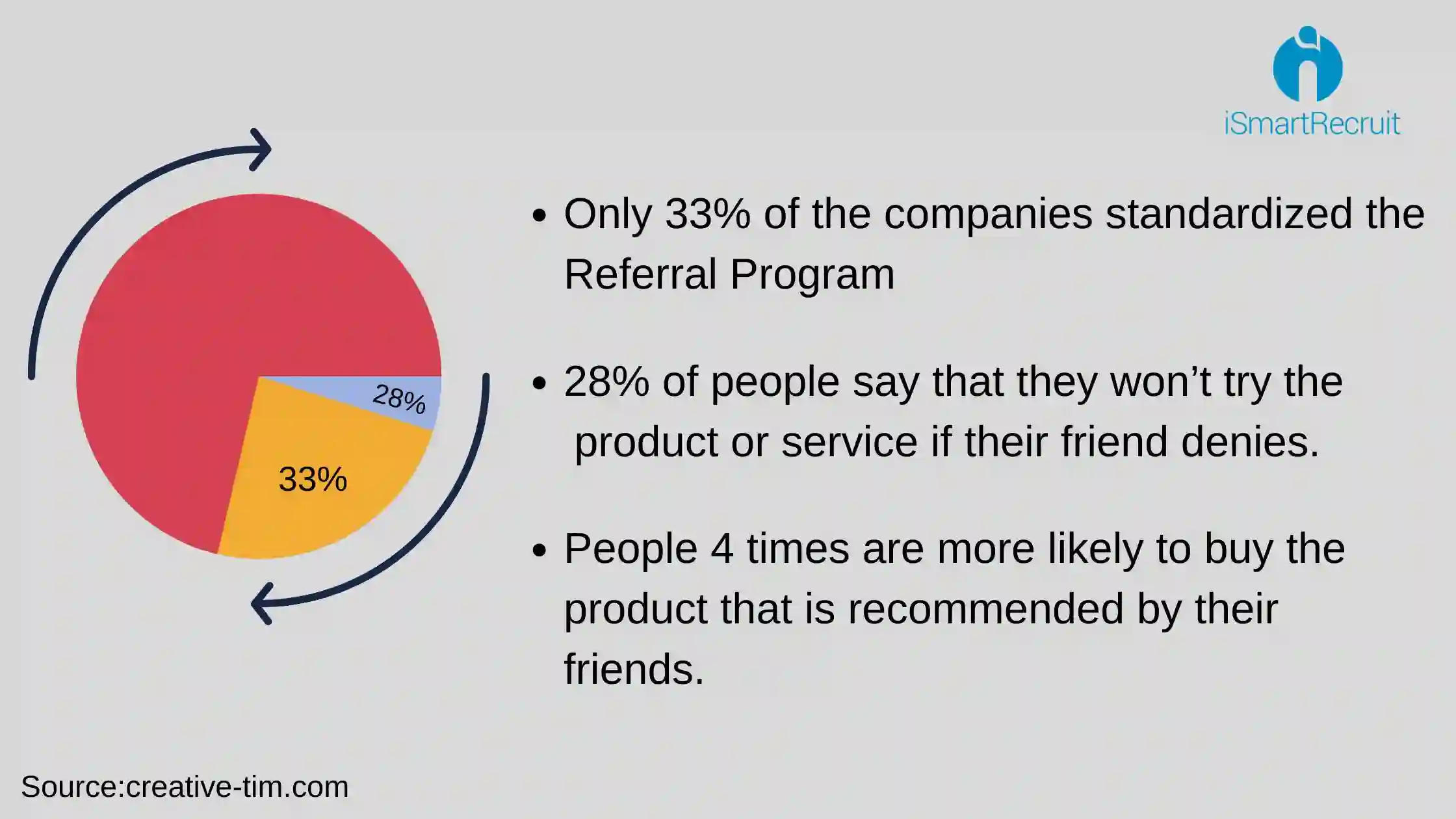
The referral is another word for "Reference" and "Recommendation". Word-of-mouth marketing is one of the productive ways to promote the employer's brand. 92% of people trust the reference of their friends and family over any other type of advertising.
The employee referral program is one of the productive ways to recruit new hires by avoiding bad hires.
In this referral program, existing employees of the company recommend candidates to the company, often leveraging platforms like LinkedIn Recommendations. This recruiting strategy helps companies to hire top talent in many ways; this is proven in the research.
This technique and process of hiring are known as the internal method of finding a candidate or an internal candidate source.
What is a Customer Referral Program?
In the customer referral program, the employer promotes his product and brand to the new customer through the referrals, usually word-of-mouth. That is also known as Referral Marketing.
The customer referral program has three main factors: target promotion audience, strong employer brand, and motivating rewards. By utilizing these three primary factors, the customer referral program turns into a successful referral program.
This is an old marketing strategy that is accomplished by encouraging existing customers and other rewarded customers to recommend your product and services to the other people around them.
How to Build an Effective Employee Referral Program: Step by Step
Let's see the step-by-step procedure of an employee referral program that can attract more employees to take part in it.
This is the simplest way to fill up the positions with quality candidates. Let's see how to do the above practices in the right way, so you can build an effective referral program.
Step #1: An announcement in the organisation
In in-house recruiting, when you come across an open position, your first step should be announcing it within your company. You can use flyers and posters to let employees know that your company is running an employee referral campaign. It's important to make employees aware of the process. Try to catch their attention early so you can build a strong pool of employee referrals from the beginning. The challenge is that creating a professional flyer often takes longer than expected, especially if you don't have a designer or need to get the announcement out quickly. An AI-powered flyer generator like Venngage AI helps you skip the blank canvas by turning a simple prompt into an editable flyer in minutes.
If you prefer, you can also start with one of its customisable flyer templates, then add your branding with the Brand Kit feature and update the content before sharing it across your organisation.
Step #2: Mass email campaign
Mass emailing could be the key process while going for the referral program. If you have a big organisation and you are not able to talk to every employee about the referral program, you can drive an automated mass mailing campaign within your premises.
So every member gets to know about the program you are going to prepare for. You can have some default templates too. So whenever you run this kind of program again, you can directly use the templates.
In this email, you can mention the following points:
-
Why do you need to hire new people: like you are a growing company and you want to expand your business in certain areas etc.
-
What will be the procedure: like how your employees can take part in this program. You can also put some forms to fill up and confirm their participation.
-
What would be the benefits of taking part in the process: you can give your employees a glimpse of the processes and what benefits they can get out of this. You can give some incentive or a gift voucher or something more creative you could deliver.
Step #3: Candidate mining
This is quite an easier process than other processes. You just need to grab all the candidates you got from your employee as a reference. You can create a great candidate database out of this process; this is called candidate mining. You can create different talent pools for bifurcation also. This database can be used for future purposes also. In this manner, this easiest process can work very effectively while searching for new candidates.
Step 4: Screening, Selection, and Recruitment
Referred candidates still go through your standard candidate screening and interview process. The referral provides a warm introduction — not a guaranteed hire.
Use your Applicant Tracking System (ATS) to manage referred candidates alongside other pipeline sources, track which employees are generating the strongest referrals, and maintain a clear record of each candidate's progress. Automation features in modern ATS platforms can notify both the candidate and the referring employee at each stage — improving transparency and keeping everyone engaged.
Step #5: Reward Referral Bonuses Promptly and Fairly
Here we are doing something additional. You have to pay your employees for their participation and interest. There are so many ideas to make your candidates feel rewarded. You can mention some salary plus or a gift card or a vacation coupon. You can also make them an employee of the month or something like this.
A referral bonus can be counted by the number of hires you did. You can have proper data with the details. You can also prepare certain charts and reports out of this process and promote on your social media walls.
How to Build an Effective Customer Referral Program?
#1: Define Clear Goals
Before organizing a customer referral program, observe everything, and ask questions to yourself.
-
What are you expecting from this referral program?
-
What is your target, and what do you want to achieve?
-
Are your goals related to growth and revenue?
-
Is there any need for retention in the process?
-
Does your company require extra trust-building?
Set goals for yourself that make your path to organising the referral program.
#2: Understand How Referrals Currently Reach Your Business
This whole process must include the sales and marketing teams in order to support and know who is accountable for creating customer relationships. Moreover, take knowledge of how they are dealing with referrals and their variety of moves toward referral customers.
This all information forms a graph of your current state, like where you already are. Therefore, you will use your energy in the right direction.
#3: Identify Your Referral Sources
Your referral network is broader than just current customers. It includes:
- Former customers who left on good terms
- Active leads who haven't yet converted
- Partners, vendors, and suppliers
- Industry influencers and association contacts
List all potential sources and assess the strength of your relationship with each. This becomes your referral source map, the foundation for outreach planning.
#4: Plan Targeted Outreach
From the vast list of sources and advocates, forge the inner circle contact, i.e., narrow down the list. Check out the list and think about which source or advocate will do marketing of your brand the way it is needed.
Think about who should include in inner circle contact with whom your business has a standout relationship. Do you have any existing customers who will stand for your referral program? It might also be useful to merge the contacts from different lists to streamline communication. But always, remember don't try to overboard your contacts.
#5: Fix your incentives
There are two types of referral programs: incentive-based and non-incentive. It has been proven that non-cash incentives are 24 per cent more effective than the cash incentive program.
In this phase, you have to decide on the incentives according to the list of inner contacts. Choose the offer as per the contact and advocate requirements. Determine the offers in a manner that, at the end of the day, you will also receive something.
#6: Promote the Program Consistently
Referral programs that are announced once and then forgotten generate minimal results. Build ongoing visibility through:
- Email newsletters with regular program reminders
- Blog content and case studies that highlight the program's impact
- CTAs in email signatures and account communications
- Product update emails that include referral program prompts
Consistent promotion keeps the program top of mind, and drives sustained participation — not just an initial burst of activity.
Bottom Line About Effective Referral Program
This can make your company's brand stronger. This also helps you in making your employees more engaged with the company culture. If you make them brand ambassadors, they can deliver you more potential candidates from their circles.
Additionally, this can help in improving your current employees' work efficiency too. If they feel noticed and cared for by an organisation, they will work more productively. So start building your employee referral program today.
If you want to manage your end-to-end employee referral program through an ATS, you can try iSmartRecruit - The best ATS System that allows you to manage campaigns like this. To see how it works, you can ask for a Free Demo from the sales experts.
Frequently Asked Questions (FAQs)
1. What is an employee referral program?
A structured system where current employees recommend qualified candidates from their network for open roles — typically supported by incentives for successful hires. It's one of the most cost-effective and high-quality sourcing methods in recruitment.
2. What makes an employee referral program effective?
Clear communication, a simple referral process, meaningful incentives, and consistent promotion. Programs that are hard to participate in or slow to reward referrers lose momentum quickly.
3. What are the benefits of an employee referral program?
Faster hiring, lower cost per hire, higher quality of hire, stronger cultural fit, and improved employee engagement. Referred employees also tend to have better retention rates than those sourced through other channels.
4. How should referral bonuses be structured?
Align incentives with company culture and the effort involved. Monetary bonuses are common, but non-cash rewards — additional leave, experience vouchers, public recognition — can be equally or more motivating depending on your workforce.
5. What are the biggest challenges with employee referral programs?
Referral bias and reduced diversity are the most common risks. Counter them with structured screening processes and supplementary diversity-focused sourcing. Keeping long-term participation high also requires regular re-promotion — not a one-time launch.
6. How is an employee referral program different from a customer referral program?
Employee referral programs source job candidates through staff networks and sit within HR and recruitment strategy. Customer referral programs acquire new customers through client advocacy and sit within sales and marketing strategy. Both use incentives and word-of-mouth — but serve entirely different business goals.
7. How do I track the success of a referral program?
Monitor key metrics including number of referrals submitted, referral-to-hire conversion rate, cost per hire from referrals, time-to-fill for referred roles, and retention rates of referred hires. An ATS with referral tracking features makes this straightforward to manage.
About the Author