


Diversity, equity and inclusion (DEI) have become a top priority for HR leaders worldwide. Organizations are increasingly recognizing that building a diverse and inclusive workplace not only strengthens company culture but also helps attract and retain top talent. After several years of heightened focus on DEI issues, the momentum continues to grow, and 2026 is expected to bring even more changes in how companies approach inclusive hiring and workplace equality. In this blog, we explore the key diversity, equity and inclusion recruiting trends that HR leaders should watch in the coming years.
TL;DR
- Diversity, equity and inclusion (DE&I) remain top priorities for HR leaders through 2026.
- Hybrid-remote workforces will expand, offering flexibility and promoting workplace diversity.
- AI and natural language processing technologies are transforming recruitment by reducing bias and improving candidate experiences.
- Managing a multigenerational workforce requires addressing generational biases and fostering collaboration.
- Employee mental health support continues to grow in importance, with companies expanding wellness initiatives.
- Greater transparency in diversity goals is expected as firms commit to measurable D&I progress.
Top 5 Recruiting Trends of Diversity, Equity and Inclusion
1. An Expanding Hybrid-Remote Workforce
Though most remote managers are concerned about employee productivity and focus, 98% of those surveyed want to work remotely for the rest of their careers. The benefits of remote working are far too many, but only some things are positive about going all-remote.
Lack of collaboration, loneliness, inability to unplug from work, and distractions at home are some of the remote workers' top struggles. Moreover, not all firms can wind up their office space and go all remote. Hence, In the coming year, you can expect organizations to find a middle ground, blending in-office and remote working models. Several companies, namely HubSpot, Dropbox, Slack, Spotify, MailChimp, and more, are embracing the hybrid-remote style of working on getting the best of both worlds. The model gives employees a set of options that typically include a remote option, a flexible option (working from the office for 2-3 days a week), and an in-office opportunity.
This model offers more flexibility to employees and allows for more predictability; hence, it is the most attractive option from a recruiting perspective. However, it will be interesting to see how firms manage equity issues as managers and executives overwhelmingly select the in-office option.
Hybrid remote work is a great way to promote diversity in the workplace because it allows managers to expand their search irrespective of the geographic location. They can access a wider pool of talent to include demographics who prefer to work from home and face limited systemic bias, like working moms.
A majority of the workforce has gotten used to working from home. However, there's no putting the genie back in the bottle. The year 2026 will see an expansion of the hybrid workforce that works in-office and remotely.
2. AI in Recruiting
AI is becoming ubiquitous in enterprise recruiting. A Gartner report reveals that two-thirds of early AI adopters use AI-based solutions in their HR function and plan to double the number of projects by the end of 2024.
Talent acquisition and recruiting are central to any HR team. AI-driven processes and talent acquisition tools can add immense value to enterprise recruiting. It's not just transforming the HR function's performance but also removing unconscious bias and improving diversity, equity and inclusion.
Most organizations adopting AI in the HR space are focusing on three core areas -
- HR operations
- Talent acquisition
- Employee engagement
For instance, AI can transform traditional hiring by making job listings more discoverable to potential candidates. AI-powered chatbots have also become a common tool for HR teams who use them for the initial phases of applicant screening and interview scheduling.
Meanwhile, AI-powered tools like Joonko connect with a firm's application tracking system (ATS) to find pre-qualified talent from underrepresented sectors. The AI-enabled diversity-first recruiting tool removes human bias and error and helps recruiters bring in already-vetted candidates of racial, ethnic and gender minorities.
Similar to AI is NLP or natural language processing, which revolutionizes sourcing, screening, and assessing candidates. Using NLP, recruiters can quickly identify candidates. The technology is also being combined with voice recognition to ensure quicker review and analysis of job interviews.
In the coming years, you can expect many companies to leverage AI to improve their HR processes. The technology will only become more advanced and sophisticated, making it a significant part of the recruitment process and its workflow.
It will be incumbent on HR leaders and hiring managers to find innovative ways to build a highly efficient and personalized candidate experience. To achieve this, they will need to count on AI by automating workflows, stages, and assessments.
3. Multigenerational Workforce
With five generations at the workplace, today's work environment is multigenerational. Thanks to the firms upholding Diversity, equity and inclusion, many have employees ranging from ageing baby boomers to Generation Z in the workplace.
Each group has its ideas, views, experiences, and aspirations. Hence, such a diverse workforce will require a much more collaborative, networked, and fluid workplace where each cohort is equally engaged.
In a recent Deloitte survey, more than half of the respondents shared that organizations should consider generational differences when designing and delivering employee programs. However, only 6% of respondents strongly agree that their leaders can effectively lead a multigenerational workforce.
For instance, HR teams need to be equipped enough to combat generational bias and stereotypes. Most organizations pretend that these do not exist. Instead, they should acknowledge and contemplate the differences and harness the strengths of each generation. Moreover, they must train the teams to confront age-based stereotypes through role-playing exercises. Such initiatives will bring several misconceptions to the forefront, making employees aware of their assumptions and building a harmonized multigenerational team.
Going forward, it will be necessary for organizations to adapt their HR initiatives to uphold a multigenerational workforce. HR leaders will play a prime role in fostering an environment where employees of all generations feel valued. Thus, they must ensure that their DE&I initiatives solve real and pressing problems.
4. Increasing Support for Employee Mental Health
One of the top things battling the COVID pandemic for two years has brought to the forefront is the awareness of mental health. Gartner confirms that by March 2021, 68% of organizations had introduced at least one mental health and wellness initiative to aid and support their teams during this period. The pandemic caused increased stress among people constantly worrying about their health, families, kids' education, and job security.
In a 2021 Lyra Health Study, one-quarter of 1000 working adults reported that their mental health declined over the past year, doubling diagnosable mental health conditions. Further, 71% of candidates now expect their prospective employers to offer mental health benefits.
Thus, HR teams started prioritizing mental health and creating wellness and employee assistance programs. For instance, Salesforce started scheduling routine 'Wellbeing Fridays' when they said their employees weren't taking vacations. The employees were encouraged to take a mandated day off to disconnect from their screens.
PwC announced that all the employees would receive a $250 bonus each time they took a full week's vacation. Similarly, many companies have introduced ongoing health and safety policies around the coronavirus. A few instituted particular time-away policies for their employees to care for their loved ones suffering from COVID-19. Others rolled out flexible work-from-home policies for employees who are uncomfortable returning to offices.
After the challenges and disappointments faced by most people in 2020 and 2021, companies further realized the importance of employee well-being and mental health, leading to the increased use of mental health ehr systems to better manage and support employee wellness.
As organizations continue prioritizing employee wellness, the adoption of electronic health records and electronic medical records software is helping healthcare providers streamline mental health data management, improve patient care coordination, and ensure secure access to employee health information.
In the coming year, you can expect more firms to de-stigmatize mental health by expanding mental health benefits. Companies will continue to build a culture of compassion and empathy and invest resources to meet their employees' psychological and physical needs.
5. More Transparency in Diversity Goals
Diversity, equity and inclusion is the cornerstone of every organization that desires to win and retain top talent, improve customer experience, and boost financial performance. McKinsey's research clearly links diversity to financial performance.
No wonder several companies have committed to Diversity, equity and inclusion. In JUST Capital's survey of 890 firms, 86% disclosed a diversity and equal opportunity (D&EO) policy, exhibiting their strong commitment to diversity. However, only 11% disclosed their actual and measurable targets transparently.
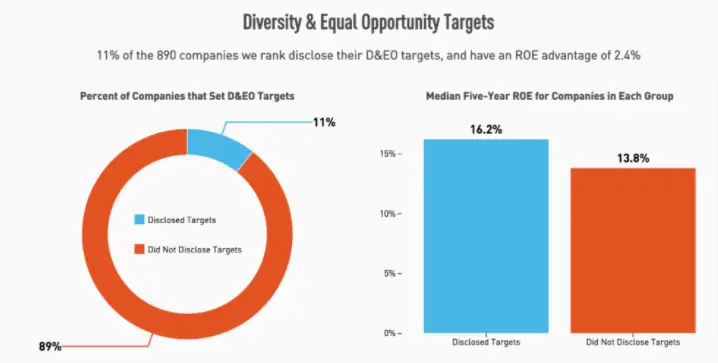
This data clearly shows that companies aren't ready to disclose their progress on Diversity, equity and inclusion data. However, this will change in 2026 as more organizations ramp up their D&I initiatives and are more equipped to uphold diversity.
Giant companies like PwC believe transparency can contribute to progress in the field of D&I. Hence, they continue to share detailed data on the diversity of their employees.
Such detailed reports are bound to persuade organizations to move faster in achieving their D&I goals. An increasing number of businesses recognize that transparency grounds everything and throws light on areas they can improve.
Final Thoughts on Diversity, Equity and Inclusion
Diversity, equity and inclusion (DEI) have become critical drivers of organizational performance, innovation, and long-term success. In recent years, cultural and sociopolitical shifts have significantly influenced how companies approach diversity in the workplace, making inclusive hiring and equitable practices more important than ever.
The diversity, equity and inclusion recruiting trends discussed above highlight how HR leaders can build stronger, more inclusive organizations while improving recruitment outcomes. By understanding and adapting to these DEI trends, organizations can develop data-driven strategies that support diverse talent pipelines, create equal opportunities, and foster a workplace culture where every employee can thrive.

FAQs - Frequently Asked Questions
1. What is diversity, equity and inclusion (DEI)?
Diversity, equity and inclusion (DEI) refers to workplace practices that ensure fair opportunities, representation, and a sense of belonging for employees from different backgrounds.
2. Why is DEI important in recruitment?
DEI helps organizations attract diverse talent, reduce hiring bias, improve innovation, and build stronger workplace cultures.
3. How does remote work support diversity hiring?
Remote and hybrid work allow companies to hire talent from different locations and backgrounds, helping create a more diverse workforce.
4. How can AI improve diversity in recruitment?
AI recruitment tools help reduce bias in candidate screening and expand sourcing to reach more diverse talent pools.
5. What are the main DEI recruiting trends?
Key trends include inclusive hiring practices, AI in recruitment, hybrid workplaces, transparent diversity reporting, and multigenerational workforces.