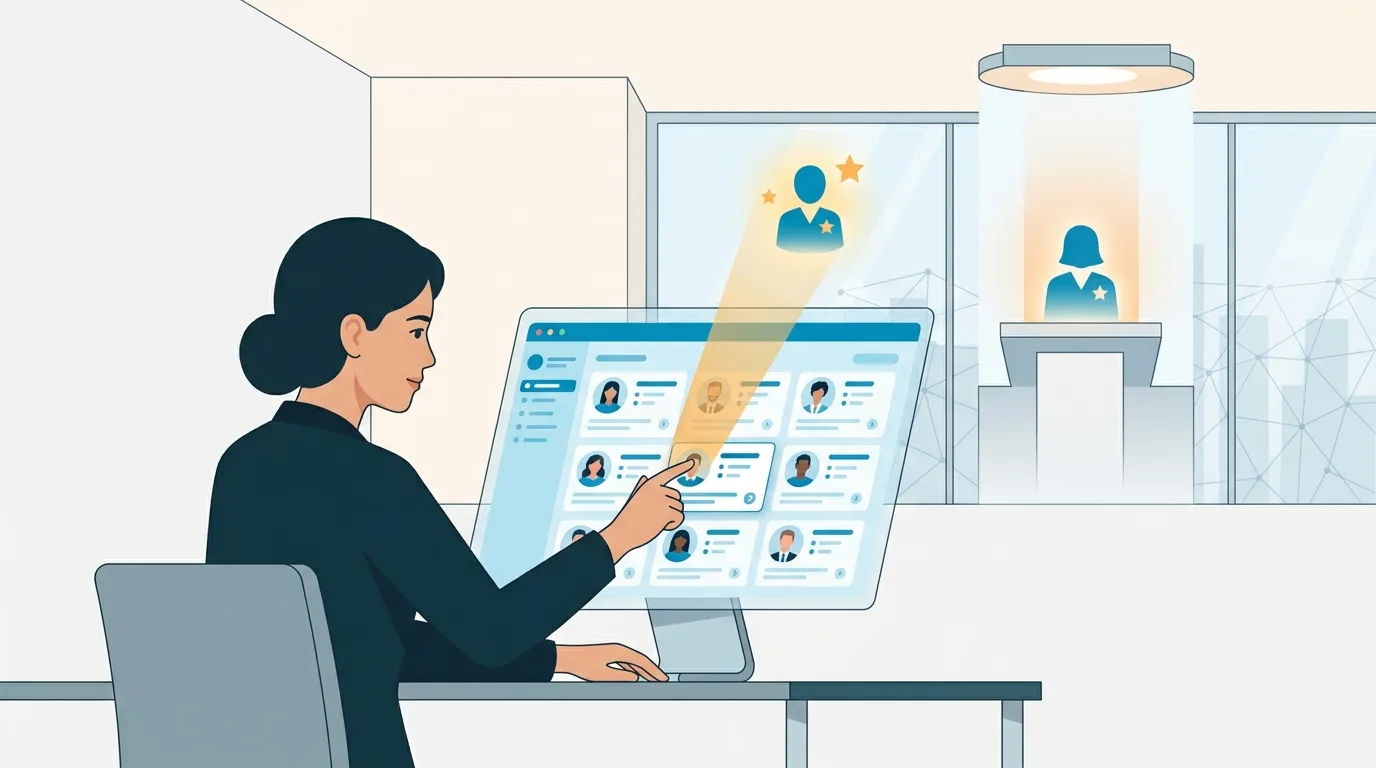
Talent acquisition software helps organisations manage the hiring process, from attracting and sourcing candidates to screening applications, coordinating interviews and making hiring decisions. It brings recruitment activities into a more organised workflow, helping recruiters, HR teams and hiring managers manage candidate information, improve collaboration and monitor recruitment performance.
Modern talent acquisition software can combine applicant tracking, recruiting CRM, candidate sourcing, recruitment automation, AI-powered matching and analytics. The exact capabilities vary between providers, so choosing the right system depends on your hiring requirements, team structure, recruitment volume and existing technology.
Whether you manage an in-house talent acquisition team, a staffing company or a recruitment agency, understanding these capabilities can help you select software that supports your hiring goals.
TL;DR
- Talent Acquisition Software automates and streamlines the hiring process for recruiters and HR teams.
- Key benefits include collaborative hiring, automation of manual tasks, enhanced candidate experience, and better hiring results.
- Implementing the software requires clear goals, team buy-in, vendor research, training, and continuous optimisation.
- AI technology plays a significant role in improving recruitment efficiency and reducing bias.
- Diversity, equity, and inclusion strategies are increasingly integrated with talent acquisition platforms.
- Future trends include mobile recruiting, real-time analytics, and virtual/augmented reality applications.
- Leading platforms like iSmartRecruit offer comprehensive, scalable solutions for effective talent acquisition.
Are you one of those hiring professionals who spend hours of time manually reviewing candidate resumes and segmenting applications?
Are you tired of that tedious hiring workflow and are looking for a better solution?
Do you often wonder if there is a way to overcome this?
Fortunately, there is a way!!
Talent Acquisition Software is a one-stop solution to mitigate all your hiring challenges. This tool is a highly scalable solution that will help you conduct an end-to-end talent acquisition process smoothly and make it more effective and efficient for both your recruitment teams and candidates.
With the Talent Acquisition Software Solution, you can hire the top candidates (passive & active talent) faster in this fiercely competitive market. Want to know how?
To help you, we have researched thoroughly and prepared this comprehensive guide on the Talent Acquisition System and everything around it that you must know before purchasing the system to streamline your Talent Acquisition process.
So what are you waiting for? Let’s get started!
First, what is talent acquisition? Let's understand it together.
What Is Talent Acquisition?
Talent acquisition is the process of identifying, attracting, interviewing, and hiring the right candidates for the open position. In a corporate setting, it often falls under the human resource (HR) umbrella.
Unlike recruitment activities that focus mainly on filling immediate vacancies, talent acquisition takes a longer-term approach. It involves understanding workforce needs, building relationships with potential candidates, developing talent pipelines and creating a consistent hiring process.
A talent acquisition strategy generally includes:
- Workforce planning to understand current and future hiring requirements.
- Employer branding to communicate the organisation's culture and employment opportunities.
- Candidate sourcing to identify suitable active and passive candidates.
- Recruitment marketing to attract relevant talent.
- Candidate assessment and selection to evaluate skills and experience.
- Talent pipeline management to maintain relationships with potential candidates.
A well-planned talent acquisition process helps organisations prepare for future vacancies instead of relying only on reactive hiring.
So, a strong talent acquisition strategy makes it easier for organisations to source and attract job seekers. Also, it helps to create a powerful employer brand and network with passive candidates.

What Is Talent Acquisition Software and How Does It Work?
Talent Acquisition Software is a tech-based recruitment solution designed to automate manual workflow and streamline the TA process.
It supports different stages of the talent acquisition process, including job posting, candidate sourcing, application tracking, communication, screening, interview coordination and recruitment reporting.
Recruiters, HR professionals, hiring managers and staffing agencies use these systems to organise candidate information, coordinate recruitment activities and maintain visibility across open positions.
Depending on the provider, talent acquisition software may include:
- Applicant tracking to manage applications and recruitment stages.
- Candidate sourcing to identify potential applicants.
- Recruiting CRM to manage candidate relationships and talent pools.
- Resume parsing to extract relevant information from candidate profiles.
- AI-powered candidate matching to identify profiles relevant to job requirements.
- Recruitment automation to manage repetitive administrative tasks.
- Interview scheduling and coordination.
- Recruitment analytics to monitor hiring performance.
- Team collaboration to support communication between recruiters and hiring managers.
- Onboarding workflows to manage the transition from candidate to employee.
Also, it is known as the Talent Acquisition System or Talent Acquisition Platform, which comes with reporting and analytics features to help the hiring managers monitor the success rate of the hiring process, locate the improvement areas and make team-based informed decisions.

In addition, this Talent Acquisition Solution is an all-in-one platform for corporate HRs, whether they want to create a personalised career page to showcase their positive company culture, design a customised workflow as per recruitment needs, or onboard new hires.
Let’s now explore some of the best strategies talent acquisition specialists can implement to conduct a streamlined and efficient TA workflow.
Innovative Talent Acquisition Strategies for Recruiters
The talent acquisition strategy is a personalised approach implemented by organisations to find, attract, assess, and hire suitable candidates as per requirements to achieve long-term objectives.
Consider the following proven TA strategies to conduct a successful talent acquisition process.
- Create harmony with business goals
- Run a killer recruitment marketing campaign
- Implement outreach expansion strategy
- Create a strong employer branding
- Prioritise positive candidate's experience
- Increase the budget for the DE&I strategy implementation
- Set a fruitful employee referral program
- Promote internal diversity
- Offer learning and development opportunities
Want the elaborated version of the abovementioned strategies? If so, then click the below image and learn more.
Key Features of Talent Acquisition Software
The features available in talent acquisition software determine how effectively it supports your recruitment workflow. Before selecting a system, understand which capabilities your team needs and how they fit together.
1. Applicant Tracking System (ATS)
An applicant tracking system helps recruiters organise applications, manage candidate profiles and track progress through different recruitment stages. Recruiters can create job openings, review applications, update candidate statuses and coordinate hiring activities from a centralised system.
An ATS is particularly useful when organisations receive applications from multiple sources and need a consistent way to manage candidate information.
2. Candidate Sourcing and Talent Pool Management
Candidate sourcing tools help recruiters identify potential applicants through job boards, professional networks, databases and other sourcing channels. Talent pool management allows recruiters to organise candidate profiles based on skills, experience, location and other relevant criteria.
For example, a recruitment agency hiring for several similar positions can maintain a database of previously identified candidates and review relevant profiles when a new vacancy becomes available.
3. Recruiting CRM
A recruiting CRM helps recruitment professionals maintain relationships with candidates, clients and other hiring stakeholders. It stores interaction histories, communication records and candidate information, allowing recruiters to nurture relationships over time.
This capability is especially relevant to recruitment agencies and executive search firms that manage ongoing candidate and client relationships.
4. Resume Parsing and Candidate Screening
Resume parsing extracts relevant information from CVs and converts it into structured candidate profiles. Screening capabilities help recruiters review applications against job-related criteria, such as required skills, qualifications and experience.
These tools can reduce manual data entry and support a more organised review process. However, screening criteria should be reviewed regularly to ensure that relevant candidates are not excluded unnecessarily.
5. AI-Powered Candidate Matching
AI-powered matching analyses job requirements and candidate information to identify potentially relevant profiles. Depending on the system, matching may consider skills, experience, qualifications, job descriptions and other available candidate information.
Recruiters can use matching suggestions to prioritise profiles for review, identify candidates in existing databases and explore potential matches for open positions. AI matching should support recruiter judgement rather than replace human evaluation.
6. Recruitment Automation
Recruitment automation helps manage repetitive activities across the hiring process.
Common examples include:
- Automated candidate notifications.
- Interview reminders and scheduling.
- Recruitment workflow updates.
- Email communication and follow-ups.
- Resume processing and candidate data entry.
- Task assignment and status notifications.
Automation can reduce administrative work and give recruiters more time to focus on candidate relationships and hiring decisions.
7. Recruitment Analytics and Reporting
Recruitment analytics provides information about hiring activities, recruitment performance and pipeline progress.
Common reporting areas include:
- Time-to-hire.
- Time-to-fill.
- Cost-per-hire.
- Source of hire.
- Application-to-interview conversion.
- Interview-to-offer conversion.
- Offer acceptance rate.
- Quality of hire, where suitable outcome data is available.
These metrics help hiring teams understand where delays occur, which sourcing channels generate relevant applicants and where recruitment processes need improvement.
8. Team Collaboration and Communication
Collaborative hiring features help recruiters, hiring managers and interviewers coordinate recruitment activities.
Depending on the system, teams may be able to share candidate profiles, provide interview feedback, review application progress and communicate through shared workflows. This improves process visibility and makes it easier for hiring stakeholders to participate in recruitment decisions.
Before choosing software, check which integrations are available, whether they are native or third-party, and whether they support the data exchange your organisation requires.

Top 5 Benefits of Talent Acquisition Software
1. Enable Collaborative Hiring
Sometimes, recruiters and recruitment teams struggle to involve hiring managers in the talent acquisition process, which eventually results in bad hires. A survey conducted by Zippia concluded that 86% of employees in leadership roles blame lack of collaboration as the top reason for workplace failures.
According to a survey conducted by Gallup found that 51% of hiring managers are not engaged in the talent acquisition process.
However, with a robust talent acquisition solution, the whole team can access the recruitment dashboard and see the current activities and status of the process. This way, everyone feels valued and participates in the process.
2. Automate Manual Hiring Tasks
Shifting through Excel sheets, manually checking applications, posting open jobs on multiple platforms, and scheduling interviews are way more time-consuming and take an ample amount of effort from recruiters. So, 76% of businesses utilise automation for standardising or automating daily workflows, as found in a survey report by Paperform.

AI-powered TA software eliminates all these drawbacks of the repetitive and tedious process by automation and makes the process faster and more accurate.
It reduces time-to-hire by automating job posting to various social media platforms and job boards, collecting, storing, and segmenting candidates’ information, screening resumes, scheduling interviews, and securing top talent with the e-signatures option.
3. Enhance Candidate Experience
As mentioned in HRDIVE, 75% of people now working at an organisation where they had a positive candidate experience said the hiring process influenced their decision to accept their job offer.
Indeed, candidate experience is a crucial parameter for every organisation nowadays as it helps them to win top talent in a highly competitive market.
This is where the Talent Acquisition Platform becomes a lifesaver as it enables recruitment professionals to communicate seamlessly from the application to the offer stage (or rejection stage).
4. More Efficient Recruitment Process
It is true that talent acquisition is a complicated process and differs from company to company. However, Talent Recruitment Software offers automation and effective candidate database management, which influences the recruitment process in a positive way.
It provides accurate insight into the hiring process that enables hiring managers to find and eliminate the inefficiency in the process and make more data-driven hiring decisions. This way, the whole recruitment workflow will be more efficient.
5. Better Hiring Results
A talent acquisition platform enables the recruitment team to reduce the time to hire faster and maintains the quality of the hire. Hence, 68% of recruiting professionals say that the best way to elevate recruiting performance over the next five years is by investing in new talent acquisition technology, according to the G2 survey.
With that, it improves employee retention rates and hiring managers' satisfaction rates by conducting efficient processes and making successful recruitment decisions.
Also, the average cost-per-hire is lesser than the manual recruitment process, so the software not only automates the process but also improves company profitability.

How to Choose Talent Acquisition Software
Selecting talent acquisition software requires more than comparing feature lists or subscription prices.
The system should support your recruitment model, fit your team's workflows and connect with the tools you already use.
Consider the following factors before selecting a provider.
1. Understand Your Recruitment Requirements
Start by reviewing your current hiring process and identifying areas that need improvement.
Consider:
- How many positions do you typically manage?
- How many recruiters and hiring managers use the system?
- Do you recruit for one organisation or multiple clients?
- Do you need to source passive candidates?
- Do you need long-term candidate relationship management?
- Which recruitment activities should be automated?
- What recruitment reports do you need?
For recruitment agencies, candidate database management, client relationships, sourcing and placement workflows may be particularly important.
In-house HR teams may place greater emphasis on requisition approvals, hiring manager collaboration, structured interviews and integration with existing HR systems.
2. Evaluate the Essential Features
Create a list of the capabilities your team requires.
Separate essential features from optional ones.
For example, an organisation receiving a high volume of applications may prioritise applicant tracking and automated screening, while an executive search firm may place greater importance on candidate research, confidential workflows and relationship management.
3. Check Integration Requirements
Review the applications your team currently uses.
These may include HRIS platforms, email applications, calendars, job boards, assessment tools and video conferencing systems.
Ask vendors whether integrations are native, supported through third-party applications or require custom development.
Also, understand how candidate data will be synchronised between systems.
4. Review Data Security and Privacy
Talent acquisition software stores personal candidate information, including CVs, contact details and recruitment history.
Before selecting a vendor, review:
- Data storage and hosting arrangements.
- User permissions and access controls.
- Data retention and deletion policies.
- Encryption and security practices.
- Audit logs and activity tracking.
- Data processing agreements.
- Relevant privacy requirements in your operating markets.
Organisations hiring internationally should consider the data protection obligations applicable to the locations in which they operate and recruit.
5. Evaluate Usability and Customisation
A system should support your recruitment process without making everyday tasks unnecessarily complicated.
Check whether recruiters can configure hiring stages, manage candidate information, create reports and access the features they need.
Also, consider how easily hiring managers and other stakeholders can use the platform.
6. Compare Pricing and Total Cost
Do not compare vendors only on their advertised subscription price.
Ask about:
- Implementation and onboarding fees.
- User or recruiter licences.
- Additional modules.
- Integration costs.
- Data migration charges.
- Support and maintenance.
- Contract duration and renewal terms.
- Costs associated with future expansion.
A clear understanding of total cost helps avoid unexpected expenses.
7. Take a Product Demo or Trial
A demonstration should reflect your actual recruitment workflow.
Ask the vendor to show how the system handles a real hiring scenario, from creating a vacancy to sourcing candidates, reviewing applications and coordinating interviews.
A product demo is also an opportunity to assess usability, reporting, integrations and support.
How to Implement a Talent Acquisition System?
The implementation process may differ depending on the software and the organisation.
Working closely with vendors and following their guidelines will help you successfully deploy the Talent Acquisition System.
In order to implement the Talent Acquisition System requires the following key steps.
- Identify your talent acquisition goals and needs
- Get every team member on board
- Research and compare different vendors
- Take a demo and trial
- Pricing & Negotiation
- Plan and prepare for implementation
- Train your team
- Test and optimise
- Monitor and maintain

Common Challenges While Rolling Out Talent Acquisition Software
Implementing a new talent acquisition system can be difficult sometimes, as the talent acquisition team may need more support to adapt and get familiar with the system.
Here's the list of potential obstacles hiring professionals face while rolling out the new system.
- Resistance to adopting a new system
- Selection of optimal system
- Issues with Integration
- Data migration quality
- Technical matters: Downtime, data loss, or software bugs
- Customisation and configuration
- Data privacy and security
- Ongoing maintenance and updates
- Training and skill development
To overcome the issues with adaption to the new system, employers must select a reliable vendor, prioritise data privacy and security, documentation and conduct knowledge-sharing sessions.
What is Remote Talent Acquisition?
Well, Remote Talent Acquisition is not completely different from the in-office acquisition approach.
The only slight difference in online talent acquisition is that the process focuses on finding, attracting and eventually hiring qualified candidates who can work from home. The process is all about candidate sourcing who possess the skills and capabilities to work efficiently in an online or distributed work environment.
To conduct virtual recruitment effectively, remote recruiters and talent acquisition teams can use the following tools. Here’s the list.
Key Benefits of Remote Talent Acquisition
- Increased Flexibility
- Access to a global talent pool
- Reduced Time-to-Hire & Cost-Per-Hire
- Less geographical constraints
- Enhanced diversity and inclusion in recruitment
- Improved work-life balance for TA teams
Tools and Technology for Remote Talent Acquisition
- Remote team collaboration and communication tools (i.e. Video Conferencing Platforms)
- Virtual background & reference check tools
- Remote Talent Acquisition Software
- Talent Management System
- Applicant Tracking Systems (ATS) and Recruitment CRM Software for remote recruitment
- Remote Onboarding Software
- Candidate screening tools
- HR Analytics and Reporting Tools
Let us now explore the advantages of the remote talent acquisition process.

How to Automate the Talent Acquisition Process?
What does automated talent acquisition mean? It involves streamlining the entire acquisition workflow by using Recruitment Automation Software to organise and manage the manual and administrative tasks associated with the process.
Automating the talent acquisition process can exponentially enhance efficiency, reduce hiring time, and enable TA professionals to provide a better candidate experience.
The following are the ways to automate the talent acquisition process.
- Analyse your current talent acquisition process and identify the repetitive tasks which can be automated.
- Streamline candidate management by implementing Applicant Tracking Systems (ATS).
- Use resume screening tools for quick candidate shortlisting.
- Employ recruitment chatbots and virtual assistants for immediate candidate support.
- Record applicants’ responses and make it easy to review and compare applicants with automated video interview platforms.
- Automate personalised candidate communication with email automation tools.
- Leverage automated background screening and utilise technology to check candidates’ backgrounds quickly for particular information.
- Review and analyse your automated talent acquisition process continuously to identify improvement areas and fine-tune automation workflows.

Talent Acquisition vs Recruiting
People in the hiring market use these two terms interchangeably. However, there is a distinct difference between talent acquisition and recruiting in terms of scope and approach. Here’s a quick comparison.
Talent Acquisition
- Long-term focus on talent development
- A proactive approach to finding and hiring the right candidate for the open role.
- Concentrate on the strategic approach for hard-to-fill positions
- Often, hiring & recruiting metrics include attrition and quality of hire
Recruiting
- Short-term focus
- Reactive approach and a subset of recruiting to source candidates to fill immediate staffing requirements.
- For high-volume hiring, usually for entry-level employees
- Metrics usually include time-to-hire and cost-per-hire

Indeed, talent acquisition and recruiting play a crucial role in finding and hiring talented individuals. Both require hiring professionals to build strong relationships and network with top talent.
However, talent acquisition requires a more holistic approach and future-oriented company goals.
Talent Acquisition Software & HRIS
The TA solution is specially designed to simplify and manage the recruitment process, while the Human Resource Information System (HRIS) is a comprehensive system built to manage all HR functions.
So, when the software integrates with HRIS, it can provide a streamlined data exchange and efficient talent acquisition process.
Here’s how you can integrate your talent acquisition system with HRIS.
- Identify your integration needs
- Choose compatible TA software
- Coordinate with the software vendor
- Integration scope and mapping
- Data synchronisation
- Configure system settings
- Test the integration
- Evaluate & improve
This way, by integrating the TA system with HRIS, the recruitment team can transfer data seamlessly, improve candidate experience and efficiency, streamline and set up compliance and better workforce planning, and enable data-driven decision-making.
What is the Role of AI in Talent Acquisition?

AI plays an indispensable role in increasing the efficiency of the talent acquisition process.
AI algorithms have the capability to analyse huge amounts of applicant data, recognise patterns, and, based on that, make predictions. This way, AI improves the recruiters’ productivity and efficiency.
It is an imperative tool for hiring professionals to source suitable candidates effectively within the candidate database.
Natural Language Processing (NLP) enables AI to interpret text-based information and improve automatic candidate and job matching. Also, it helps in job description optimisation.
AI-powered assessment tools to screen candidates’ skills efficiently and offer valuable insights to make hiring decisions.
AI-based analytics tools help talent acquisition teams to analyse the performance of the talent acquisition process.
Also, it mitigates bias in the hiring process and fosters diversity, which is an essential element for job seekers while searching for a job.
In addition, it is true that candidate experience is an important factor for every organisation, and AI technology improves overall candidate interaction and engagement.
As a result, candidate experience is also enhanced, which ultimately boosts the employer brand.
Finally, AI in recruitment helps recruiters and talent acquisition professionals to optimise sourcing and recruitment strategies by offering valuable data analytics insights.
Diversity, Equity & Inclusion (DEI) in Talent Acquisition

Diversity, equity and inclusion are important considerations when organisations design their recruitment processes.
A structured talent acquisition strategy can help teams evaluate candidates consistently, reach different talent communities and reduce unnecessary barriers during hiring.
Talent acquisition software may support DEI-related recruitment activities through the following capabilities.
Structured Candidate Assessment
Standardised interview questions and evaluation criteria help recruiters assess candidates against relevant job requirements.
This can make the assessment process more consistent across candidates.
Inclusive Job Descriptions
Recruiters should review job descriptions to ensure that the language is clear, inclusive and focused on genuine role requirements.
Some recruitment tools provide assistance with reviewing job description language.
Wider Candidate Sourcing
Using multiple sourcing channels can help organisations reach candidates with different professional backgrounds and experiences.
Recruitment Reporting
Where appropriate data can be collected lawfully, reporting can help organisations review recruitment stages and identify potential differences in candidate progression.
Human Oversight
Automated screening should be monitored to identify possible unfair patterns.
Removing personal information from an application may be useful in some processes, but it does not guarantee unbiased selection.
DEI initiatives should be supported by responsible recruitment practices, transparent criteria and ongoing evaluation.

Future of Talent Acquisition
The scope of the Talent Acquisition Tool is currently increasing. However, it will be higher with the development of artificial intelligence and machine learning.
Communication will be more effective
Communication with candidates will improve and become more fluid via the use of a recruitment chatbot and conversational AI interface and eliminate the communication gap between recruiters and candidates.
Assess talent more effectively
The information of the hired candidates during the application process can be utilised to train machine learning models and can be implemented to screen applicants more efficiently.
Higher demand for mobile recruiting
AI can eliminate manual workflow and help managers to make better hiring decisions. However, with the exponential usage of mobile devices, the need for mobile-friendly TA software will also increase.

Real-time hiring analytics
The future landscape of talent acquisition will demand real-time insights to make the process more efficient and make better hiring decisions, and constantly enhance your recruitment strategies for higher growth.
More diverse talent
Nowadays, diversity, equity, and inclusion are becoming essential parameters for organisations. Hence, in the future upgradation of the TA tool demands a feature to find and hire diverse candidates and also track the DE&I metrics in the candidate pipeline.
Virtual and Augmented Reality in Talent Acquisition
According to a Statista survey report, In the AR & VR market, the number of users is expected to amount to 2,593.00m users by 2027.
The talent acquisition industry will not be an exception in the usage of VR/AR technology as it will offer an immersive experience to the candidates that will let them explore the work environment and gain realistic insights virtually about the organisation.

What are the Best Skills of a Talent Acquisition Specialist?
A talent acquisition specialist is responsible for sourcing, attracting, nurturing, evaluating and hiring the most suitable candidates for an organisation.
While conducting the talent acquisition process, they have to keep in mind the long-term goals of the organisation.
To conduct a smooth talent acquisition process, TA specialists must have the following skills.
- Strong communication
- Human resource planning
- Workforce planning & management
- Amazing negotiation skills
- Recruitment expertise
- Relationship building
- Analytical skills
- Strategic thinking
- Time management
- Cultural awareness
- Continuous learning
- Technology savvy

Talent Acquisition Analytics for Data-driven Hiring
According to research, bad hires affect business via less productivity (37%), time taken to recruit and train another worker (32%) and compromised quality of work (31%).
To avoid such issues, hiring teams must leverage talent recruitment analytics to make data-driven decisions, streamline the TA process and employ only suitable candidates.
Here's how you can benefit from talent recruitment analytics and recognise areas for improvement.
- Identify what you want to achieve with talent analytics
- Determine the key performance indicators (KPIs)
- Leverage Analytics and reporting feature
- Collect data insights
- locate areas which need improvisation
- Enhance analytical capabilities with a recruitment analytics dashboard
- Monitor sourcing & recruitment channels
- Measure diversity and inclusion
- Keep an eye on your progress
By measuring key metrics such as time-to-hire, cost-per-hire, and quality of hire, the recruitment team can refine their talent acquisition strategy based on feedback and make it optimal over time.

7 Best Practices of Talent Acquisition
The best way to conduct an effective talent acquisition process is to follow and embrace current trends and best practices.
Here are seven best practices for talent acquisition you need to start practising.
1. Define Clear Job Requirements
Precisely determine what skills, qualifications, and experience are required to apply for the open position. The recruitment team can collaborate with hiring managers to create accurate job descriptions to attract more candidates.
2. Develop a Comprehensive Talent Acquisition Strategy
Hiring managers must ensure the talent acquisition strategy aligns with the organisation's prime goals and objectives.
Also, they need to check whether the recruitment plan outlines the sourcing techniques, selection parameters, recruitment channels, etc.
3. Track Your Talent Pool Regularly
Constantly build strong relationships with potential talent and ask them if they are interested when the position is open in your organisation.
Review your talent pool database when new vacancies are available to source suitable candidates faster.
Maintain a talent pool to proactively interact and engage with applicants who may be a perfect fit for future positions.
4. Talent Management
Indeed, managing talent effectively is crucial to talent acquisition. Hence, it is vital to provide new hires with opportunities to learn and improve by providing training and development programmes.
Talent management practice also ensures that candidates have higher morale, which eventually leads to increased productivity and engagement.

5. Use Multiple Sourcing Channels
The TA team must advertise the open jobs on the top sources where they get suitable candidates faster. Utilise a multichannel sourcing strategy to identify quality candidates.
Also, leverage the benefits of talent communities, employee referral programmes, and candidate databases to find suitable applicants.
6. Implement Succession Planning
Sometimes, candidates are available within the organisation, but managers need to be made aware of this hidden talent.
With internal hiring programs, such employees can showcase their exceptional skills. By training and preparing them for executive-level positions, the company can save the cost and effort of hiring someone new.
Succession planning helps identify and acquire skilled employees within the company and ensures a smoother workflow, as the current employees already know the system and work culture.
7. Constantly Seek Candidate Feedback
The current talent acquisition market is indeed candidate-driven. Also, candidate feedback is essential to improve applicant experience and employer brand.
Collective feedback helps organisations identify improvement areas, streamline the process, and ensure smoother TA workflow.
So, ask for an honest and unfiltered opinion of candidates about your hiring process to make it fine-tuned and more personal.

Talent Acquisition Software Market Size
The market of talent acquisition software is experiencing substantial growth due to skyrocketing demand for streamlined and efficient recruitment processes. Also, the current market is witnessing constant and rapid technological advancements.
The Talent Acquisition Software market is segmented based on various factors, including:
- Deployment type
- Organisation size
- End-user industry
- Functionalities & features
- Geography
The market size will expand through advancements in AI and automation, analytics and machine learning capabilities, which are integrated with talent acquisition software.
Market expansions also depend on new vendors entering the market and current vendors getting exposure to innovative advancements.
The market size depends on industry-specific talent acquisition solutions as per the customised and unique needs of various sectors such as health care, IT and manufacturing.
With recruitment technology development, the demand for cloud-based talent acquisition software will be exponential as it offers scalability, flexibility and cost-effectiveness.

The main aspect of the competitive landscape of the talent acquisition software market includes the following:
- Established players
- Market consolidation
- Global reach
- Integration capabilities
- Customer support and services
- Pricing models
- Technological advancements
Top 5 Talent Acquisition Software to Invest in 2026
Here is the list of top talent acquisition platforms recruiters can use for different purposes.
1. iSmartRecruit - Highly Scalable & Best Overall
iSmartRecruit is AI-powered Talent Acquisition Software that automates manual recruitment tasks and saves 57% time-to-hire for talent acquisition teams and hiring managers.
The high-volume recruiting software is specially designed for hiring managers, HRs, mass recruiters and staffing agencies to streamline the overall TA process, provide a positive candidate experience and establish a strong employer brand.
Key Features:
-
AI Recruitment Agents: Use specialised AI agents for candidate sourcing, executive research, headhunting, company insights and recruitment workflows.
-
AI Candidate Matching: Identify suitable candidates using AI-powered skills analysis, contextual intelligence and job-candidate matching.
-
Generative AI: Generate job descriptions, candidate summaries, recruiter notes, interview feedback and personalised recruitment emails.
-
Conversational AI: Engage candidates through AI-powered chatbots and voice agents for candidate queries, screening and interview scheduling.
-
MCP Connector: Connect recruitment data with ChatGPT and Claude to search, compare and analyse candidate profiles using natural language.
-
Applicant Tracking System (ATS): Manage job openings, candidate applications, recruitment pipelines, interview processes and hiring stages.
-
Recruiting CRM: Manage candidate and client relationships, maintain talent pools, track interactions and nurture recruitment leads.
-
AI-Powered Candidate Sourcing: Discover potential candidates, automate talent research and build targeted candidate pipelines.
-
Recruitment Automation: Automate resume parsing, candidate screening, follow-ups, interview scheduling, task management and recruitment workflows.
- Executive Research and Market Mapping: Research companies, identify executive talent, analyse leadership structures and build market maps.
Suitable for: Recruitment agencies, staffing businesses, executive search firms and in-house recruitment teams evaluating a combined ATS, CRM and automation system.
Pricing: Get the custom pricing quote as per the requirements of your organisation.

2. JazzHR - Good for Candidate Tracking
JazzHR is a recruitment software provider focused on applicant tracking and hiring workflow management.
When evaluating JazzHR, review its current capabilities for job posting, application management, interview coordination, hiring team collaboration and recruitment reporting.
Key features:
- User-friendly interface
- Easily integrate with your HR tools
- Highly customisable workflows
Suitable for: Organisations evaluating dedicated applicant tracking and recruitment workflow software.
Pricing:
- Hero plan - Intuitive Recruiting for Small Teams: $49/month
- Plus plan - Limitless Hiring Software - $239/month
- Pro plan - Streamline Every Stage - $359/month
3. Clear Company - Integrated Talent Management
The software mainly focused on integrated candidate management. It offers an all-in-one platform that helps HR, and hiring managers manage talent acquisition, performance tracking, onboarding and employee engagement.
Key features:
- Centralised data and reporting
- End-to-End talent solutions
- Seamless Workflows & Processes
Suitable for: Organisations evaluating recruitment alongside broader talent management requirements.
Pricing: Contact the sales team for more information related to pricing.
4. SmartRecruiters - Good for Collaborative Hiring
The software enables hiring managers to conduct a team-based hiring process, involve every team member in conducting the workflow, and hire suitable talent faster and more effectively.
Key features:
- Collaborative Evaluation
- Communication Tracking
- Mobile Collaboration
Suitable for: Organisations assessing talent acquisition technology for structured and larger-scale hiring operations.
Pricing: Contact their sales team for price consultation.
5. Beamery - Proactive Candidate Relationship Management
Beamery aims to offer advanced features and tools to organisations to form positive relationships with potential talent. The proactive CRM tool enables companies to create candidate pipelines, engage with passive talent, and establish long-term relationships.
Key features:
- Talent CRM
- Talent Lifecycle Management
- Talent Analytics
Suitable for: Organisations evaluating talent relationship management and broader talent lifecycle technology.
Pricing: Contact the sales team for more information related to pricing.
11 Major Reasons Why Choose iSmartRecruit Talent Acquisition Software
iSmartRecruit brings every aspect of talent acquisition into a single solution.
It is an innovative and easy-to-use solution specially designed for hiring professionals and recruitment agencies to streamline and manage talent acquisition workflow effortlessly.
The following are the major reasons why you must sign up for iSmartrecruit’s Talent Acquisition Solution.
1. Powerful Advanced DataBase Search
This unique feature will check your whole database (resumes, application details, candidate’s email communication history and recruiter’s notes) to search for suitable candidates as per the requirements of open positions.
2. Auto-pilot Workflow
Are you tired of the inefficiency and time-consuming nature of manual workflow?
This feature will be a life-saver as it will automate the recruiting workflow from creating tasks based on the workflow update to sending automated emails and text messages to your candidates about any update on application status.
3. AI-based Job & Candidate Matching
This feature uses the power of artificial intelligence and suggests a suitable talent for the open job and also recommends the best matching job against the candidates.
4. Tailor-made Workflow as per Hiring Requirements
It will enable TA professionals like you to build customised recruiting workflows and track all the candidates’ applications and the current status of each open job. So, it is a win-win situation both ways, right?
5. Sourcing to Manage Talent all in one place
With our talent acquisition platform, you can find the best candidates by promoting your jobs on various social media channels and job boards and also fetch candidates from referral campaigns.
Also, serve the best candidate and clients' experience and strengthen and maintain positive relationships with them with Recruitment CRM tools.
6. Integrations and Mass Emailing
With iSmartRecruit’s 50+ integration platform, you can post jobs on free and premium job boards and various social media sites, communicate with candidates effectively and schedule meetings and interviews with your clients and candidates.
Also, with our integration with two leading platforms (Twilio & Dialpad), you can strengthen your written communication with candidates by sending them emails or text SMS individually as well as in bulk and utilise the
About the Author