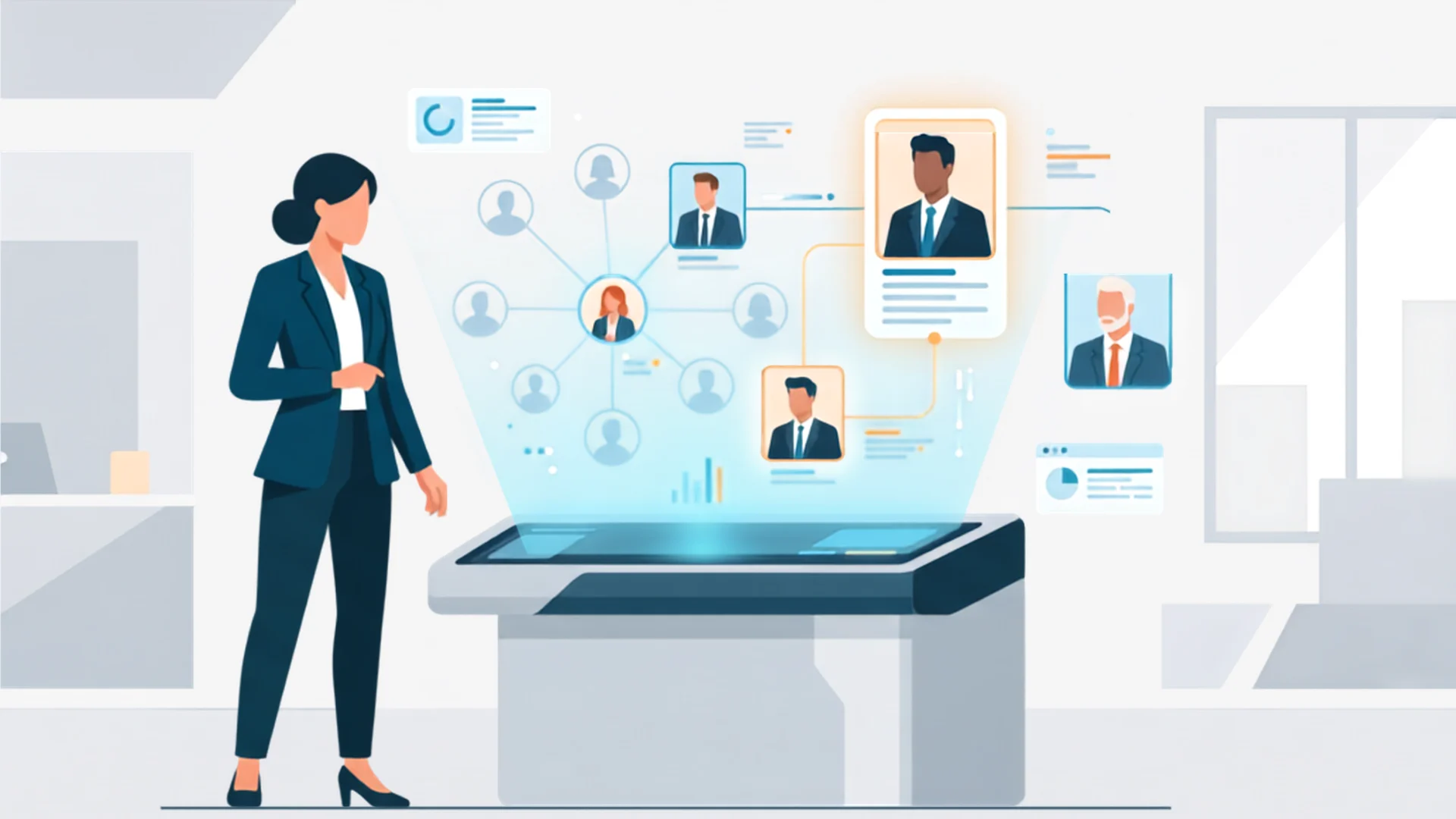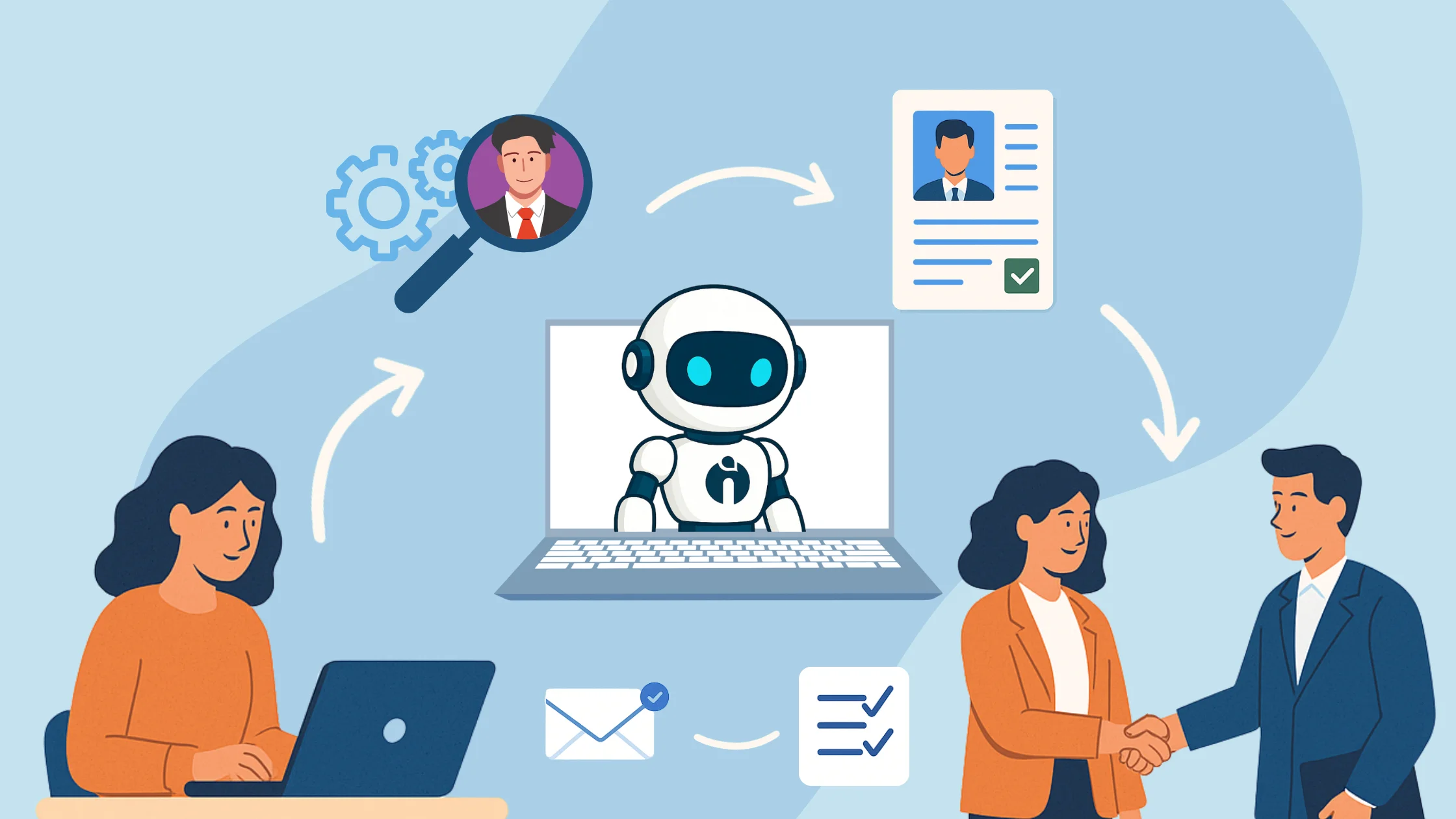

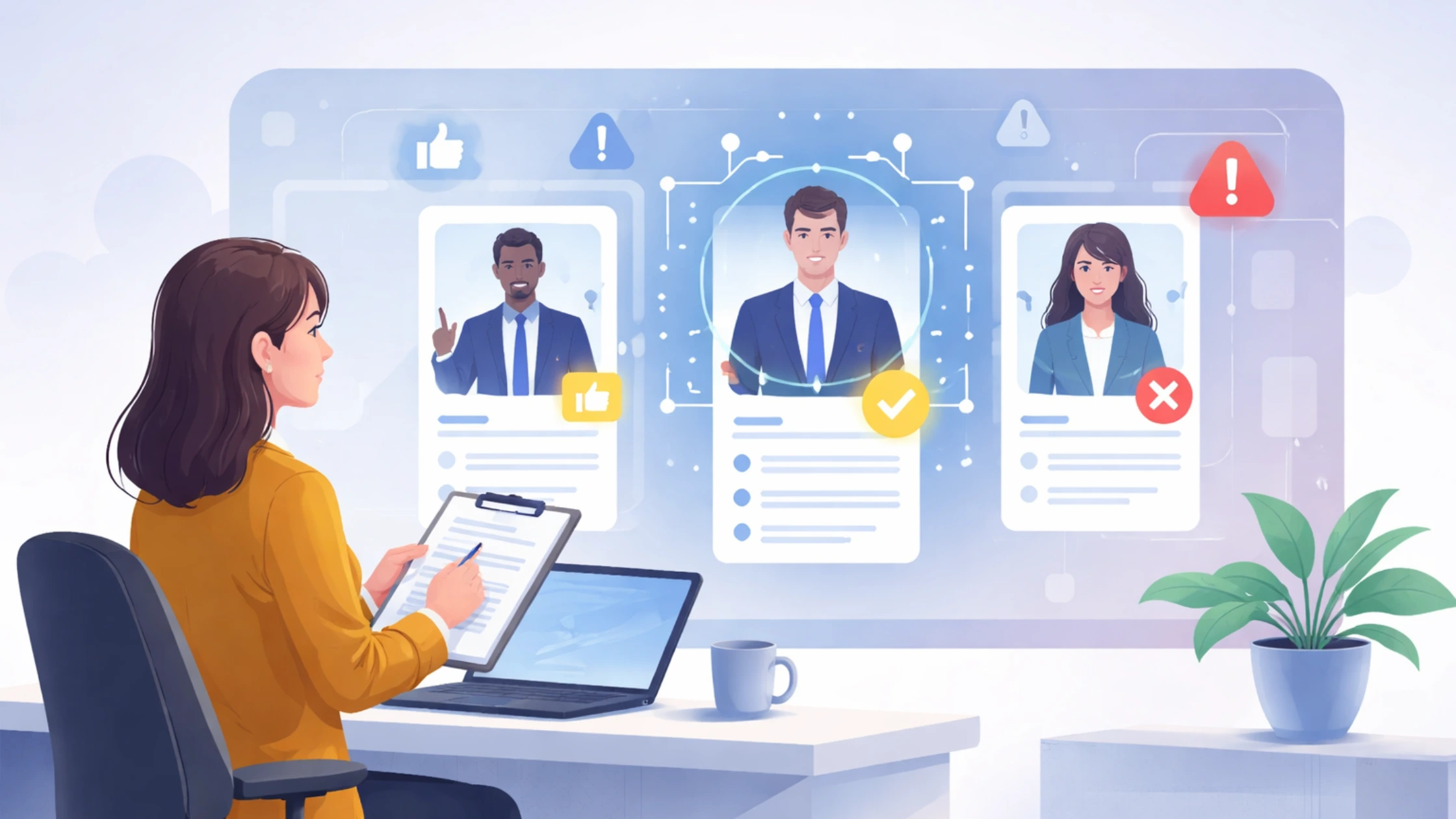
Artificial intelligence is transforming how organizations hire talent, and discussions around AI bias in hiring are becoming increasingly important. From automated resume screening to candidate matching, AI-powered recruitment tools help companies process applications faster and make more data-driven hiring decisions.
However, as AI becomes more integrated into recruitment, an important question arises: Can AI introduce bias into hiring decisions?
While some critics believe AI may reinforce existing biases, others argue it can actually help reduce human bias when used responsibly. The key is understanding how AI bias in hiring occurs and how organizations can prevent it while adopting modern recruitment technology.
TL;DR
- AI bias in hiring occurs when recruitment algorithms produce unfair outcomes due to biased training data or flawed model design.
- Many concerns about AI bias stem from historical hiring data, not the technology itself.
- When implemented responsibly, AI recruitment tools can help standardize candidate evaluation and reduce certain forms of human bias.
- Organizations can minimize risks through bias audits, diverse training data, and human oversight.
- Modern recruitment platforms use AI primarily to assist recruiters, not replace human decision-making.
What Is AI Bias in Hiring?
AI bias in hiring refers to situations where AI-driven recruitment systems produce unfair or unequal outcomes for certain groups of candidates.
These biases can appear at multiple stages of the hiring process, including:
- Resume screening
- Candidate ranking
- Automated interview analysis
- Predictive hiring assessments
AI recruitment tools rely on machine learning algorithms that analyze large datasets to identify patterns. These datasets often include historical hiring data, candidate profiles, and job performance metrics.
If the data used to train these systems contains historical inequalities or biased patterns, the algorithm may unintentionally learn and repeat them.
For example, if a company historically hired candidates primarily from certain universities or demographics, an AI model trained on that data may prioritize similar candidates in future hiring decisions.
This phenomenon is commonly referred to as algorithmic bias in hiring.
Why Companies Are Adopting AI Recruitment Tools
Despite concerns about bias, AI adoption in recruitment continues to grow rapidly. The main reason is the increasing complexity and scale of modern hiring.
Large organizations often receive hundreds or even thousands of applications for a single position. Reviewing each resume manually can be inefficient and time-consuming for recruitment teams.
AI-powered recruitment systems help address this challenge by supporting recruiters with tasks such as:
automated resume screening
- candidate-job matching
- recruitment analytics and insights
- candidate communication automation
These capabilities allow talent acquisition teams to focus more on strategic decision-making and candidate engagement, rather than administrative tasks.
However, the growing reliance on automated hiring systems also raises important questions about fairness, transparency, and accountability.
Common Myths About AI Bias in Recruitment
Discussions about AI hiring technology often include misconceptions. Separating myths from reality helps recruitment leaders make informed decisions when adopting AI tools.
Myth 1: AI Hiring Systems Are Always Biased
One of the most common assumptions is that AI recruitment tools are inherently biased.
In reality, AI systems themselves are not inherently discriminatory. Bias typically arises from the data used to train the algorithm or from poorly designed models.
When properly designed and monitored, AI can actually help standardize candidate evaluation and reduce inconsistencies that often occur in purely human-driven hiring processes.
Human recruiters may unknowingly introduce unconscious bias based on familiarity, background, or personal assumptions. AI systems can help create structured evaluation criteria that focus more on measurable qualifications.
Myth 2: Removing AI Eliminates Hiring Bias
Some organizations believe avoiding AI will prevent bias altogether.
However, decades of behavioral research show that human decision-making is also prone to unconscious bias.
Recruiters may unintentionally favor candidates with similar educational backgrounds, cultural experiences, or communication styles.
Structured hiring processes supported by AI can help create more consistent evaluation standards.
Myth 3: AI Makes Perfectly Objective Hiring Decisions
Another misconception is that AI produces completely objective results.
While AI systems analyze data mathematically, they still rely on historical data patterns. If those patterns reflect past hiring inequalities, the algorithm may replicate them.
This is why organizations must regularly evaluate their recruitment algorithms and ensure that ethical AI practices are in place.
Reality: AI Improves Recruitment Efficiency and Hiring Speed
AI-powered recruitment tools are designed to streamline time-consuming hiring tasks such as resume screening, candidate matching, and interview scheduling.
According to Datarefs research, AI recruitment technologies can reduce time-to-hire by up to 50%, enabling organizations to identify and engage qualified candidates much faster.
.webp.dat)
By automating repetitive steps in the hiring process, recruiters can focus more on strategic activities such as candidate engagement, talent relationship building, and final hiring decisions.
How Bias Can Enter AI Hiring Systems
Understanding the sources of bias is essential for organizations adopting AI-powered recruitment technology.
Several factors can contribute to biased outcomes in AI hiring systems.
1. Historical Hiring Data
Machine learning models learn from past data. If historical hiring patterns favored specific demographics, educational institutions, or career paths, the AI system may learn to prioritize similar profiles.
This is one of the most common causes of training data bias.
2. Algorithm Design and Feature Selection
AI models evaluate candidates based on selected attributes such as experience, skills, education, or career history.
If these features indirectly correlate with demographic factors or socioeconomic background, they may influence candidate rankings in unintended ways.
Careful feature selection and evaluation are necessary to reduce these risks.
3. Lack of Transparency in AI Models
Some AI systems operate as complex “black box” models, meaning it is difficult to understand how decisions are made.
Without transparency, identifying potential bias becomes challenging. Many HR technology experts now emphasize the importance of explainable AI in recruitment.
4. Insufficient Monitoring
AI systems require continuous monitoring. Hiring patterns, workforce goals, and labor markets change over time.
Organizations that fail to audit their recruitment algorithms regularly may unknowingly allow biased patterns to persist.
Regular bias audits and model evaluations help ensure fair outcomes.
Can AI Actually Reduce Bias in Recruitment?
While AI bias is a legitimate concern, AI can also help reduce certain forms of bias when used responsibly.
AI-powered hiring tools can support fairness by:
- Standardizing evaluation criteria
- Focusing on skills and qualifications
- Removing identifying information during early screening
- Analyzing large candidate pools consistently
For example, some recruitment systems implement blind resume screening, which removes personal identifiers such as names or photos during initial evaluations.
This allows recruiters to focus more on candidate skills, experience, and job-relevant qualifications.
When combined with structured hiring processes, AI can help organizations create more objective and consistent recruitment workflows.
How Recruitment Leaders Can Reduce AI Bias
Organizations adopting AI in recruitment should follow responsible implementation practices to minimize bias risks.
1. Conduct Regular Bias Audits
Recruitment teams should periodically evaluate AI hiring systems to identify potential bias patterns. Auditing recruitment data helps ensure that candidate selection processes remain fair.
2. Use Diverse Training Data
AI models trained on diverse candidate datasets are less likely to reinforce narrow hiring patterns. Ensuring representative data helps improve fairness in candidate evaluation.
3. Maintain Human Oversight
AI should assist recruiters rather than replace them. Many organizations use a human-in-the-loop approach, where recruiters review AI-generated recommendations before making final hiring decisions.
Human oversight ensures that technology supports recruiter expertise rather than fully automating hiring decisions.
4. Prioritize Transparent Recruitment Technology
Recruitment leaders should prioritize hiring technologies that emphasize transparency, explainability, and ethical AI practices. Understanding how AI systems evaluate candidates helps organizations detect and correct potential bias.
The Role of Responsible Recruitment Technology
Modern recruitment platforms are increasingly designed to support fair, transparent, and efficient hiring processes. Rather than replacing recruiters, many AI-powered systems focus on automating repetitive tasks and providing insights that support decision-making.
For example, platforms like iSmartRecruit integrate AI capabilities to assist recruiters with candidate matching, sourcing automation, and candidate communication. By using AI primarily as a support tool rather than a decision-maker, these platforms help organizations maintain a human-centered hiring approach.
This balanced model allows recruitment teams to benefit from AI-driven efficiency while ensuring that final hiring decisions remain in the hands of experienced recruiters.
Conclusion
The debate around AI bias in hiring highlights an important truth: technology itself is not inherently biased. The way AI systems are designed, trained, and monitored ultimately determines their impact on hiring outcomes.
When implemented responsibly, AI can help recruitment teams reduce repetitive work, analyze candidate data more effectively, and build more structured hiring processes.
For recruitment leaders, the future of hiring lies in combining AI-powered efficiency with ethical and transparent recruitment practices. Organizations that adopt responsible recruitment technology will be better positioned to create hiring processes that are both efficient and fair.
.webp.dat)
Frequently Asked Questions (FAQs)
1. What is AI bias in hiring?
AI bias in hiring occurs when recruitment algorithms produce unfair outcomes for certain groups of candidates. This usually happens when AI models are trained on historical hiring data that contains existing biases, which the system may unintentionally learn and repeat during candidate evaluation.
2. Can AI recruitment tools reduce hiring bias?
Yes, AI recruitment tools can help reduce some forms of bias by standardizing candidate evaluation and focusing on skills and qualifications. However, responsible implementation, diverse training data, and human oversight are essential to ensure fair hiring outcomes.
3. Why do AI hiring systems sometimes become biased?
AI hiring systems can become biased if they are trained on historical data that reflects past hiring inequalities. Bias can also arise from poor algorithm design, limited datasets, or a lack of transparency in how candidate evaluations are performed.
4. Are AI-powered recruitment platforms designed to reduce bias?
Many modern recruitment platforms aim to reduce bias by combining AI automation with structured hiring processes and human oversight. Solutions such as iSmartRecruit use AI mainly to assist recruiters rather than automate final hiring decisions.
5. What should recruitment leaders look for in AI hiring tools?
Recruitment leaders should evaluate AI hiring tools based on transparency, fairness, and human oversight. It is important to understand how candidate evaluations are made and whether the platform allows monitoring to detect potential bias.
About the Author