


Recruiters and talent teams increasingly use AI-generated job descriptions to save time and scale hiring. That convenience is appealing, but it raises an important question for employer branding: are these AI outputs strengthening your reputation or quietly undermining it? This article explores the trade-offs and offers practical guidance to help HR teams harness the benefits while protecting their employer brand.
TL;DR
- AI-generated job descriptions can speed up hiring and improve consistency across teams.
- When used thoughtfully they can strengthen employer branding through clarity and inclusivity.
- Poor prompts or blind automation risk bland, misleading or biased job ads that damage reputation.
- Combine AI with human review, inclusive language checks, and role-specific context to avoid brand damage.
- Measure impact with quality metrics such as application quality, diversity and time to hire.
- Clear governance, transparency and candidate communication protect trust and legal compliance.
- Start small, iterate, and align AI outputs with employer brand guidelines and hiring data.
What we mean by AI-generated job descriptions
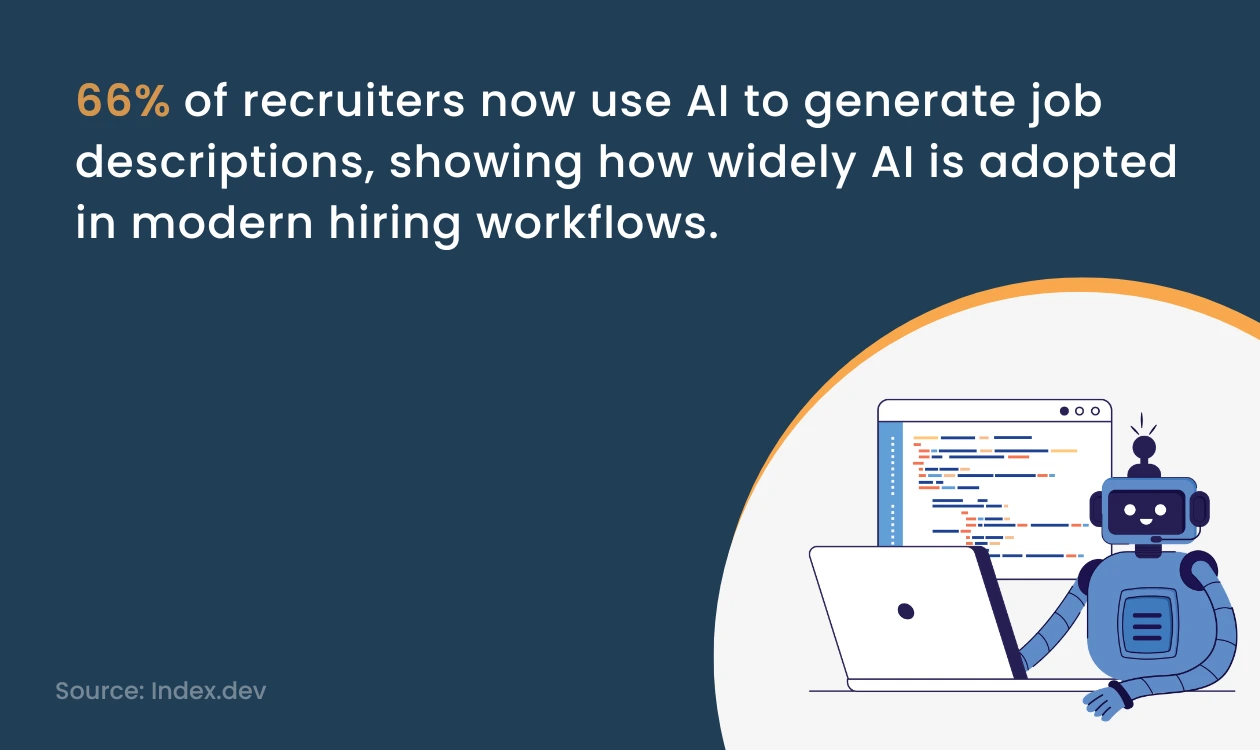
AI-generated job descriptions are role adverts, person specifications, or job summaries produced with the help of generative AI tools. According to Index.dev, 66% of recruiters now use AI to write job descriptions, highlighting how widely this technology is being adopted in modern hiring workflows. These tools can draft a full job advert from a short brief, rewrite copy for tone or length, localise content for markets, and suggest inclusive language alternatives. They are often integrated into applicant tracking systems or recruitment marketing platforms to streamline copy production.
How They Fit Into Modern Recruitment
AI-generated job descriptions are part of a broader wave of recruitment automation that covers sourcing, screening and candidate engagement. For many teams, generating consistent, on-brand copy at scale is the most immediate benefit. Yet this same scale means errors or tone mismatches get amplified unless controlled carefully.
How AI-Generated Job Descriptions Can Improve Employer Branding
Used well, AI-generated job descriptions can be an asset to employer brand. Key advantages include:
- Speed and consistency: AI can create standardised templates and role families quickly, ensuring adverts reflect brand voice and legal requirements across hundreds of vacancies.
- Scalability: When a business grows or opens new offices, AI helps produce localised copy fast without burdening small talent teams.
- Improved clarity: Generative models can remove jargon and produce clearer role summaries, helping candidates understand expectations and improving candidate experience.
- Inclusive language: Tools with bias and language checks can flag masculine-coded terms or ageist phrases and suggest alternatives to widen applicant pools.
- Data-driven optimisation: AI can A/B test headlines and benefits language, revealing what phrases attract higher quality applicants and aligning job ads to brand performance metrics.
These benefits directly support employer branding by creating consistent candidate experiences, lowering friction in application flows and broadening the talent pipeline.
Risks of AI-Generated Job Descriptions for Employer Branding
Despite the positives, improper use of AI-generated job descriptions can damage employer reputation in several ways.
1. Loss of Authentic Employer Voice
One common complaint from candidates is that job adverts feel generic. If every role reads the same, the advert fails to convey company culture and differentiators. Over time this erodes employer distinctiveness.
2. Inaccurate or Misleading Role Descriptions
AI can hallucinate or invent details when prompts are weak. That can lead to adverts that misrepresent seniority, responsibilities or required skills. Candidates who experience a mismatch during interviews are more likely to drop out and share negative feedback.
3. Bias and Diversity Concerns
If the training data or the prompts reflect biased patterns, AI-generated job descriptions may include language that discourages underrepresented groups. Even subtle cues can reduce applicant diversity and harm brand perception externally.
4. Legal and Compliance Risks
Poorly worded adverts can create legal risk, for example by implying discriminatory preferences or making claims about salary and benefits that are not accurate. Regulatory environments in many regions expect transparency and fairness in hiring communications.
Best Practices for Using AI-Generated Job Descriptions
To capture benefits and limit harm, follow these practical controls when using AI-generated job descriptions.
1. Define Employer Brand and Tone Guidelines
Before using AI, codify employer brand attributes and tone of voice in short prompts or style guides. Store examples of ideal job descriptions and negative examples. Feed these into prompt templates or the ATS-integrated tool so outputs align with your personality and values.
2. Use Structured Prompts and Templates
Work with standardised prompts that capture essentials: role purpose, key outcomes, required experience, team culture and perks. Structured inputs reduce hallucination and maintain role-specific nuance.
3. Keep Human Review in the Process
Never publish AI copy without human review. Subject matter experts and hiring managers should validate responsibilities and seniority. Brand or recruitment marketing owners should approve tone and benefits statements.
4. Run Inclusive Language Checks
Integrate inclusive language tools to flag words that deter particular demographics. Combine AI suggestions with data on which terms historically attracted diverse applicants in your organisation.
5. Test and Measure Performance
A/B test headlines and core selling points and track metrics such as applicant volume, application completion rate, applicant quality and diversity. Use this data to refine prompts and templates iteratively.
6. Maintain Transparency With Candidates
If you use AI to help craft adverts or screen applications, be transparent in candidate-facing communications. Explain how technology fits into the process and provide human contact points to build trust.
7. Establish Governance and Audit Processes
Create a simple governance framework that documents prompt libraries, approval flows and audit logs. Periodic audits should check for bias, accuracy and alignment with employment law.
Real examples and insights
Here are practical examples from market practice and composite case studies that illustrate both positive and negative outcomes.
Case Study: Scaling Hiring Without Losing Employer Voice
A mid-sized software company used AI to generate initial drafts for role families and then assigned a small team to add cultural specifics. The result was a 40 percent reduction in time-to-post and consistent branding across regions while retaining authentic culture lines added manually by hiring managers.
Case Study: When AI Job Ads Caused Candidate Confusion
An organisation redirected a high volume of roles to an AI-only workflow. Several adverts overstated responsibilities and omitted key benefits. Candidates reported confusion, and time-to-offer increased as hiring managers spent additional hours correcting expectations. The employer experienced a short-term dip in candidate satisfaction.
Insights From Talent Leaders
"AI helps us create a first draft quickly, but the human edit is where our employer brand comes alive. We use AI to remove bias and speed up copy, not to replace our hiring managers."
These examples show a consistent theme: AI is a productivity multiplier when paired with human expertise.
How to Measure the Impact on Employer Branding
Quantify the impact of AI-generated job descriptions with a mix of quantitative and qualitative metrics.
- Applicant quality: Track interview-to-offer ratios and performance of hires sourced from AI-generated adverts.
- Diversity metrics: Monitor changes in gender, ethnicity and other diversity markers across roles using AI-generated copy.
- Time metrics: Measure time-to-post, time-to-fill and recruiter hours saved.
- Candidate experience: Use post-application surveys to capture clarity, fairness and perceived authenticity.
- Brand sentiment: Monitor employer review sites and social commentary for changes in tone linked to job adverts.
Regularly review these metrics and loop insights back into your prompt library and templates.
Legal and Ethical Considerations of AI in Recruitment
AI-generated job descriptions sit at the intersection of ethics, compliance and brand strategy. Key considerations include:
- Non-discrimination: Ensure copy does not imply preferences that violate equality laws in your jurisdiction.
- Accuracy: Avoid misrepresentation of role, remuneration or progression opportunities.
- Data privacy: If prompts include candidate or employee data, ensure you comply with data protection rules and maintain strong email protection.
- Accountability: Maintain records of how AI was used and who approved published adverts.
Clear policies and legal review of templates help reduce regulatory and reputational risk.
Implementation Checklist for HR Teams
Use this short checklist to get started and govern AI-generated job descriptions.
- Create a prompt template library aligned to brand voice.
- Mandate human validation by hiring managers and brand owners.
- Integrate inclusive language and bias-detection tools.
- Set up A/B tests and track core recruitment KPIs.
- Document approvals and maintain an audit trail of edits.
- Train hiring teams on when to override AI outputs and how to provide effective prompts.
Quick prompt tips
Use explicit constraints in prompts such as target audience, role level, examples of preferred tone and unacceptable language. Short, structured inputs deliver better results than long, vague briefs.
Conclusion
AI-generated job descriptions offer clear efficiency and optimisation opportunities for recruitment teams and can strengthen employer branding if managed carefully. The technology is a tool, not a substitute for human judgment. By combining structured prompts, human-in-the-loop review, inclusive language checks, and rigorous measurement, talent teams can scale consistent, authentic job advertising without sacrificing candidate trust or brand distinctiveness.
Platforms like iSmartRecruit provide generative AI features that help recruiters draft and refine job descriptions, create professional communication templates, and maintain consistency across hiring content. These tools make it easier to implement best practices, such as clarity, inclusivity, and brand alignment, without adding administrative burden. Thoughtful governance and ongoing iteration are essential to ensure that AI-generated job descriptions support rather than harm employer reputation.
.webp.dat)
Frequently Asked Questions (FAQs)
1. Can AI-generated job descriptions replace recruiters?
No. AI can automate drafting and optimisation but cannot replace the contextual knowledge and judgement of recruiters and hiring managers. Human review is essential to ensure accuracy and cultural fit.
2. Do AI-generated job descriptions introduce bias?
They can if care is not taken. Bias arises from training data and prompt design. Integrating bias detection, inclusive language tools and diverse reviewer input helps mitigate this risk.
3. How do I measure if AI-generated job descriptions are helping my brand?
Track metrics such as applicant quality, diversity of applicants, time-to-fill and candidate satisfaction. Monitor employer reviews and social feedback for changes in sentiment related to job adverts.
4. Are there legal risks to using AI for job adverts?
Yes. Inaccurate or discriminatory language can create legal exposure. Maintain legal oversight of templates, avoid misleading claims and document approval processes.
5. What is a good governance model for AI in recruitment?
A simple governance model includes a prompt library, mandatory human approvals, periodic audits for bias and accuracy, training for hiring teams and logs of published content and edits.
6. How do I get started with AI-generated job descriptions?
Begin with a pilot for a small set of roles, create templates aligned to brand voice, require human validation and measure outcomes. Iterate based on performance and feedback.
About the Author