
TL;DR
- Use AI in employee onboarding to automate routine tasks and free HR time for human-led activities.
- Integrate your ATS, HRIS and LMS so data flows smoothly and onboarding tasks trigger automatically.
- Start with document collection, account provisioning and a FAQ chatbot to win quick efficiency gains.
- Personalised learning and sentiment analysis from AI in employee onboarding improves time to productivity and early retention.
- Measure time to productivity, onboarding completion rate and new hire NPS to track success.
- Avoid over-automation and protect personal data when using AI in employee onboarding.
- Pilot in one team, train managers, then scale based on metrics and feedback.
AI in employee onboarding is the use of artificial intelligence to automate, personalise and optimise the process of integrating new hires into an organisation. It reduces manual HR work, improves the new hire experience and strengthens employee engagement through recruitment automation, ATS and HRIS integration. This guide explains practical use cases, step-by-step implementation, key onboarding metrics and common pitfalls to help HR teams deploy AI effectively while preserving human connection.
Why Talent Acquisition Automation Matters for HR Teams
Why Use AI in Employee Onboarding
New starters form an impression of your organisation within the first days and weeks. A structured, welcoming onboarding experience builds trust and accelerates contribution. Introducing AI in employee onboarding enables personalised, consistent and data-driven journeys. Rather than relying on manual emails and paper forms, you can automate compliance, guide learning and provide always-on support for common questions. That reduces administrative overhead and improves the candidate-to-employee experience. Modern HR tech makes this integration faster and more affordable than ever for organisations of all sizes.
Key Business Benefits
- Faster time to productivity by automating routine tasks and delivering personalised learning plans.
- Improved retention through early engagement and clearer expectations.
- Cost savings from reduced manual processing and fewer errors.
- Better data for decisions so you can identify bottlenecks and optimise the journey.
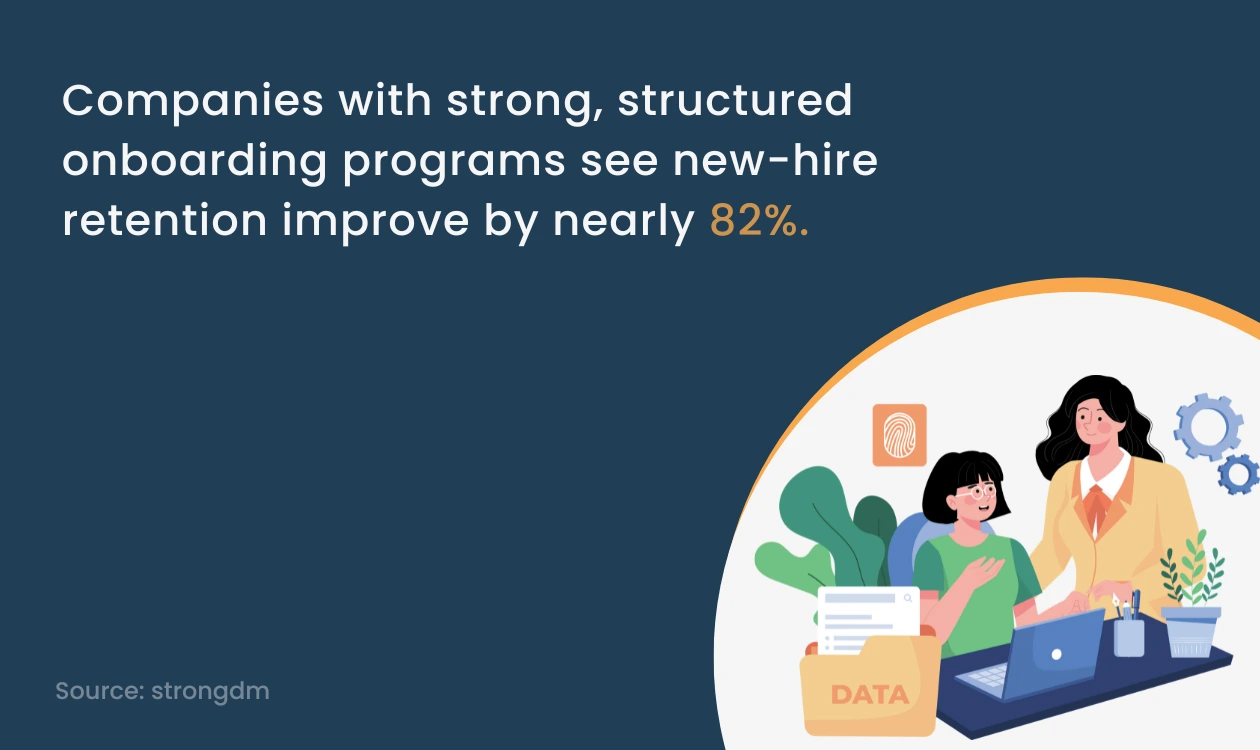
Industry research consistently shows that structured onboarding improves retention and productivity. For example, organisations with a strong, structured onboarding programme can improve new-hire retention by approximately 82%, highlighting just how significant the impact of a consistent onboarding experience can be. For example, companies that invest in formal onboarding report substantially higher new hire engagement and quicker contribution. Using AI in employee onboarding multiplies those gains by making the experience adaptive for different roles and backgrounds.
How AI and Recruitment Automation Actually Work in Onboarding
Practical applications of AI in employee onboarding go beyond chatbots. The most valuable features HR teams deploy today are automation of tasks, personalised learning, conversational assistants, document verification and sentiment analysis. Each capability removes friction at a different stage of the journey. Integrating onboarding systems with payroll software can also help HR teams streamline salary-related processes for new employees.
1. HR Automation: Automated Task Orchestration
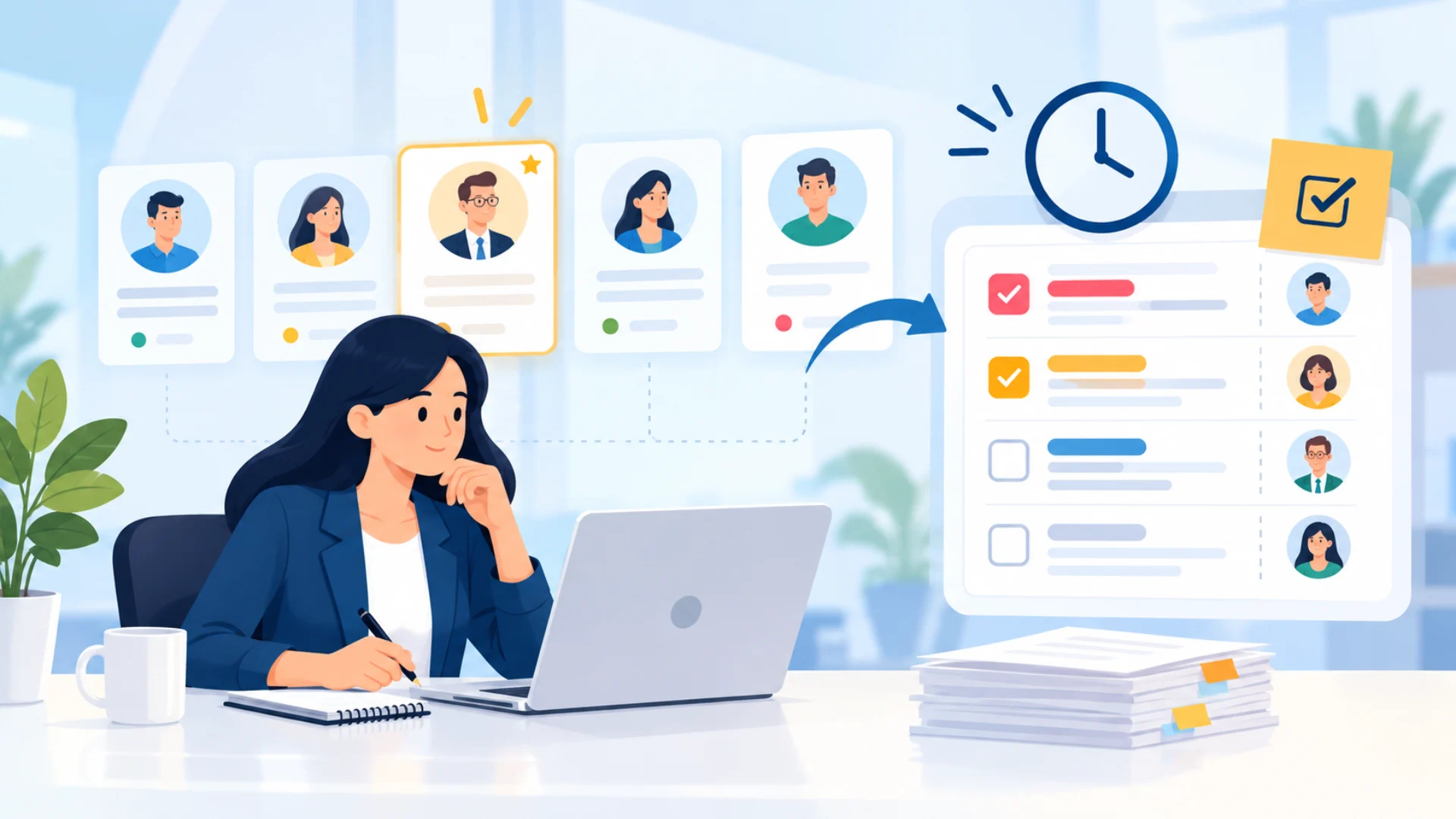
Recruitment automation connects your Applicant Tracking System, HRIS and onboarding platform so tasks trigger automatically when an offer is accepted. Typical examples include creating user accounts, scheduling inductions, assigning equipment and allocating mandatory training. When you use AI in employee onboarding to orchestrate tasks, nothing is missed, and every new starter receives consistent, role-specific steps.
2. Personalised Onboarding: Learning Pathways and Role Readiness
AI-driven employee onboarding training can assess a new hire’s existing skills and recommend tailored learning modules to address specific gaps. Recommendations can use role, previous experience and performance indicators to create concise learning pathways. Personalised learning reduces unnecessary training time and speeds confidence, which shortens the time to productivity.
3. Conversational Assistants
Conversational AI answers common questions about payroll, benefits, IT and policies 24 hours a day. These assistants handle routine queries and escalate complex matters to HR. By adding AI in employee onboarding chat capabilities, organisations cut ticket volumes and improve response times for new starters without losing service quality.
4. Document and Compliance Automation
As organisations increasingly use generative AI to create onboarding documents, training materials, and internal communications, maintaining accuracy and transparency becomes important. Some HR teams use an AI text detector as an additional review layer to identify AI-generated content and ensure critical onboarding resources align with company standards, compliance requirements, and brand guidelines.
5. Sentiment and Engagement Analysis
Natural language processing helps analyse survey responses, manager notes and chat transcripts to identify early disengagement. When AI in employee onboarding highlights risk signals, managers can intervene with coaching before problems escalate. This proactive approach improves retention in the critical first months.
Real Examples and Outcomes
The following cases illustrate realistic outcomes from combining recruitment automation and AI in employee onboarding.
Example 1: Global Technology Firm
A global technology firm integrated its ATS with an onboarding automation platform and introduced an AI assistant for FAQs. Routine tasks such as equipment provisioning, access requests and induction scheduling were automated. The HR team reported a marked reduction in manual steps and a significant drop in query emails. Time to productivity for new hires fell by nearly a third, while hiring managers gained clear visibility of onboarding status through dashboards.
Example 2: Mid-Sized Professional Services Agency
A professional services agency used AI in employee onboarding to personalise induction learning. Instead of a generic programme, new consultants received learning based on their prior experience and the skills needed for their upcoming projects. The outcome was faster billable work and higher satisfaction scores among new starters. The firm measured a 20 per cent increase in early engagement within three months.
Practical Implementation: Step by Step
Successful adoption of AI in employee onboarding does not happen overnight. Use a staged, measurable approach to build confidence and show results.
1. Map the Current Onboarding Journey
Document every touchpoint from offer acceptance to the end of probation. Identify manual tasks, handoffs and common pain points. This baseline is essential for prioritising automation.
2. Define Success Metrics
Choose metrics linked to business outcomes. Typical measures include time to productivity, new hire retention at 90 days, completion rate for mandatory training and average response time to new hire questions. Setting clear targets keeps the programme focused on results rather than activity.
3. Prioritise High-Impact Automations
Start with tasks that save time and reduce failure points. Document collection, equipment provisioning and induction scheduling are often quick wins. Implementing these first demonstrates value while building integration capability for more advanced features.
4. ATS and HRIS Integration for Seamless Onboarding
Ensure the ATS, HRIS, payroll and learning management systems are connected. Recruitment automation works best with reliable data flows across your stack. Use APIs or middleware to reduce bespoke integration work and maintain data integrity.
5. Deploy AI Incrementally
Begin with rule-based automations and a simple chatbot for FAQs. Once processes stabilise and data accumulates, expand into AI-driven personalisation and sentiment analysis. This stepwise approach mitigates risk while improving outcomes from AI in employee onboarding.
6. Train HR and Managers
Equip HR teams and hiring managers with practical training on dashboards, exception workflows and AI insights. Human oversight ensures the experience remains empathetic and fair, and it helps managers use automation to amplify their impact.
7. Monitor and Iterate
Review metrics and user feedback regularly. Use A/B testing for communications and learning pathways to determine what works best for different roles. Continuous improvement is a core principle when you scale AI in employee onboarding.
Key Onboarding Metrics to Measure Success
- Time to productivity: Time to reach the expected level of contribution.
- Onboarding completion rate: Percentage of required activities completed by the target dates.
- New hire NPS: Satisfaction of new starters with the onboarding process.
- First 90-day retention: Early retention is a reliable indicator of onboarding success.
- HR response time: Average time to resolve new hire queries.
Onboarding Technology and Integration Checklist
- ATS with open APIs for secure data sharing
- An onboarding platform or HRIS capable of workflow automation
- Learning management system for role-based training
- Secure document management and e-signature capability
- Conversational AI tool for FAQs and guided flows
- Analytics layer or dashboard for metrics, audit trails and reporting
Common Pitfalls and How To Avoid Them
Automation can fail when teams focus only on technology. Avoid these common mistakes when implementing AI in employee onboarding.
- Over automation: Do not replace human interactions that build culture and psychological safety. Use AI to support people rather than replace them.
- Poor integrations: Siloed systems create duplicate work and inconsistent records. Prioritise reliable data flows and single sources of truth.
- No clear success criteria: Measure outcomes, not activity. A high completion rate matters little if new hires are not productive or engaged.
- Neglecting privacy: Protect personal data and obtain clear consent for AI-driven processes. Use secure storage and full audit logs.
Tip: Pilot with a single department or location before scaling. Smaller pilots reveal usability issues and give managers time to adapt while producing measurable results.
How to Maintain the Human Touch and Improve New Hire Experience
AI can streamline many tasks, but human rapport matters most in the early months. Encourage managers to schedule meaningful one-to-one touchpoints and assign buddies for practical day-to-day support. Use AI in employee onboarding to free up time for these conversations rather than replace them.
Practical Ways To Combine AI and Human Interaction
- Automate document collection so HR can focus on coaching and relationship building.
- Use chatbots for routine queries and reserve manager time for role clarity and cultural induction.
- Deliver personalised learning recommendations and have a mentor review progress weekly.
Future Trends To Watch
Expect more AI-driven adaptive learning, better predictive analytics to spot hires at risk, and deeper integration between recruitment and onboarding systems. Voice assistants and immersive induction experiences using augmented reality will become more common as the technology matures. These trends will increase reliance on data and on ethical frameworks for AI use in HR.
Vendor Selection Considerations
Choose vendors that support open standards, provide transparent AI models and demonstrate strong security practises. Prefer platforms with pre-built connectors to your ATS and HRIS to reduce deployment time. Ask for reference implementations in similar sectors and for evidence of measurable outcomes.
Conclusion
Adopting AI in employee onboarding and recruitment automation creates a measurable advantage. Automating routine tasks, personalising learning and giving HR teams the data to improve delivers a repeatable experience that nurtures new starters and drives business results. Start small, measure outcomes and scale what works. Thoughtful human design and targeted automation together help you onboard employees faster and with better outcomes.
Frequently Asked Questions (FAQs)
1. Is AI in employee onboarding suitable for small businesses?
Yes. Small businesses benefit from automation where manual administration takes time away from growth activities. Begin with simple automations for document collection and a FAQ chatbot to free up HR capacity while preserving personal interactions.
2. What is the best order to implement onboarding automation?
Map the process, then automate high-impact repetitive tasks such as document collection, account provisioning and induction scheduling. Add AI-driven personalisation once core flows are stable and you have reliable data.
3. How do we maintain compliance when using AI?
Ensure data handling complies with local privacy laws, store records securely and obtain clear consent for any AI-driven processing. Keep audit logs for all automated actions and use role-based access controls for sensitive information.
4. How much improvement can organisations expect?
Outcomes vary with maturity and approach, but many organisations report substantial reductions in administrative time and faster time to productivity. Track your own metrics and iterate to find the right improvements for your context.
5. Can AI replace human onboarding managers?
No. AI complements onboarding managers by reducing routine tasks and providing data-driven insights. Human judgement and relationship building remain central to successful onboarding.
About the Author