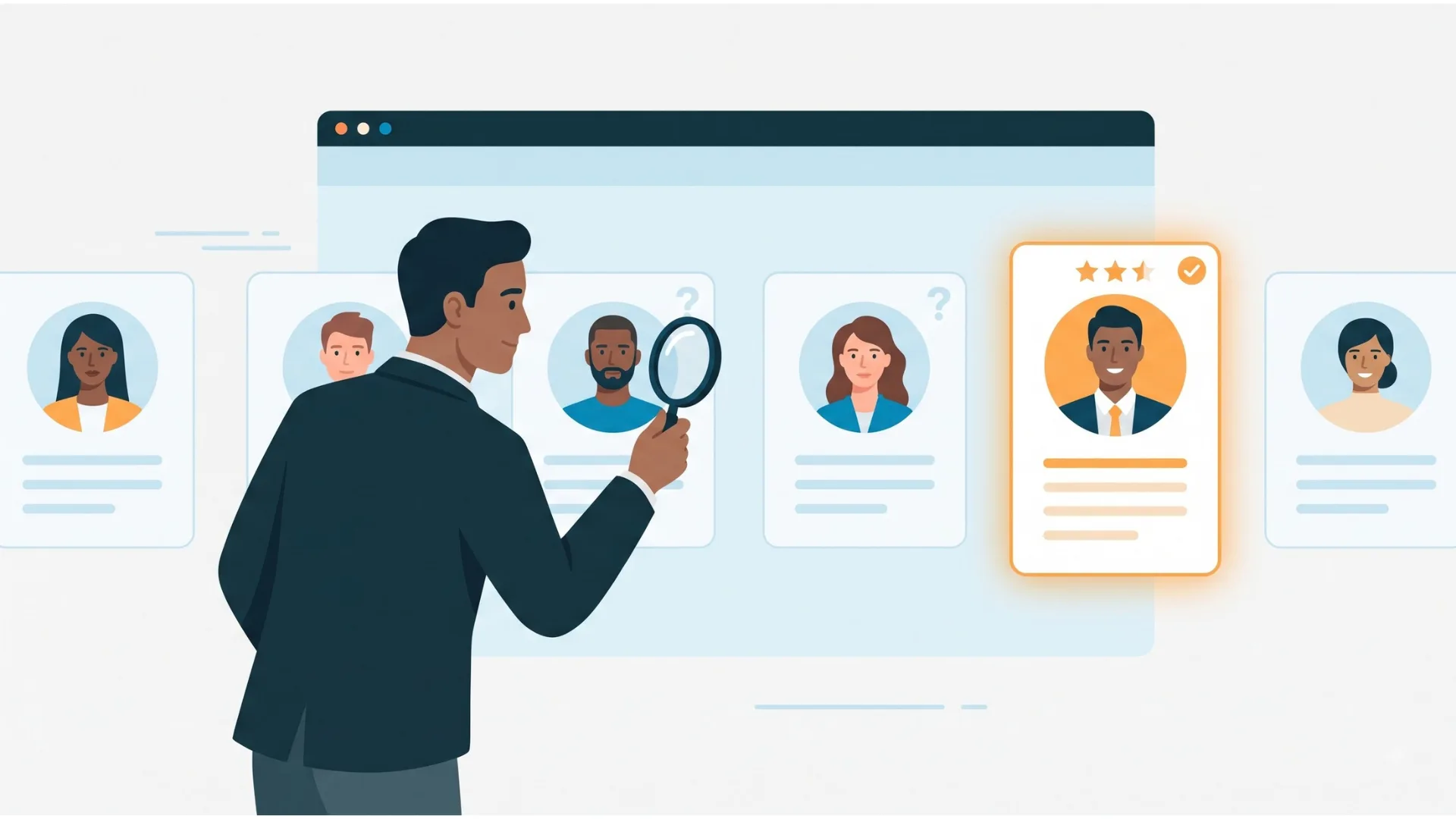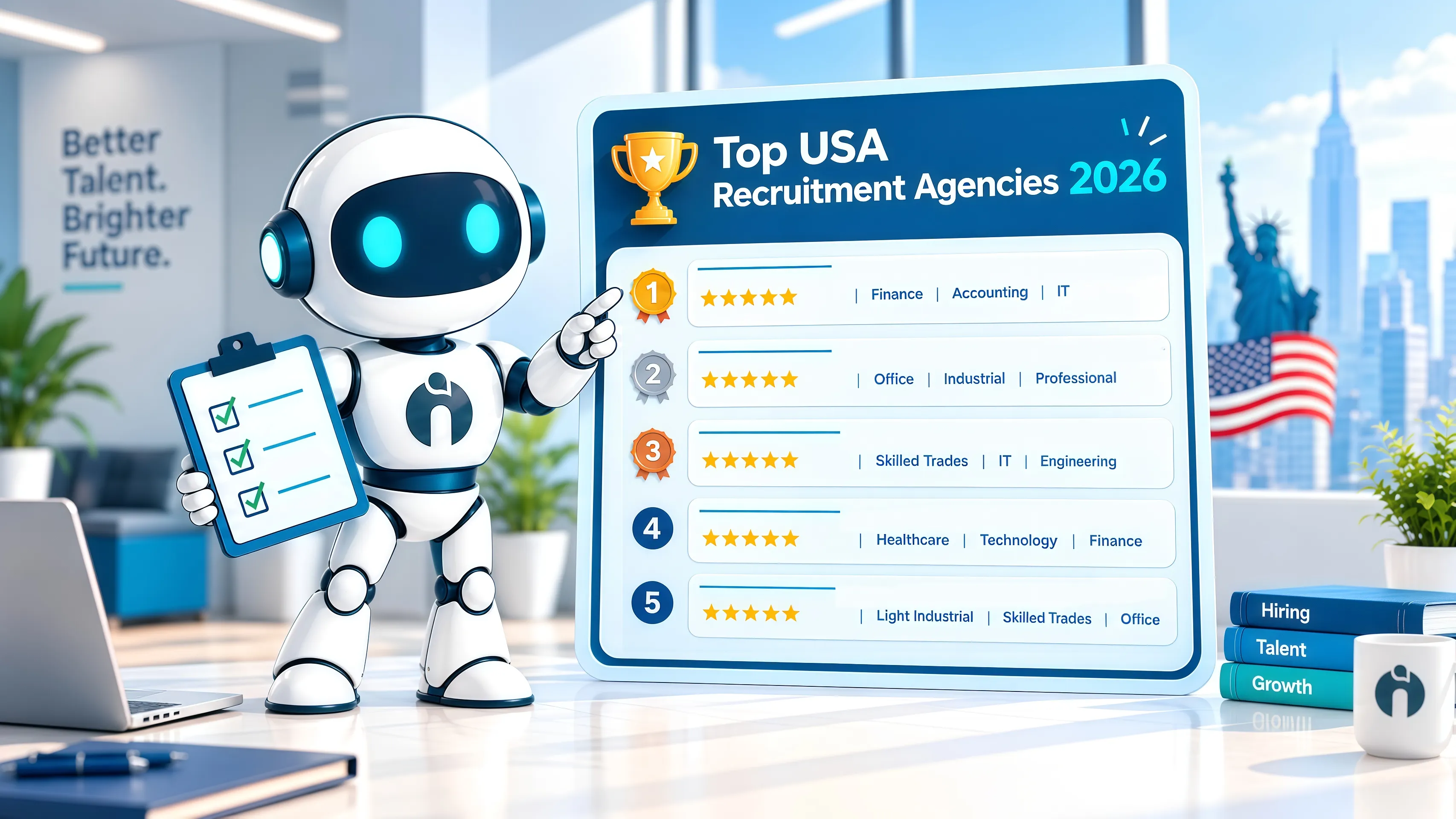


Recruiters and talent teams are under constant pressure to hire faster while keeping quality high. This guide explains how AI tools for talent acquisition can transform sourcing, screening, interviewing, and candidate engagement. It covers practical selection, implementation, and measurement advice for HR teams and talent acquisition leaders who want to adopt AI responsibly and effectively without losing the human judgment that makes great hires great.
TL;DR
- AI tools for talent acquisition accelerate sourcing, screening, and candidate engagement.
- Top categories include sourcing AI, screening AI, interview automation, and conversational AI.
- Choose tools that integrate with your ATS and protect candidate data.
- Start small with pilot use cases such as resume screening and outreach automation.
- Measure time-to-hire, quality-of-hire, and cost-per-hire to prove ROI.
- Watch for bias, data privacy, and compliance when deploying AI tools.
- Combine AI with recruiter expertise for the best outcomes.
Why AI tools for talent acquisition matter now ?
Organisations face talent shortages, rising hiring costs, and increased candidate expectations. AI tools for talent acquisition help teams scale outreach, reduce time-to-hire, and improve candidate experience without sacrificing fairness. Industry surveys in recent years indicate that teams using recruitment AI commonly report 20 to 40 percent reductions in time-to-hire, along with improved response rates from passive candidates.
Those gains aren't automatic they're achieved when tools are selected and implemented with clear metrics and governance, not bought as a quick fix. If you want a broader view of where the technology is headed before you commit budget, it's worth reviewing the top AI trends transforming recruitment in 2026 to see which capabilities are maturing fastest.
Core categories of AI tools for talent acquisition
Choose AI tools for talent acquisition based on the stage of your hiring process. The main categories are:
- Sourcing AI – discover passive candidates from public profiles and community data, and build long-term talent pools for hard-to-fill roles.
- Screening AI – parse resumes, score candidates, and shortlist based on skills and fit.
- Interview automation – schedule, run, and transcribe interviews, and assess competencies at scale.
- Conversational AI and chatbots – engage candidates on career sites and messaging platforms around the clock.
- Talent CRM and candidate rediscovery – use AI to surface prior applicants with suitable skills instead of starting every search from zero.
- Analytics and predictive hiring – forecast attrition, predict success, and measure quality-of-hire over time.
Sourcing AI deserves special attention because it sets the ceiling for everything downstream a great screening tool can't fix a thin candidate pool. Many teams pair AI sourcing with structured techniques like Boolean search to improve talent acquisition efficiency, and increasingly with AI-driven talent mapping to plan pipelines for roles months before a requisition opens.
Top tools and what they do
Below are representative AI tools for talent acquisition by category. This is not an exhaustive list, but it reflects popular approaches you'll see in the market.
| Category | What It Does | Example Tools |
| Sourcing | Expands talent pools, finds niche skills, enriches profiles | iSmartRecruit, SeekOut, HireEZ |
| Screening | Skills-based scoring, video analysis, structured assessments | iSmartRecruit, Pymetrics, modern ATS plugins |
| Interview automation | Ondemand interviews with automated scoring | ScreeningHive, myInterview, HireVue |
| Conversational | AI Candidate Q&A, screening, and scheduling chatbots | Paradox Olivia, Mya |
| Recruitment writing | Optimises job descriptions and outreach copy | Textio |
| ATS AI integrations | Native AI modules built into the hiring workflow | iSmartRecruit, Greenhouse, iCIMS |
If you're hiring at the leadership level, general screening tools often fall short leadership hiring depends more on judgment, references, and market mapping than resume parsing. It's worth reading this guide to smarter AI executive recruiting before extending standard AI screening workflows to senior roles.
How to evaluate AI tools for talent acquisition?
Evaluate vendors using a structured checklist to avoid common pitfalls. Key criteria include:
- Integration – native connectors to your ATS and HRIS reduce manual work and data duplication.
- Transparency – vendors should explain how models score candidates and provide audit trails.
- Bias mitigation – ask for fairness testing results and the ability to tune criteria for diverse hiring.
- Data privacy and security – ensure compliance with GDPR and local data laws, and request security certifications.
- Configurability – the system should allow recruiters to adjust weightings, templates, and screening rules.
- Support and change management – vendor training, onboarding, and a named customer success team matter.
If you're choosing between several AI-driven sourcing or screening agents, it helps to follow a more detailed framework this breakdown of how to choose the right AI agent for recruitment walks through the evaluation criteria recruiters tend to overlook.
Practical pilot plan for HR teams
Start small with a clear pilot plan. A recommended sequence is:
- Define one measurable objective - for example, cut screening time by 30 per cent for sales roles.
- Select an initial use-case - resume parsing and candidate ranking or automated interview scheduling.
- Integrate with your ATS and pull a sample dataset of past hires to validate scoring.
- Run a controlled pilot for 6 to 8 weeks and compare metrics such as time-to-offer and interview-to-hire ratio.
- Gather recruiter and candidate feedback and iterate before broad rollout.
Measuring success and ROI
Measure outcomes using a combination of operational and quality metrics. Key indicators for AI tools for talent acquisition include:
- Time-to-hire – days from job posting to accepted offer.
- Time-to-fill – days to close a requisition.
- Quality-of-hire – performance of new hires at 3 and 12 months.
- Interview efficiency – interviews per hire and recruiter hours saved.
- Candidate experience – NPS and dropout rates during the pipeline.
Combine cost-per-hire reductions with improvements in quality-of-hire to build a compelling ROI case. For example, if AI screening halves the manual triage time for a role type that hires 200 people per year, the saved recruiter hours and faster placements can quickly offset subscription costs. For a deeper dive into one of the most-watched metrics in this list, see this complete breakdown of time-to-fill and what it means for recruiters in 2026. If your stakeholders need a finance-friendly case for the investment, this guide to the ROI of AI recruitment agents lays out how to translate hours saved into hard numbers.
Ethics, bias and governance
Responsible use is non-negotiable. AI tools for talent acquisition can amplify bias if trained on historical hiring data that reflects past inequalities. Steps to reduce risk include:
- Run disparate impact analyses and require vendors to share fairness testing.
- Use anonymised, skills-based assessments where possible to remove identity signals.
- Create a governance committee with HR, legal, data science, and diversity leads to review models and outcomes.
- Document and retain audit logs for automated decisions that materially affect candidates.
Transparency with candidates about AI use builds trust. Update job pages and privacy notices to explain how AI is used in hiring decisions and how candidates can request human review. Two resources worth bookmarking here: this guide on how AI is transforming diversity hiring strategies, and a more compliance-focused look at GDPR in AI recruitment for teams hiring across the EU or UK.
Integration tips with your ATS and tech stack
Successful deployments are tightly integrated with your ATS and talent CRM. Recommendations:
- Prefer API-first vendors that map candidate statuses and events back to the ATS in real time.
- Ensure single sign-on and role-based access so recruiters can access AI insights within existing workflows.
- Use webhooks to trigger automated outreach and update candidate records to avoid rekeying.
- Retain raw scores and explanations in the ATS so hiring managers can inspect automated suggestions.
Real-world example and insight
Example insight from large enterprises that have published their approaches shows practical benefits. A mid-sized technology firm adopted a sourcing AI integrated into its ATS and focused on hiring for niche engineering skills. After a three-month pilot they increased qualified candidate flow by 60 per cent while reducing recruiter outreach time. They emphasised change management - training recruiters to trust AI suggestions while retaining manual control over final decisions. This combination of tool capability and human oversight delivered sustained improvement.
Common mistakes to avoid
Watch for these pitfalls when buying AI tools for talent acquisition:
- Buying tools because they're trendy, without clear KPIs.
- Failing to check data lineage and privacy terms.
- Assuming out-of-the-box models suit your roles without calibration.
- Neglecting human-centred design AI should augment recruiters, not replace judgement.
A surprising number of these mistakes start with misconceptions about what the technology can actually do. This piece debunking 5 myths about AI recruitment agents is a quick, useful gut-check before you finalise a vendor shortlist.
Checklist for procurement
Before signing a contract, confirm the following:
- Integration compatibility with your ATS and HRIS.
- Data retention, deletion, and portability clauses.
- Performance SLAs and uptime guarantees.
- Training, support, and professional services included in onboarding.
- Ability to export explainability reports and audit logs for compliance.
Future trends to watch
Expect the space of AI tools for talent acquisition to evolve rapidly. Key trends include more advanced candidate experience personalisation, greater real-time analytics for workforce planning, and expanded use of generative AI for job content and candidate communications.
AI's role is also extending past the offer letter. Forward-looking teams are already using AI in employee onboarding to automate, engage, and retain new hires, treating the first 90 days as part of the same AI-supported funnel as sourcing and screening. And as remote and cross-border hiring keeps growing, this guide to global hiring and onboarding for distributed teams is a useful companion piece if your talent pool isn't confined to one country.
The most effective teams will combine domain expertise with an experimentation mindset and robust governance.
Conclusion
AI tools for talent acquisition offer measurable benefits when selected and implemented with clear objectives, transparent models, and strong governance. Start with focused pilots, integrate with your ATS, measure both operational and quality outcomes, and keep recruiter experience central. With the right controls, AI can transform hiring velocity and candidate experience while protecting fairness and privacy.
If you're just getting started, resist the urge to roll out AI everywhere at once. Pick the single stage of your funnel causing the most pain slow sourcing, screening backlogs, scheduling friction, or candidate drop-off run a tightly scoped pilot, and let the data make the case for what comes next. Revisit your tool stack at least twice a year; the categories, vendors, and capabilities covered here are moving quickly enough that "good enough" today may be a competitive gap in twelve months.
Used this way, AI tools for talent acquisition stop being a line item on a software budget and start being a genuine lever for hiring velocity, candidate experience, and recruiter capacity all without losing the judgment, empathy, and relationship-building that no model can replicate.
FAQs - Frequently Asked Questions
1. What are AI tools for talent acquisition?
AI tools for talent acquisition are software solutions that use machine learning, natural language processing and automation to support sourcing, screening, interviewing and candidate engagement.
2. Will AI replace recruiters?
No. AI automates repetitive tasks and provides insights so recruiters can focus on relationship-building, stakeholder collaboration, and final decision-making.
3. How do I avoid bias when using AI tools?
Choose vendors with fairness testing, anonymise data where possible, run disparate impact analyses, and maintain a governance process to monitor outcomes.
4. Which metrics should I track?
Track time-to-hire, cost-per-hire, quality-of-hire, interview efficiency and candidate experience metrics to assess impact.
5. How long does it take to implement?
A pilot can run in 6 to 8 weeks. Full enterprise rollouts vary by integration complexity and change management, but commonly take 3 to 6 months.
About the Author