


Sourcing vs recruiting is a common comparison in talent acquisition, but the two are not the same. Sourcing focuses on finding, identifying, and engaging potential candidates, especially passive talent. Recruiting covers the broader hiring process, including screening, interviewing, coordinating with hiring teams, and moving candidates toward a final offer.
In simple terms, sourcing builds the candidate pipeline, while recruiting converts that pipeline into successful hires. Understanding the difference between sourcing and recruiting helps hiring teams define responsibilities, improve collaboration, and create a more efficient recruitment process.
TL;DR
- Sourcing is about identifying and engaging potential candidates early, even passive ones.
- Recruiting focuses on guiding candidates through the hiring process to onboarding.
- Both roles require distinct skills and work best when collaborating closely.
- A strong sourcing strategy builds a talent pipeline, reducing time-to-fill roles.
What is Sourcing?
Sourcing in recruitment is a specialised process focused on identifying and engaging potential candidates before they even apply for a job. The main goal here is not only to find any candidate but also to identify the right candidate who might not be actively looking for a new job.
The main purpose of sourcing is to create a strong pool of talent. So, you always have a good selection of qualified candidates ready when positions become available. It's about preparing in advance rather than waiting for job openings, using networks and databases to find people who fit certain job requirements but aren't necessarily looking for work.
Key Responsibilities of Sourcer
As a recruiter specialising in sourcing, you're wearing several hats:
1. Research: Identifying the right platforms and tools to find potential candidates.
2. Networking: Building relationships with potential candidates through social media, professional events, and referrals.
3. Engagement: Reaching out to potential candidates to gauge their interest and inform them about opportunities.
4. Screening: Assessing candidates' skills and qualifications to ensure a good fit with the job and company culture before they enter the formal recruitment process.
What is Recruiting?
Recruiting is about matching the right people with the right job openings. It's not just finding candidates; it's helping them through every step of getting hired, from when they are first considered to when they accept a job offer.
Recruiting is about building relationships. It begins with knowing what the company needs; suitable skills, experience, and cultural fit are required for a role. From there, it involves identifying potential talent (sometimes from the sourcing team), assessing their suitability through interviews and evaluations, and ensuring they have a smooth and pleasant experience.
Key Responsibilities of a Recruiter:
1. Understanding Job Requirements: Delving deep into the role’s impact and the ideal candidate profile.
2. Engaging Talent: Building connections with active and passive candidates to gauge fit.
3. Screening and Evaluating: Assessing qualifications and potential beyond resumes.
4. Coordinating the Process: Ensuring smooth communication between candidates, hiring managers, and teams.
5. Negotiating Offers: Aligning candidate expectations with employer needs.
6. Advocating Experience: Ensuring a positive candidate journey for lasting impressions.
Recruiting isn’t just filling roles - it’s about shaping an organisation’s future by hiring the right people.
Sourcing vs Recruiting: A Comparative Analysis
| Aspect | Sourcing | Recruiting |
| Scope and Focus | Identifying and building a pool of potential candidates, including passive ones. | Engaging, evaluating, and guiding candidates through the hiring process to onboarding |
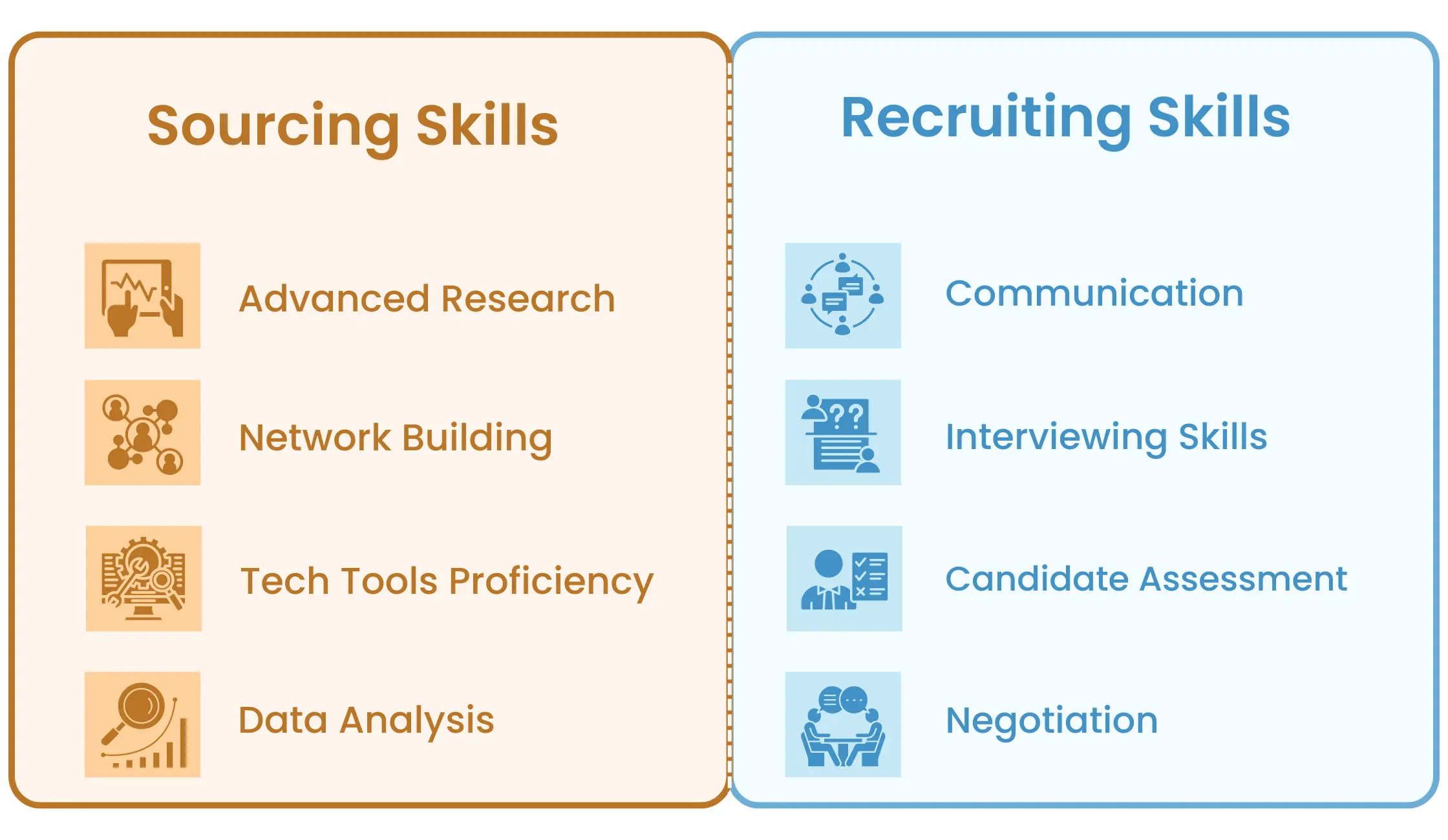
| Skills and Expertise | Advanced research skills, Boolean search expertise, proficiency with sourcing tools, and creative outreach. | Strong communication, negotiation, cultural assessment, and strategic thinking to match candidates with roles. |
| Tools and Platforms | LinkedIn Recruiter, Boolean search tools, ATS, niche platforms (e.g., GitHub, AmazingHiring). | ATS, CRM tools, interview scheduling platforms, and communication tools for managing candidate interactions. |
| Timelines and Goals | Long-term focus on building pipelines for future hiring needs. | Short-term focus on filling open roles efficiently and meeting hiring deadlines. |
| Metrics and KPIs | Response rates, profiles added to the pipeline, and conversion of passive to active candidates. | Time-to-fill, quality-of-hire, offer acceptance rates, and hiring process efficiency. |
| Relationship with Candidates | Initial outreach to spark interest and introduce opportunities. | Building deeper relationships through engagement, addressing concerns, and ensuring a smooth hiring journey. |
| Responsibilities | Conduct thorough research to identify potential candidates. Use creative outreach strategies to engage passive talent. Maintain and organise sourcing databases. Collaborate with recruiters to align on job requirements. | Screen resumes and applications to shortlist candidates. Conduct interviews to assess qualifications and fit. Coordinate with hiring managers to align on role expectations. Negotiate offers and ensure successful onboarding. |
How Sourcing and Recruiting Work Together?
It's not always sourcing vs recruiting. Sourcing and recruiting might seem like distinct stages, but they're two sides of the same coin. Here’s how they blend together:
Sourcing isn’t just about compiling a list of names; it’s about forming the first crucial layer of the recruitment process. Sourcing is the foundation for getting good hires. Sourcing specialists lay down the tracks by identifying potential candidates, sometimes even before a specific job is available. This proactive approach means that when a position does open, recruiters have a ready-to-go list of candidates who are not just qualified but potentially interested as well. This seamless handoff from sourcing to recruiting can greatly reduce the time it takes to fill a position.
Best Practices for Collaboration:
Having a smooth operation between sourcing and recruiting teams depends on good communication and using the same tools. Here are some best practices I've found invaluable:
1. Regular Alignment Meetings: Ensure sourcers and recruiters regularly sync to discuss upcoming roles, talent pipelines, and strategies.
2. Shared Tools: Use a unified ATS for smooth candidate tracking and seamless handoffs.
3. Feedback Loops: Recruiters should provide feedback on sourced candidates to help sourcers refine their searches.
4. Joint Strategy Sessions: Collaborate periodically to explore new channels and refine processes.
5. Celebrate Successes Together: Recognize hires as joint wins to foster team spirit.
Aligning efforts, sourcing, and recruiting create a streamlined process, improving hiring speed and quality.
Final Thoughts on Sourcing vs Recruiting
Understanding the difference between sourcing and recruiting is essential for building a successful hiring strategy. Sourcing focuses on identifying, attracting, and engaging potential candidates, while recruiting guides those candidates through the hiring process, from screening and interviews to final selection.
By recognising the unique role of each function, you can identify where your hiring process needs improvement. You may need stronger sourcing tactics to build a better talent pipeline, or better recruiting methods to create a smoother candidate experience.
The key takeaway is simple: effective sourcing sets the stage for successful recruiting. When both work together, hiring teams can find better candidates, move faster, and make more confident hiring decisions.
One bonus tip for you: Whether you do sourcing or recruiting, one tool can help you with both, and that is iSmartRecruit’s recruitment software. Let’s make your hiring smoother and faster; get a demo today.
.webp.dat)
Frequently Asked Questions (FAQs)
1. What is the difference between sourcing and recruiting?
Sourcing is the process of finding, identifying, and engaging potential candidates, especially passive candidates. Recruiting is the broader process of screening, interviewing, evaluating, and hiring those candidates.
2. What does sourcing mean in recruiting?
Sourcing in recruiting means searching for qualified candidates through job boards, social media, talent databases, referrals, and professional networks. It helps recruiters build a strong candidate pipeline before the hiring process begins.
3. What is a sourcing recruiter?
A sourcing recruiter is a talent acquisition professional who focuses on finding and engaging potential candidates for open or future roles. They often use Boolean search, LinkedIn, job portals, and recruitment software to identify suitable talent.
4. Is sourcing part of recruiting?
Yes, sourcing is usually considered the first stage of recruiting. It helps identify and attract candidates, while recruiting continues with screening, interviews, selection, and offer management.
5. Which is more important: sourcing or recruiting?
Both are important. Sourcing helps build a strong talent pipeline, while recruiting helps convert qualified candidates into successful hires. A strong hiring strategy needs both effective sourcing and recruiting.
About the Author