
.webp "Social Media Background Checks: Screening Beyond the Resume")
A polished resume tells you what a candidate wants you to know. A well-rehearsed interview tells you what they think you want to hear. But a candidate's social media presence built over years, often without any thought of a future employer ever seeing it can tell you something closer to the truth.
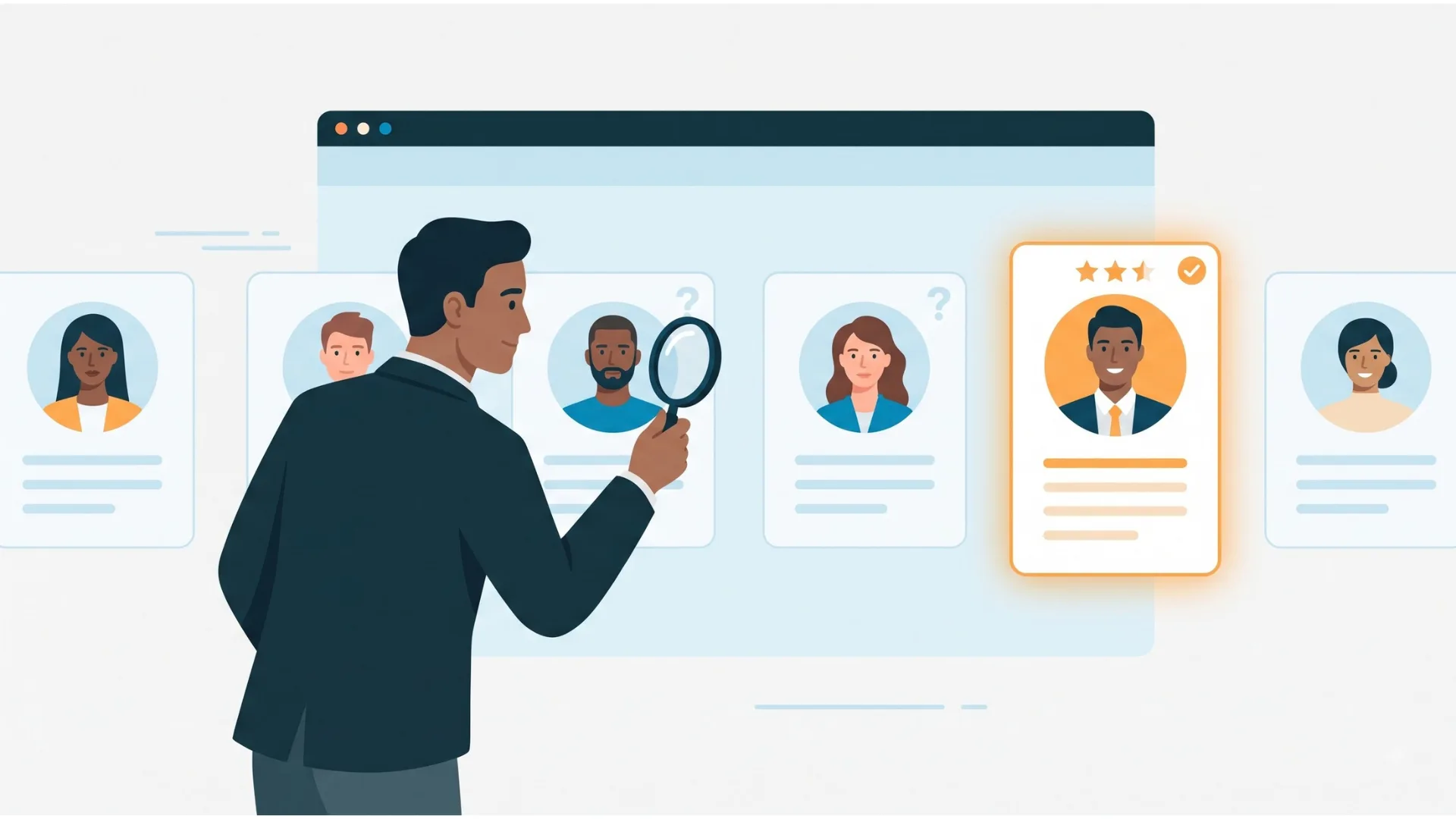
Social media background checks have become an increasingly important part of the modern hiring process. In a world where candidates' digital footprints span years of posts, comments, likes and shared content, recruiters who ignore social media during screening are missing a significant source of information about the people they are considering hiring. Not just about red flags and risk but about values, communication style, professional interests and cultural fit in ways that a structured interview rarely surfaces.
That said, social media screening is not without complexity. It raises legitimate questions about privacy, bias, legal compliance and fairness that every recruiter and HR team needs to understand before making it part of their process. This guide covers what social media background checks are, why organisations use them, how to conduct them legally and ethically, what to look for, and how to use what you find to make better, more informed hiring decisions.
TL;DR
- Social media background checks help recruiters gain a comprehensive view of candidates beyond their resumes, revealing values, behaviour, and potential risks.
- Organisations use these checks to protect their reputation by screening for problematic content such as offensive or discriminatory posts.
- Checks should be performed with candidate permission, preferably after a job offer is made, and ideally outsourced to third-party experts.
- Social media profiles can indicate work performance, cultural fit, and additional skills, aiding better hiring decisions.
For today’s Gen Z generation, being smart recruiters is not enough.
You have to be a quick-witted and savvy recruiter.
But how can you be one?
By going beyond the resume when it comes to candidate screening.
Like trying to find the things about candidates that are not shown on those polished resumes.
How?
Simple, by using Social Media!
Yes!
Social media is where people share their every moment, and that’s why it is a crucial platform to learn more about a person's background.
In today's digital age, It's not just about what's on the resume anymore. It's about painting a complete picture of who your candidates really are.
A person's online presence can reveal a lot about their values, behaviour, and even potential red flags.
It's about checking culture fit in this digital age.
But here are the questions that strike your mind: Is it ethical? Is it fair? And how much is too much when it comes to digging into someone's virtual life?
But let's not debate that.
It's not just about stalking your next potential hire. It's about understanding the person behind the profile, work ethic, communication style, and even company culture fit and finding the right fit for your team.
So, activate your detective mind and let’s explore this blog about Social Media Background Checks. To screen your candidate beyond resumes.
Let’s scroll more and learn more.
What is a Social Media Background Check?
A pre-employment background check determines if a candidate has a clean history of any illegal acts or criminal records or not.
Traditionally, a background check is carried out by contacting the employee references or through their ex-employers. But, there is more than you can discover from their social media apps than from any of their references.
Obviously, why would the candidates provide you with the contact details of their bosses who will not praise them when you contact them to ask questions? To avoid unwanted hiring bias, you need to carry out social media background checks for confirmation.
In a social media background check, you skim through the candidate’s profile, look for the type of content they share or the groups they have joined, etc. You also check their comments on posts to identify if they have a bullying nature or any history of online harassment.
You can consider your social media background check for employment as stalking for hiring.
You get to learn more about the potential candidate by diving deeper into their social media.
Why do Organisations Use Social Media Background Checks?
.webp.dat)
When you acquire talent, they represent your organisation to the outside world. The people who know them judge their workplaces through their characters.
For instance, if a person is a misogynist, then people who know him might think that the organisation he works for maybe discriminate against their female staff. How else could a misogynist candidate survive in a workplace if it does not have equal employment opportunities?
Organisations nowadays use social media background checks to protect the reputation of their companies. They do not want employees with bad character.
Following are the types of problematic content organisations check while conducting social media screening.
-
Illegal substances
-
Offensive content
-
Sexist content
-
Content that promotes violence
-
Racist content
-
Discriminatory content or drugs
-
Content that supports or indicates criminal behaviour
Moreover, even the general public is aware of the importance of social media background checks.
Recently, discovered some comment screenshots of an employee working in a reputable company. The comments were inappropriate and fell under the category of sexual harassment.
The majority of the people commented that the person should be reported to their organisation so they could take strict action.
From one perspective, the employee was on his own on the social media platform. But, from the other perspective, he was a harasser, and if his organisation still kept him, it would have determined how much importance is given to workplace harassment issues in that organisation.
People on social media have ethical responsibilities, and you should hire the right candidates who are aware of their responsibilities and carry them well.
This is why organisations carry social media background checks to prevent their brand image exploitation.
Social Media Background Checks for Eligible Candidates
Not every candidate needs to go through the same level of social media screening. Prioritisation should be based on the degree to which the role involves public-facing responsibilities, the level of trust or authority the position carries, and the extent to which the employee's personal conduct would reflect directly on the organisation.
Roles that typically warrant particular attention in social media screening include:
- Social media managers and content creators - where the candidate's personal platform use and communication style is directly relevant to the professional responsibilities of the role
- HR managers and recruiters - where the candidate's values around fairness, inclusion and professional conduct are central to the function
- Sales representatives and business development professionals - who represent the organisation directly in client and prospect relationships
- Senior leadership and executive roles - where the individual's public profile is closely associated with the organisation's reputation
- Roles working with vulnerable populations - where character and conduct are directly relevant to duty of care
Regardless of role level, social media screening should be applied consistently to all shortlisted candidates in comparable positions. Applying it selectively based on demographic factors - screening candidates from certain backgrounds more thoroughly than others - would itself constitute discriminatory practice and undermine the ethical foundations the process is designed to uphold.
Investing in a thorough screening process also makes clear financial sense. The disruption and cost involved in discovering a problem post-hire significantly outweighs the cost of a proper pre-employment check - and the reputational risk of getting it wrong is not recoverable with a budget line.
.webp1.dat)
Top 2 Requirements for a Social Media Background Check
Conducting a legally compliant and practically reliable social media background check requires two non-negotiable foundations:
1. Outsource to a Third-Party
As an employer, you must outsource this task to a third party to avoid biased decisions from your end. A third party can bring you all the necessary information that you require by using software incorporating artificial intelligence.
The AI-powered hiring tools locate your candidates on all social media platforms and look out for any indecent activities or inappropriate content sharing.
This reduces your burden, too, while you are occupied by hiring decisions and other evaluation processes that follow.
A third party like Accurate are expert in social media background checks for compliance violations, review large batches of social media content quickly, and searches based on the employer’s criteria. So you should not worry and focus on more important tasks of your expertise.
2. Inform the Candidates about the Background Checks & Seek Permission
The only way of carrying out a social media background check on your candidates is by first informing them and seeking their permission. You cannot simply run social media background checks on all the shortlisted candidates.
You first need to offer them a job and hand them offer letters. Only after you offer them a job can you seek permission from them to run a background check on them via their social apps.
Once you get their permission, you can then look for the content you think might risk your organisation’s reputation. If you find no content of that sort, you can onboard candidates or reject them if otherwise.
To avoid legal consequences, get written consent from your candidates so they do not sue you for invading their privacy if you reject them.
The Importance of Social Media Background Checks
The value of social media background checks is not just in identifying what to avoid it is in building a more complete picture of who a candidate actually is, so hiring decisions are made with better information and greater confidence.
Consider the alternative: you hire a candidate based on a strong resume, positive references and a good interview performance, and then discover post-hire that their social media includes content that creates reputational risk, contradicts the values they presented in the interview, or indicates behavioural patterns that affect team relationships or client trust. At that point, the options are limited and none of them are comfortable.
The purpose of the full candidate journey from application through screening to onboarding is to ensure the right person is in the right role with a clear, honest foundation for the working relationship. Social media screening, conducted responsibly and as part of a structured pre-employment process, is one tool in that journey that gives the hiring organisation additional relevant information before making a final commitment.
Done properly, it also benefits the candidate: entering a role in an organisation whose values genuinely align with their own is more likely to result in a successful, long-term placement for both parties. A candidate whose social media content raises concerns that lead to a rejected offer is also, in most cases, a candidate who would not have thrived in that environment.
Use Candidate’s Social Media Profile for Background Checks
What is the point of collecting candidate information through their social media platforms, and what does that information indicate? Here is what the background information indicates.
1. Work performance
You can create a link with the social media activities of your candidates and their work performance.
For instance, if they share content during work hours, it can be guessed that they might be time-wasters at work. You can just gain an idea through assumptions and data that you find.
Your assumptions don't need to be accurate, but they always bridge you to some useful information.
2. Cultural Fit
For every organisation, company culture is essential. With the type of information that the candidates share, you learn about their interests. This helps you find out if they are a cultural fit for your organisation or not.
For example, if you prioritise decent language in the work setting and your candidate is found abusing different platforms, then they might not fit into your culture.
3. Additional Skills Check
Often, candidates with more years of experience cannot add all the details to their resumes. They cannot discuss every detail in their interviews because of the limited time they have. By running social media background checks, you can find out any additional skills that the candidates possess.
Experienced candidates often cannot include everything relevant in a resume particularly when they have career interests or skills developed outside formal employment that are genuinely relevant to the role. Social media profiles frequently reveal:
- Portfolio work, creative projects or side interests that demonstrate skills directly applicable to the role
- Writing quality and communication style from blog posts, articles or professional content shared
- Specialist knowledge and industry engagement evidenced through the communities they participate in and the content they engage with
- Assessment of capabilities that a formal interview would not have time to explore
These additional data points found through responsible, consensual social media review can sometimes be the differentiating factor in a close shortlist decision, and occasionally reveal a candidate whose full capabilities were significantly underrepresented in their formal application.

Final Thought on Social Media Background Check
It is a technologically advanced era, and to find the best candidates, you need to go the extra mile to look for the most appropriate candidates. You should utilise social media resources to learn more about your candidates before you end up making a bad hiring decision.
It can risk your brand image, and with a ruined image, nobody would want to work with you. Any organisation is identified by its workforce. If your workforce is good, you can gain a competitive advantage, and if not, you might end up disappearing in thin air in no time.
Social media background checks have many advantages, especially when the candidates permit you. It becomes a legal process, and you can even reject the candidates if you find them unfit without bearing any legal consequences.
As an employer, you should surely hire one of the many social media backgrounds to check companies for the best social media background checks.

FAQs - Frequently Asked Questions
1. Why should employers consider social media background checks in hiring?
Employers should use social media background checks to gain a fuller picture of candidates beyond their resumes. It helps identify values, behaviour, and potential risks, ensuring the best fit for the company culture.
2. Is it legal to conduct social media background checks on candidates?
Yes, but it is crucial to inform candidates and obtain their permission before conducting checks. This makes the process legal and transparent, preventing privacy invasion claims.
3. What kind of content do organisations look for during social media screenings?
Organisations look for illegal substances, offensive, sexist, violent, racist, discriminatory content, or anything indicating criminal behaviour to protect their brand image.
4. Who should be prioritised for social media background checks?
Candidates in roles involving public dealings or heavy social media use, such as social media managers, HR managers, and sales representatives, should be prioritised for checks.
About the Author