
Recruiting the right person is only half the job. What happens in the first weeks and months after a new hire joins determines whether that investment pays off or disappears in a resignation letter. A poor onboarding experience sends a clear message to new employees: that the organisation that worked hard to hire them is not equally invested in helping them succeed. And that message has a measurable cost.
In 2026, a purpose-built onboarding portal is one of the most impactful tools an HR team can deploy not just for compliance and paperwork, but for building the connection, clarity and confidence that makes a new hire want to stay and perform. This guide covers what an onboarding portal is, why it matters, its key benefits and how to use it effectively.
TL;DR
- A quality onboarding portal is essential for retaining new hires and reducing costly early turnover Glassdoor research shows employee retention improves by 82% with a strong onboarding experience.
- An onboarding portal automates manual HR processes, improves new hire engagement and provides a secure, structured environment for everything from form submissions to training.
- Onboarding and orientation are not the same thing onboarding is a comprehensive, ongoing process that can last up to 12 months, while orientation is a single event within it.
- Key features: online connectivity for day-one readiness, tailored content management, secure data handling and simplified training delivery.
- Best practices: proactive communication before day one, regularly updated portal content and genuine two-way dialogue with new hires throughout the process.
As an employer in 2026, it is vital to utilise new HR practices such as the use of an onboarding portal. These help in retaining new hires after a quality recruitment process.
A new hire onboarding portal decides your turnover rate. Digitate reports with an unpleasant onboarding process; new hires are 2x more likely to seek better opportunities. It means the cost of hiring doubles as you need to fill up the vacancy again.
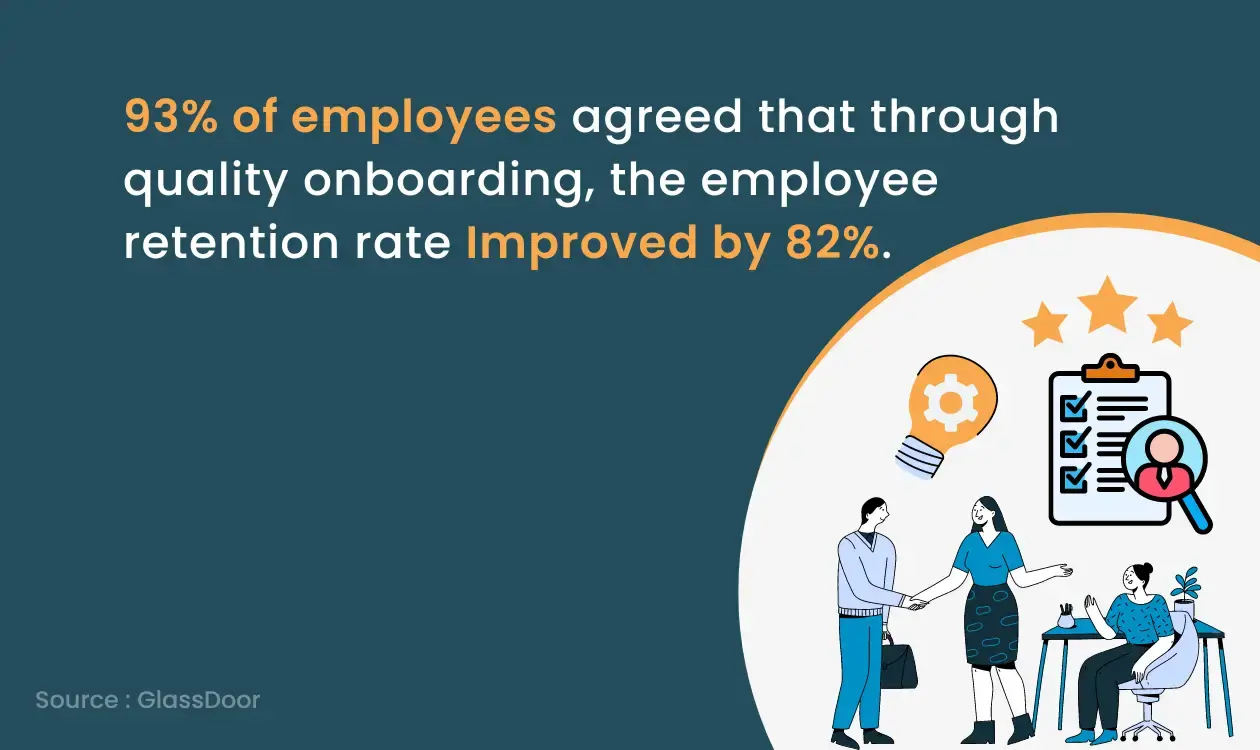
Also, Glassdoor research says the employee retention rate improves by 82% with a quality onboarding portal experience. According to this finding, 93% of employers agree. Thus, it is evident that you also need an employee onboarding portal along with an ATS for recruitment purposes. Why? So that talented hires do not leave. Indeed, productive employees help in generating revenues.
Before proceeding, first, let's describe an onboarding portal.
What is Onboarding Portal?
It is a feature in the ATS to onboard new employees. The online onboarding portal permits new hires to learn about your company, sign up for benefits, submit forms, etc. It helps new hires start work from day one.
The new hire onboarding portal automates the most time-consuming manual onboarding tasks document collection, deadline tracking, task assignment and communication while keeping the focus on what actually matters: people, processes and a positive first impression. As the digital employee onboarding landscape has evolved rapidly in 2026, modern portals now offer far more than form management they deliver personalised, interactive learning experiences that accelerate time-to-productivity and measurably improve retention.
However, the Human Capital Institute reports that 74% of HR practitioners believe onboarding remains underutilised in most organisations which means a significant number of companies are investing in the recruitment process but failing to protect that investment at the handoff stage. The onboarding portal is your organisation's first genuine impression on a new employee as a colleague rather than a candidate. A clear, welcoming and well-structured portal sets the foundation for engagement. A confusing or outdated one signals disorganisation before the first working day has even passed.
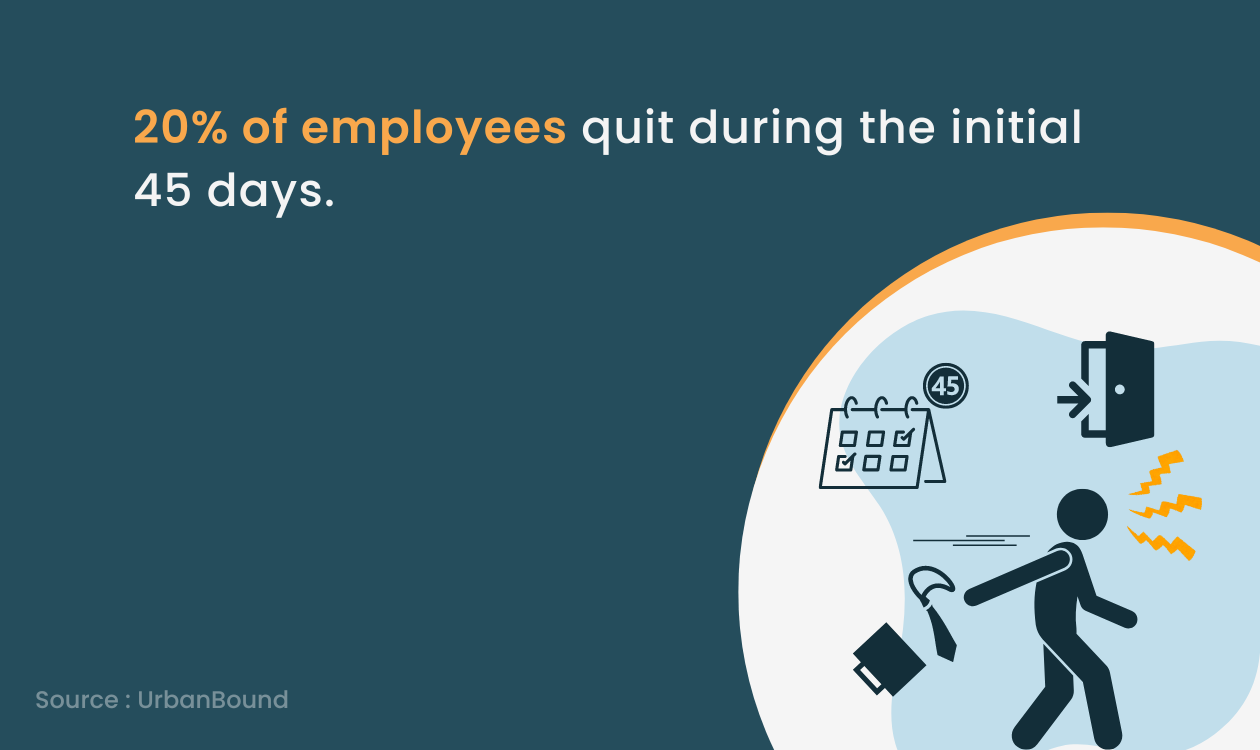
New hire onboarding is a complicated process that can last up to 12 months. No wonder thinking about the yearlong process, 20% of employees quit during the initial 45 days.
Again, recruiting the right candidate is only part of a good and productive team. The process is extensive for onboarding candidates. For better time management, you need a well-structured onboarding portal.
Difference Between Onboarding and Orientation
People usually think that these two processes are the same. However, the truth is that employee onboarding is different from orientation. The onboarding process consists of a series of events and focuses on the new hires' everyday tasks. Orientation, on the other hand, is just a part of onboarding. It familiarises new employees with the organisation and is a one-time event.
Orientation is a single event typically the first day or first week focused on introducing the new hire to the organisation, its policies, facilities and team. It is essential, but it is only the beginning.
Onboarding is the comprehensive, ongoing process that continues for weeks or months after orientation ends. It encompasses role-specific training, performance goal-setting, relationship-building, cultural integration, regular check-ins and the progressive development of the confidence and competence a new hire needs to perform at their full potential. It is a series of structured, purposeful interactions not a single induction event.
Understanding this distinction matters because it changes how the onboarding portal is designed and used. A portal built only to manage orientation paperwork misses most of the value. A portal designed to support the full onboarding journey tracking progress, delivering training, enabling communication and monitoring engagement across months is what genuinely improves retention and performance. The full candidate journey from application through to successful onboarding shows just how much the post-hire phase matters relative to the hiring phase most organisations invest in most heavily.
Benefits of New Hire Onboarding Portal
The onboarding portal consists of different features. These assist your employees in better engagement, team building, mentoring, etc. However, here the question is, what are these features, and what is their importance? Let us discuss them.

1. Facilitates Online Connectivity for New Hires
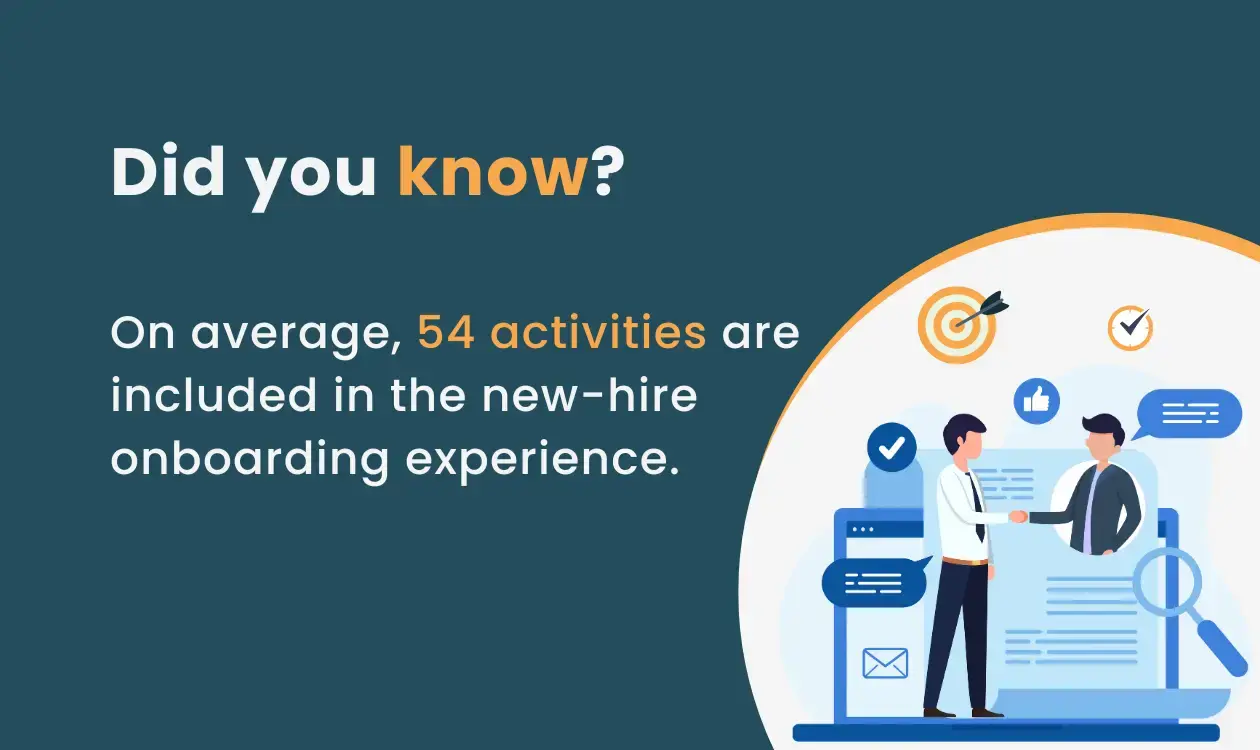
Research shows that a typical new hire onboarding experience involves an average of 54 distinct activities ranging from e-form submissions and e-signature workflows to benefit enrolment, outcome-based target setting and introductory training modules. Managing this volume manually is error-prone and time-consuming for HR teams, and confusing and stressful for new hires trying to navigate it without guidance.
An onboarding portal brings all of these activities into a single, structured environment. New hires have one clear destination for everything they need to do and learn which removes uncertainty, reduces the volume of HR queries and ensures nothing falls through the cracks. Outcome-based targets such as completing a specific training course, reviewing a particular policy or connecting with a specific team member can be assigned and tracked automatically, giving new hires a clear sense of what is expected in their first weeks without requiring a manager to follow up on every item manually.
A standardised portal that is also customisable with content tailored to each role, team and individual is what strikes the right balance between consistency and personalisation.
The onboarding portal is used as a medium to manage all HR activities. Having a standardised portal for all is hard to use. Therefore a customised employee onboarding portal is crucial.
2. Tailored to Meet Specific Organisational Requirements
Considering employee diversity, onboarding portals can be customised. It means no two portals are the same as reviewed by a study.
Content is managed through an integrated content management system that enables HR teams to add, edit and update pages, videos, images and documents without any technical training. If you can use a basic word processing tool, you can manage the portal content which means HR teams remain in control of what new hires see without depending on IT support for every update.
It does not require technical training. If you know basic MS word, you are good to go. Your new hires will also appreciate this feasibility. They will not have to contact HR every time for any updates. Peace for both the HR department and employees!
3. Ensures Secure Employee Data and Process Handling
As an employer, you need to keep a record of different information and other employee data. The data needs security, both through access control and being backed up and protected with physical security. It should not be publicly available but only for the users. For this, the onboarding portal login requires a user id and password. The login details remain with the account holders. Maintaining such credentials within a framework of identity and access management helps ensure that only authorized individuals can reach sensitive data.
For organisations operating in the UK or EU, GDPR-compliant data handling in the onboarding workflow is specifically required candidate and employee data must be collected for explicit purposes, stored for defined periods, and accessible to the individual upon request. A portal built with these requirements in mind removes the compliance risk from the onboarding process rather than adding to it.
4. Simplifies Training for New Employees
Employees with a demanding routine find it hard to remember different due dates and scheduled meetings. When you have a big organisation, a communication gap is inevitable. With the onboarding portal, employees can easily access their training and meeting schedules.
Similarly, to-do lists make them stay vigilant about their upcoming tasks too. Any update? Just send one reminder to notify all the members about what is next.
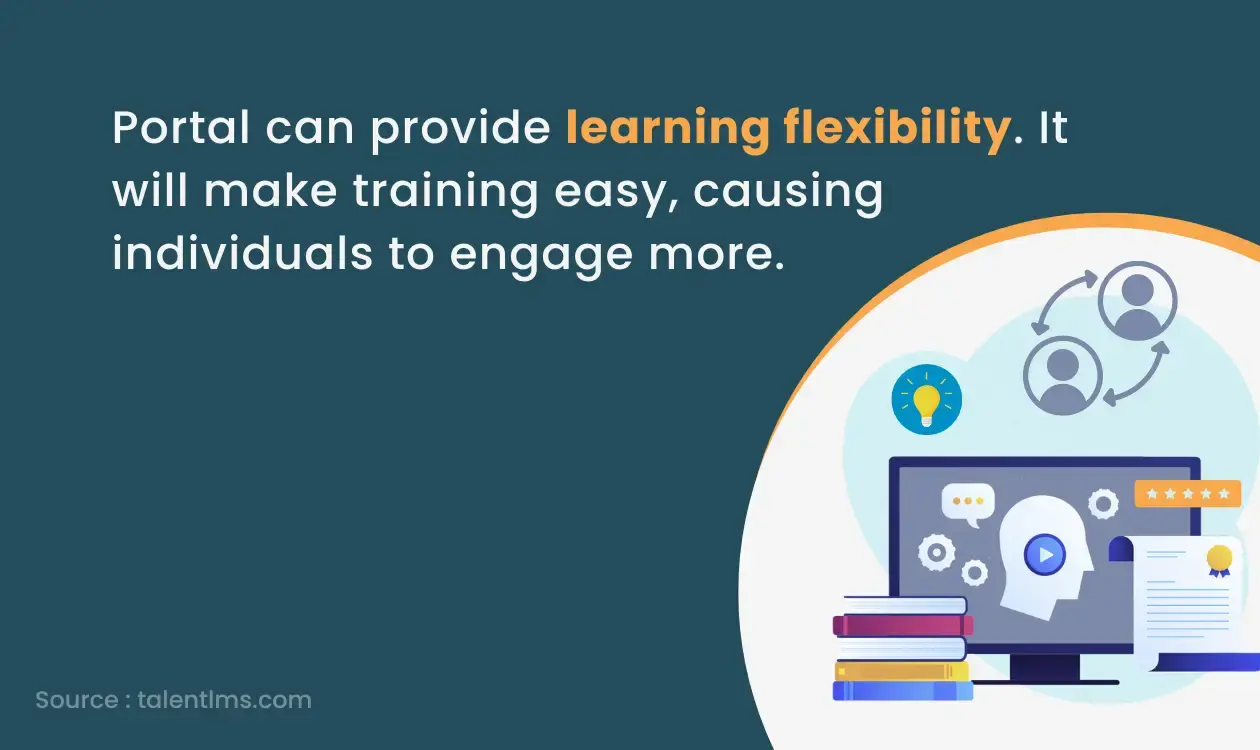
Besides, the onboarding portal acts as an e-learning platform. Workforce diversity means different languages, workstyles, and demographics. For this, the portal can provide learning flexibility. It will make training easy, causing individuals to engage more.
Does it not happen with all of us? If something is easy, we take more challenges for high dopamine leading to better engagement.
Onboarding software provides different and specific training courses as per the requirements. Moreover, it helps in evaluating the training needs to improve performance. The onboarding portal's purpose is to act as the online gateway to the organisation. It solves problems that could be time-consuming manually.
Best Tips For Onboarding New Hires in 2026
By now, you are well aware of the importance of an outstanding onboarding portal. Utilising these vital features is one part of an effective onboarding process. In today's time, employees want more. They want all the helpful tools and information to be efficient. To ensure productive employees stay with you, follow the tips for onboarding below.
1. Reach out to your new hire onboarding
The hiring process is complete? What is next? Just imagine being in the place of your employees. If your employer does not email you for follow-up, would that not confuse you? The same would be the case with your employees.
Make sure you do not give them the silent treatment; instead, send them a welcome message. Tell your employees what is needed next or the office they need to visit etc. Having no word from the organisation will create a misimpression. Rather than always looking for information, employees would look for better opportunities. Think about it.
2. Put updated content on the onboarding portal
With the outbreak of Covid-19, most organisations have executed work-from-home policies. It means no physical interaction. Here, the onboarding portal is all that the employees have. Make sure, as an employer, you upload updated content that explains work well. It could be documents or videos, and pictures that visually put out your requirements.
With every new project, you would not want to stay on-call every time to explain work to each individual. It would disrupt your productivity too. Also, in case you are unreachable, then your employees' work would delay. Who would suffer then? Your organisation would.

3. Communicate with new hires
Rather than just burdening your employees with work, communicate with them. Take their valuable feedback to know how you can improve. You never know what you are missing out on that could further refine your onboarding process. Chats through your onboarding portal can facilitate communication.
These can also be group chats for team bonding and teamwork. New hires' perspective about you and their comfort is very critical for the whole onboarding process. You can even allot mentors for each new hire to address their issues. Thus, communication through the onboarding portal is a way to keep a check on your employees. Employees wouldn't feel helpless in times of need.
How to Integrate Onboarding Portals with Existing HR Systems?
Integrating your onboarding portal with existing HR systems can make a big difference. You can smoothly bring new hires into your organisation. Let me break it down for you.
First off, Your onboarding portal is the main place for new employees to find their first tasks, training materials, and important company information. It's where they go to get started with their new job.
You also have different HR systems for things like payroll, benefits, and performance reviews. To make everything work well together, you should connect these systems so they can share information and work seamlessly.
Here’s how you can achieve that:
-
Identify Your Key Systems: Start by listing out all the HR systems you currently use. This might include your HRIS (Human Resource Information System), payroll software, and performance management tools. Knowing what systems you have will help you figure out which ones need to be connected to your onboarding portal.
-
Choose Integration Points: Decide what information needs to flow between your onboarding portal and these systems. For instance, you might want new hire details to automatically update in your payroll system or other tools.
-
Work with Your IT Team: Integration can sometimes get technical, so collaborating with your IT team is crucial. They can help ensure that the data flows correctly and securely between your systems. They’ll also be able to handle any technical issues that arise.
-
Test Everything: Before rolling out the integration, do a thorough test to make sure everything works as expected. Check that data transfers correctly, updates are timely, and there are no glitches. It’s better to catch and fix issues before new hires encounter them.
-
Train Your Team: Once everything is set up, make sure your HR team is familiar with the new integrated system. They should understand how to use the onboarding portal in conjunction with the other HR tools, so they can manage new hires effectively.
By integrating your onboarding portal with your existing HR systems, you streamline processes, reduce manual data entry, and create a smoother experience for both your new hires and your HR team.
Is it Time to Buy the Online Onboarding Portal?
Let's sum up the chat about the Employee Onboarding Portal for 2026.
This isn't just some boring software; it's a game-changer for welcoming new folks to your team.
With this tool, the onboarding process becomes smooth and enjoyable, making a great first impression on your new hires.
It's also a lifesaver for HR teams. Plus, it's not just about the first day or week; this portal supports continuous learning and engagement, making sure everyone feels valued.
In simple terms, the Employee Onboarding Portal 2026 is like a friendly guide that helps new team members navigate their new workplace. It's easy to use, saves time, and makes the whole onboarding experience a lot more fun.
So, if you're looking to step up your onboarding game, this is definitely something to consider. It's not just about keeping up with the times; it's about creating a welcoming, supportive environment where everyone can thrive.
Running a regular recruitment audit that includes the onboarding stage reviewing completion rates, new hire satisfaction scores, time-to-productivity and first-90-day retention gives you the data to make a compelling business case for the investment, and to measure the improvement once the portal is in place.

FAQs - Frequently Asked Questions
1. What is an onboarding portal and how does it help new hires?
An onboarding portal is an online platform that helps new employees learn about their company, complete tasks like form submissions, and start work confidently. It makes the first day easier and keeps everything organised, enhancing employee experience.
2. How can iSmartRecruit improve the onboarding process?
iSmartRecruit offers a customised onboarding portal that simplifies HR activities and communication. It ensures seamless processes, secure data handling, and provides tools for training, all tailored to your organisation's needs for better employee engagement.
3. What are the benefits of integrating an onboarding portal with existing HR systems?
Integration streamlines multiple HR functions by connecting payroll, benefits, and performance tools with the onboarding portal. This reduces manual work, improves data accuracy, and creates a smooth experience for HR teams and new hires alike.
4. Why is effective communication important during onboarding?
Good communication builds trust and comfort for new hires. Using chats and feedback features in the onboarding portal encourages team bonding and addresses issues early. It helps employees stay engaged and feel supported in their new role.
About the Author