

TL;DR
- Candidate engagement goes beyond communication, focusing on building a genuine relationship between employer and potential hire during recruitment.
- It differs from candidate experience in that engagement is proactive and intentional, shaping how candidates perceive the recruitment process.
- Strong candidate engagement positively impacts employer brand, improves hire quality, reduces drop-off rates, and supports long-term retention.
- Common challenges include one-sided communication, slow processes, and lack of personalised experiences.
- Effective strategies include personalised communication, transparency, consistency, and providing constructive feedback.
- Technology like AI, ATS, and social media enhances engagement by enabling timely, personalised, and scalable interactions.
- Measuring engagement through metrics and adapting to evolving candidate expectations are crucial for future recruitment success.
Recruitment today is no longer solely about filling vacancies. It is also about attracting top talent in a market where candidates are more informed, selective, and empowered than at any previous point.
Job seekers now evaluate the recruitment process itself as a signal of what working for an organisation will actually be like. They assess whether the company's values align with their own, whether communication feels respectful, and whether the process reflects genuine professionalism. In this environment, the hiring process is effectively an audition for both sides.
This shift places candidate engagement at the very heart of recruitment success. A poorly engaged candidate may lose interest, decline an offer, or share negative feedback publicly in ways that cause lasting damage to an employer's reputation. A highly engaged candidate is motivated, responsive, and significantly more likely to accept an offer and perform well once in post.
This guide covers what candidate engagement really means, why it matters, the challenges organisations face, the strategies that improve it, and where it is heading.
What Is Candidate Engagement?
Candidate engagement is best understood as the ongoing interaction and relationship between a potential hire and an employer during the hiring process. It goes beyond basic communication and requires organisations to demonstrate consistency, empathy, and transparency throughout.
Think of it as building a relationship rather than completing a transaction. Just as brands nurture customers with personalised experiences, recruiters must nurture candidates by offering value and relevance at each stage of the hiring journey.
In practical terms, candidate engagement means keeping applicants interested, informed, and connected throughout the process. It’s about recognising candidates as individuals, not just as applicants, and treating their time as valuable. Something as simple as acknowledging receipt of an application or providing a clear update on next steps can keep interest alive. At a deeper level, it can mean personalised feedback, proactive communication, or sharing insights into company culture that make a candidate feel valued.
It’s important to distinguish engagement from candidate experience. While experience refers to how candidates feel during the recruitment journey, engagement is the employer’s effort to actively shape those feelings. Experience can be passive, but engagement is proactive and intentional. For instance, a user-friendly job portal enhances the experience, but a recruiter taking time to send a personalised thank-you email after an interview creates engagement. Both matter, but without active engagement, the overall experience often feels incomplete. Understanding what candidate engagement truly entails naturally leads us to explore how it differs from the related concept of candidate experience, as recognising this distinction is key to building effective recruitment strategies.
Candidate Engagement vs Candidate Experience: What Is the Difference?
While the terms “candidate engagement” and “candidate experience” are often used interchangeably, they refer to distinct aspects of the recruitment journey. Understanding the difference is crucial for employers who want to optimise their hiring processes and build strong employer brands.
Candidate experience refers to how applicants feel during every stage of the hiring process. It is largely a reflection of the process itself, from the usability of the application portal to the professionalism of interviews. A smooth application process, clear communication, and timely responses all contribute to a positive candidate experience. Essentially, experience is the outcome: it’s how the candidate perceives the recruitment process.
Candidate engagement, on the other hand, is the active effort employers make to influence that perception. Engagement is about building a relationship, creating a sense of connection, and keeping candidates motivated and informed throughout the process. This involves proactive communication, personalised feedback, transparency, and attention to the candidate’s individual needs. Engagement is deliberate; it shapes the candidate’s experience rather than leaving it to chance.
Candidate experience is how the hiring process feels to the applicant, but candidate engagement is what makes that process feel human. In 2026, candidates expect more than efficient systems. They want timely communication, transparency, and signs that the employer is genuinely invested in the relationship, not just the outcome, says Steve Morris, founder of a marketing firm.
To illustrate, a user-friendly online application system enhances the experience by making it easy for candidates to submit their details. However, sending a personalised email acknowledging receipt of their application, updating them on progress, or sharing insights about company culture actively engages the candidate. Both experience and engagement are interdependent - without engagement, a good experience may feel hollow, and without a positive experience, engagement efforts may not resonate effectively.
Employers who clearly understand this distinction can design recruitment strategies that deliver both. By combining a seamless process with active engagement, companies ensure candidates feel valued, informed, and connected. This not only improves offer acceptance rates but also strengthens long-term retention and enhances employer brand reputation.
In today’s competitive talent market, distinguishing between candidate experience and engagement is more than semantic. It is a strategic approach that allows organisations to nurture relationships, build trust, and secure top talent in an increasingly demanding recruitment landscape. With a clear understanding of both engagement and experience, we can now examine why candidate engagement matters so profoundly in recruitment and how it influences every stage of the hiring process.
Why Does Candidate Engagement Matter in Recruitment?
Candidate engagement is more than just good practice; it is a strategic necessity. In a market where top talent has options, engagement builds trust and makes candidates feel valued, directly influencing whether they choose your organisation over others.
Impact on Employer Brand
Every recruitment process sends a message about an organisation. Even candidates who don’t get the job remember whether they were treated respectfully. This memory influences how they speak about the company to peers, on social media, and on platforms like Glassdoor. A reputation for fairness and professionalism not only attracts stronger applicants in the future but also strengthens the overall employer brand.
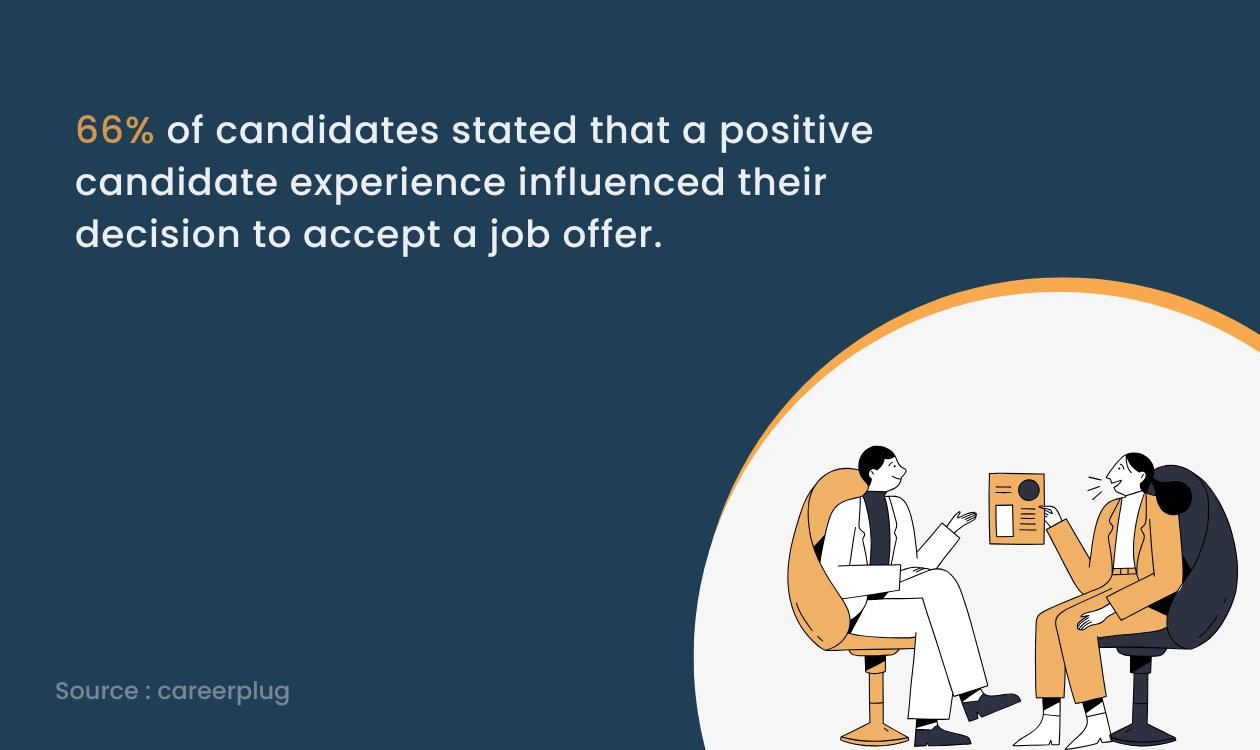
Consider Virgin Media, which once calculated that poor candidate experience was costing them millions annually because rejected applicants were cancelling their customer subscriptions. By improving engagement, they protected not only their talent pipeline but also their revenue. Similarly, 66% of candidates stated that a positive candidate experience influenced their decision to accept a job offer [Source]. This statistic highlights the direct link between engagement and hiring success. Beyond shaping perceptions, candidate engagement also directly affects the quality of hires, ensuring that organisations secure motivated and high-performing talent.
Improving Quality of Hire
Engaged candidates are typically those who understand the role clearly, feel connected to the company culture, and remain motivated to contribute. They walk into their new role with confidence and clarity, often becoming high-performing employees from the outset. Conversely, poorly engaged candidates may accept an offer out of convenience but resign shortly after, causing turnover costs and morale issues. Another significant outcome of strong engagement is the reduction of candidate drop-off rates, helping organisations maintain momentum in the hiring process.
Reducing Drop-Off Rates
One of the major pain points in modern recruitment is candidate “ghosting.” Many applicants abandon applications midway or stop responding altogether. This often stems from unclear communication, overly long processes, or a lack of personal connection. Engaged candidates, however, feel invested in the journey and are far less likely to disappear. Regular updates, quick responses, and a respectful tone keep them in the loop. Maintaining engagement doesn’t stop at hiring decisions; it extends into the early stages of employment, laying the foundation for long-term retention.
Retention Beyond Hiring
The recruitment process sets the tone for long-term employment. If candidates feel supported and respected during hiring, they are more likely to remain engaged and loyal after joining. In essence, recruitment engagement lays the foundation for employee retention and strengthens the company’s culture in the long run. While the benefits of engagement are clear, companies often face challenges in implementing effective strategies, which must be addressed to maintain consistent candidate connections.
Challenges Companies Face With Candidate Engagement
Despite its importance, consistent candidate engagement is genuinely difficult to achieve. Several common barriers stand in the way.
One-sided communication:
When applicants complete lengthy assessments and attend multiple interviews only to wait weeks without any update, the process feels exploitative rather than mutual. Silence is frequently interpreted as rejection, leaving candidates frustrated and disengaged. Research shows that 58% of candidates expect weekly communication during an active process, but fewer than half of employers deliver this consistently.
Process speed:
In competitive sectors such as technology, healthcare, and finance, skilled candidates often receive multiple offers within days of beginning a search. A slow or disorganised process hands the advantage directly to competitors who move faster. Speed of response is itself a form of engagement.
Lack of personalisation:
Candidates increasingly expect tailored experiences that reflect their individual background and circumstances. A one-size-fits-all approach signals that the organisation did not invest time in understanding who they are, which erodes trust and makes disengagement more likely.
How to Improve Candidate Engagement?
Improving candidate engagement doesn’t require flashy gimmicks; it requires respect, clarity, and authenticity.
Personalised Communication
Generic mass emails no longer suffice. Candidates respond positively when communication acknowledges their unique skills or experiences. A recruiter might reference a candidate’s recent project or highlight a specific skill that stood out in their CV. This recognition makes applicants feel seen rather than processed. Equally important is ensuring transparency and clarity in every interaction, which further strengthens trust and engagement. You can use ZoomInfo or alternatives to automatically enrich your candidate profiles, helping recruiters personalise outreach with more relevant details about each candidate’s background, skills, and professional interests.
Transparency and Clarity
Uncertainty breeds disengagement. When employers set clear expectations - for instance, informing candidates that the next stage will take two weeks - candidates remain patient because they know what to expect. Even if no decision has been made, updating candidates on time shows reliability and builds trust. Consistency in communication is another pillar that reinforces trust and demonstrates reliability to candidates.
Building Trust Through Consistency
Trust is built when recruiters follow through on promises. If a recruiter says an update will arrive on Friday, delivering it on Friday, even with no final decision, creates credibility. Candidates quickly notice whether a company respects its word. Providing constructive feedback not only supports candidates’ growth but also enhances the overall perception of the recruitment process.
Providing Feedback
Feedback transforms rejection into learning. Even unsuccessful candidates appreciate constructive feedback because it demonstrates respect for their effort and leaves them with a positive impression of the company. In the long term, they may reapply, recommend the employer to peers, or speak positively about the experience. In today’s digital age, technology plays a crucial role in sustaining engagement, making it easier to maintain personalised and timely communication.
The Role of Technology in Candidate Engagement
Technology is transforming the way companies engage with candidates.
AI and chatbots can provide instant responses, answer frequently asked questions, and schedule interviews - ensuring no candidate feels ignored. When used effectively, automation doesn’t eliminate the human touch; instead, it enhances it by freeing recruiters from repetitive tasks, allowing them to focus on personalised interactions.
ATS (Applicant Tracking Systems) and CRM tools also play a vital role. They allow recruiters to manage large pipelines efficiently, track communication, and measure engagement at every stage. Candidates are less likely to slip through the cracks when processes are organised and consistent.
Meanwhile, social media platforms such as LinkedIn, Instagram, and even TikTok enable employers to showcase culture and values in creative ways. Sharing behind-the-scenes videos, employee stories, or live Q&A sessions makes the organisation relatable and builds engagement long before an application is submitted. To ensure strategies are effective, it is essential to measure engagement systematically and track the impact on recruitment outcomes.
Measuring Candidate Engagement
Engagement should be measured systematically rather than assumed. Key metrics to track include email open rates, interview attendance rates, application completion rates, and offer acceptance ratios. Candidate surveys at defined stages of the process provide qualitative insight that quantitative data alone cannot capture.
Asking candidates direct questions such as "How clearly were expectations set during the process?" or "Did you feel valued throughout?" surfaces actionable feedback that helps refine the approach over time.
Additional indicators of strong engagement include low drop-off rates, high response rates to recruiter outreach, positive reviews on Glassdoor and similar platforms, and candidate referral rates. Engaged candidates are more likely to recommend the employer to peers, expanding the talent pipeline organically and at low cost.
The Next Era of Candidate Engagement
The future of recruitment will be shaped by technology, generational shifts, and evolving expectations of candidates.
Artificial intelligence will not replace human recruiters but will enable them to personalise communication at scale. Predictive analytics may even forecast which candidates are most likely to accept offers.
As Gen Z enters the workforce in large numbers, their expectations for rapid, authentic, and inclusive communication will push employers to adapt. Gen Z values transparency, sustainability, and diversity - and will disengage quickly if they feel these values are lacking.
Looking ahead, engagement will also rely heavily on employer storytelling. Candidates want to connect emotionally with a company, not just understand the job description. Video-based communication, authentic social content, and talent communities that nurture relationships over time will become the norm. By understanding and preparing for these future trends, organisations can build recruitment processes that are not only effective but also sustainable, leading to stronger outcomes and a more resilient talent pipeline.
Conclusion
Candidate engagement is not just a recruitment strategy - it speaks to fundamental psychological needs for recognition, clarity, and fairness. When employers meet these needs, candidates remain motivated and invested in their roles. Engagement reduces drop-offs, improves hiring outcomes, and strengthens retention, all while boosting employer brand.
Behavioural science shows that uncertainty creates stress. When candidates are left waiting without updates, they may disengage to protect themselves emotionally. Transparent, timely communication reduces this stress and fosters trust. For employers competing in a fast-moving talent market, candidate engagement is no longer optional; it is a core driver of success.
Now that we have explored the full spectrum of candidate engagement, it’s time to take actionable steps to implement these strategies and secure top talent for your organisation.

Frequently Asked Questions (FAQs)
1. What is the difference between candidate engagement and employee engagement?
Candidate engagement refers to the process of attracting and selecting potential hires during recruitment, whereas employee engagement focuses on motivating existing staff. Both are vital, but occur at different stages of the talent journey.
2. Can small businesses focus on candidate engagement without big budgets?
Yes. Even without advanced tools, small businesses can build engagement through personalised communication, timely updates, and transparency.
3. Is candidate engagement only crucial in competitive industries?
No. In every industry, engaged candidates are more likely to trust the employer and accept offers, making engagement universally important.
4. When should engagement begin during recruitment?
Engagement should start immediately - even a simple acknowledgement email after application sets the tone for respect and professionalism.
5. What tools help improve candidate engagement?
ATS and CRM systems streamline processes, but the human touch - such as a thoughtful phone call or personalised feedback - remains the most powerful engagement tool.
About the Author