

Campus recruitment has always been a long-game strategy. But in 2026, the stakes and the competition have intensified considerably. According to NACE's Job Outlook 2026 data, the top reason employers are increasing campus hiring is succession planning and building future talent pipelines, cited by nearly 73% of respondents.
At the same time, the candidates themselves have changed. Gen Z applicants research employers the way consumers research brands, and they make fast, informed decisions about where to invest their interest.
This guide covers the strategies, tools, and approaches that are genuinely working for campus recruitment teams in 2026.
TL;DR
- Campus recruitment is crucial for hiring fresh talent amid tight labour markets and involves strategic planning and collaboration with university career centres.
- Effective campus recruitment includes pre-planning activities, advertising via social media, leveraging technology, and building strong alumni connections.
- Using AI-powered recruitment tools streamlines resume screening, interview management, and onboarding, improving efficiency and reducing costs.
- Partnering with college career services and focusing on post-fair communication enhances employer branding and candidate engagement.
What is Campus Recruitment?
Campus recruitment is the process of identifying, attracting, engaging, and hiring entry-level employees, interns, and recent graduates directly from college and university campuses. It typically involves building relationships with university career service centres, attending career fairs, and using digital channels to reach students at scale.
Employers are no longer treating campus recruiting as a one-time event in a student's final year. Instead, they are building multi-year pipelines through internships, co-ops, apprenticeships, and management trainee programmes that engage students well before graduation. By the time senior year arrives, the most effective recruiters have already identified and nurtured their top prospects.
In order to hire better people faster, companies are maximising their campus recruitment efforts and searching for ways to enhance the campus recruitment workflow.
This blog covered the high-impact campus recruiting strategies and innovative ideas to hire the best talent from college campuses. So, let’s begin!
Best 10 High-Impact Strategies for Campus Recruitment in 2026
1. Pre-Plan Every Activity Before Your Campaign Launches
The recruitment team needs to make a strategic plan before conducting campus hiring and come up with future obstacles that might occur and probable solutions to mitigate them.
Define career-fair goals
Determining clear job-fair goals enables the recruiting team to source the best potential talent and construct a concrete pipeline of entry-level talent. It is also helping the team to communicate the recruitment goals and company culture with the candidates at events like co-op programs, summer jobs, and internship programs. Hence, campus recruiters need to work with every department of the organisation to understand the hiring requirements and later hiring goals.
Assess campus relationships
Employers, hiring managers, and recruiters must choose career centres and on-campus organisations very carefully. It would be foolish to target ineffective university partnerships or career centres that don’t provide high-quality hires, as their resources and time are limited.
The team can take references from previous years' hires and find the best programs, schools, and universities that provide suitable talent. Once they have found the best, don’t delay reaching out to their respective career centres.
Find & select a company representative
The business representative becomes the face of the company. He/she will be the first person to welcome the candidates and provide a company introduction. So, it is extremely important for organisations to choose the right representatives as they won’t get a second chance to make a positive first impression.
While choosing a representative, the company should keep in mind that he/she possesses thorough knowledge of the open position and company culture and must be enthusiastic about the firm.
Market employment fair presence
Employing online campus recruitment software to promote career fairs or the presence of the organisation and elevate pre-registration. The recruitment marketing team can be creative and share information on social media platforms with the sign-up link and offer them a section on your career page that allows interested applicants to apply and upload their resumes.
Also, run email campaigns to target the potential talent you met last year and send them a compelling email with a sign-up link in the email.
Create engaging promotional content
Students can easily access information about the company and prospective employers on the internet by visiting the company’s website, social media platforms, and third-party review sites. Hence, designing helpful content that targets college graduates and effectively communicates your messages to the target audience is vital.
For instance, if your company is hiring for marketing and sales roles, then illustrate the entry-level career path at your company. Whereas, for sales roles, the company can showcase the biggest achievement of the sales department or the challenging sales campaign that the team has executed successfully.
Plan for Job Fair logistics
Along with creating compelling content, the team also needs to pay attention to job fair logistics. It includes acquiring materials such as business cards, name tags, booth attractions, giveaways, tablets, etc.
By planning early, the team can start brainstorming about what, when, where, and how to acquire job fair resources. In addition, the hiring manager should elaborate on the plan with a timeline of material pick-up and drop-off, setting up the booth, and key responsibilities of each team member for attendees.
Train the hiring team
Avoid chaos during recruitment; training the team would be a good idea. Employers must clearly communicate their hiring needs and the metrics they hope to achieve by the end of the hiring process. Also, the hiring manager can allocate specific recruitment tasks to the team member. This way, the hiring becomes more structured.
Make a plan for post-career fair communication
Job fairs offer candidates wonderful opportunities to learn about company culture, interact with them, and make an in-person connection. On the other hand, it allows campus recruiters to build positive relationships with potential talent. So, the recruitment team needs to have a plan for effective communication and interaction with potential candidates after the career fair event.
Indeed, the saying is true: "A simple gesture of thoughtfulness can yield unexpected results.” So, the recruitment team needs to make small efforts to interact and can use hiring software that allows them to personalise emails to candidates, acknowledgement messages for visiting their booth, and messages that encourage them to schedule an interview screening.
2. Advertise and Communicate for Campus Recruitment
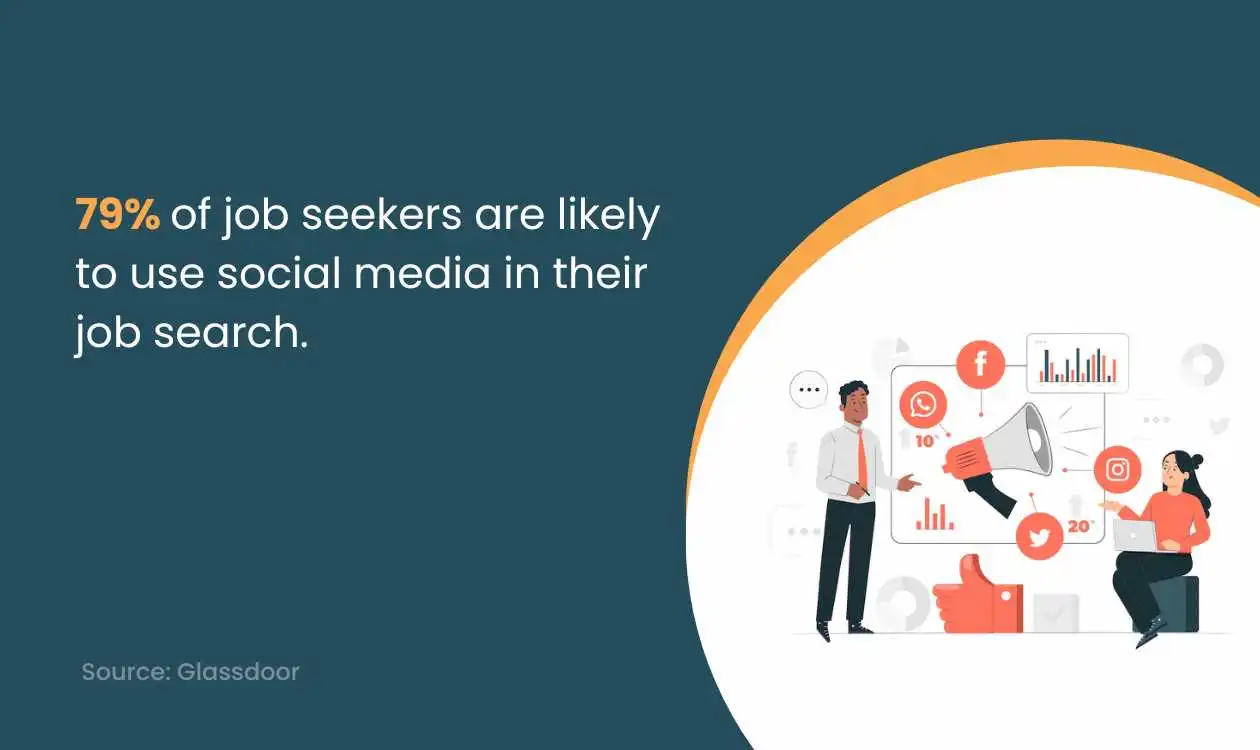
Initially, 79% of global active candidates were very likely to use social media platforms for job searching, as found in the Glassdoor survey. Thus, the recruitment team can leverage the fruitful benefits of social media by connecting with active candidates and building strong relationships with them. Ensure that your social media marketing strategy includes branding the organisation as the best place to work, where freshers can learn new things and thrive in their professional careers.
Besides effectively conveying company culture, recruiters can immediately reply to the doubts candidates might have via social media platforms. Also, one thing recruiters need to keep in mind is that the content they create should be findable and mobile-friendly, as it is the tool the young talent use to explore career opportunities. Also, recruiters actively interact and keep in touch with their previous top candidates and former interns they found via social media. The team need to facilitate their career development and create a way for them to join the organisation.
3. Leverage Technology for Streamlined Campus Hiring
Campus recruitment tools can speed up the process, save time, and, most importantly, be cost-effective. Therefore, campus recruiters must keep themselves up-to-date with the rapidly changing work landscape and determine the recruitment tools that make it efficient.
Virtual event platforms allow you to run remote career fairs, networking sessions, and one-on-one candidate interactions digitally, extending your campus reach beyond the universities you can physically attend.
AI-powered Applicant Tracking Systems manage the full recruitment workflow -- marketing, screening, resume parsing, interview scheduling, video interviews, offer letter management, and onboarding -- within a single platform. Leading campus recruitment teams are rethinking end-to-end candidate engagement and implementing skills-first evaluation workflows to identify qualified candidates earlier and more accurately.
Assessment tools filter large candidate volumes against defined competency criteria, providing objective screening data that reduces reliance on CV review and first-impression judgements. Students hoping to demonstrate their ability during a skills-based hiring process should share examples of when they used their skills to solve real problems -- good assessment tools create the space for exactly that kind of evidence. Many candidates lean on essay writing services during their final semesters just to keep up with deadlines, which makes hands-on evidence like this even more valuable to recruiters.
Secondly, campus recruiters can employ AI-powered recruitment software such as Applicant Tracking System and Candidate Relationship Management Software to smoothly manage campus recruitment. By utilising such software, recruiters can efficiently and easily conduct hiring tasks like recruitment marketing, screening candidates, automatically reviewing resumes, scheduling interviews, conducting video interviews or one-on-one interviews, sending offer-letter, managing offer letter workflow, and smooth onboarding. This all-in-one hiring software makes the recruitment of entry-level employees more streamlined.
4. Partnership & Collaboration with College Career Service
University career service centres are an underused channel for many campus recruiting teams. These departments actively want to connect their students with quality employers, and they have direct access to the student population you are trying to reach.
Partnering with career services gives you the ability to host events, sponsor student-facing activities, and engage with specific academic departments relevant to your open roles. It also builds institutional familiarity with your brand before students even start actively searching for jobs.
Intentional partnerships with HBCUs, HSIs, and community colleges expand your reach to candidates from underrepresented backgrounds, broadening both your talent pool and your diversity hiring outcomes. Go beyond the obvious target schools some of the strongest early-career hires come from institutions that receive far less recruiter attention.
5. Efficient resume and interview screening
Resume screening can be easily and effortlessly done with AI-powered features of hiring software like resume parser. The tools import resumes from various job boards and scan thousands of graduates' resumes, detect relevant keywords, and find suitable candidates for the interview round.
The interview stage is of utmost importance for recruiters and HRs. So, to conduct it efficiently interview management tool becomes handy in managing the interview workflow.
Both of these tools serve to automate the recruitment process and lessen the time and cost of hiring, which is the organisation's primary goal.
6. Implement a Smooth Onboarding Experience
Onboarding is an incredibly important stage as it increases the employee retention rate of the organisation. Hence, using the right tool to create positive experiences for the freshers and entry-level employees can build healthy and long-term relationships with the employees.
Hiring software provides features for smooth onboarding. Once the student accepts the offer letter, it changes the candidate's status as hired. It automatically sends the welcome mail and asks for the documents for the verification process. Also, the onboarding feature offers information about the company, the people and the roles to the new hires via email.
7. Track Recruitment Metrics to Optimise Campus Hiring
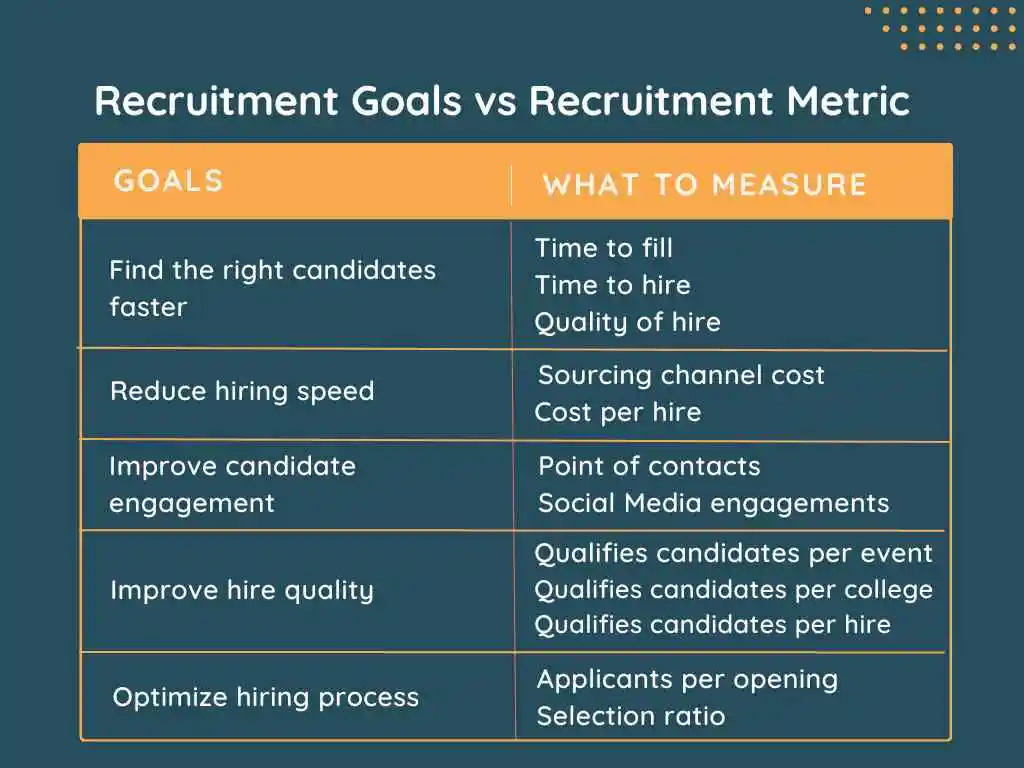
Campus recruitment programmes that are not measured cannot be improved. The key metrics to track include: source of hire, time-to-hire by channel, cost-per-hire, offer acceptance rate, intern-to-full-time conversion rate, first-year retention rate, and diversity of hire by campus and role type. Also, recruitment KPIs enable the campus recruitment team to fuel a data-driven process and improve and tailor recruitment. The metrics must be aligned with the recruitment goal of the organisation.
The following image is the best depiction of the company’s goal and the recruitment metrics hiring managers and recruiters have to keep an eye on to measure the ROI of the talent acquisition process.
8. Boost Campus Hiring with Alumni Connections
Alumni are among the most credible and underused assets in campus recruitment. Former students who joined your organisation through campus hiring carry first-hand knowledge of the transition from education to professional life in your specific context. That perspective is uniquely valuable to current students weighing up their options.
Invite alumni back to participate in recruitment events, panels, webinars, and career fair appearances where they can speak authentically about their experience. Students see alumni as relatable figures rather than distant professionals, which makes your company a more credible and attractive place to begin a career.
Alumni also extend their reach into current student networks organically. A positive post from a recent graduate on LinkedIn carries more influence with that audience than the same message from a corporate account.
9. Host Engaging Pre-Recruitment Events to Build Pipeline Early
Waiting until career fair season to make your first impression puts you behind employers who have been building relationships with students for months. Pre-recruitment events hackathons, case study competitions, employer webinars, and skills workshops, create meaningful touchpoints with students long before they are actively applying.
Companies are building multi-year pipelines through internships, co-ops, apprenticeships, and management trainee programmes that engage students well before graduation. By the time senior year recruitment rolls around, the most effective employers have already identified and nurtured their top prospects.
These events serve a dual purpose. They give students a genuine preview of your organisation's culture and the type of work they would be doing, which improves both application quality and offer acceptance rates. And they give your team early visibility into high-potential candidates before the formal process begins.
Hackathons and case competitions work particularly well for technical and analytical roles, where problem-solving under realistic conditions is a far better signal of ability than a CV review. Webinars and virtual employer panels work well for broader awareness across large student cohorts at relatively low cost.
10. Create a Structured Candidate Feedback Loop After Each Hiring Cycle
Most campus recruitment teams invest heavily in attracting and assessing candidates, but relatively little in systematically capturing what those candidates experienced. That gap means avoidable problems repeat across cycles.
73% of Gen Z candidates expect personalised, consistent communication throughout the hiring process, and where that expectation is not met, they share their experience publicly. A structured feedback loop -- short post-process surveys sent to both successful and unsuccessful candidates gives you direct, actionable data on where the experience broke down.
Ask specifically about response times, clarity of communication, perceived fairness of assessment, and overall impression of the employer. Cross-reference candidate feedback with your internal hiring metrics: time-to-fill, drop-off rate by stage, and offer acceptance rate. Patterns in the data will point clearly to the stages and touchpoints that most need attention before the next cycle.
31% of candidates decline job offers, citing poor communication as the top reason, a problem that structured feedback almost always surfaces early and one that is entirely preventable with the right process adjustments.
Sharing aggregated findings with your hiring team after each campus cycle, and committing to specific improvements before the next one, closes the loop and drives genuine year-on-year progress in both candidate experience and hiring outcomes.
Benefits of Campus Recruitment
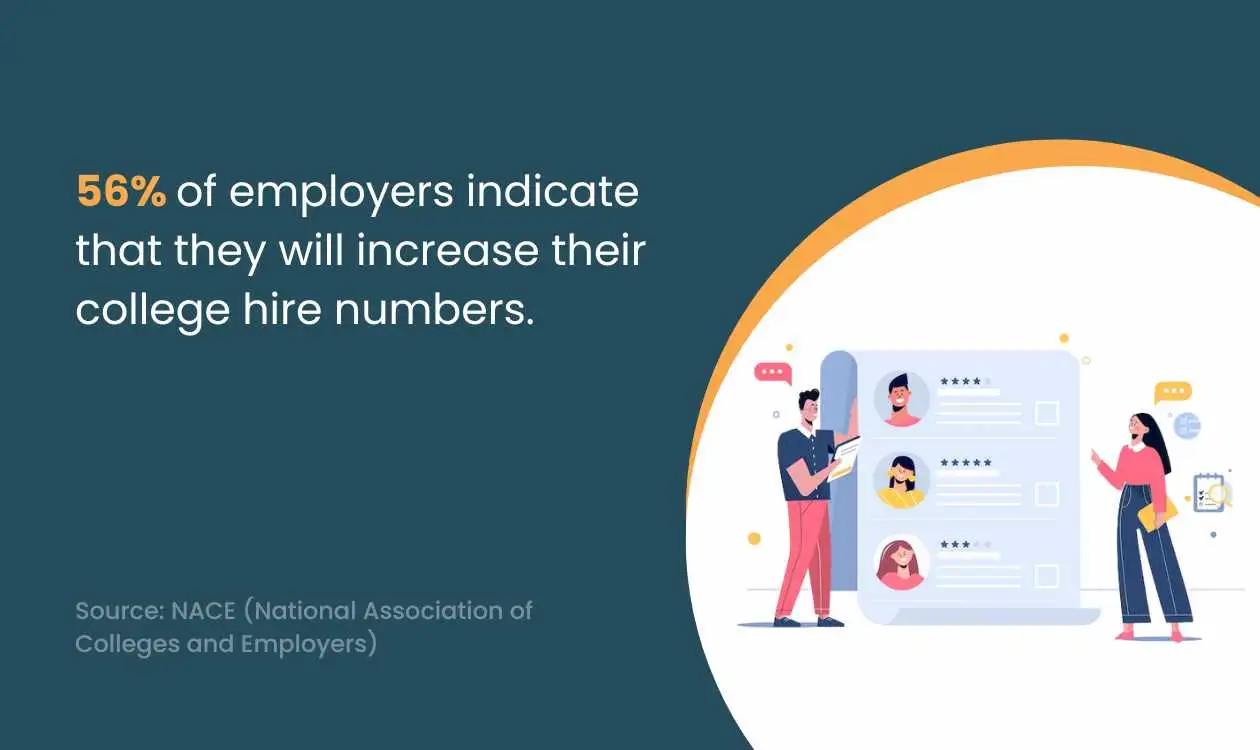
A survey conducted by NACE showed that 56% of respondents said that they would increase the hiring of college students, and 41% would maintain the number as it offers plenty of benefits. Campus recruitment enables the organisation to hire young talented minds to meet the requirement of work in new technology.
Also, in today’s fast-paced life, recruiters want to save time, cost, and effort in the recruitment process. Campus recruitment enables them to directly connect and coordinate with college/university students. This benefit simplifies the hiring process.
Many graduates also appreciate employers who recognize the realities of academic workloads. During particularly demanding periods, some students may seek support from professional essay writers you can trust to manage assignments responsibly while staying focused on internship applications and career preparation.
Indeed entry-level employees are more loyal to their employers, and if, in the campus recruitment process, they feel valued, then it increases the retention rate and employee productivity. Clear communication also plays a vital role in raising the retention rate of the company.
The main advantage employers get from recruiting from campus is that it offers candidates who have a fresh perspective of the real world a high level of confidence, passion, and dedication.
Along with the experience of new technology, freshers are quick learners and good at multitasking. Also, as they start their professional career, they are enthusiastic about learning new skills and aim to learn a great deal during their early stage.
Real-world Ideas to Attract University Talent & Entry-level Workers
1. L'ORÉAL
L’ORÉAL hosts the “Taste of L’Oréal” internship recruitment program every year, where they offer a wonderful opportunity to 100 undergraduates and graduates to learn what it feels like to work at L’Oréal.
In this event, the company invites students to New York City for an in-depth orientation, work on a case study, and presentations from presidents of different Divisions. Here, the students who participated can also learn more career choices and get the opportunity to interview in person for the open role.
2. Amazon
In the USA, Amazon was growing rapidly. As the company was consistently expanding, there was a greater demand for talented individuals for a ‘fulfilment network’ where people needed to package and deliver orders. Hence, in 2017, Amazon arranged the largest recruitment event in the USA, attracting at least 20000 applicants.
The amazing package of the organisation drew many active candidates and college students with pre-payment for tuition and medical benefits for full-time positions.
It established locations in Newyork, Washington, Ohio, Maryland, etc. their guided tours of the facility were delivered to all the potential hires and are the cherry on the cake. Also, interviews were conducted in tents set up outside.
Final Thought on Campus Recruitment Strategy
Campus recruitment in 2026 demands more than a career fair booth and a job posting. It requires year-round relationship building, authentic Gen Z engagement, technology-enabled screening, and a consistent post-hire experience that converts strong hires into long-term employees. Organisations that approach campus hiring as a strategic investment rather than a periodic event are building the talent pipelines that will define their workforce for the next decade.
Along with hosting talent attraction events, campus talent acquisition can be done with strategic planning, collaborating with the recruitment team and hiring managers, networking with targeting institutions and building strong relationships with them, promoting employer branding, and outreach to the candidates via social media platforms.
Happy Campus Recruiting!!

FAQs - Frequently Asked Questions
1. What do Gen Z candidates expect from campus recruiters in 2026?
Gen Z expects fast responses, personalised communication, authentic employer content, and transparency about role, pay, and career progression.
2. How is skills-based hiring changing campus recruitment in 2026?
70% of employers now use skills-based hiring. Competencies, problem-solving, and potential matter more than GPA or degree prestige alone.
3. What is the intern-to-full-time conversion rate in campus hiring?
Top employers convert 50–70% of interns to full-time roles. Strong programmes with structured projects and mentoring drive the highest rates.
4. Which social media platforms work best for campus recruitment in 2026?
LinkedIn builds credibility, Instagram showcases culture, and TikTok drives peer advocacy. All three are essential for Gen Z campus outreach
5. How early should campus recruitment campaigns begin in the academic year?
Top employers launch outreach in September. Many internship offers go out by October, with full-time recruiting extending through the spring semester.
6. How do you measure the ROI of a campus recruitment programme?
Track cost-per-hire, source-of-hire conversion, intern-to-hire rate, time-to-fill, first-year retention, and diversity of hire by campus.
7. What is a virtual career fair and how does it support campus hiring?
Virtual career fairs are online events where employers meet candidates via video chat. They expand reach beyond target schools at lower cost.
About the Author