



Some of the best hires an organisation makes never apply through a job board. They come through a conversation at a team lunch, a message from a former colleague, or a casual mention at an industry event because someone who already works at the company thought of them when a role opened up. That informal, trust-based talent discovery is the mechanism behind one of the most consistently high-performing recruitment channels available: the employee referral program.
When structured and managed well, an employee referral program is not just a cheaper sourcing channel it is a fundamentally different way of finding talent. Referred candidates arrive pre-vetted for cultural fit by someone who knows both the organisation and the individual. They convert faster, accept offers more readily, ramp up more quickly and stay longer. And every successful referral reinforces the programme, building a self-sustaining talent attraction engine that compounds over time.
This guide covers everything you need to design, launch and sustain a high-performing employee referral program including the benefits, the genuine risks, a step-by-step implementation guide, real examples from organisations doing it well, and the data that makes the business case impossible to ignore.
TL;DR
- Employee referral programs are one of the most effective and cost-efficient recruitment strategies available, delivering consistently higher-quality hires and stronger retention than most external sourcing channels.
- Key benefits: improved quality of hire, better cultural fit, faster time-to-hire, lower cost-per-hire and positive impact on employer brand.
- Known disadvantages: risk of homogeneity, potential for discrimination claims if overused, and employee disillusionment if rewards or communication fall short.
- Successful implementation follows four stages: plan, design, promote and maintain with clear rules, motivating rewards and consistent internal communication.
- The most effective referral programmes use talent acquisition technology to track referrals, automate communication and ensure a positive experience for both the referring employee and the referred candidate.
- Case studies from Fiverr, Google, Intel, DigitalOcean and HP demonstrate the range of creative and effective referral programme structures in use.
- The statistics consistently show referrals deliver the highest ROI, the lowest cost-per-hire, the fastest time-to-hire and the strongest two-year retention rates of any recruitment channel.
The employee referral program has become one of the most popular recruitment strategies in recent times.
The employee referral program is similar to a friend recommending you a movie or television series to watch over the weekend, whereas, in this case, it's a candidate being referred for an open position in your company.
It is essential to have a well-structured employee referral program to get the most productive outcomes.
What is an Employee Referral Program?
The employee referral program is an effective strategy for recruitment marketing. It is an internal method where new employees are hired based on a reference by the existing candidates of the organization. A good referral program helps companies to get the best employee for the position and makes the current employee feel valued.
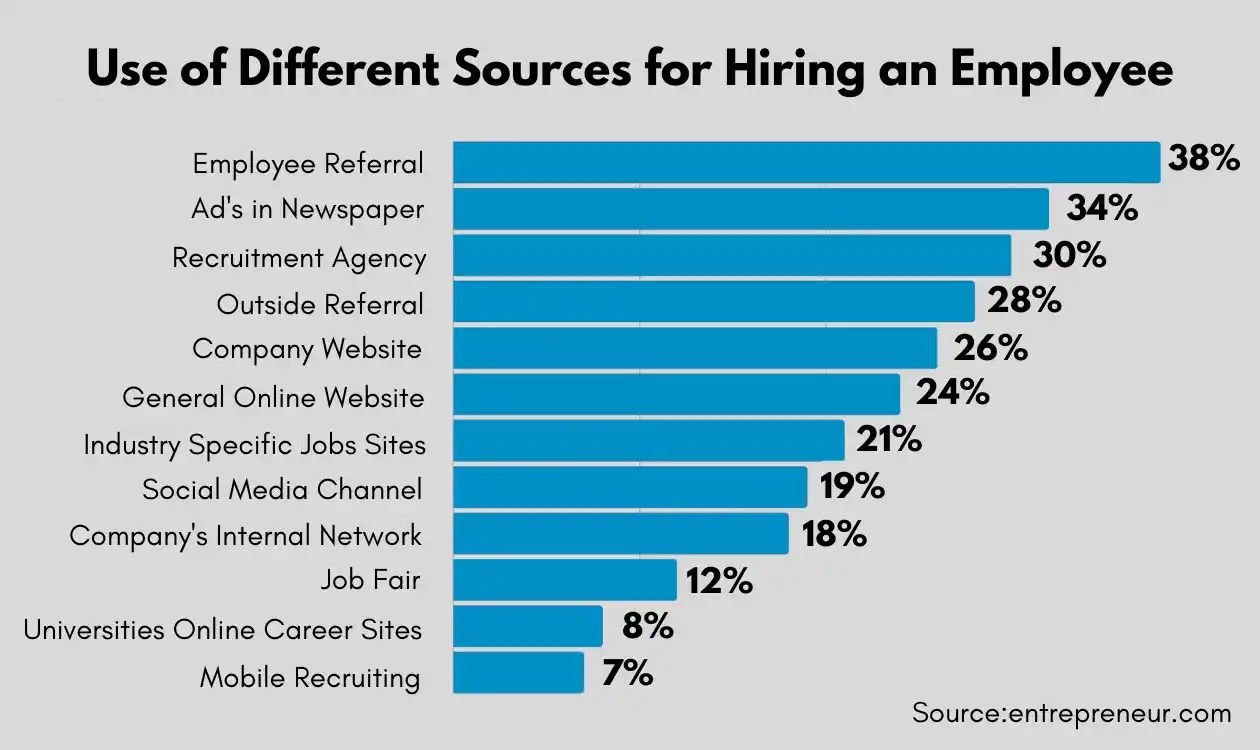
The employee referral program is a popular way to recruit a new candidate - no need to depend on the recruiter for research and attract the right talent. Hiring the existing employee's reference will perform better compared to the nonemployee referral candidate and is a cost-effective solution too.
What are the Benefits of an Employee Referral Program?
Employee referral program undeviatingly connects the employer to the profession and personal network of the existing employees. Within a short period of time, employers seat foot on the huge talent pool. And this is because of the primary advantages of the employee referral program. So, let's have a look at its benefits of it.
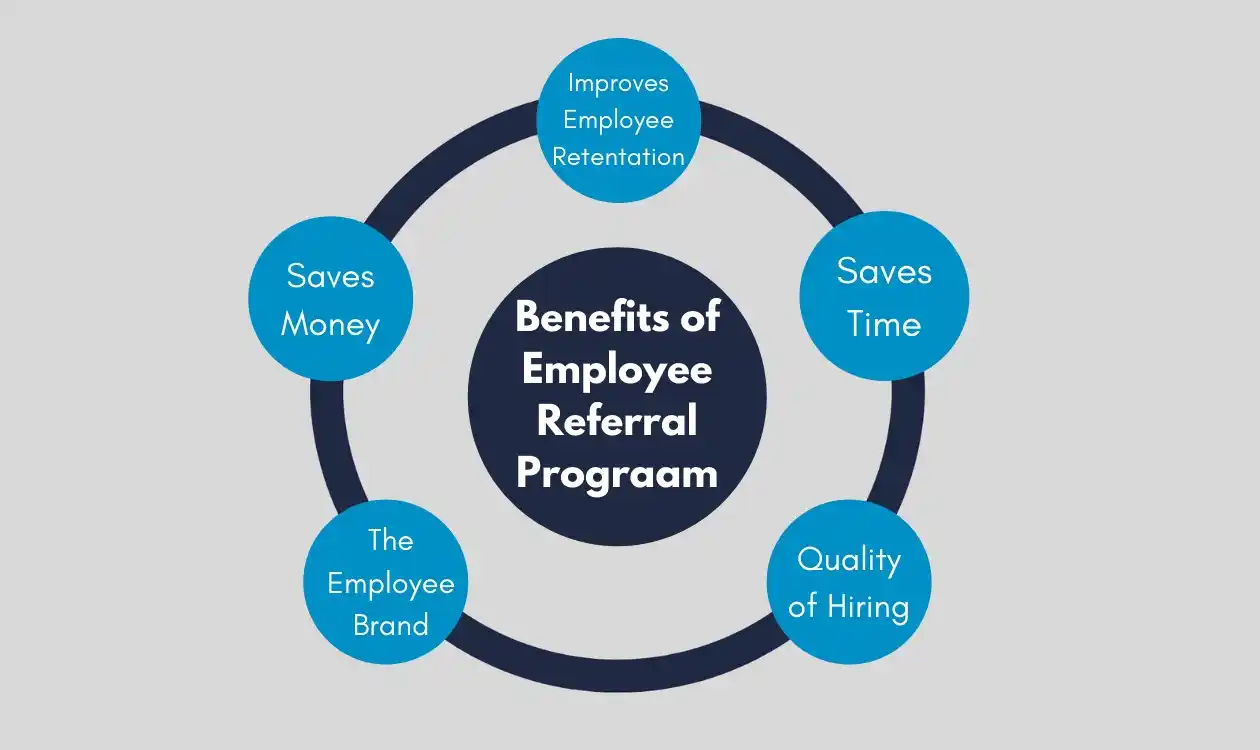
1. Improving the quality of hire
The employee referral program is considered an internal method to find a candidate for a particular position. Your existing employees widely know about the attributes that your company needs in their employees, so oftentimes, employee referrals confer a most suitable candidate compared to candidates from other sources.
2. Improves employee retention
It is a known fact that employees who match the organizational culture, norms, and values better, stay longer with the company. The candidate referred by the existing employee is always aware of the company's needs and the work approach that company follows. From the beginning, they have detailed knowledge concerning the company, as a consequence, reductions in employee turnover rate.
3. Saves time
Through this program, the employer can save the maximum amount of time that they spend on a time-consuming process like onboarding as a candidate is well-known about the company culture. Also, contacting them is easier. As a result, it speeds up the recruitment process.
4. Saves money
If you opt for referred candidates by your employees, you can eliminate a portion of expenses that you spend on other sources to get the right talent, such as job boards, paid advertisements, etc.
5. Improves employer brand
Usually, before applying for any job, the jobseeker will gain proper awareness about the company. Hence, when your company hires the candidate through a referral program and if it is mentioned in the review, then it will automatically increase your brand value by creating a positive impression of your brand in the market.
What are the Disadvantages of an Employee Referral Program?
It might be the number of benefits of an employee referral program is quite high. But, the disadvantage is it is not avoidable. Therefore, we also cover the topic of the disadvantages of an employee referral program. And here are some drawbacks of employee referral programs.
1. Discrimination charges
When referral programmes are used as the primary or dominant sourcing channel, they can inadvertently produce a homogeneous workforce because people naturally recommend others who share their background, education, network and characteristics. This limits diversity and, if the pattern is systematic, can create legal exposure under anti-discrimination legislation. AI-driven diversity hiring tools and structured programme design can mitigate this risk, but referral hiring should always be used alongside other sourcing channels, not instead of them.
2. Lack of ideas
Organisations built primarily on referral hires risk developing an echo chamber where new employees think similarly, have comparable backgrounds and are less likely to challenge existing assumptions or bring genuinely different approaches. Innovation often comes from outside the existing professional network, which means over-indexing on referrals can limit the cognitive diversity that drives creative problem-solving and business adaptation.
3. The disillusionment of the referral program
If the rewards on offer are perceived as too small, too restricted or too difficult to actually receive with complex eligibility criteria, long waiting periods or opaque approval processes employees quickly lose interest in participating. An employee who makes a strong referral and feels the organisation did not take it seriously or reward it fairly is unlikely to refer again, and may share that experience with colleagues.
4. Getting alienated from other staff
When referred employees arrive and are immediately closer to the person who recommended them than to the rest of the team, it can create social clusters that exclude other team members. This dynamic requires active attention during onboarding ensuring referred candidates are introduced and integrated broadly into the team rather than orbiting primarily around their personal contact.
Employee Referral Program Guidelines
As we got to know, the employee referral program is a crucial and fruitful approach to hiring for the employer. But, implementing it in a manner to taste the profit is quite difficult. Thus, we came here with the solution by providing the best practice of adopting an employee referral program. Let's see the guidelines for setting up the employee referral program.
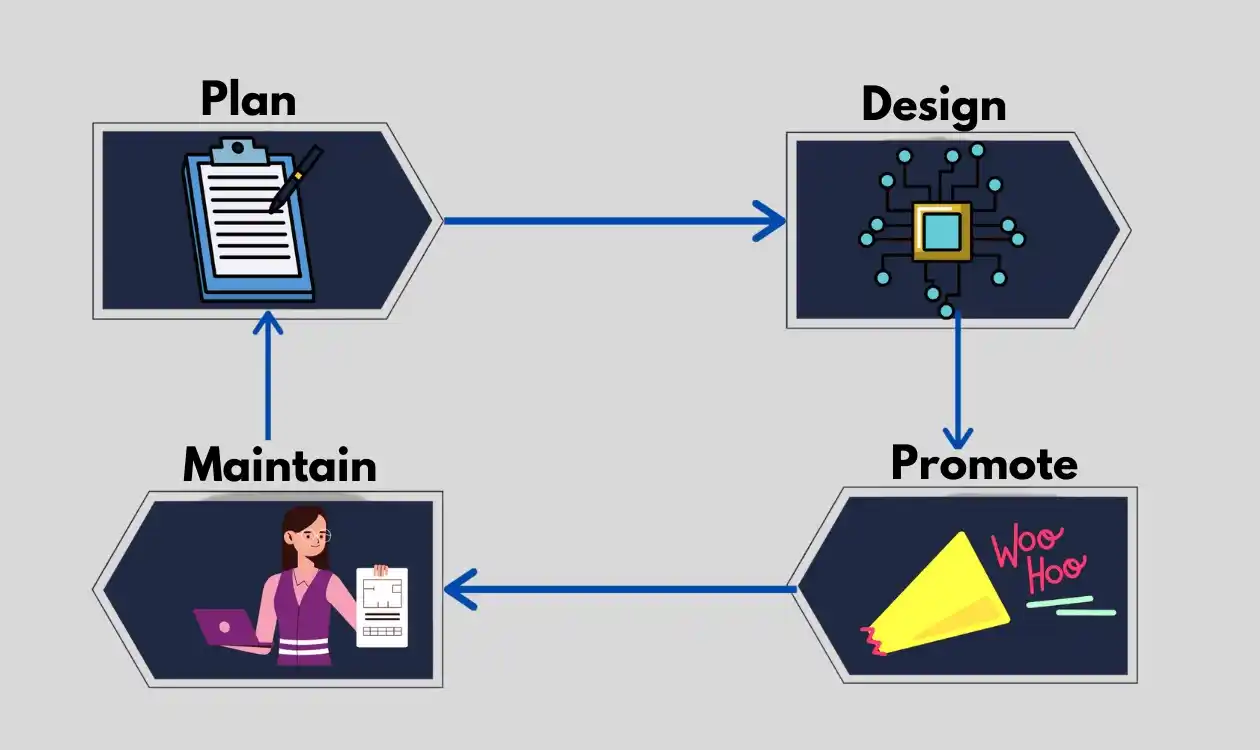
The following are the steps to implement the employee referral program for your enterprise.
Plan
Start by identifying the specific positions you want the referral programme to target, the skills and qualities that would make a candidate genuinely successful in each, and the timeline within which you need to fill them. Define your programme goals not just "get more referrals," but specific targets: referral hire percentage, time-to-hire improvement, cost-per-hire reduction.
Also, set various types of goals like minimum duration to hire a new candidate. Allocate all the resources and designate different positions for setting up the program.
Design
A programme that is difficult to participate in will not be used. The design stage should focus on making the referral process as simple and frictionless as possible for the referring employee with a clear, accessible submission method, straightforward eligibility rules and reward terms that are easy to understand.
Use modern applicant tracking system technology to manage referral submissions, track the progress of referred candidates through the pipeline, and trigger automated communications at each stage. A Recruiting CRM platform with a built-in employee referral portal makes the entire process trackable and transparent, removing the opacity that causes employees to lose faith in the programme. Define:
- The strategic purpose of the programme and the roles it targets
- Participation rules who is eligible, when rewards are paid, what happens if the referred candidate is not hired
- Reward structure monetary and non-monetary options
- How the process will be communicated to employees and hiring managers
Promote
A referral programme that employees are not aware of or do not understand cannot succeed. Launch the programme with genuine internal energy an all-hands announcement, manager briefings to ensure each team leader can explain it clearly, and ongoing reminders when new positions become eligible for referrals. Use multiple internal channels: email, Slack or Teams, intranet, digital signage and team meetings. Share the names and stories of successful referrals (with permission) to demonstrate that the programme is active and rewarding..
Maintain
Once launched, the programme requires active maintenance to stay effective. Regular refreshes new roles, updated rewards, seasonal campaigns keep it visible in employees' minds. Regular recruitment audits of referral programme performance tracking submission volume, candidate quality, hire rates and time-to-hire by source identify where the programme is working and where it needs adjustment. Acknowledge every referral submission, communicate clearly about its progress, and ensure rewards are paid promptly and without friction when earned.
How to Make an Employee Referral Program Effective?
By now, we have clearly discovered how useful employee referral programs are, but it does not give the desired outcomes if it is not proficiently done. This problem can be solved by keeping the following points in mind.
- Use Talent Acquisition System to manage and streamline employee referral program efficiently
- Keep your existing employees updated about new vacancies
- Acknowledge good referrals
- Offer to appeal monetary as well as non-monetary incentives
- Enhance user experience
- Experiment with referral tactics
- Provide the strong candidate experience
Employee Referral Program Guidelines
The most instructive examples of successful employee referral programmes demonstrate that there is no single "correct" model the best programme is the one that fits the organisation's culture, values and workforce.
Fiverr introduced a gamification model, creating a leaderboard where employees earn points for job shares and successful referrals. The game mechanic transformed participation from a passive, occasional activity into an active, ongoing engagement.
Google kept its approach deceptively simple: asking employees directly, "Who is the best designer or software engineer you know?" The simplicity of the question and the directness of the ask produced a consistently strong volume of high-quality nominations.
Intel tied its referral programme directly to its diversity goals offering double bonuses for successful referrals of women or candidates from minority backgrounds. This directly addressed the homogeneity risk inherent in standard referral hiring while maintaining strong participation incentives.
DigitalOcean combined financial reward with social purpose: $3,500 to the referring employee plus a $1,500 charitable donation made on their behalf. This approach resonated with employees for whom a meaningful workplace is as important as financial reward.
Hewlett Packard focused on recognition rather than financial incentives celebrating referrers publicly and making visible their contribution to building the team. For employees motivated by recognition and belonging, this approach was highly effective.
Distillery personalised rewards based on individual employee preferences, discovering what each person genuinely values as a reward whether that was a specific hobby-related gift, a travel experience or a professional development opportunity and delivering that specifically.

What is the Importance of Employee Referral Rewards?
Referral rewards are the primary mechanism that converts an employee's knowledge of a great candidate into an actual submission. Without a reward structure that employees find genuinely motivating, participation will be lower than it should be regardless of how many vacancies are available or how well the programme is communicated.
The employee referral program becomes the most productive source to hire top talent if employee referral rewards are fruitful & designed appropriately. Proper employee referral rewards encourage current employees to participate actively.
Best employee referral reward ideas
Everybody loves to get rewards and appreciation. Some of the ideas for referral rewards are given below:
- Give days off as a reward
- Provide a bonus
- Give a small gift even if the referred person doesn't get hired
- Sponsor lunch for the new hire and the referrer
- Fund as per the employees' choice
- Plan a holiday
- Gift Vouchers
- Corporate gift basket
- Create personalized stationery
- Gifts for their pets
- Certificate of appreciation
- Recognition of social media
- Handwritten note
- Canvas Prints
Employee Referral Program Execution and Challenges
When you plan an employee referral program, there may be something that can lead it to failure. To avoid this, we bring some potential challenges that you may need to overcome.
- Employees are not well informed about the employee referral program
- They are unable to track the referrals
- Employees face difficulty while submitting referrals
- Once the referrals are submitted, they don't hear about it from the company
- The process is long and tedious, so employees prefer not to refer to it
- The rewards are not exciting enough
- Lack of motivation in the referred candidates.
Addressing these execution challenges is what separates a programme that delivers consistent results from one that looks good on paper but underperforms in practice.
Some Employee Referral Program Statistics
Every business decision is always based on analyses and statistics.
So, here are employee referral program statistics that help you to know the real benefits of employee referral programs. These statistics show you that you are last in the race of competition if you haven't adopted the employee referral program yet.
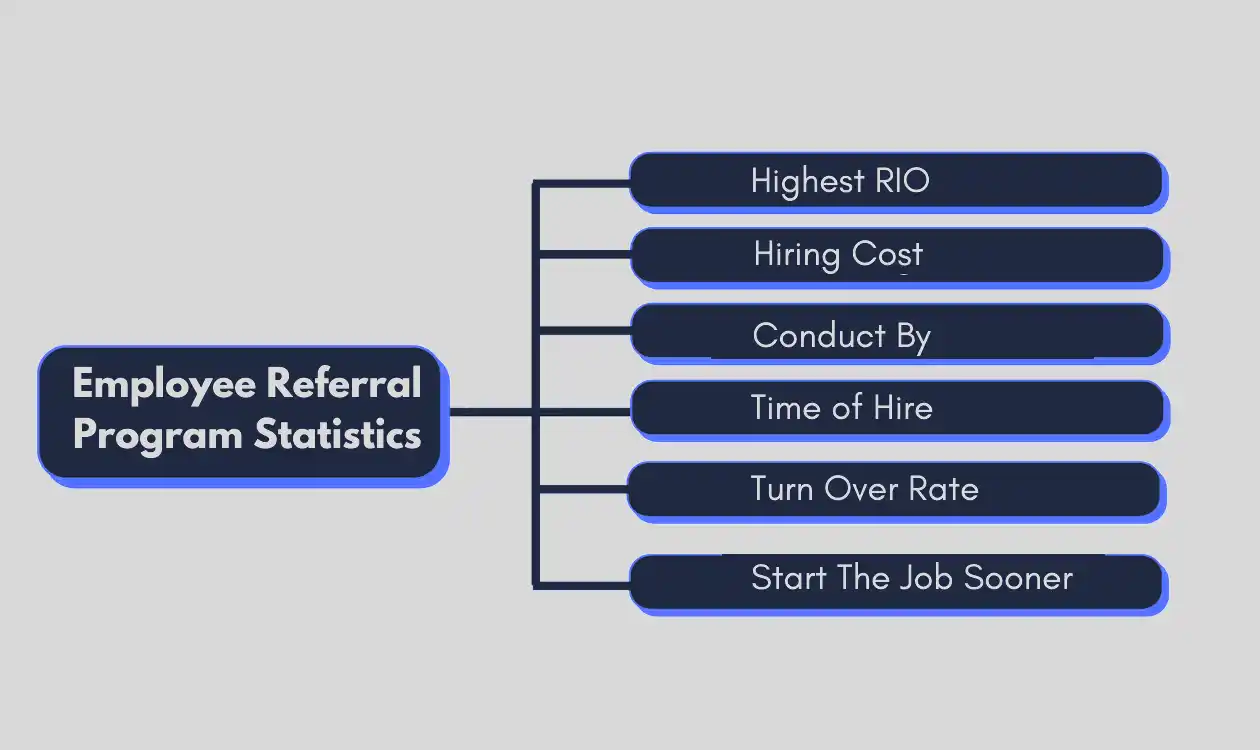
1. Provide the highest ROI
82% of employers rate employee referrals above all other sourcing channels for generating the best return on investment. No other recruiting channel delivers a comparable combination of candidate quality and sourcing cost efficiency.
2. Reduce the cost per hire
Organisations with active referral programmes can save $3,000 or more per hire compared to equivalent external sourcing a significant reduction in cost-per-hire that compounds meaningfully across an annual hiring programme.
3. Conduct by any organisation
69% of employers report running formal employee referral programmes making it one of the most widely adopted recruitment strategies in use, across organisations of all sizes and sectors.
4. Reduce the time per hire
Referred candidates are 55