

TL;DR
- Improve your hiring process by removing bottlenecks, standardising interviews, and using recruitment technology more effectively.
- Build a strong talent pipeline so you can reduce time-to-hire and improve candidate quality.
- Strengthen employer branding and candidate experience to attract better applicants and increase offer acceptance.
- Use structured screening, an ATS, and hiring metrics to improve recruitment process efficiency and decision-making.
Most hiring teams are working harder than ever but still losing ground. In 2026, 60% of organisations reported that their time-to-hire increased year over year. Only 12% managed to reduce it. Meanwhile, the average time from job posting to accepted offer now sits at 63.5 days, and top candidates are typically off the market within 10 days.
The result is a compounding problem: slower processes, higher competition, and candidates who are more willing to walk away from a poor experience. In 2026, 26% of job seekers declined an offer due to a negative hiring experience, and 52% have done so at least once in their career.
Improving your hiring process is not about working faster for the sake of it. It is about removing the friction, inconsistency, and delays that cause you to lose strong candidates and make poor hires. This guide covers 9 proven strategies to help you do exactly that.
What Is Hiring Process Improvement?
Hiring process improvement means systematically refining every stage of recruitment to make it faster, fairer, and more effective. It covers job description quality, candidate screening, interview structure, communication, employer branding, offer management, and the technology that supports all of it. The goal is to consistently attract and select better-fit candidates while reducing the time, cost, and effort it takes to do so.
9 Proven Ways to Improve Your Hiring Process and Recruitment Results
1. Build a Strong Talent Pipeline for Faster Hiring
A talent pipeline is a pool of qualified candidates who can be engaged for current or future roles. By building relationships with potential candidates in advance, recruiters can reduce time-to-hire, improve candidate quality, and fill hard-to-close roles more efficiently.
Here are a few practical ways to build a stronger talent pipeline:
-
Identify the roles that require an ongoing pipeline, especially positions that are hard to fill or frequently reopened.
-
Reconnect with past applicants, former employees, interns, and silver-medal candidates.
-
Use sourcing methods such as Boolean search, niche job boards, LinkedIn outreach, and recruitment conferences to discover passive talent.
-
Nurture candidate engagement with regular follow-ups, personalised outreach, and relevant job updates.
2. Strengthen Your Employer Brand to Attract Better Candidates
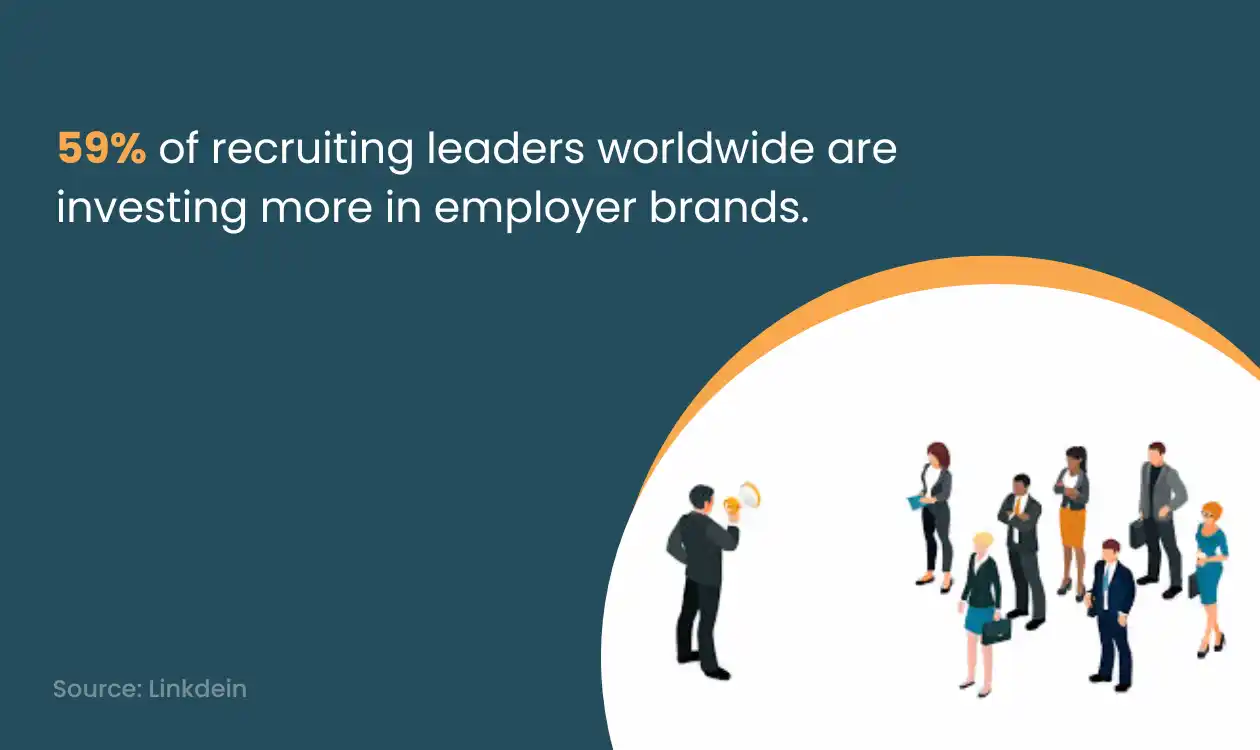
A strong employer branding helps candidates understand what your company stands for, what the work culture looks like, and why they should join your team.
Before applying, most candidates review your website, career page, LinkedIn presence, and employee content to evaluate your company culture and reputation. Employers should maintain a credible online presence and communicate a consistent employer value proposition across digital and offline channels.
Share team storeys, employee testimonials, workplace content, thought leadership articles, and event participation to build trust and visibility. Recruitment marketing strategies can further strengthen employer branding by helping you attract the right candidates with targeted messaging and content.
3. Refine Job Requirements and Write Better Job Descriptions
In a competitive hiring market, clear and realistic job requirements help you attract more qualified applicants.
Recruiters should write job descriptions that are clear, relevant, and appealing enough to encourage the right candidates to apply. Avoid long, vague job descriptions. Keep the content easy to scan while clearly explaining responsibilities, required skills, growth opportunities, and key benefits.
How to write better job descriptions:
- Lead with what the role offers: scope, impact, flexibility, and compensation. Put requirements after the opportunity, not before it.
- Audit your must-have requirements honestly. If you are listing five years of experience for a junior role, or a degree for a job that does not need one, you are filtering out qualified candidates unnecessarily. By 2026, 81% of companies had adopted skills-based hiring to address this.
- Keep descriptions scannable. Use short paragraphs, bullet points for requirements, and a consistent structure across all postings.
- Write in the language your target candidates actually use. Search job titles and keywords on LinkedIn or Indeed before finalising your posting.
4. Speed Up Candidate Screening Without Sacrificing Quality
To improve the hiring process, recruiters need to reduce delays in time-consuming tasks without compromising hiring quality. In most hiring workflows, candidate screening is one of the most time-intensive stages.
This stage often includes resume review, candidate shortlisting, pre-screen assessments, and interview scheduling.
Hence, the recruitment team has to figure out ways to make the screening process faster and improve the overall hiring workflow. The following are some of the key techniques to create a quick and efficient screening process.
-
Use structured interviews to assess all candidates against the same criteria and reduce bias.
-
Automate manual tasks such as reviewing resumes, conducting skill assessment tests, and scheduling interviews.
-
Utilise pre-screen tests and questionnaires to filter out the applications that are unqualified.
-
Use video interviews rather than conducting in-person interviews
-
Create one-way video interviews using one-way video interview software, which recruiters can review at their convenience time and candidates can respond at their convenience time.
These steps can shorten screening time, improve consistency, and create a smoother candidate experience.
5. Use an Applicant Tracking System to Improve Recruitment Efficiency
To improve the hiring process, recruiters must choose the best recruitment software. To do that, one of the most important talent acquisition tools that Recruiters can use during the recruitment process is an Application Tracking System (ATS).
An Application Tracking System makes the hiring process organised and easier and the communication between the candidate and the recruiter most sorted as it supports automated communication. The ATS is also helpful when it comes to finding the best talent from all the applications for the job position, as it refines the data and provides results.
6. Improve Your Interview Process with Structure and Consistency
To speed up your recruiting process, you can also reach out to your current employees and ask them to promote vacant job positions via word of mouth or through their social media profiles.
You can also set up a referral program that will motivate your current employees to participate in the recruitment process.
7. Improve Your Interview Process
When you are conducting an interview, it is not only you who is making up your mind about the candidate, but also you are putting your company to the applicant. So whether the interview is conducted through a video call or face-to-face in a conference room, you must be very organised with your interview and should not rush through it.
The recruiter must train the HR staff to make the candidates feel welcomed and comfortable and ask the questions that bring out the candidate's personality. Once the interview is conducted, take time before coming to a decision about a candidate before making a judgement.
8. Improve Candidate Experience Throughout the Recruitment Process
Each interaction with candidates during the hiring process is important as it shapes the image of the company. Indeed positive candidate experience can increase the employer's brand, and the company get more candidates in the talent pipeline when a new position opens up. Hence, to improve candidate experience following are some key actionable tips that recruiters and HRs must implement:
-
Be transparent throughout your hiring process.
-
Streamline and shorten your application process.
-
Keep candidates in the loop.
-
Be informative & genuine.
-
Enhance your career page.
-
Give and ask for feedback.
-
Be user-friendly.
_(1)4.jpg)
9. Offer Flexibility to Improve Offer Acceptance Rates
Candidates, while looking for a job, consider many factors, and one of them is flexibility. Providing flexible work options like working from home, and flexible working hours, among others, can make the opposition more appealing to the applicant, and they might end up choosing your company over your competitors.
The hiring process is an important and time-consuming process that can be made easier using the latest technology. These methods will help you to improve your recruitment process and increase the hiring rate eventually.
How to Measure and Optimise Your Hiring Process
Improving your hiring process is an ongoing effort, not a one-time project. The teams that consistently outperform are those that track the right metrics, review them regularly, and make targeted adjustments based on what the data shows.
Key hiring metrics to track:
| Metric | What it tells you |
| Time-to-hire | How long your process takes from application to accepted offer |
| Time-to-fill | How long it takes to fill a vacancy from opening to hire |
| Cost per hire | The total investment per successful hire (average: $4,700) |
| Quality of hire | Performance and retention of new hires over time |
| Interview-to-offer ratio | How efficient your screening and interview stages are |
| Offer acceptance rate | Whether candidates are choosing you after going through the process |
| Source of hire | Which channels deliver the best-quality candidates |
| Candidate NPS | How candidates rate their experience with your process |
Review these metrics quarterly. If a specific stage consistently shows high drop-off or long delays, that is where to focus your next improvement effort.
Conclusion
Improving your hiring process is not a one-time fix. It is an ongoing effort to make recruitment faster, fairer, and more effective.
By building a strong talent pipeline, improving candidate screening, strengthening employer branding, using structured interviews, and investing in the right recruitment technology, you can create a better hiring process from end to end.
The most successful hiring teams regularly review hiring metrics such as time-to-hire, quality-of-hire, interview-to-offer ratio, and candidate satisfaction. These insights help you identify bottlenecks, improve hiring practises, and make smarter recruitment decisions over time.
Most importantly, remember that hiring is a two-way experience. Candidates are evaluating your company just as closely as you are evaluating them. A clear, fast, and respectful process will help you attract stronger talent and improve long-term hiring success.

Frequently Asked Questions (FAQs)
1. How can you measure the success of a talent pipeline?
The success of a talent pipeline can be measured using metrics such as time-to-hire, candidate quality, pipeline conversion rates, and employee retention. If your pipeline consistently delivers qualified candidates who perform well and stay longer in their roles, it indicates that your sourcing and engagement strategies are working effectively.
2. How can employer branding support hiring success?
Employer branding supports hiring success by helping candidates understand your company culture, values, and employee experience before they apply. A strong employer brand builds trust, attracts qualified candidates, and improves application quality. Sharing employee storeys, company culture, and workplace values through career pages and social media can significantly strengthen your hiring efforts.
3. What are the best practises for candidate feedback?
Effective candidate feedback should be timely, clear, and constructive. Share feedback soon after the interview and highlight both strengths and areas for improvement. Providing respectful and helpful feedback improves candidate experience and strengthens your employer brand, even for candidates who are not selected.
4. How can AI improve the hiring process without removing the human touch?
AI can improve the hiring process by automating repetitive tasks such as resume screening, interview scheduling, and candidate shortlisting. This allows recruiters to focus more on meaningful interactions, interviews, and relationship building. When used correctly, AI increases efficiency while keeping human judgement central to hiring decisions.
About the Author